From the exhibition
The Adventures of Patsy—Tea For Two
· 1920s–1930s
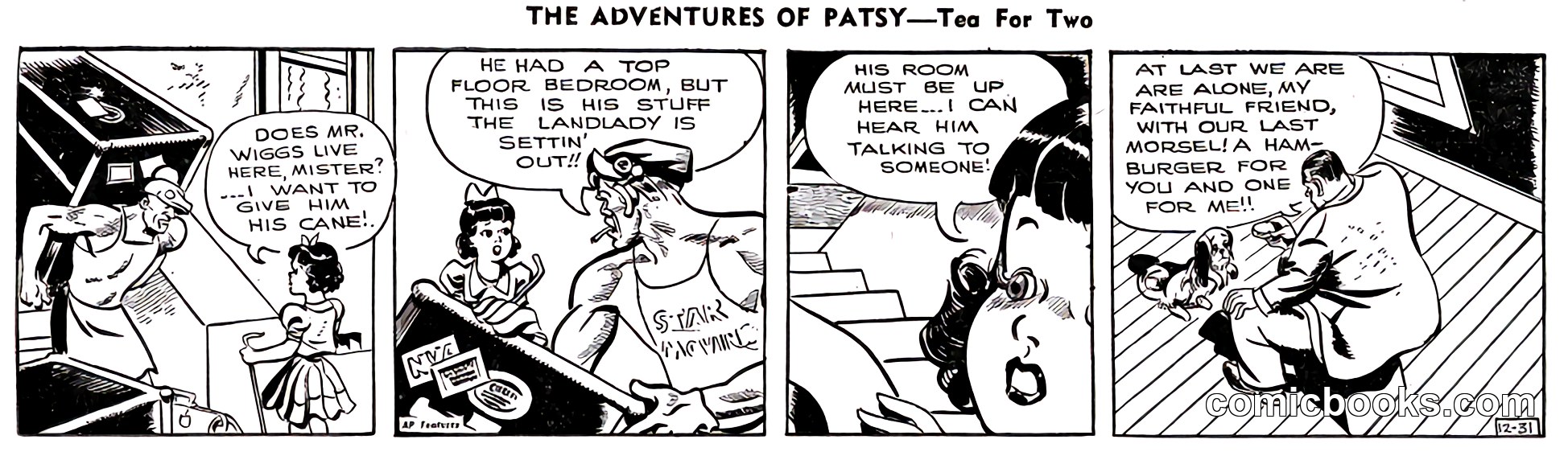
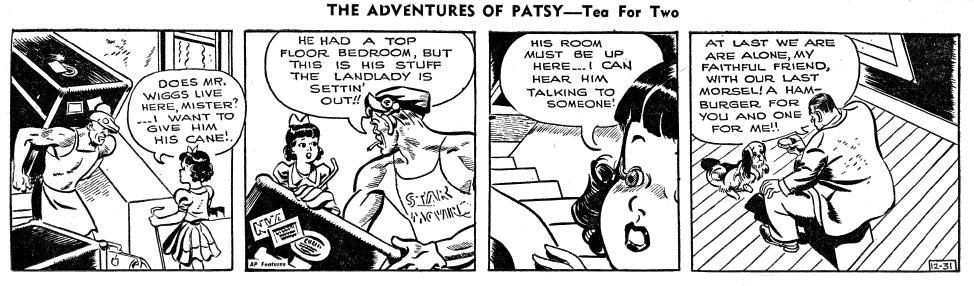
This strip exemplifies the visual conventions that emerged in newspaper comics during the early twentieth century. Four panels track Patsy's domestic scheme with economy and clarity: each panel advances the narrative through dialogue and action, using speech balloons to convey character voices and comic timing. The artist employs sequential framing, exaggerated poses, and sight gags—a pratfall, a hidden figure, reactions to surprise—that rely on readers' familiarity with recurring characters and situations. The style reflects how newspaper comics developed a distinct visual language separate from illustration: panels as discrete units, action flowing left to right, dialogue integrated with image to carry plot forward. These formal innovations, refined through dailies and Sunday pages, became the foundation for the comic book medium that followed.
Public domain, restored and presented by comicbooks.com public-domain