From the exhibition
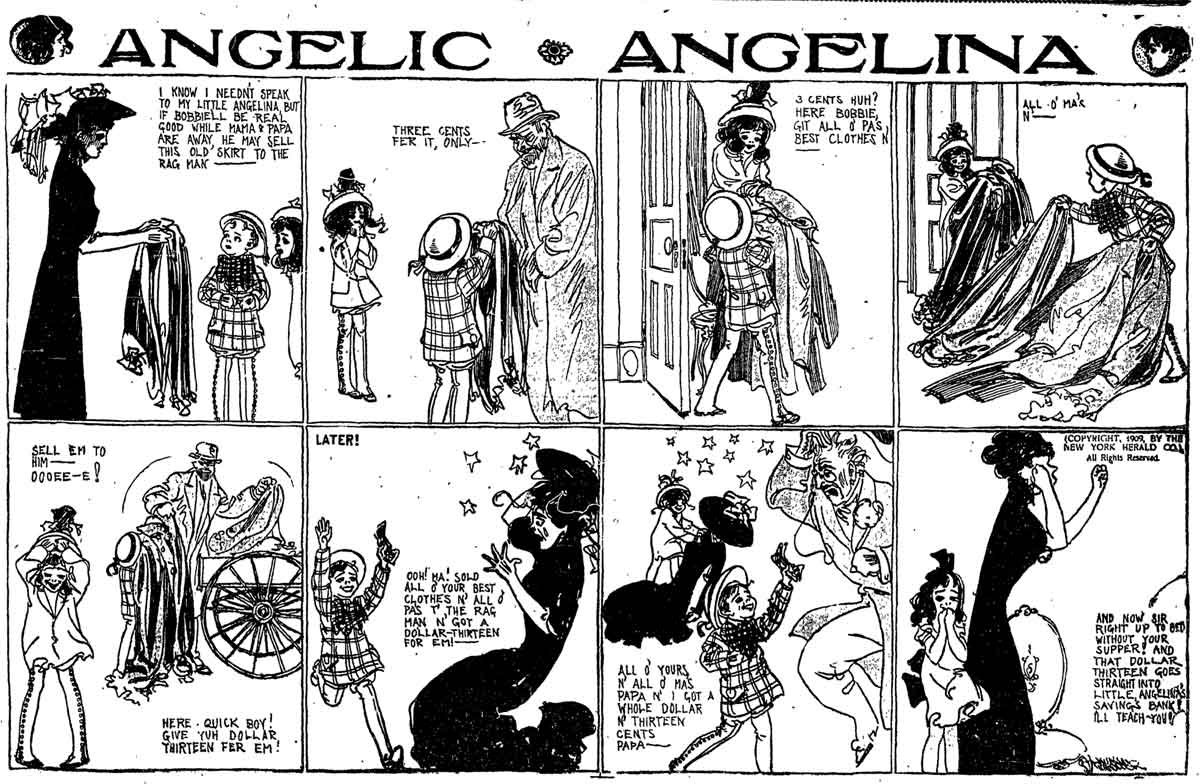
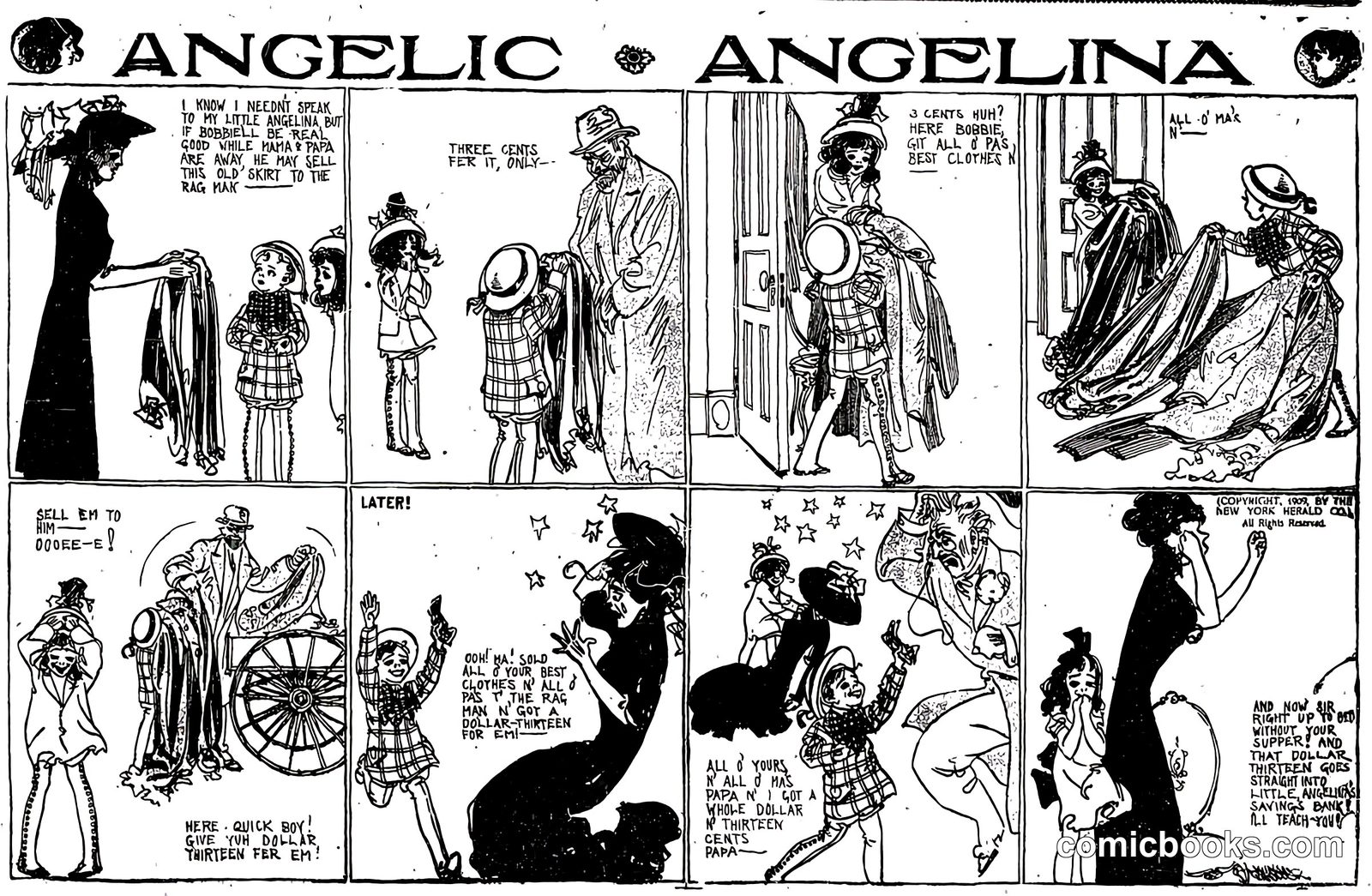
Angelic Angelina
· 1909
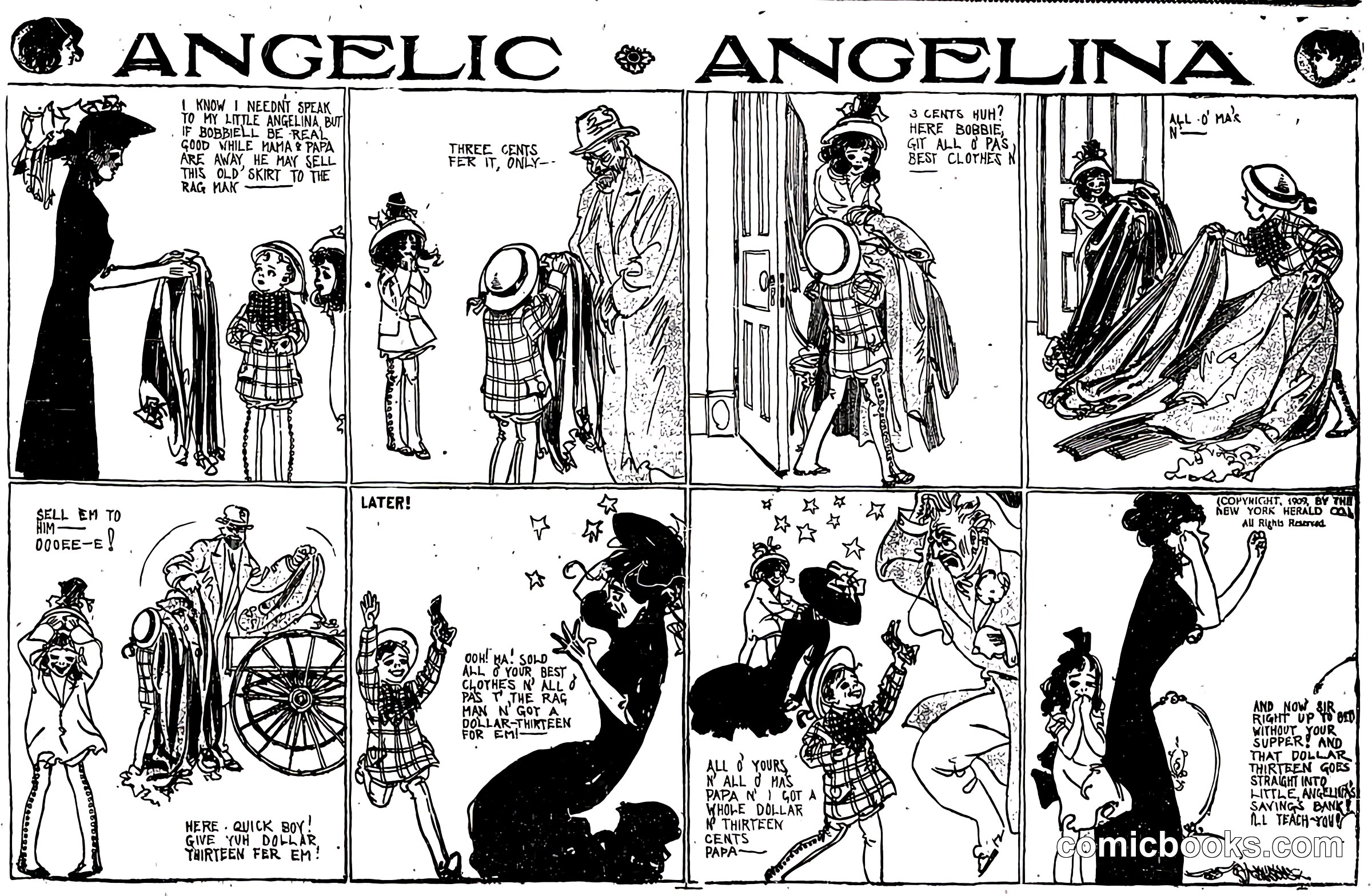
This Sunday newspaper strip follows a young girl named Angelina through a commercial transaction: she sells her old clothes to a ragman for three cents, then uses the money to buy new garments. The narrative unfolds across eight panels arranged in a grid, using speech balloons to advance the plot and reveal character voice. The strip employs the visual conventions that define early comics—sequential panels, expressive line work, and recurring characters—that emerged from newspaper Sunday pages. By 1909, artists had established the language of sequential art: bordered frames containing action, dialogue containers directing reader attention, and visual gags that rely on picture-text relationships. Strips like this one were the direct precursors to the comic books that would follow, establishing both narrative structure and mass-market distribution through daily and Sunday newspaper circulation.
Public domain, restored and presented by comicbooks.com public-domain