From the exhibition
Bungleton Green
· January 29, 1927
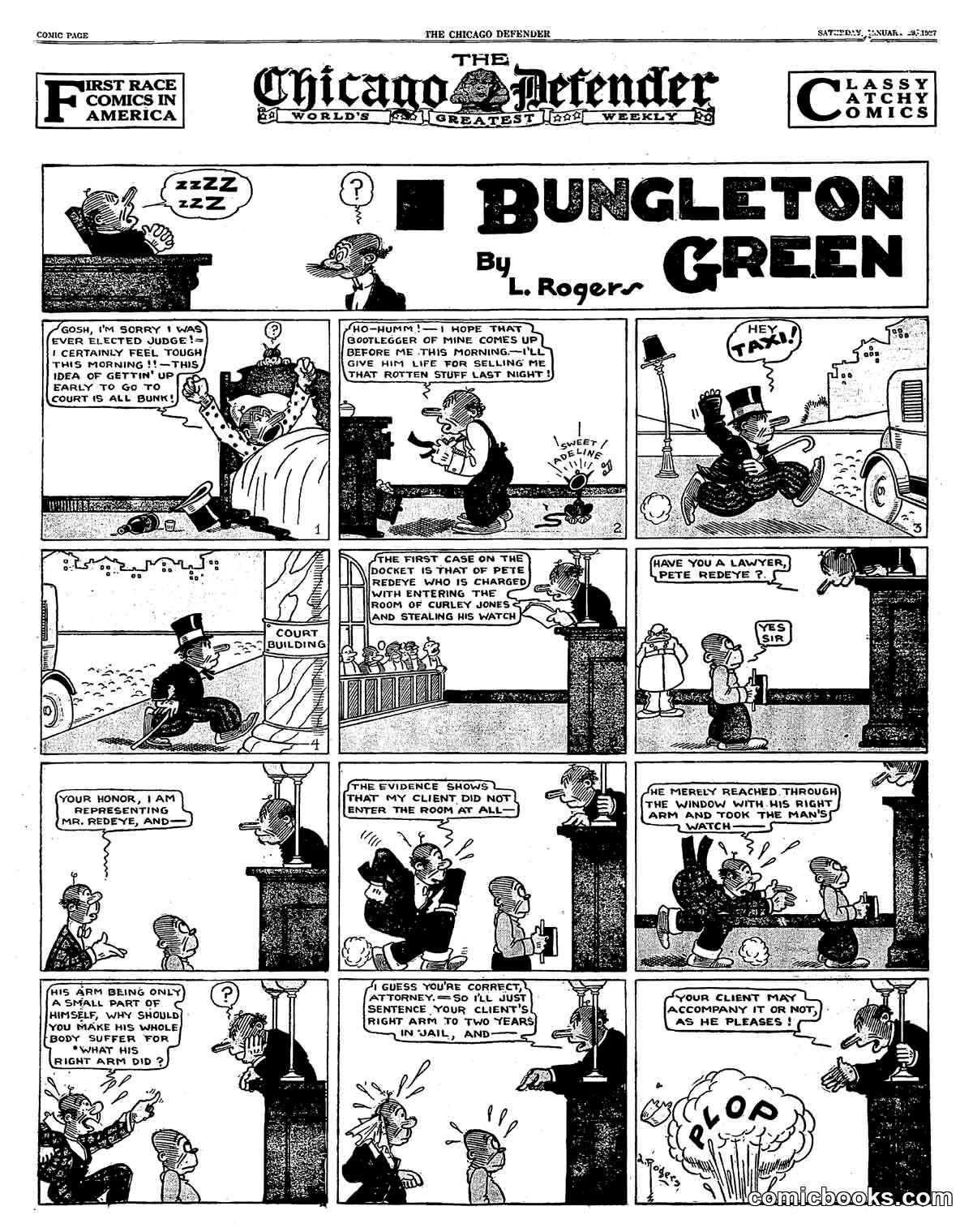
L. Rogers's *Bungleton Green* exemplifies the Sunday newspaper comic strip at its formal peak. The strip employs a nine-panel grid to follow a courtroom narrative: Bungleton, accused of stealing a watch, becomes the unwitting subject of his own lawyer's bumbling defense. Rogers uses sequential art conventions—panel borders, speech balloons, consistent character design—that newspapers had standardized by the 1920s. The humor derives from visual timing and escalating chaos: the lawyer's strategy backfires when evidence of the crime is produced. By this era, comic strips in daily and Sunday papers had become the primary vehicle for visual storytelling in America, directly influencing the format of comic books that would emerge in the 1930s.
Public domain, restored and presented by comicbooks.com public-domain
