From the exhibition
The Captain and the Kids
· February 22, 1925
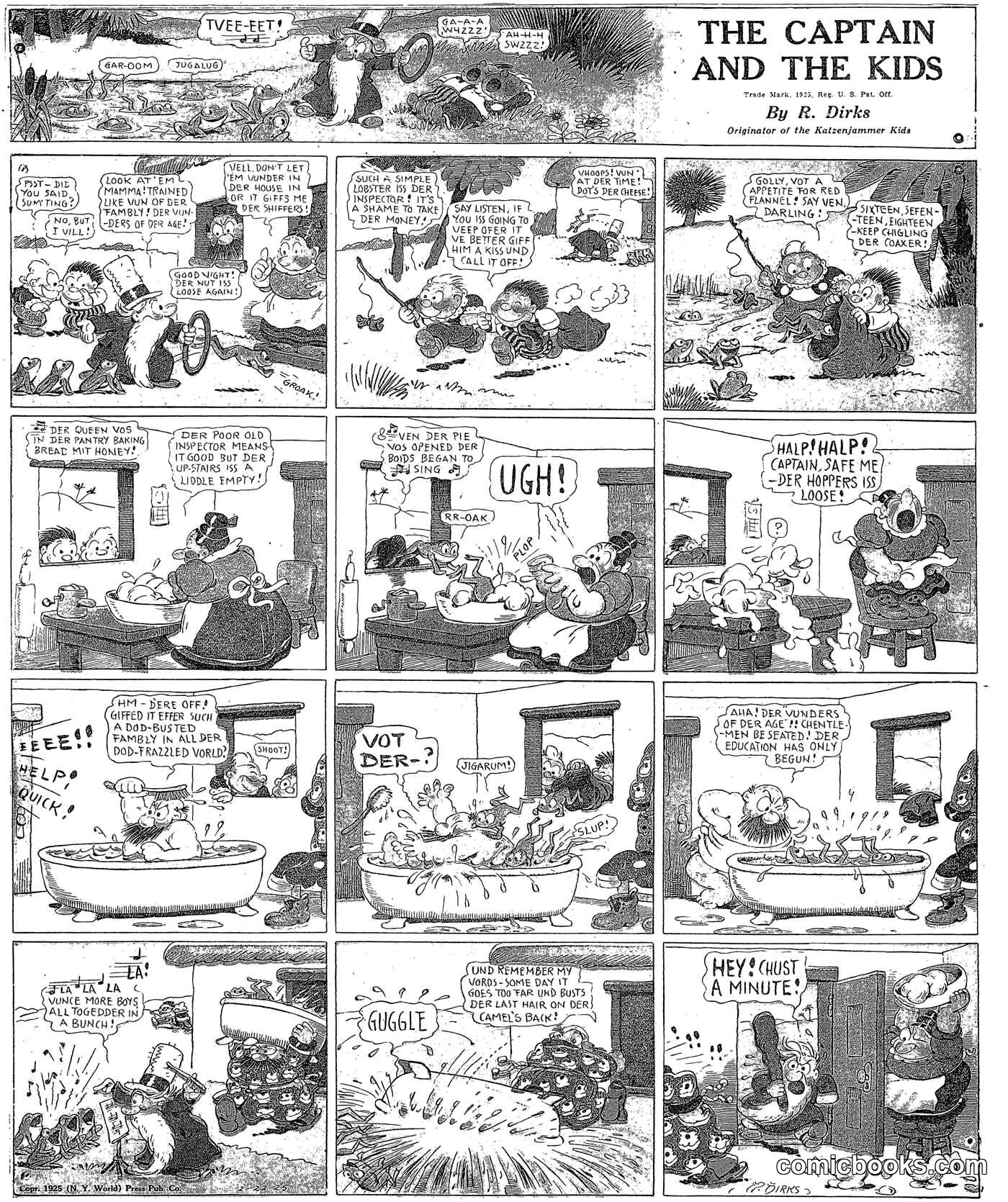
R. Dirks's *Captain and the Kids* exemplifies the Sunday newspaper comic at its peak—a three-tier layout exploiting the full page width, with characters expressed through bold line work and physical comedy. The strip's narrative unfolds across nine panels: mischievous children torment their captain guardian through pranks that escalate from bicycle tricks to a chaotic bathing sequence. Dirks employs the visual vocabulary pioneered by *The Yellow Kid* and *Katzenjammer Kids*: speech balloons anchor dialogue, panel borders guide eye movement, and recurring cast types generate predictable but satisfying gags. The strip's Germanic dialect and immigrant milieu reflect early-twentieth-century newspaper audiences. By the 1920s, such comic strips were the primary mass medium for sequential visual narrative, establishing compositional rules that would define comic books when they emerged as a format in the 1930s.
Public domain, restored and presented by comicbooks.com public-domain
