From the exhibition
Dot Goes to Bed
· 1916
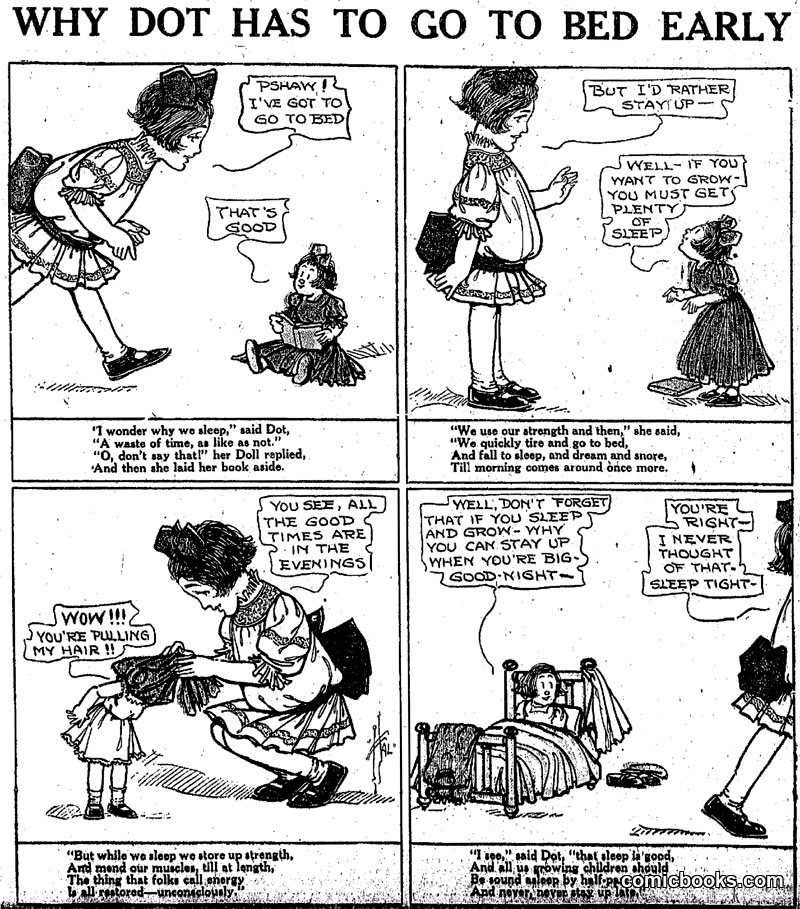
This comic strip follows a young girl named Dot through her bedtime routine, using six panels to develop a simple narrative arc. The mother instructs Dot to sleep early for growth; Dot resists but eventually accepts the logic. The strip employs speech balloons, sequential panel layout, and recurring character relationships—visual conventions that define early newspaper comics. By the 1910s, Sunday strips and daily serials had become a primary showcase for comic art, establishing the medium's foundational grammar: panel borders directing reader flow, dialogue advancing plot, and character expressions conveying emotion. Such domestic humor strips populated American newspapers, entertaining families while normalizing the visual language that would shape the comic book form.
Public domain, restored and presented by comicbooks.com public-domain
