From the exhibition
Etta Kett
· early 1930s
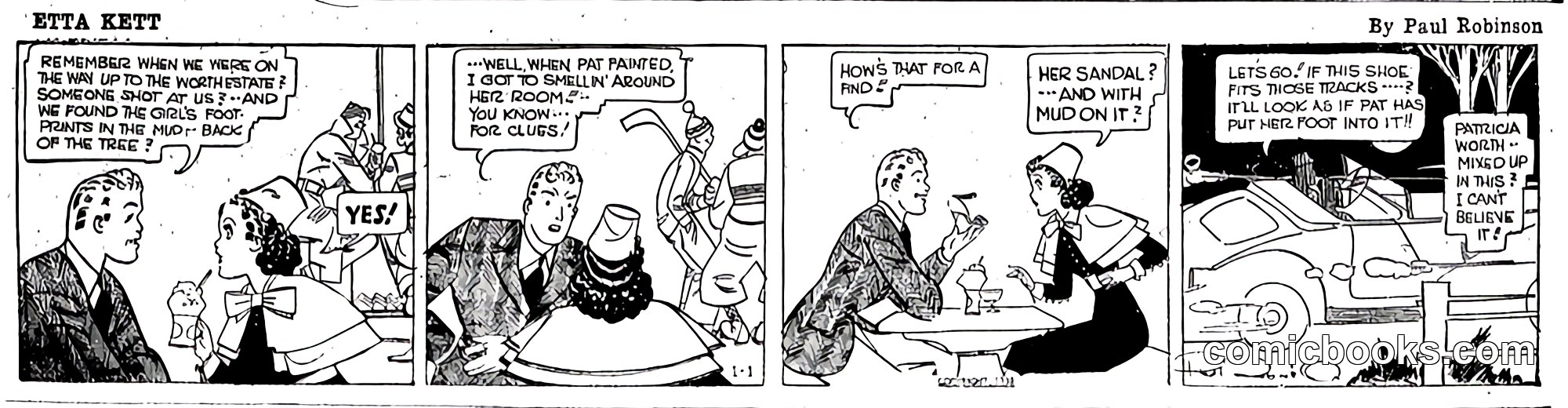
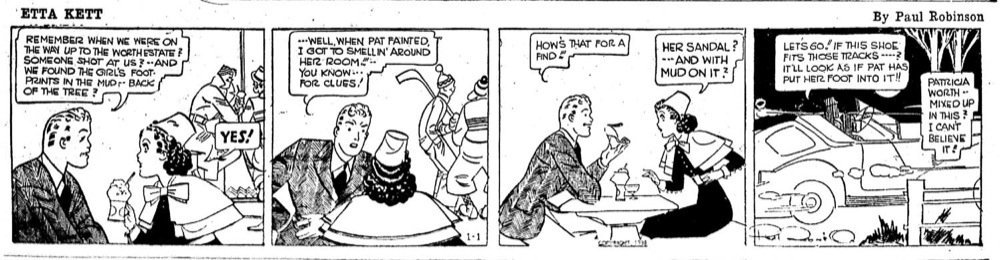
Paul Robinson's *Etta Kett* follows a young woman navigating romantic entanglements and social mishaps. This strip exemplifies the daily newspaper comic's visual economy: compact panels, speech balloons advancing plot and character, and recurring protagonists whom readers followed across decades. The strip's humor turns on misunderstanding and physical comedy—a shoe mix-up, a scandal narrowly averted—stock devices of stage farce adapted to sequential art. By the 1920s–30s, newspaper comics had established the formal grammar later adopted by comic books: panel borders directing eye movement, dialogue contained in balloons, expressive linework conveying emotion and action. Robinson's crisp draftsmanship and brisk pacing are typical of strips that filled Sunday pages and weekday editions, reaching millions and establishing comics as an indigenous American narrative form before the industry consolidated into the pamphlet format we know today.
Public domain, restored and presented by comicbooks.com public-domain