From the exhibition
Tricky Twidge
· 1935
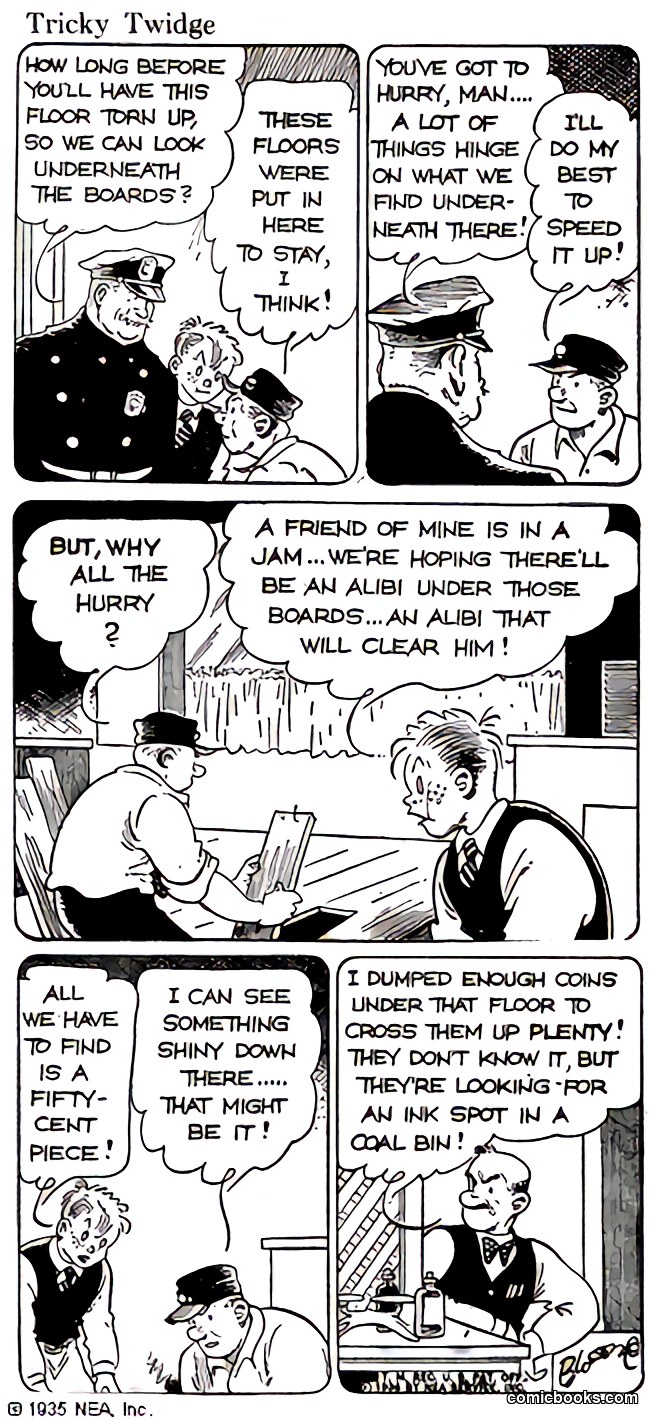
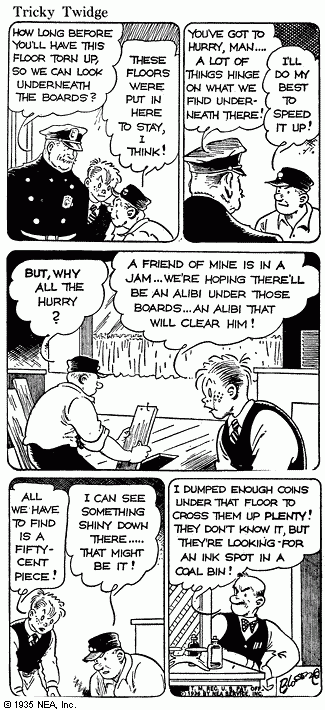
This comic strip exemplifies the visual storytelling conventions that emerged in newspaper comics of the 1930s. The artist uses sequential panels, speech balloons, and expressive line work to develop a multi-panel narrative arc—a criminal scheme unfolding across three tiers. The recurring character Tricky Twidge, identifiable by his distinctive hat and facial features, appears in conversation with authority figures and accomplices, establishing the kind of archetypal characters that populated daily newspaper strips. The dialogue drives plot through efficient exposition while facial expressions convey emotion and intent. By 1935, such formal innovations—panel borders, word-image integration, character consistency—had become standardized visual grammar, allowing readers to follow complex stories in compact spaces. Newspaper comic strips served as the primary laboratory for techniques that would later define comic books.
Public domain, restored and presented by comicbooks.com public-domain