From the exhibition
Freckles and His Friends
· 1920s–1940s
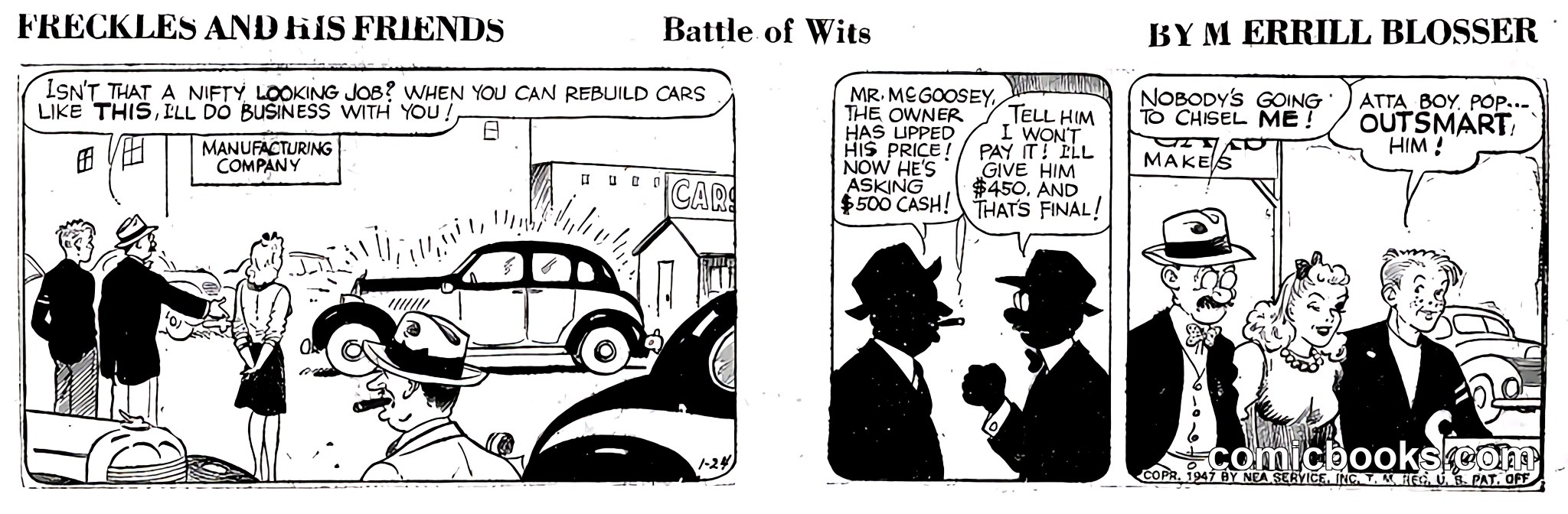
Merrill Blosser's *Freckles and His Friends* exemplified the daily newspaper comic strip: recurring characters in self-contained gags, deployed across multiple panels with speech balloons and visual hierarchy. The left panel shows the strip's central conceit—a boy and his circle navigating small-town American life through economic schemes and social mishaps. The right panels demonstrate the strip's reliance on wordplay and situation comedy, with characters negotiating prices and social standing in rapid-fire exchanges. Strips like this one populated Sunday and weekday papers nationwide, creating the visual language—panel borders, word-balloon placement, character consistency—that became the foundation of the American comic book. Newspaper strips were the primary venue for comics art before the emergence of comic books in the 1930s.
Public domain, restored and presented by comicbooks.com public-domain