From the exhibition
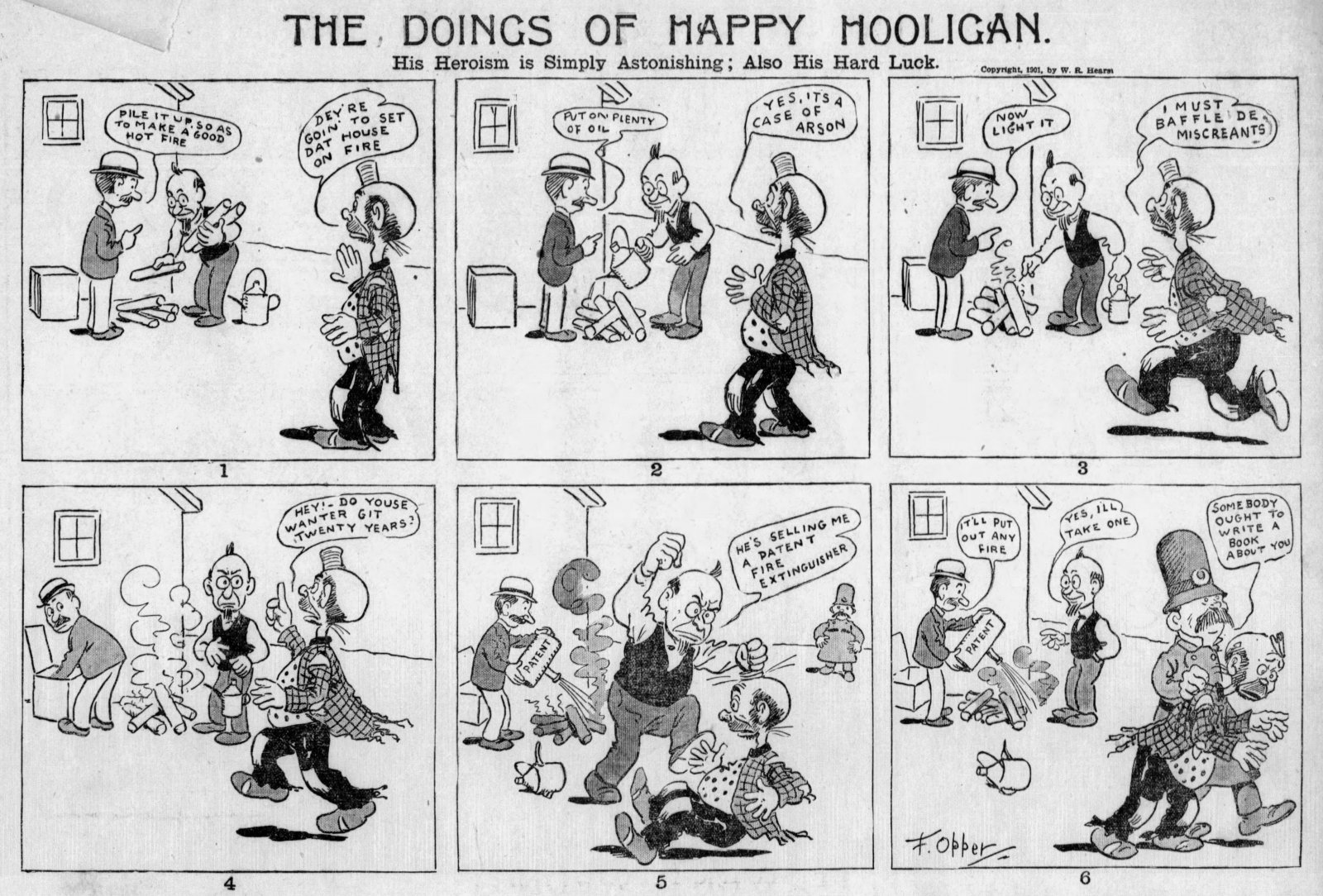
Happy Hooligan — 1901-06-02
· Frederick Burr Opper, 1901
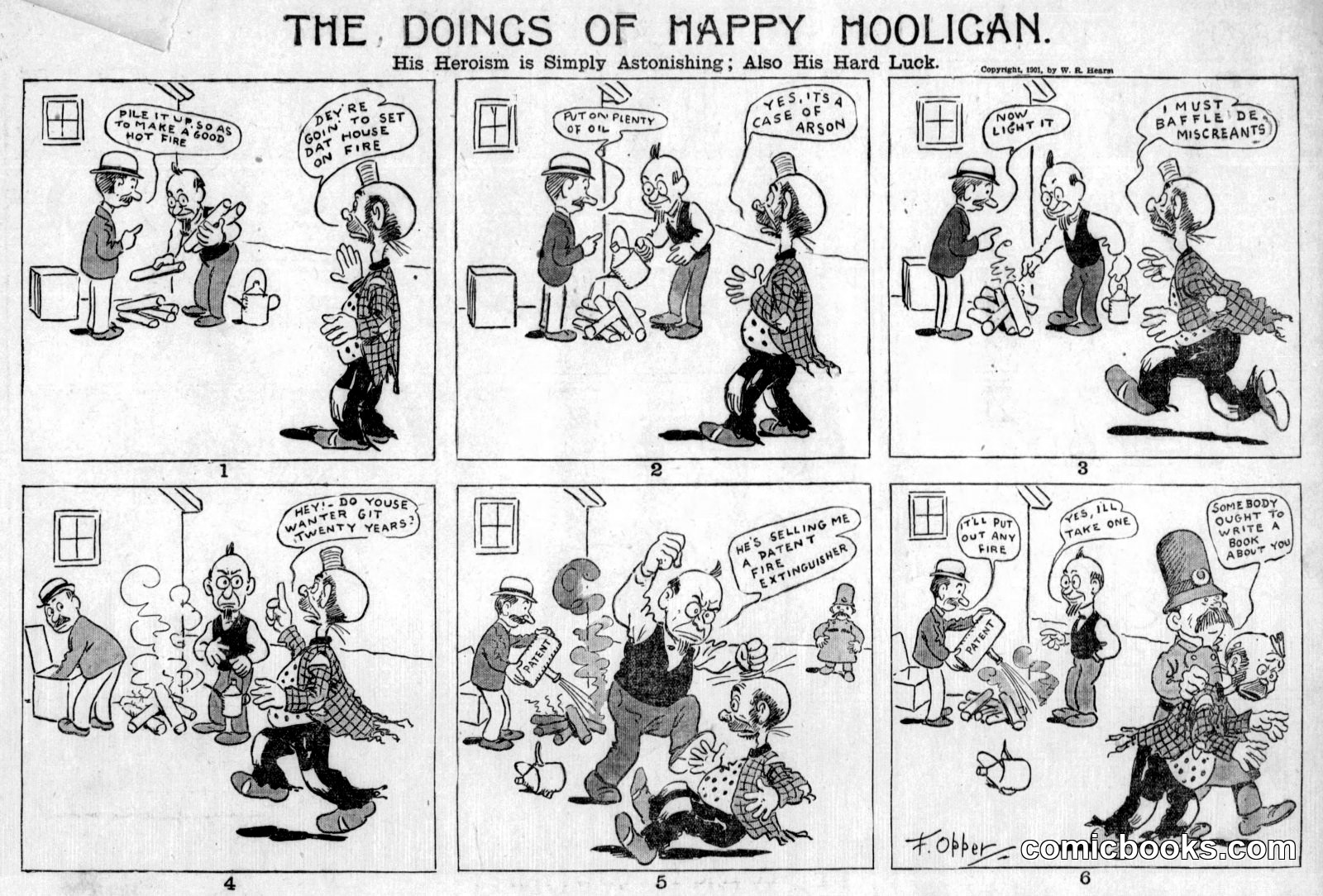
Six panels signed by Frederick Burr Opper track Happy Hooligan—identifiable by his tin-can hat and patched suit—stumbling into an arson scheme. Two conspirators pile wood and douse it with oil; Happy witnesses the crime, announces he will "baffle the miscreants," and instead gets blamed, beaten with a fire extinguisher, and arrested. The final panel has a bystander suggest somebody ought to write a book about him. Opper's line is loose and kinetic, with expressive limbs and speech balloons carrying distinct dialect spelling. Running in Hearst Sunday pages from 1900, *Happy Hooligan* helped cement the recurring-character strip as a commercial fixture. These Hearst and Pulitzer Sunday supplements—printed in color, distributed nationally—are the direct ancestors of the comic book format, establishing panel grids, balloon dialogue, and slapstick seriality as the medium's foundation.
Public domain, restored and presented by comicbooks.com public-domain