From the exhibition
Happy Hooligan — 1901-06-23
· Frederick Burr Opper, 1901
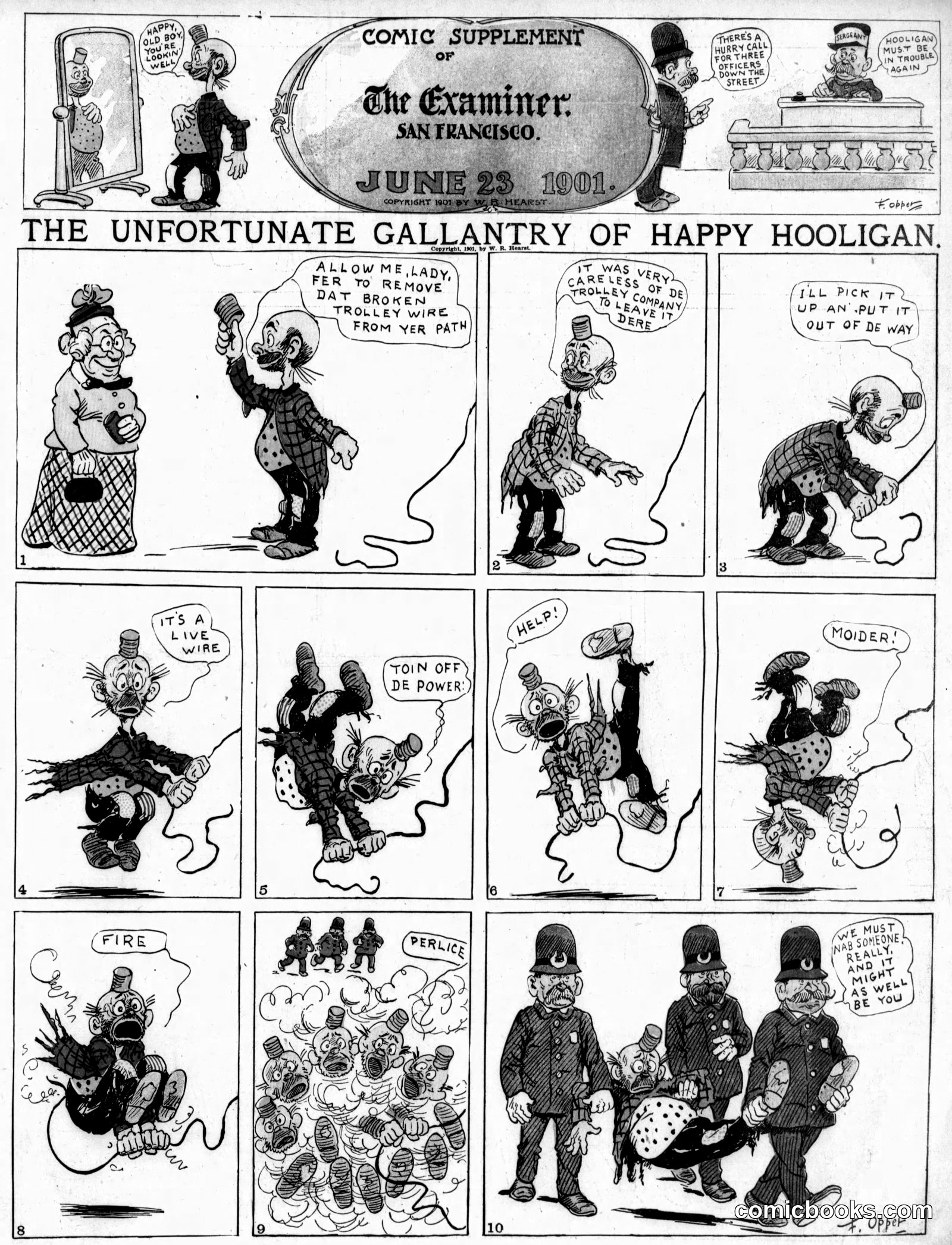
Ten panels follow Happy Hooligan — the tin-canned tramp in his signature battered pail hat — through a ruinous act of chivalry. Spotting a downed trolley wire, he offers to clear it for a passing woman, discovers it is live, gets electrocuted, causes a fire, draws a crowd, and is promptly arrested by two stolid policemen who admit they simply need *someone* to blame. Opper's draftsmanship is loose and kinetic: figures buckle and spark, speech balloons carry phonetic dialect, and the eight-panel grid builds comic momentum with clockwork precision. Published in Hearst's *San Francisco Examiner*, strips like this one were the true cradle of the American comic book — recurring characters, sequential panels, expressive balloon lettering — a visual grammar Opper helped invent and which print artists would refine for the next century.
Public domain, restored and presented by comicbooks.com public-domain
