From the exhibition
Happy Hooligan — 1901-07-07
· Frederick Burr Opper, 1901
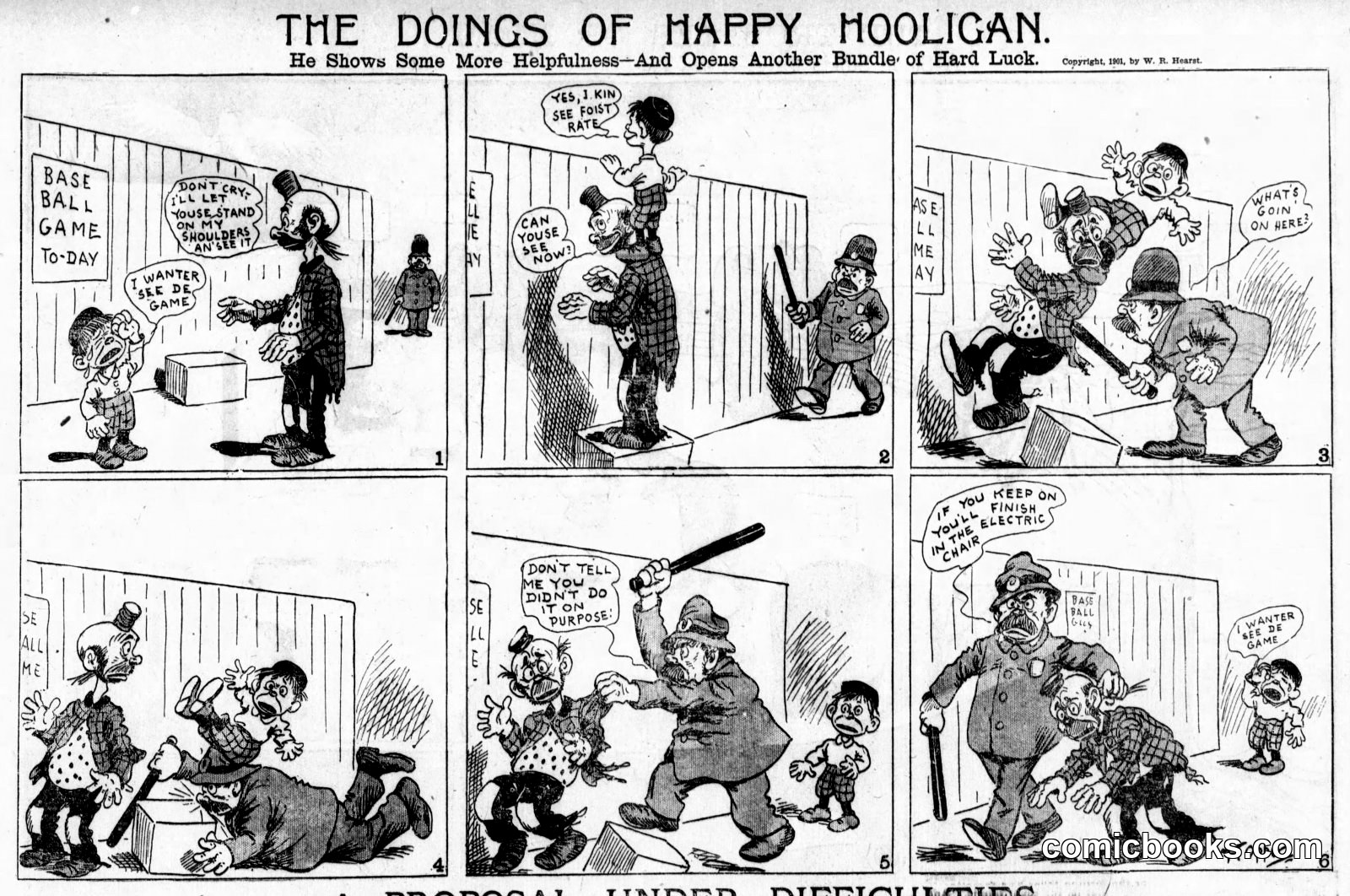
Six panels follow Happy Hooligan—identifiable by his tin-can hat and clown-suit polka dots—as he hoists a small child onto his shoulders outside a baseball game so the boy can see over the fence. A policeman misreads the scene, a scuffle topples everyone, and Happy ends up threatened with the electric chair while the boy still plaintively wants to see the game. Opper's line is loose and kinetic; speech balloons carry phonetic dialect and drive the slapstick timing. Syndicated in Hearst papers from 1900, *Happy Hooligan* helped fix the conventions—recurring characters, sequential panels, integrated lettering—that Sunday newspaper comic pages exported worldwide and that directly seeded the comic-book format of the 1930s.
Public domain, restored and presented by comicbooks.com public-domain
