From the exhibition
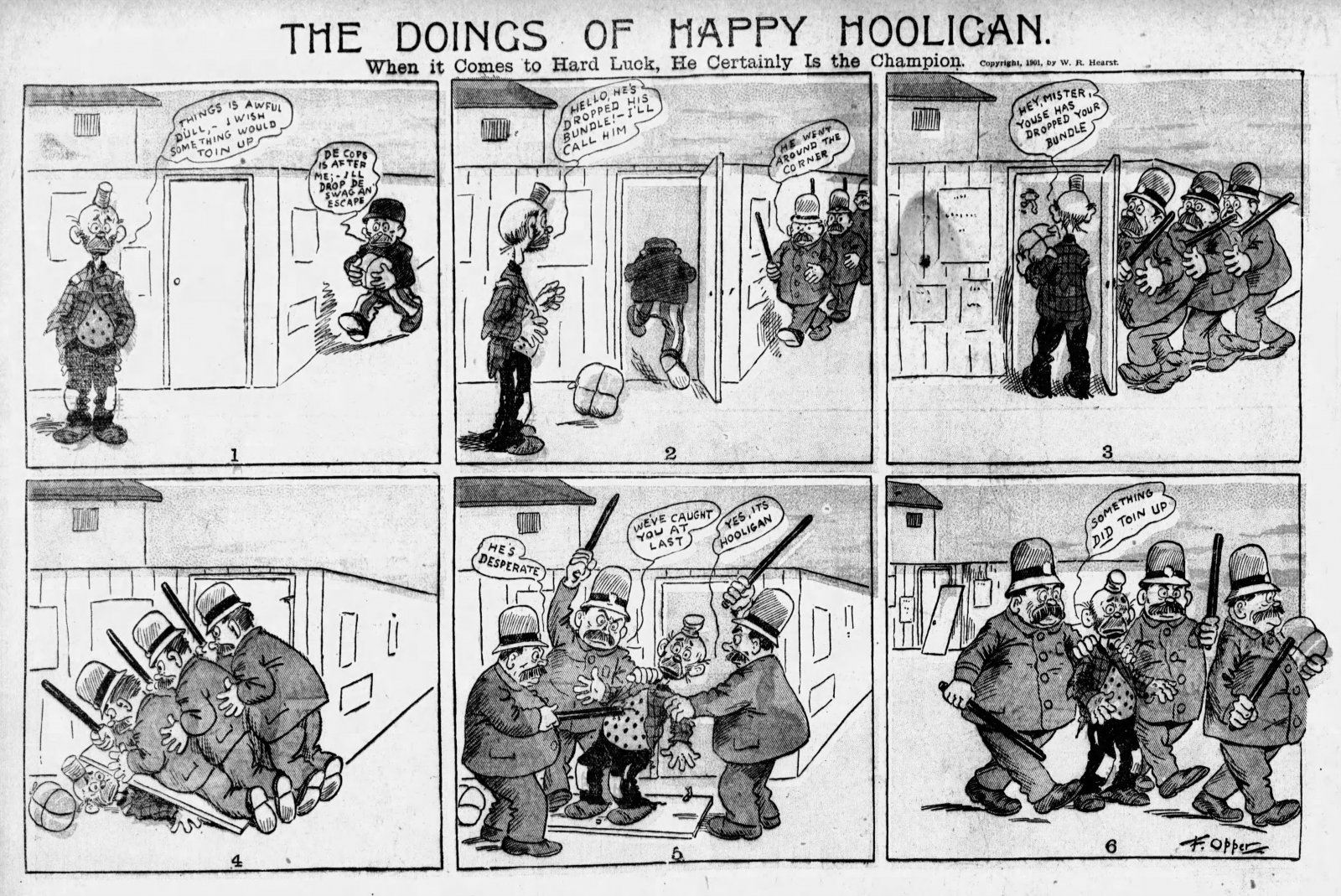
Happy Hooligan — 1901-09-22
· Frederick Burr Opper, 1901
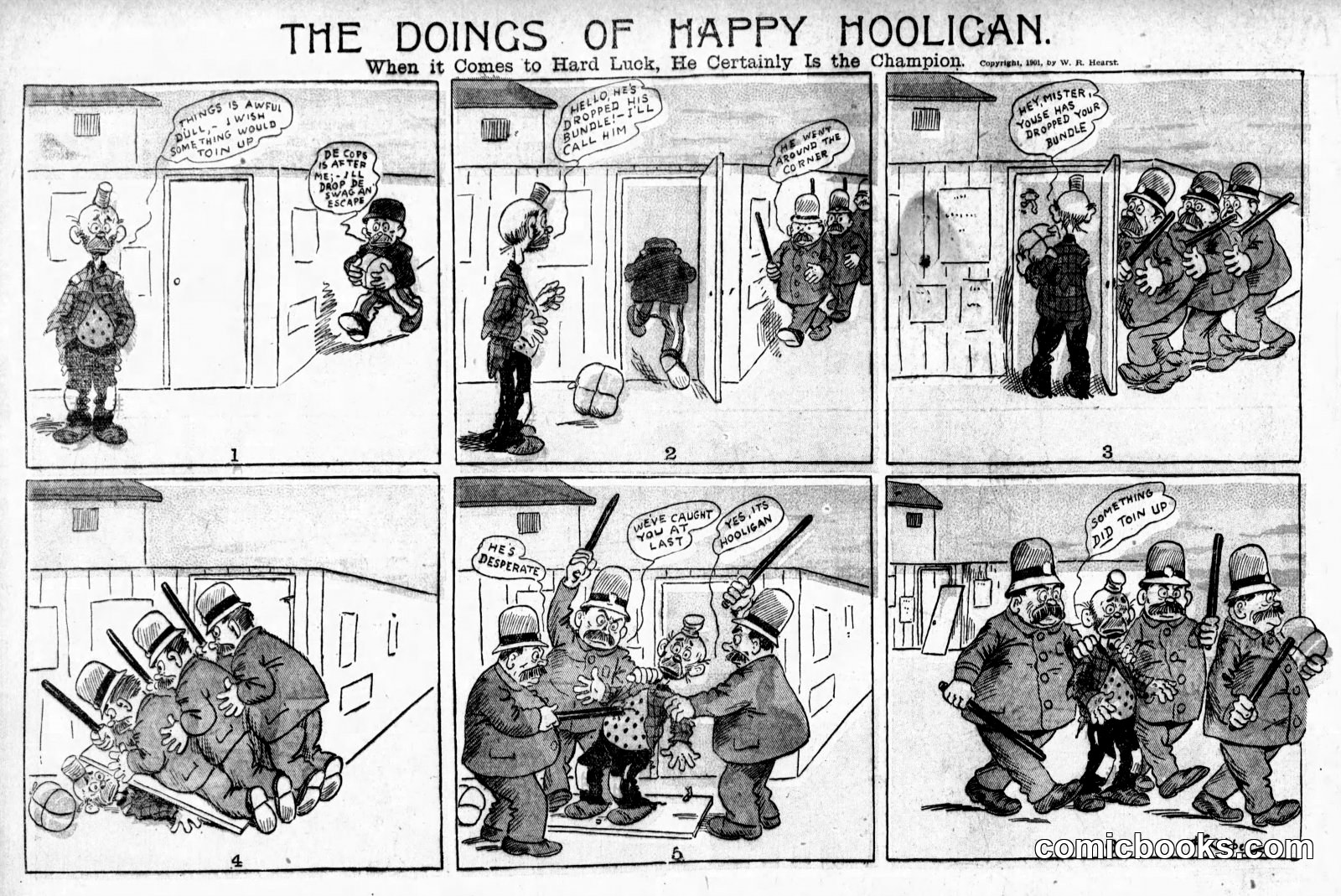
Six panels follow Happy Hooligan—tin-can hat, ragged coat, perpetual good intentions—as he spots a dropped bundle, chases down its owner, and is promptly beaten and arrested by a squad of thick-necked policemen who mistake his help for crime. Opper's linework is loose and kinetic: figures tumble, batons swing, and speech balloons carry working-class dialect ('things is awful dull'). The strip ran in Hearst's Sunday papers beginning 1900 and exemplifies how the American newspaper page industrialized the comic form—regularized panel grids, recurring characters, integrated lettering—creating the template that would eventually migrate into the saddle-stitched pamphlets we call comic books. Opper, already a celebrated *Puck* cartoonist, brought editorial draftsmanship to the funny pages and helped establish the gag strip as a weekly institution.
Public domain, restored and presented by comicbooks.com public-domain