From the exhibition
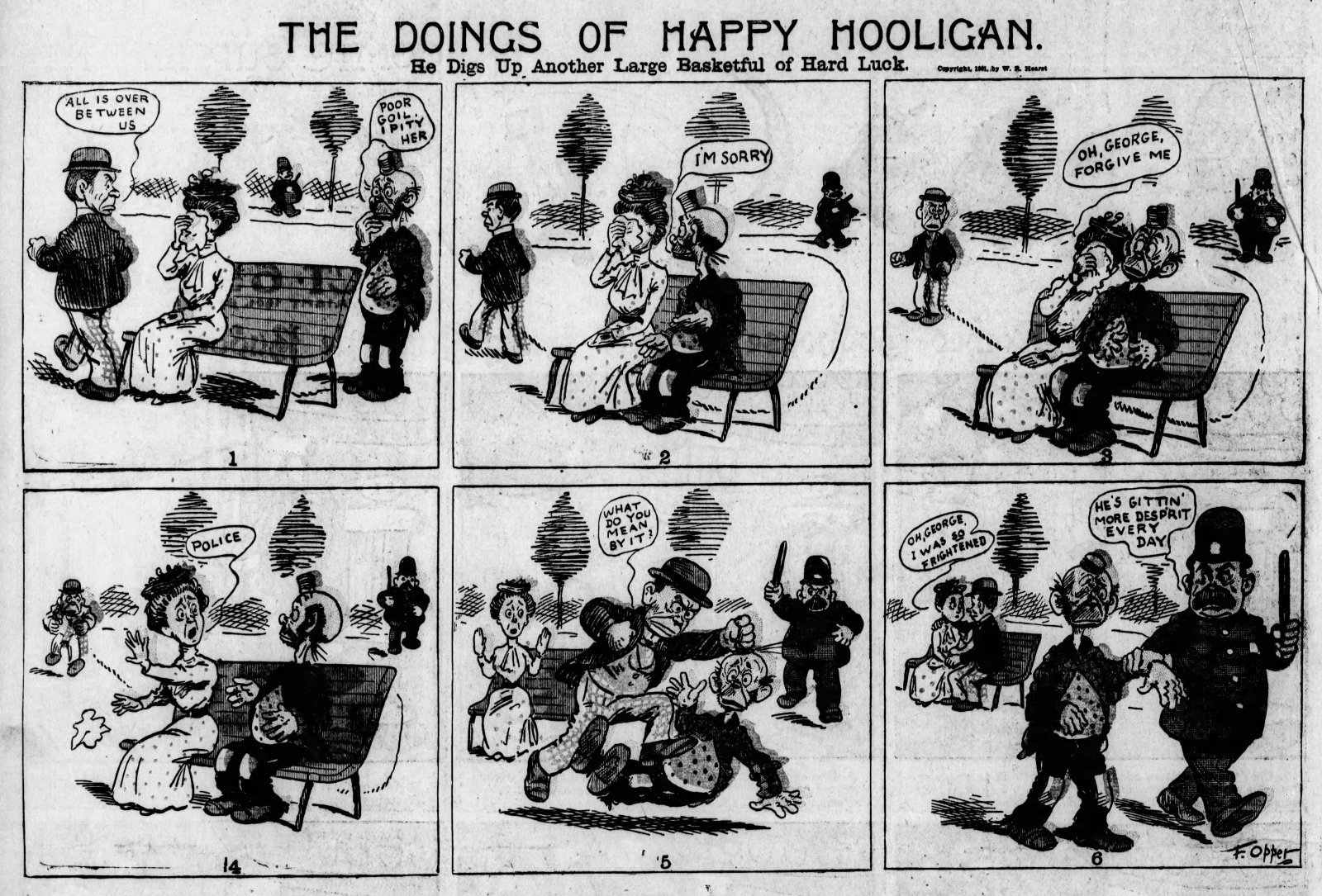
Happy Hooligan — 1901-10-06
· Frederick Burr Opper, 1901
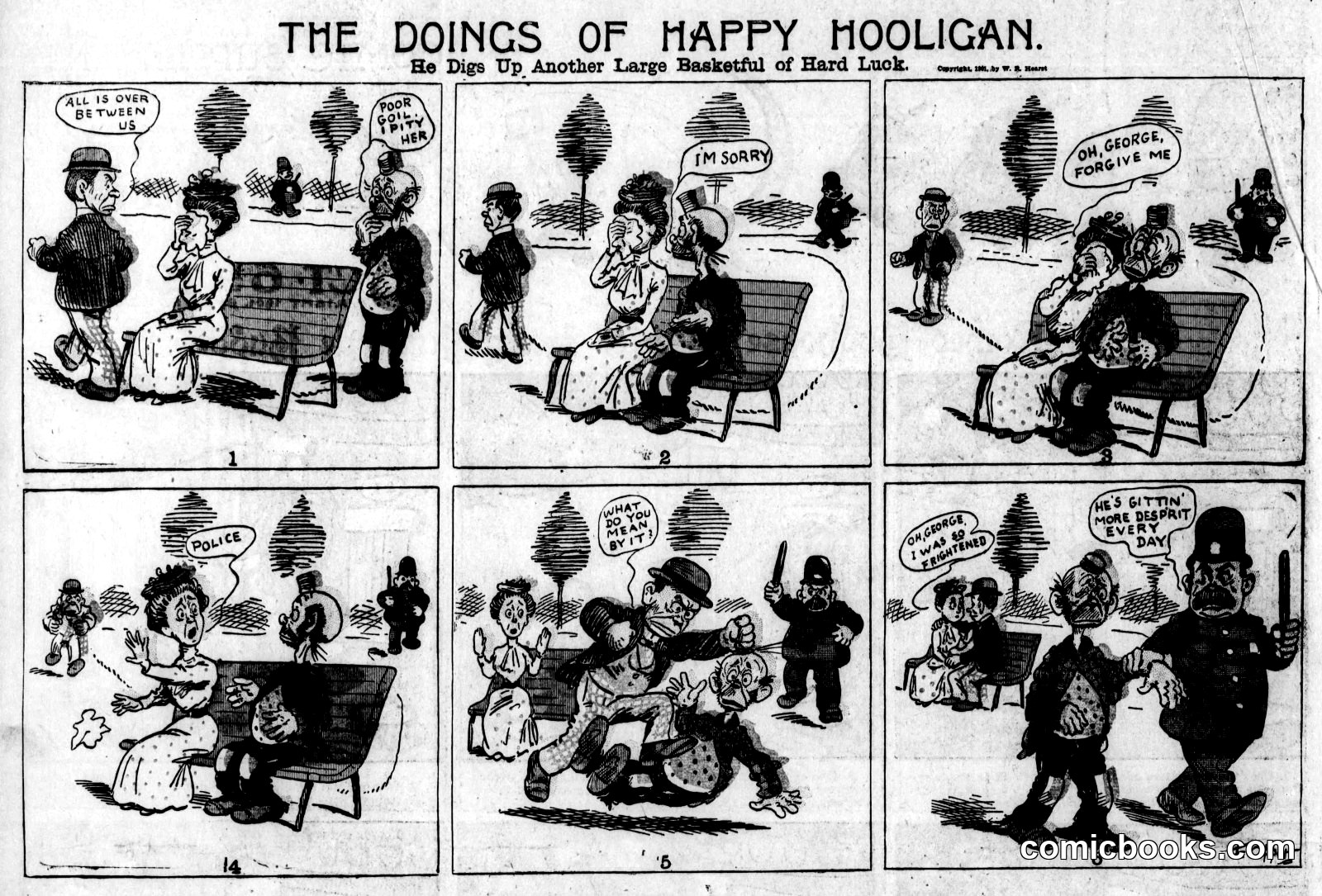
Six panels follow Happy Hooligan—tin-can hat, ragged suit—as he overhears a woman weeping on a park bench over a broken romance, attempts to console her, and is promptly beaten by a policeman and dragged away while the couple reconciles. The gag is mechanical and cruel in the classic vaudeville sense: good intentions punished by comic violence. Opper's draftsmanship is loose and kinetic; speech balloons anchor each beat with economical dialogue. *Happy Hooligan* ran in Hearst papers from 1900 and was among the Sunday-page strips that taught readers to follow sequential panels as narrative—a grammar that would migrate, within four decades, directly into the comic book format.
Public domain, restored and presented by comicbooks.com public-domain