From the exhibition
Happy Hooligan — 1901-11-10
· Frederick Burr Opper, 1901
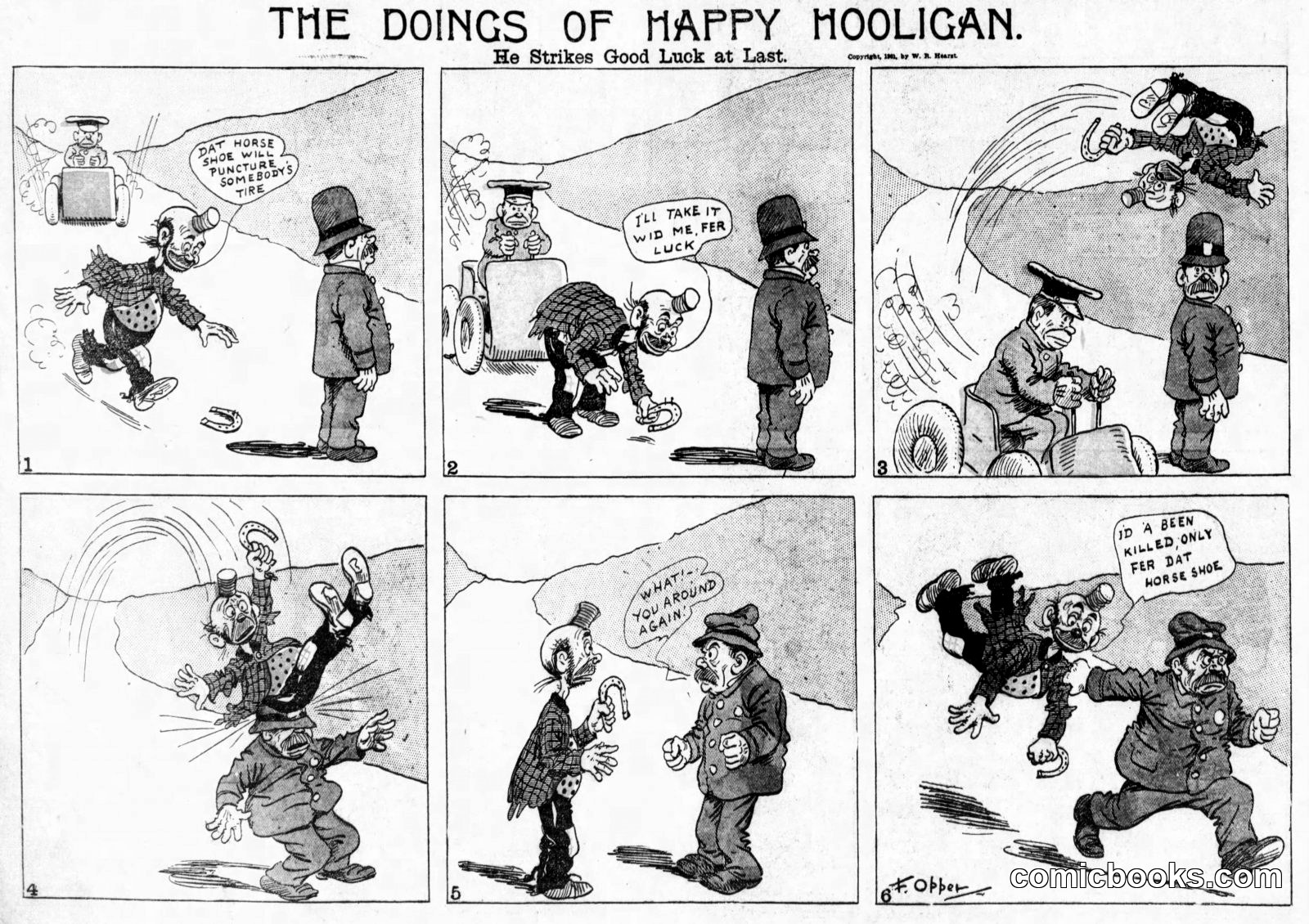
Six panels follow Happy Hooligan—a tin-can-hatted tramp in checkered coat—who finds a horseshoe in the road, pockets it for luck, and promptly causes a wealthy motorist's tire to blow. Launched by Opper in 1900 for William Randolph Hearst's syndicate, the strip belongs to the founding generation of American newspaper comics: pages where artists like Opper, Outcault, and McManus invented the visual grammar still in use today—recurring cast, sequential panels, speech balloons carrying vernacular dialect. Hooligan's slapstick irony (good-luck charm produces disaster) ran weekly for over two decades, and strips like it, printed as Sunday supplements and collected into pamphlets, directly prefigured the comic book format. Opper's loose, expressive line and comic timing remain immediately readable a century later.
Public domain, restored and presented by comicbooks.com public-domain
