From the exhibition
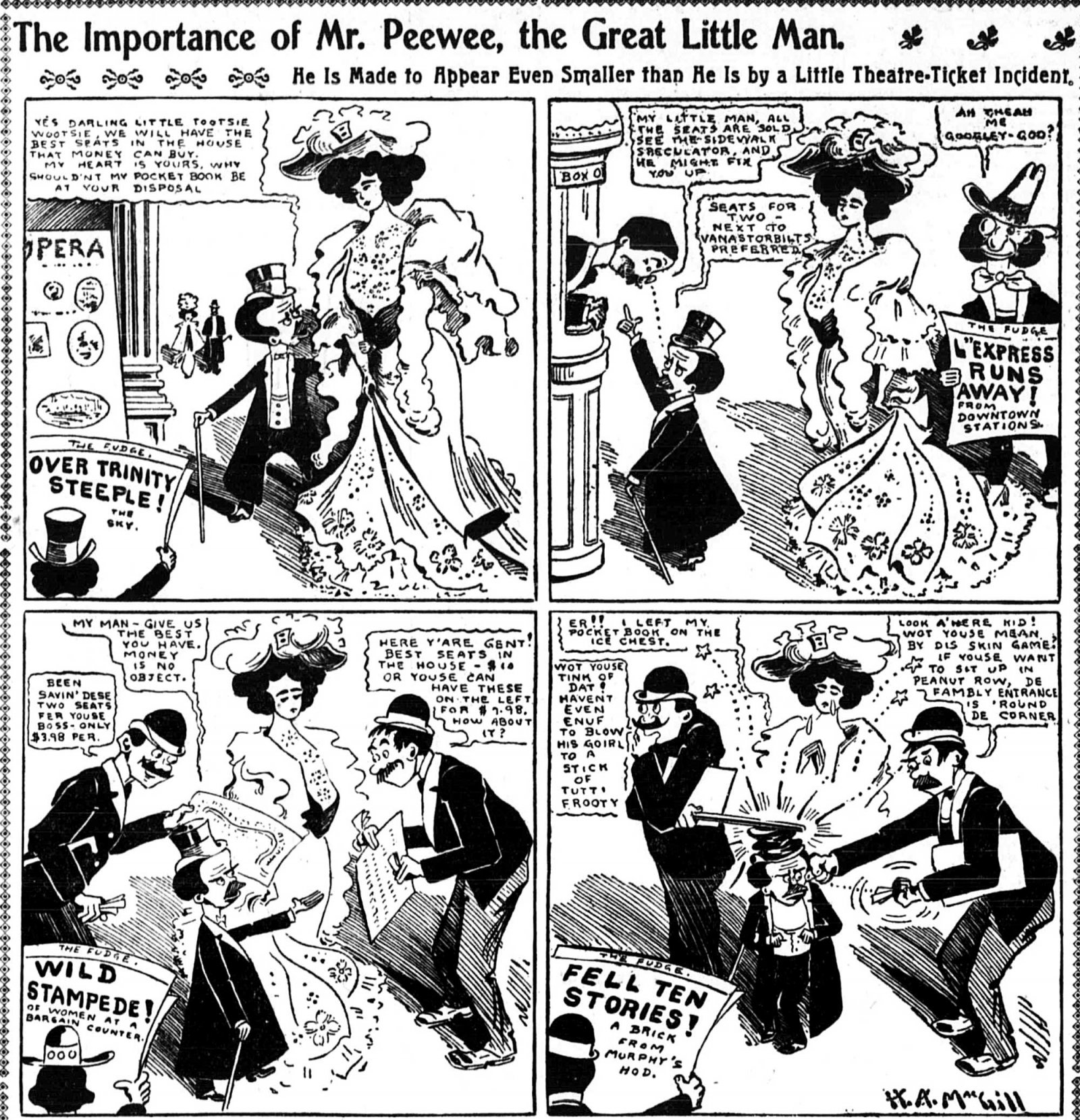
The Importance of Mr. Peewee, the Great Little Man
· Early 1900s
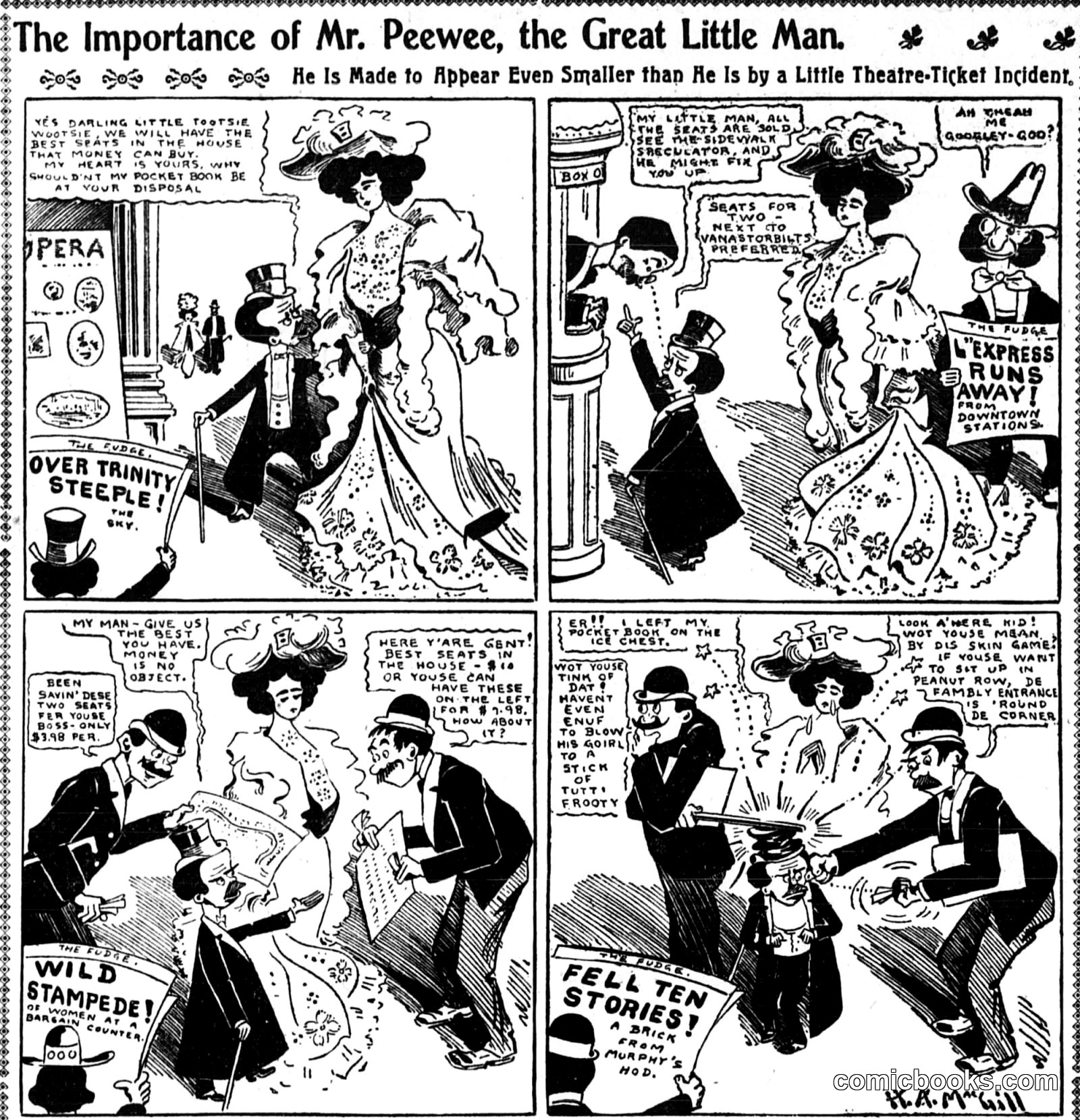
This newspaper comic strip follows Mr. Peewee, a diminutive character whose small stature becomes a running joke across four panels. The strip employs the visual conventions that defined early newspaper comics: sequential panels with speech balloons, recurring characters, and sight gags built on physical contrast. Men in top hats tower over the tiny protagonist as he moves through urban settings—a theater, a street corner—creating humor from scale and social awkwardness. The artist uses bold black ink lines and hatching typical of newspaper reproduction, with exaggerated facial expressions and body language to convey comedic timing. This strip exemplifies how Sunday pages and dailies became laboratories for visual storytelling, establishing the grammar of panel layout and character-driven narrative that would become foundational to the comic book medium.
Public domain, restored and presented by comicbooks.com public-domain