From the exhibition
The Ins and Outs of Coffee and Sinkers
· Early 1900s
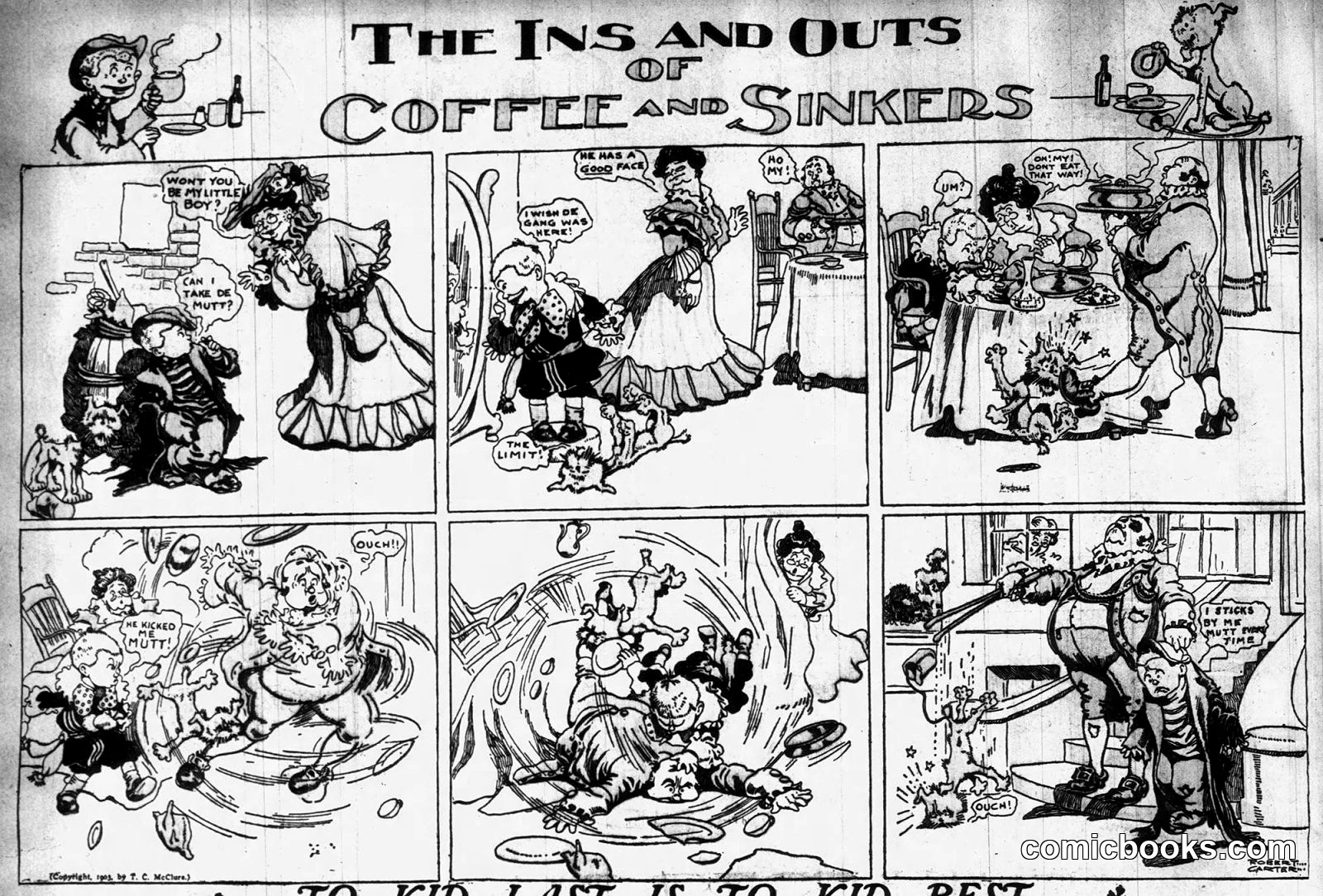
This Sunday newspaper comic employs the visual language that defined early sequential art: multiple rectangular panels arranged in a grid, speech balloons containing character dialogue, and recurring cast members in domestic and public settings. The strip's humor derives from physical comedy and social observation—patrons and servers in cafes and kitchens engaged in slapstick mishaps. The artist uses dynamic linework and detailed cross-hatching to convey motion and chaos across six panels, a standard format for Sunday supplements. By the early 1900s, such strips were the primary laboratory for what would become the comic book medium, establishing panel transitions, character consistency, and visual gags as foundational storytelling techniques.
Public domain, restored and presented by comicbooks.com public-domain
