From the exhibition
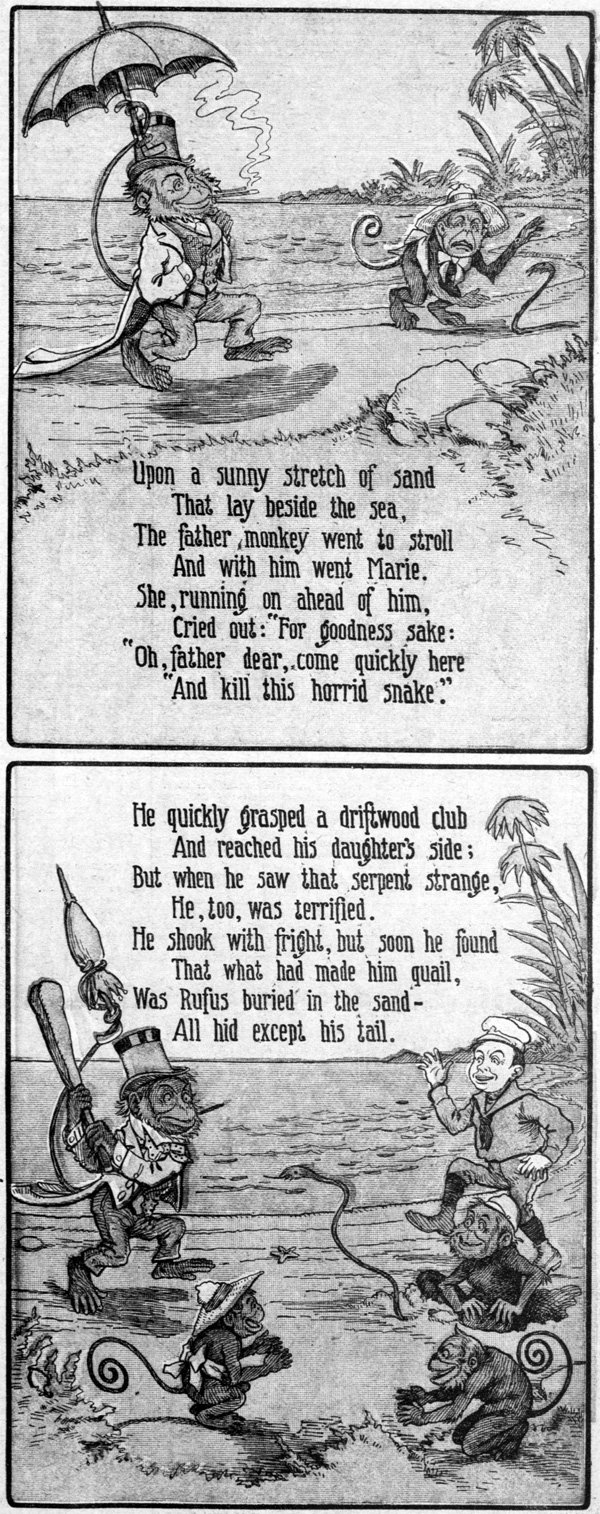
Father Monkey and Marie
· April 20, 1901
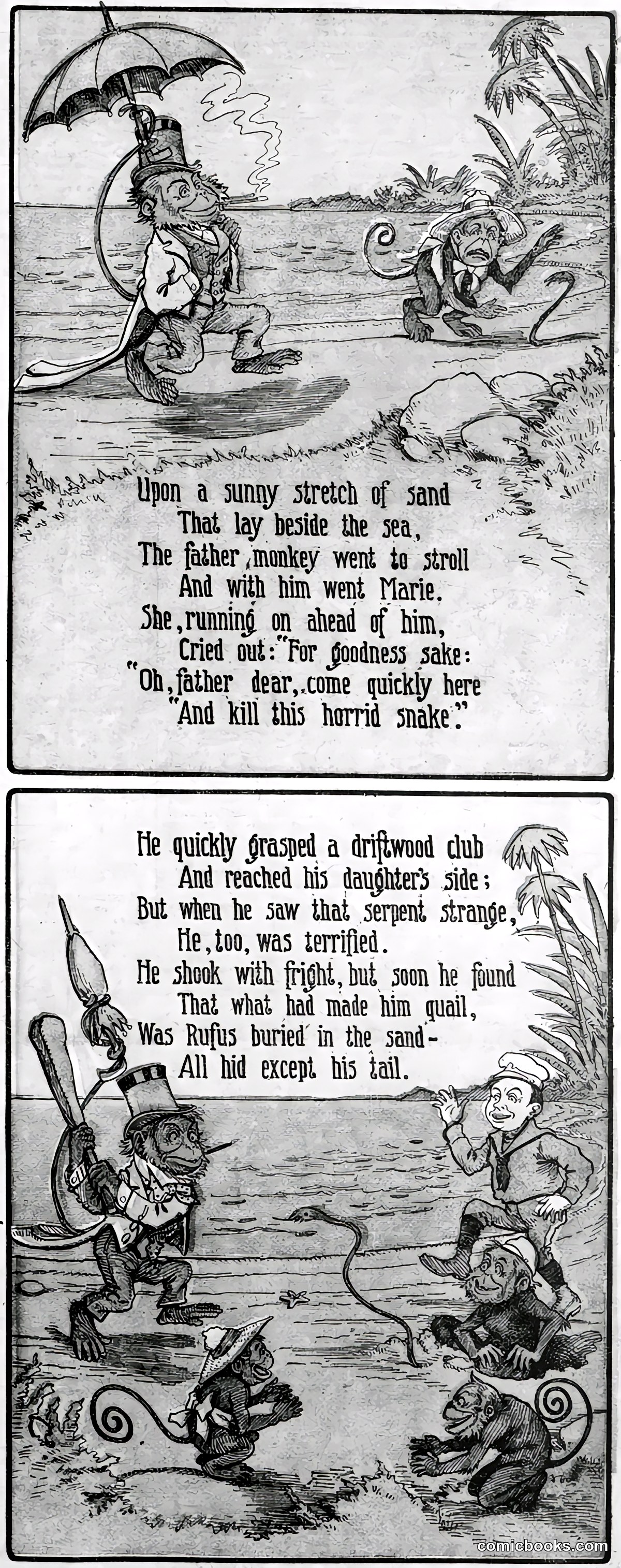
This two-panel narrative strip tells a sequential story across the page: a father monkey protects his daughter Marie from a snake on a beach, grasps a club to defend her, then discovers the serpent is actually Rufus, buried in sand with only his tail visible. The strip employs the visual conventions that define early comic narrative—panel division, speech balloons, recurring animal characters, and sequential action that unfolds left-to-right. The humor depends on recognition of character and situation developing across panels, a technique central to newspaper comic strips that emerged in the 1890s and became the foundation of comic book storytelling. Anthropomorphic animals provided artists with flexible vehicles for domestic humor and adventure.
Public domain, restored and presented by comicbooks.com public-domain