From the exhibition
Laughterville
· February 22, 1925
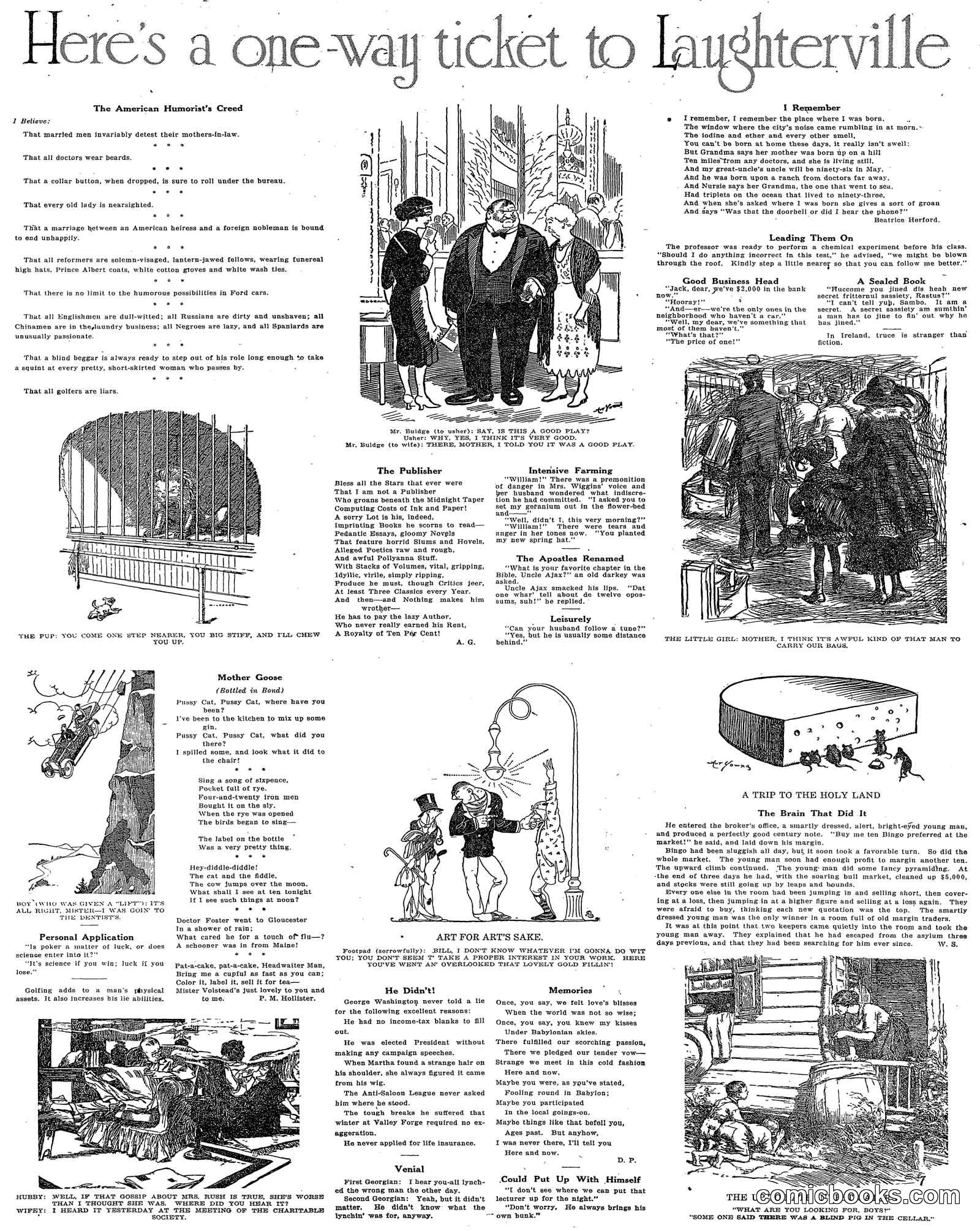
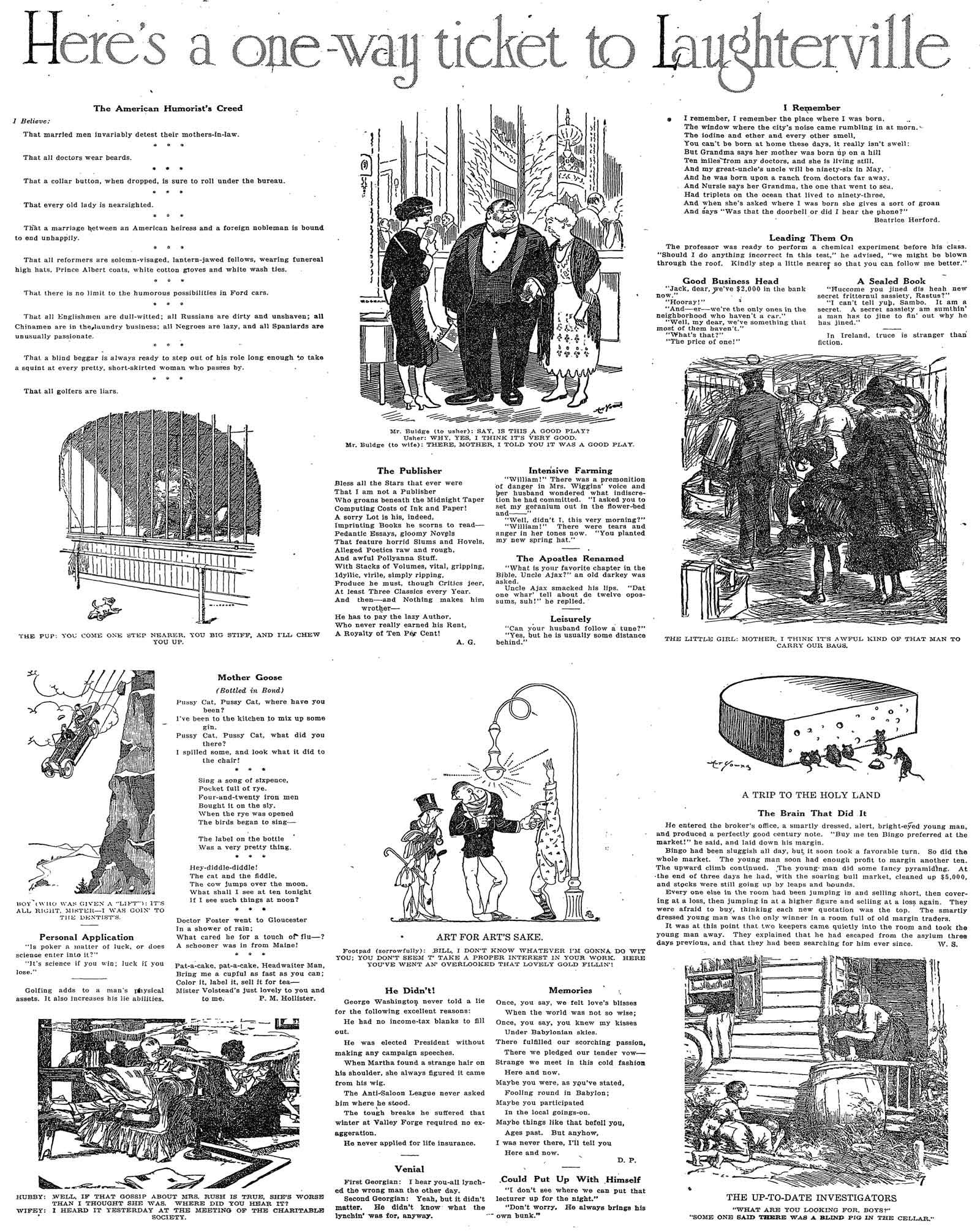
This Sunday newspaper page demonstrates the full visual toolkit of 1920s comics: multiple independent gag strips stacked vertically, each with recurring characters, speech balloons anchoring humor to specific moments, and sequential panels that control pacing and reveal. The layout—six to eight short narratives per page—was standard practice. Artists working in this format pioneered the grammar that would define comic books: the panel as unit of time, dialogue contained within balloons, character consistency across strips. Each gag strip here runs three to four panels, building setup and payoff through visual sequence rather than text alone. This page economy, where economic constraints forced maximum information density, shaped how comics would eventually function as a medium.
Public domain, restored and presented by comicbooks.com public-domain