From the exhibition
Nobody Loves a Fat Man
· 1909
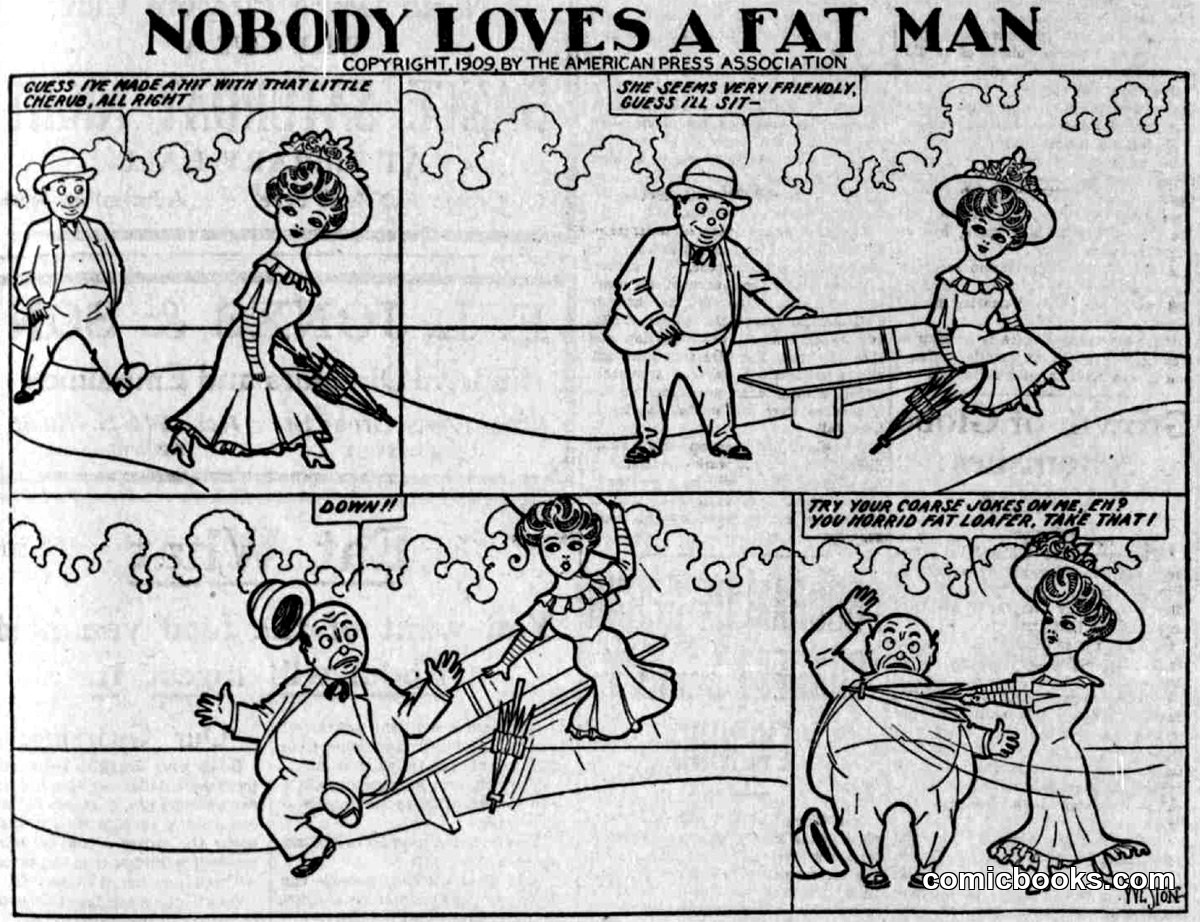
This comic strip demonstrates the visual conventions that defined early newspaper comics: sequential panels with speech balloons, physical slapstick gags, and a narrative arc spanning six frames. A portly man becomes the target of repeated pratfalls—tripped by a woman with her parasol, knocked down by a seesaw, tangled in rope. The strip's humor relies entirely on visual storytelling and exaggerated character animation. By 1909, newspaper comics had established their fundamental grammar: the panel border to divide time, dialogue integrated into images, and recurring body types as comedic shorthand. These Sunday color strips and daily sequences were the direct predecessors of the comic book form, teaching readers how to parse sequential art and establishing the artist's role as visual narrator.
Public domain, restored and presented by comicbooks.com public-domain
