From the exhibition
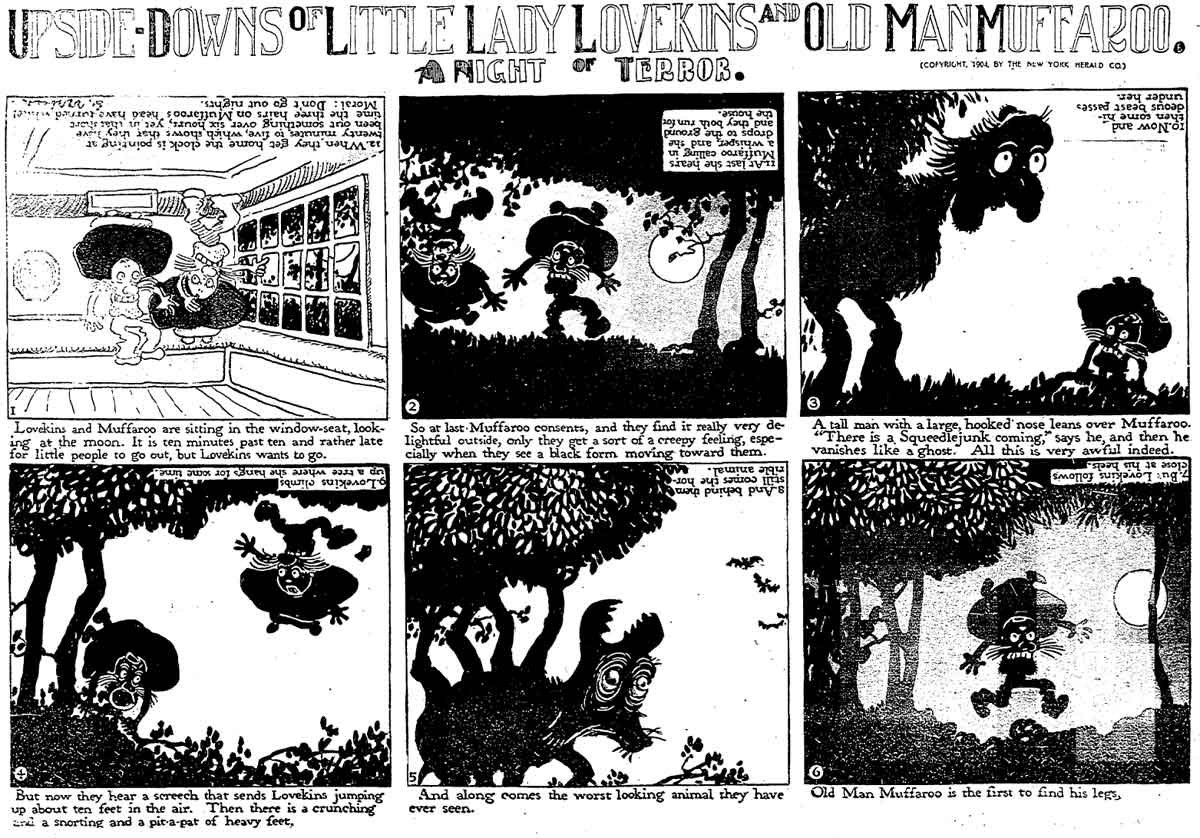
Upside-Downs of Little Lady Lovekins and Old Man Muffaroo: A Night of Terror
· Early 1900s
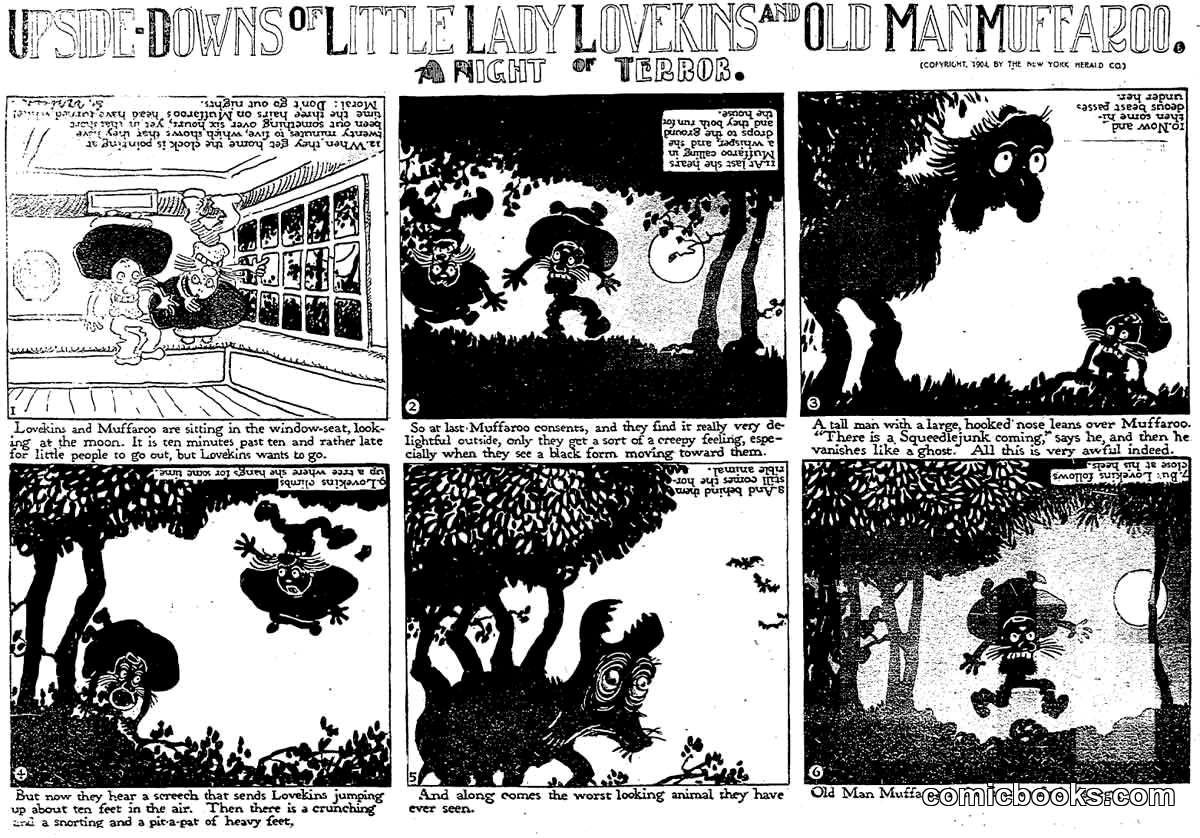
This Sunday newspaper strip exemplifies the visual innovations that transformed sequential art into comic narrative. Panels flow left to right and top to bottom, establishing spatial and temporal sequence through layout alone. Speech balloons contain character dialogue; captions below each panel advance plot. The artist employs silhouette and high-contrast black-and-white drawing to create mood and movement—chase scenes, grotesque creatures, and slapstick encounters unfold through precise panel progression. Recurring characters like Lovekins and Muffaroo anchor ongoing narratives across multiple installments. Such Sunday pages, printed in newspapers nationwide, reached millions of readers and became the direct precursor to bound comic books, establishing the formal language—panel borders, balloon placement, character consistency—that comics still employ today.
Public domain, restored and presented by comicbooks.com public-domain