From the exhibition
Wunst Upon a Time
· Early 20th century
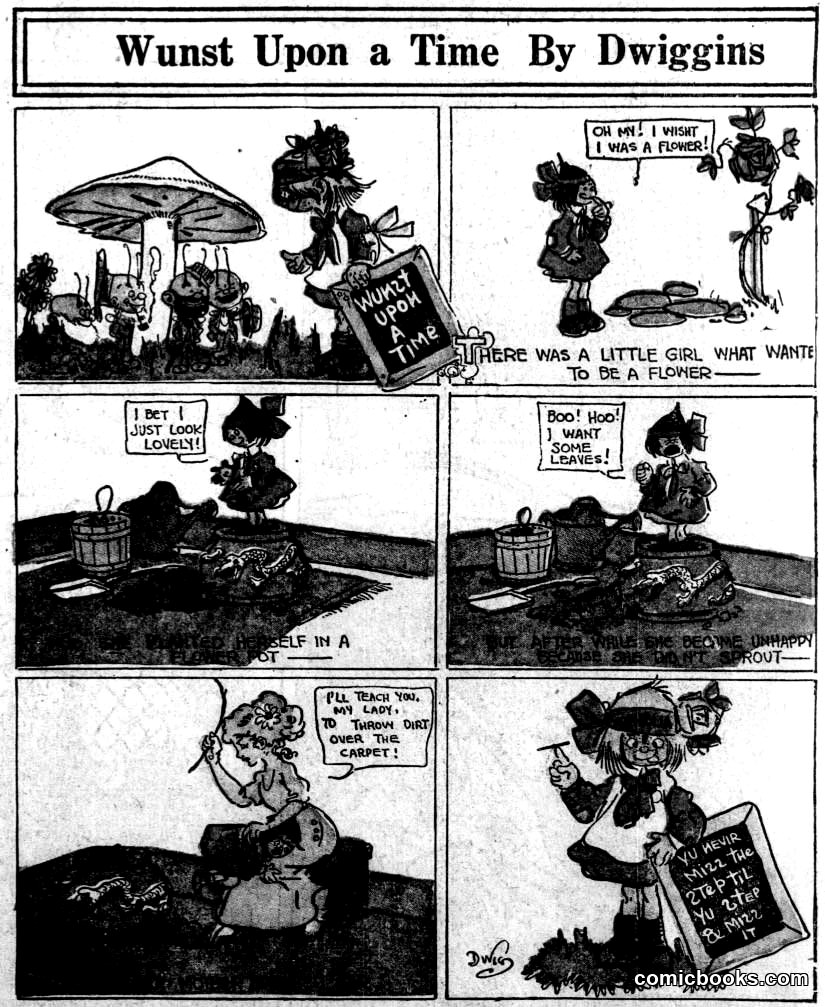
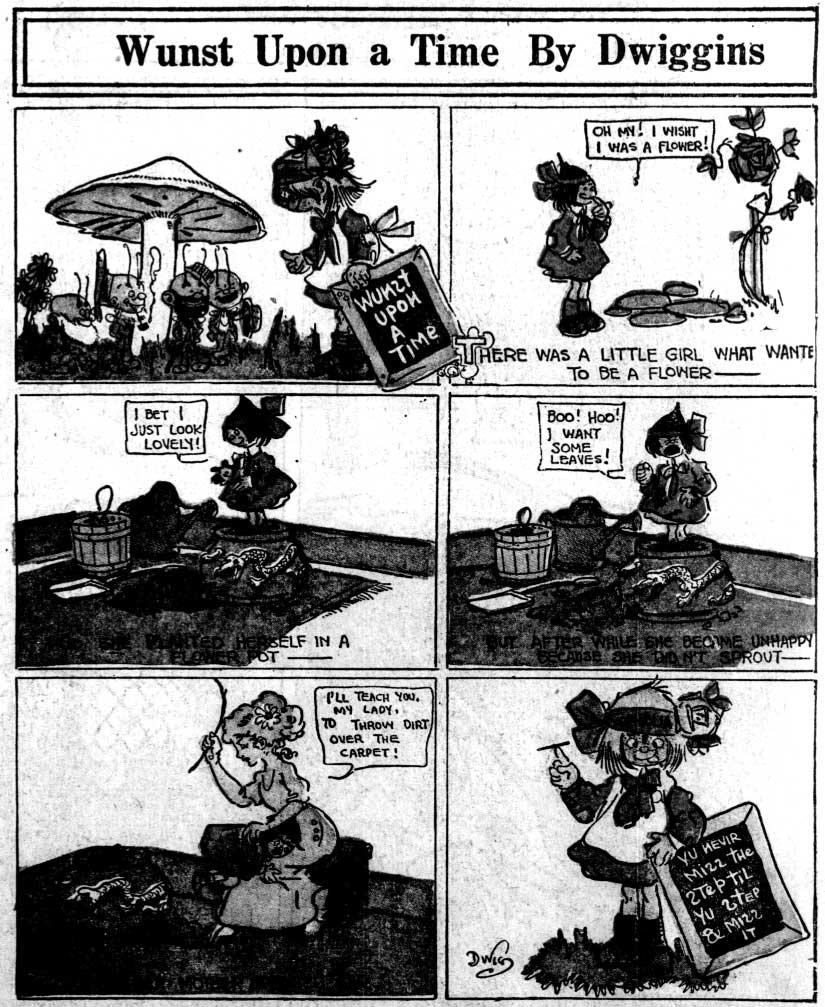
Dwiggins' *Wunst Upon a Time* employs the visual storytelling conventions that newspaper comics pioneered: sequential panels with speech balloons, exaggerated character silhouettes, and narrative progression. Here, a girl's wish to become a flower sets off a chain of transformations told across six panels. The strip demonstrates how early newspaper comics adapted fairy-tale structures to the medium's formal grammar—panel borders, gesture-driven action, and dialogue integration. This visual vocabulary, developed by cartoonists working in dailies and Sunday supplements in the 1900s-1910s, became foundational to comic books themselves.
Public domain, restored and presented by comicbooks.com public-domain