From the exhibition
Petey Dink
· August 22, 1917
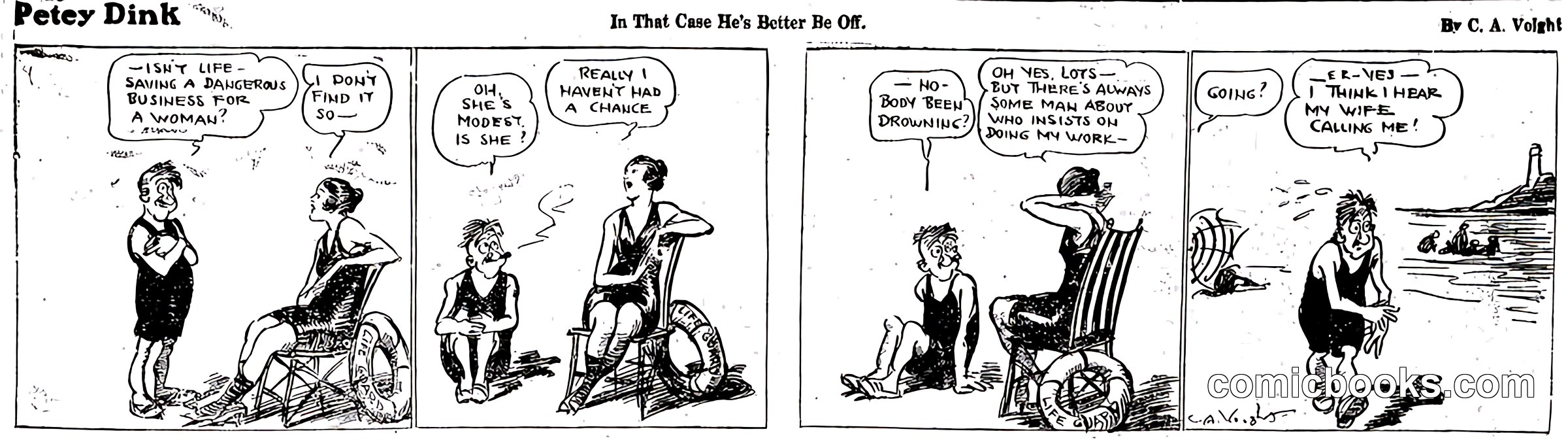
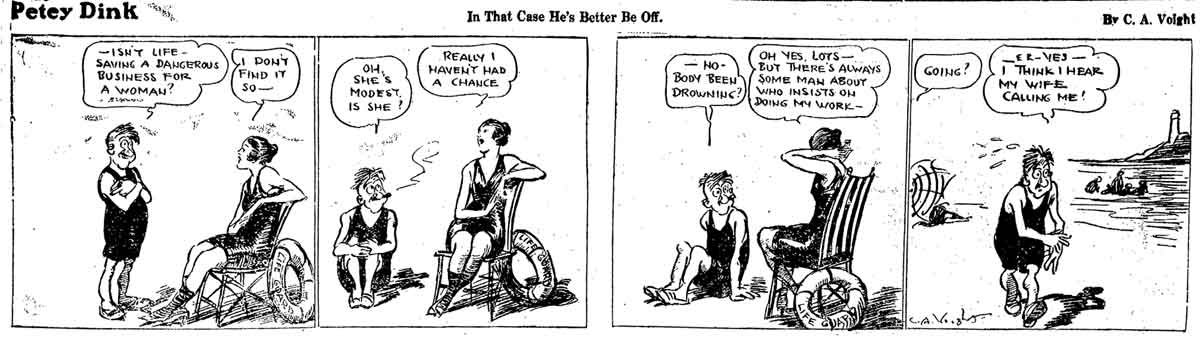
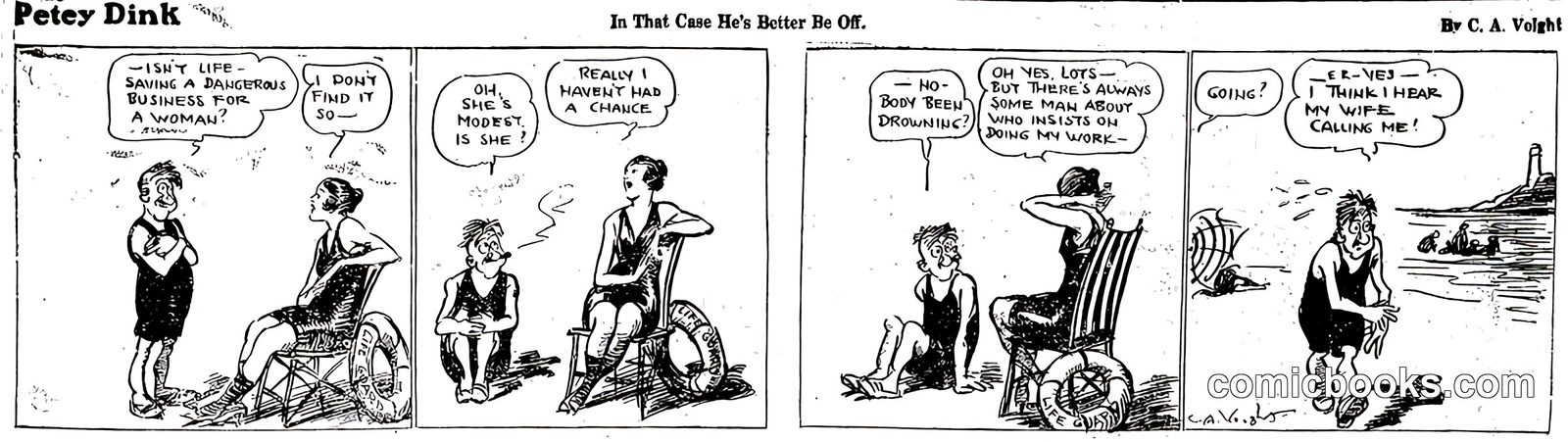
This daily strip follows a small boy navigating domestic life with characteristic mischief. The four-panel sequence uses speech balloons and sequential frames to convey narrative momentum—a visual syntax that newspapers were still perfecting in the 1910s. Petey's scheming, his interactions with adults, and the physical comedy of his situations anchor the humor in observable childhood behavior. By this period, the daily comic strip had become a staple of American papers, establishing conventions of character consistency, panel layout, and dialogue that would define the medium for decades. Artists working in newspapers during this era developed the fundamental grammar of comics: the repeated protagonist, the escalating gag structure, and the marriage of drawing and text that made visual storytelling both economical and engaging for mass audiences.
Public domain, restored and presented by comicbooks.com public-domain