From the exhibition
Salesman Sam: A False Alarm
· April 14, 1928
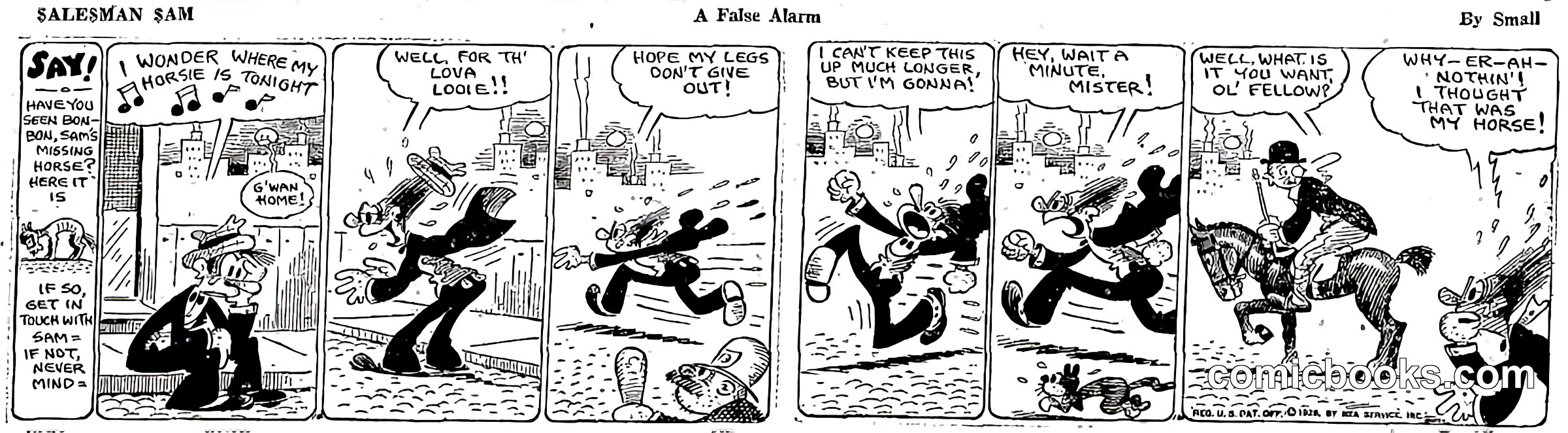
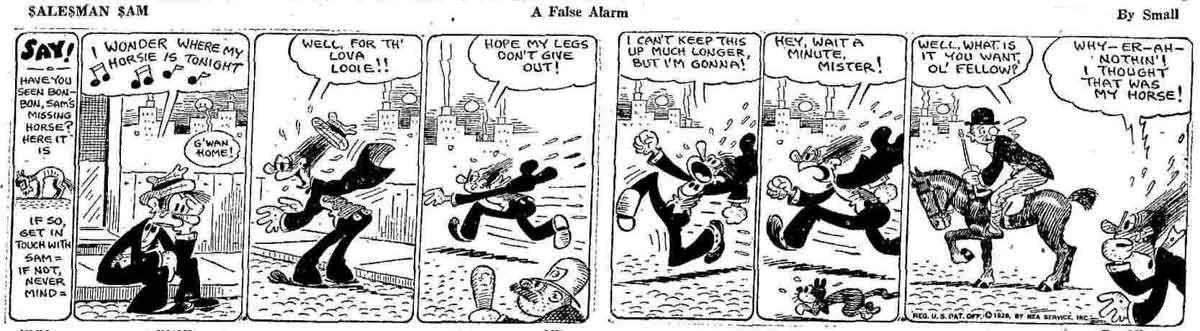
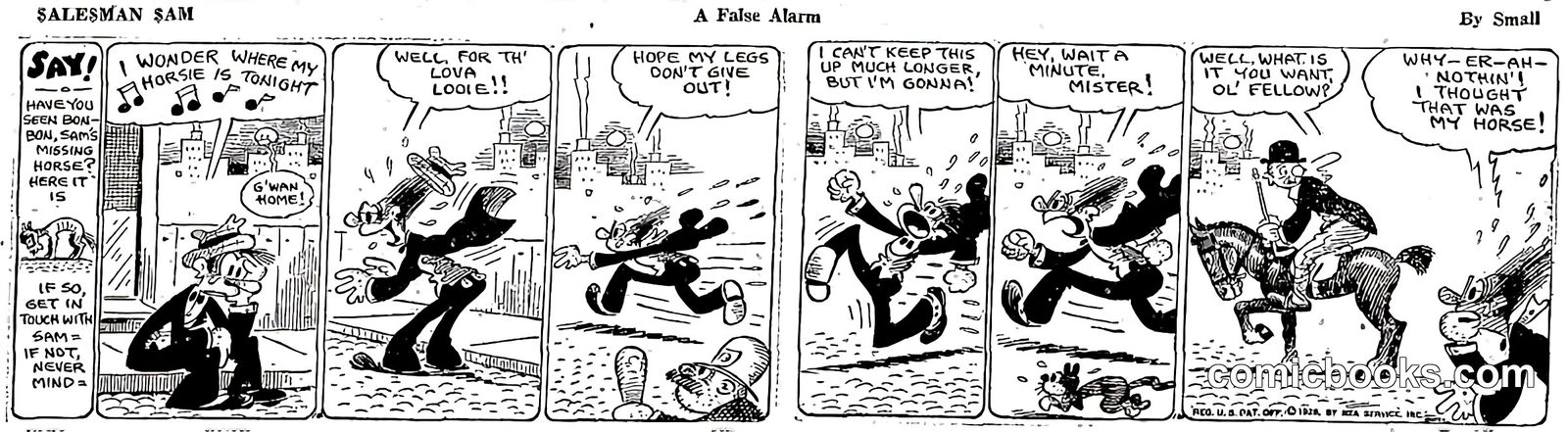
A six-panel daily strip following Sam through a comedic misunderstanding. Sam overhears a customer's complaint about his legs and pants, misinterpreting it as a crisis. He flees in panic—first running, then commandeering a car, finally galloping away on horseback—only to discover the "alarm" was a sales pitch about merchandise.
By the late 1920s, newspaper comic strips had become the primary medium for visual storytelling in America. Strip artists pioneered the language of sequential art: panel borders to mark time, speech balloons for dialogue, expressive silhouettes, and repeated characters readers followed daily. *Salesman Sam*, a popular urban comedy series, exemplifies the fast-paced gag strips that filled Sunday and daily papers, driving millions of readers' engagement and establishing the visual conventions that would define comic books when they emerged in the 1930s.
Public domain, restored and presented by comicbooks.com public-domain