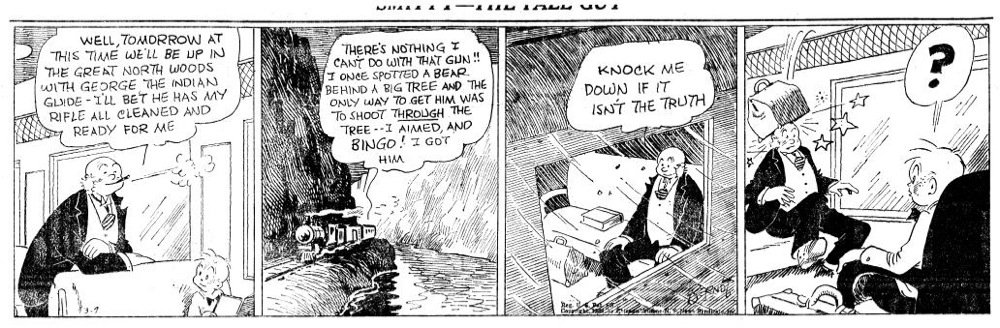
From the exhibition
Smitty
· Early 1930s
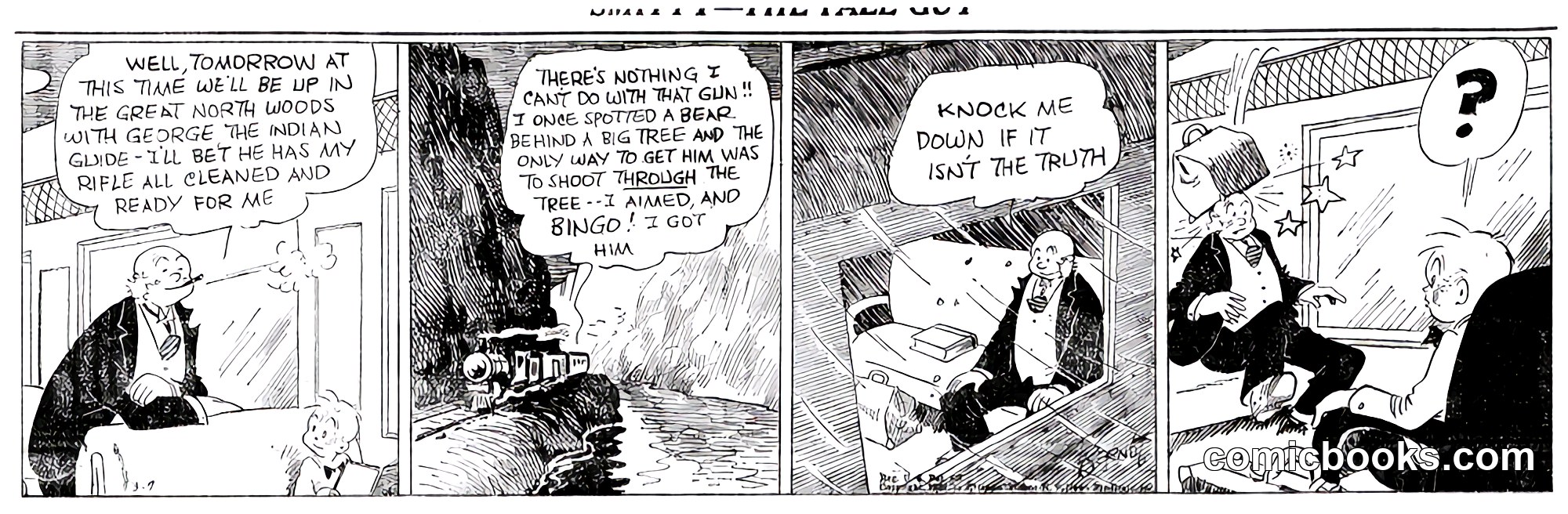
This daily strip follows the misadventures of a young office boy named Smitty and his friend Herby. The four-panel sequence demonstrates the comic strip's essential visual vocabulary: sequential panels advancing a narrative gag, speech balloons carrying dialogue, and expressive line work that conveys action and emotion. The artist employs sharp black ink and crosshatching for depth and shadow—techniques refined through decades of newspaper cartooning. By the 1930s, the daily newspaper comic strip had become America's dominant sequential art form, reaching millions of readers. These strips established the grammatical foundations—panel borders, word balloons, character consistency across episodes—that would directly shape the emerging comic book industry.
Public domain, restored and presented by comicbooks.com public-domain