From the exhibition
Smitty — Laugh That Off!
· 1930s
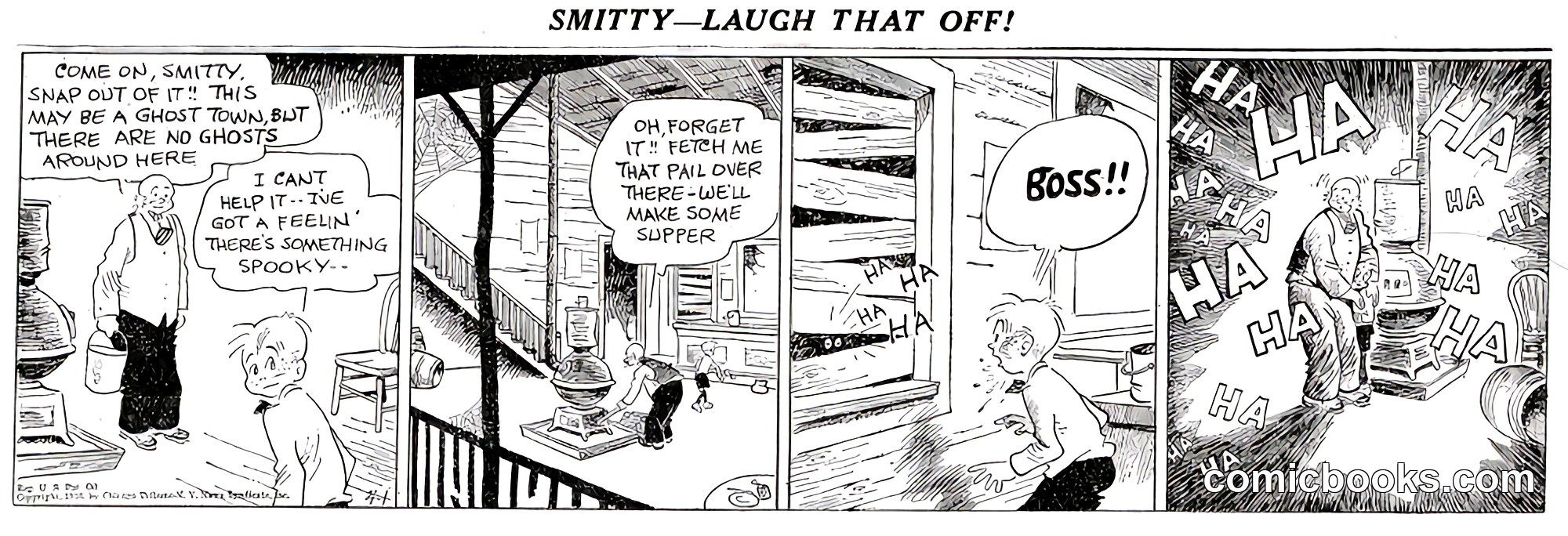
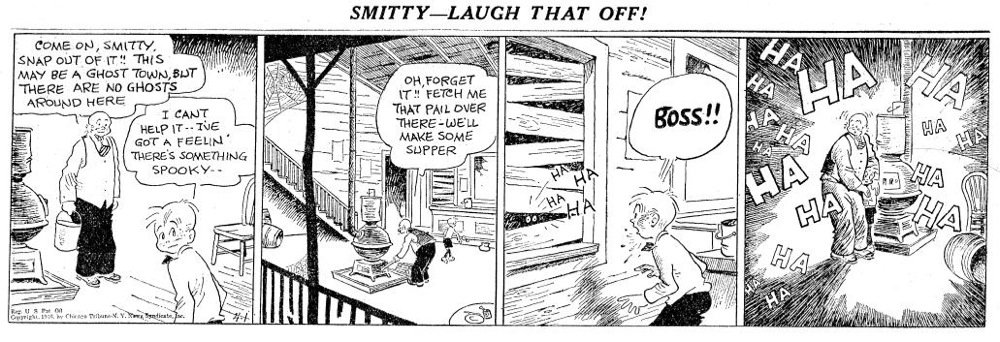
In this daily strip, young Smitty encounters a black cat in a spooky house and nervously insists there are no ghosts—only to be startled by his boss's sudden arrival. The comic exploits a classic gag structure: escalating comedic tension resolved by surprise. The strip's visual economy shows how newspaper comics condensed storytelling into four or five panels, using close framing and gesture to convey character emotion. Speech balloons and thought bubbles carry dialogue and internal reaction. Smitty, a recurring working-class protagonist, belonged to the stable of newspaper comic characters that dominated American popular culture before the comic book industry formally began. These daily strips established the visual language—sequential panels, anthropomorphic animal sidekicks, slapstick timing—that cartoonists would adapt into the comic books of the 1930s and beyond.
Public domain, restored and presented by comicbooks.com public-domain