From the exhibition
Smitty — The Man Who Has Never Lost
· 1920s–1930s
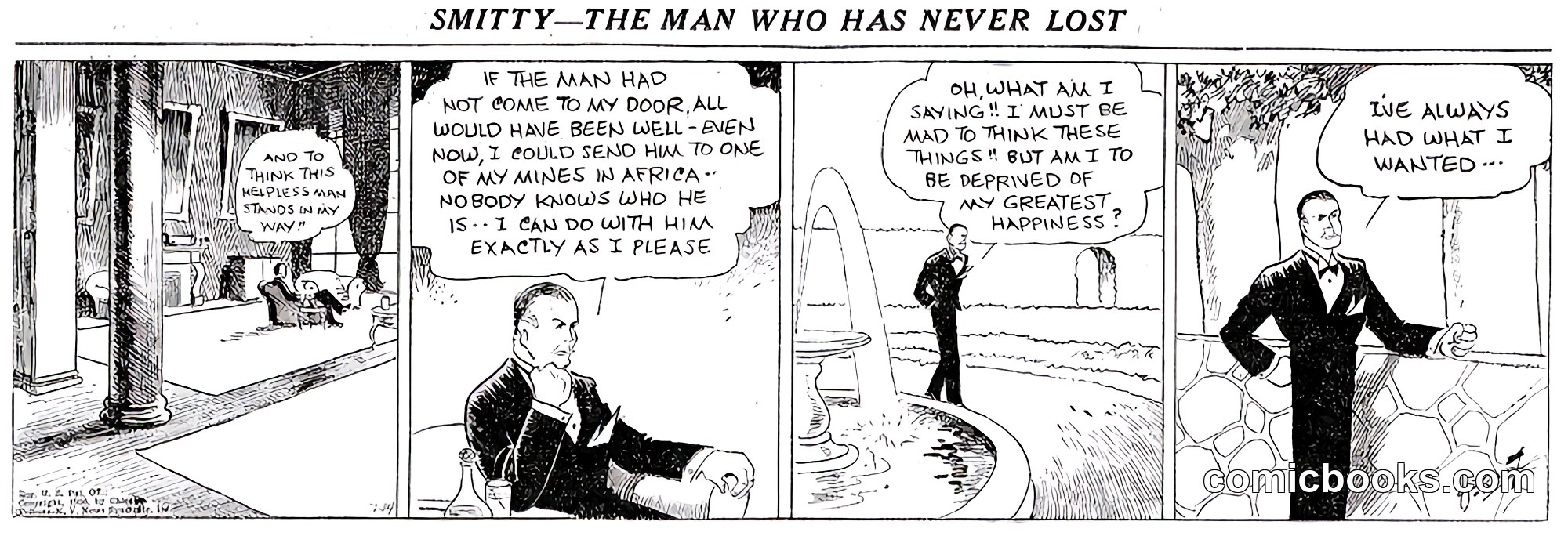
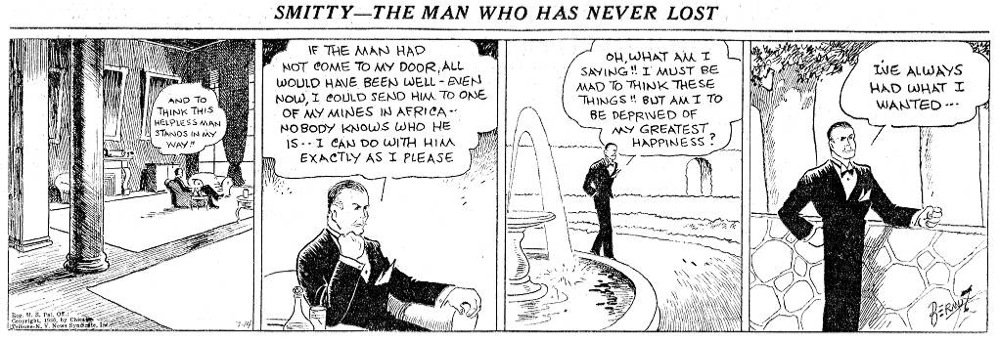
This strip exemplifies the newspaper comic's visual sophistication: sequential panels advance a narrative through dialogue and action, while speech balloons anchor character voice. Smitty, a recurring protagonist, demonstrates the formula that made newspaper comics essential reading—a relatable figure in everyday situations, rendered in crisp line work. The four-panel structure became standard in dailies, while Sunday pages exploited larger formats for elaborate compositions. By the 1920s and 1930s, such strips had established comics as a distinct medium: distinct panel layouts, lettering conventions, and character continuity created a visual grammar that would define the emerging comic book industry. These newspaper pages were the proving ground for both artists and audiences, establishing narrative techniques and character appeal that persisted through decades of sequential art.
Public domain, restored and presented by comicbooks.com public-domain