From the exhibition
Smitty — A Life Saver!
· 1920s–1930s
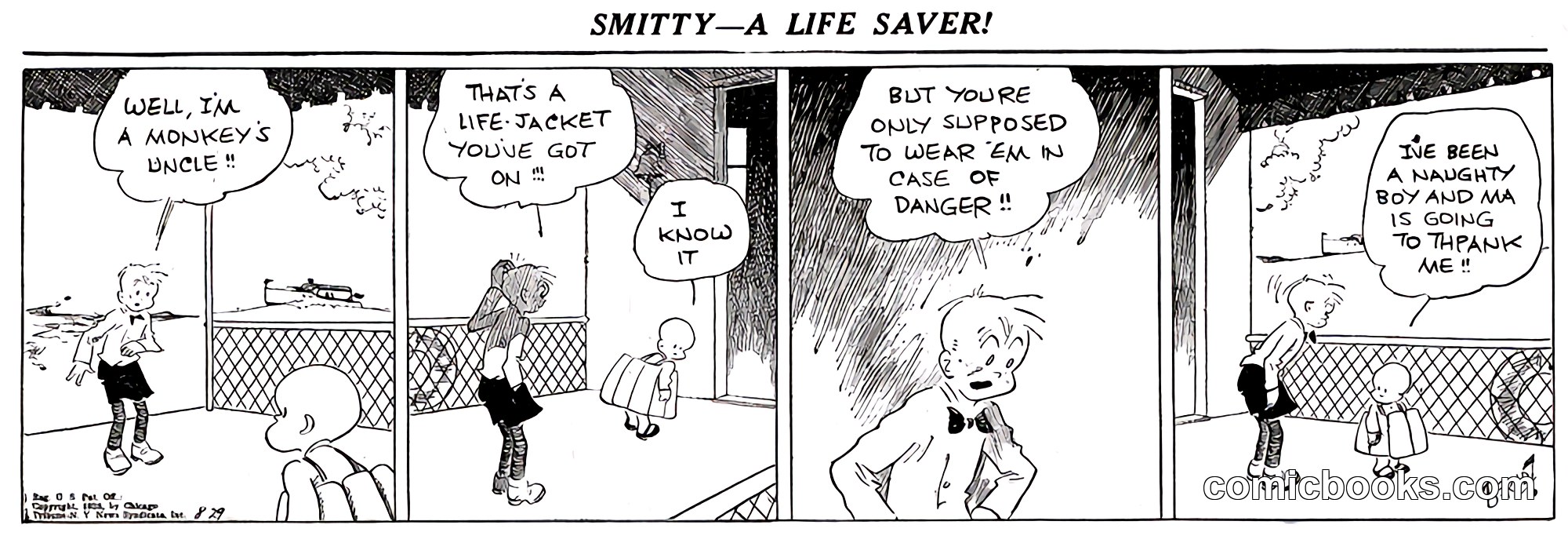
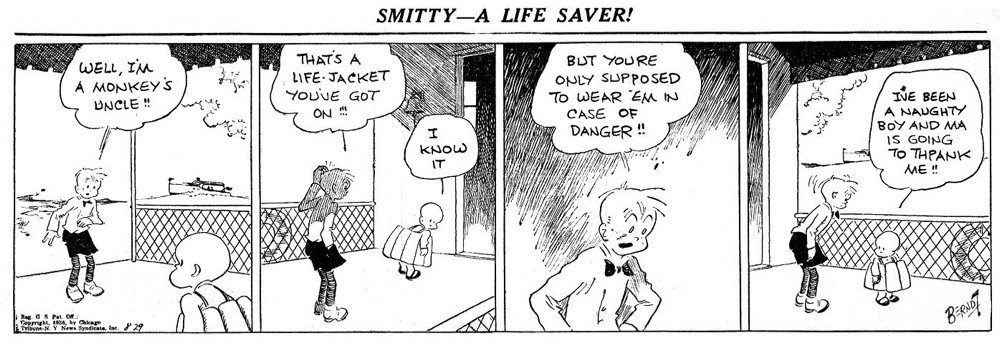
This daily strip exemplifies the visual vocabulary that shaped comic art: sequential panels advancing a narrative, speech balloons revealing character voice, and recurring figures in domestic situations. The boy Smitty navigates a small crisis—claiming to be a monkey's uncle, then threatened with punishment—in four economical frames. The artist deploys cross-hatching for mood and shadow, varied panel sizes for pacing, and gestural linework for movement. Such strips ran in newspapers nationwide, reaching millions daily. This format—serialized characters, sight gags, and visual storytelling through panel sequence—became foundational to the comic book medium that emerged in the 1930s.
Public domain, restored and presented by comicbooks.com public-domain