From the exhibition
Smitty
· 1920s–1930s
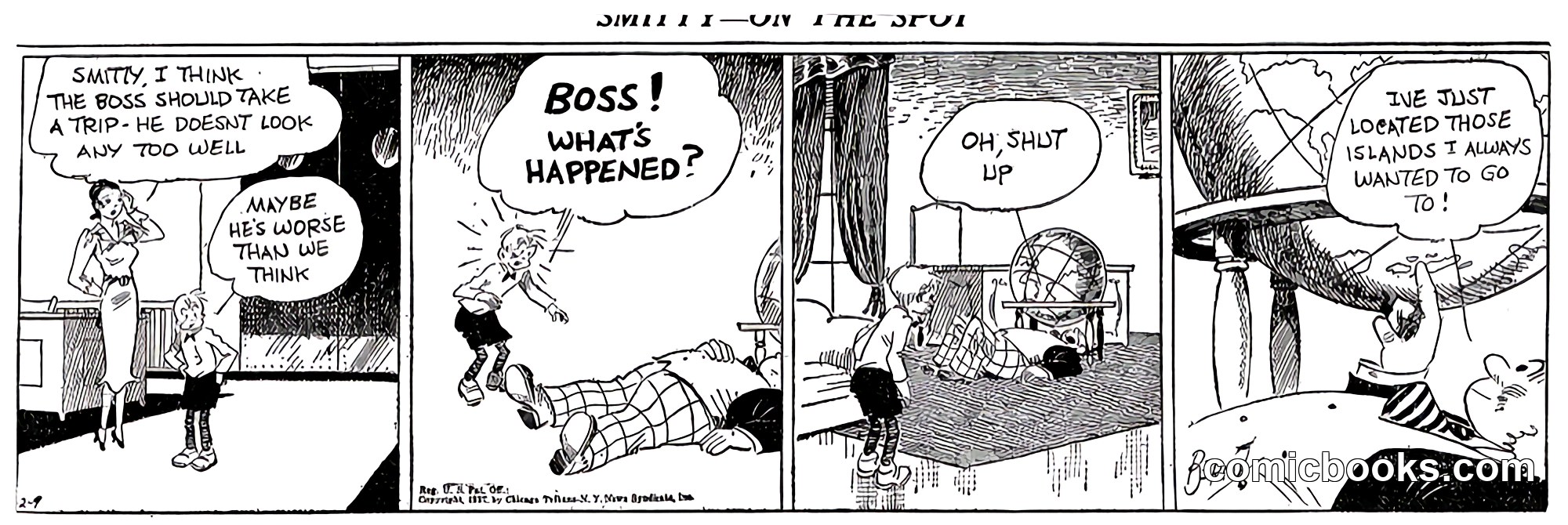
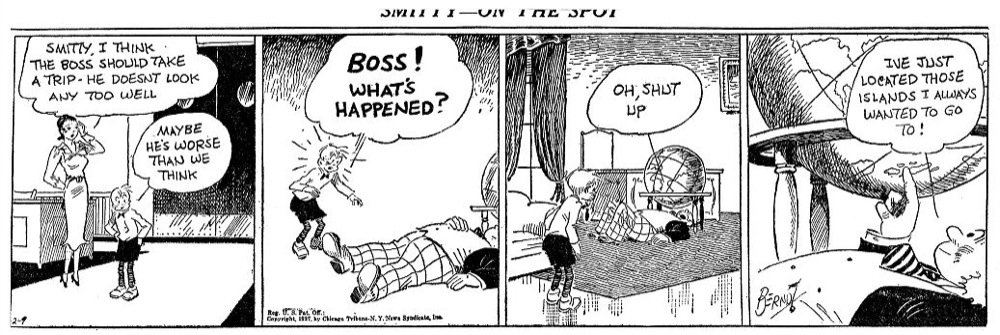
This newspaper comic strip follows the misadventures of a young office boy and his interactions with authority figures. The four-panel sequence demonstrates the visual conventions that defined early comics: consistent character design, sequential narrative flow across panels, speech balloons for dialogue, and sight gags as primary humor. The strip's layout—progressing left to right with varying panel sizes to control pacing—reflects techniques developed by newspaper cartoonists in the 1920s. Such daily and Sunday strips, distributed through syndication networks, reached millions of readers and established the visual grammar that would form the foundation of the comic book industry. The character-driven humor and workplace setting were typical of the era's popular entertainment.
Public domain, restored and presented by comicbooks.com public-domain