From the exhibition
Smitty — Good News
· 1920s–1930s
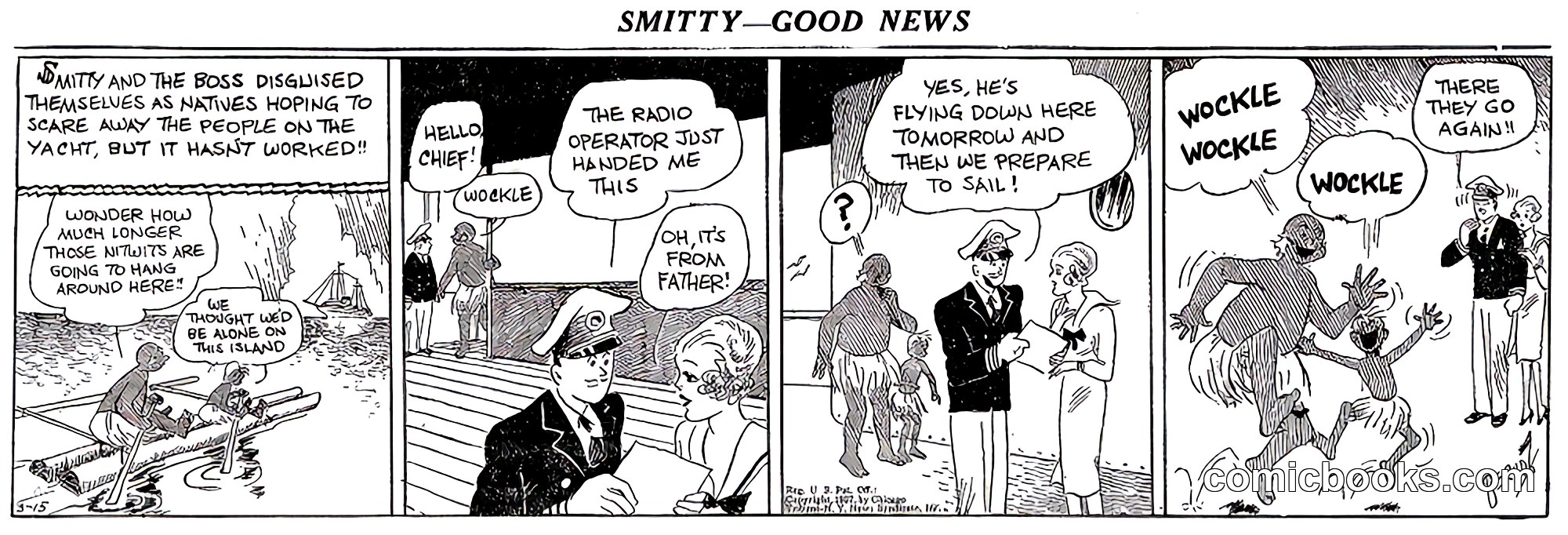
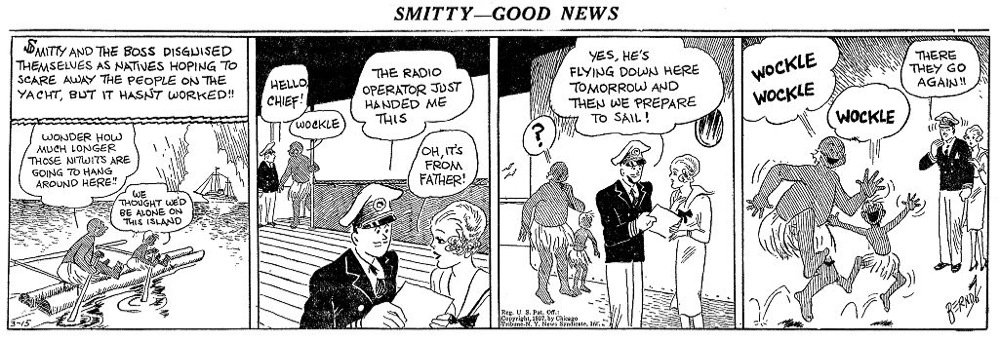
This *Smitty* strip demonstrates the visual conventions that shaped early American comics: sequential panels advancing a narrative, speech balloons anchoring character dialogue, and recurring characters in episodic situations. The strip follows a young office boy and his boss through workplace misadventures. Here, Smitty's scheme to frighten the boss backfires when a radio operator's call coincides with the prank, creating layered comic timing across panels. The newspaper comic strip—appearing daily and in Sunday color editions—served as the laboratory where artists developed and refined the visual grammar that would define comic books: panel borders defining temporal sequence, lettering conventions, character consistency, and sight gags driven by drawing rather than text alone. These strips reached millions of readers and established templates for action, humor, and visual storytelling that persisted throughout comics' history.
Public domain, restored and presented by comicbooks.com public-domain