From the exhibition
Smitty — Change for the Worse
· Early 1930s
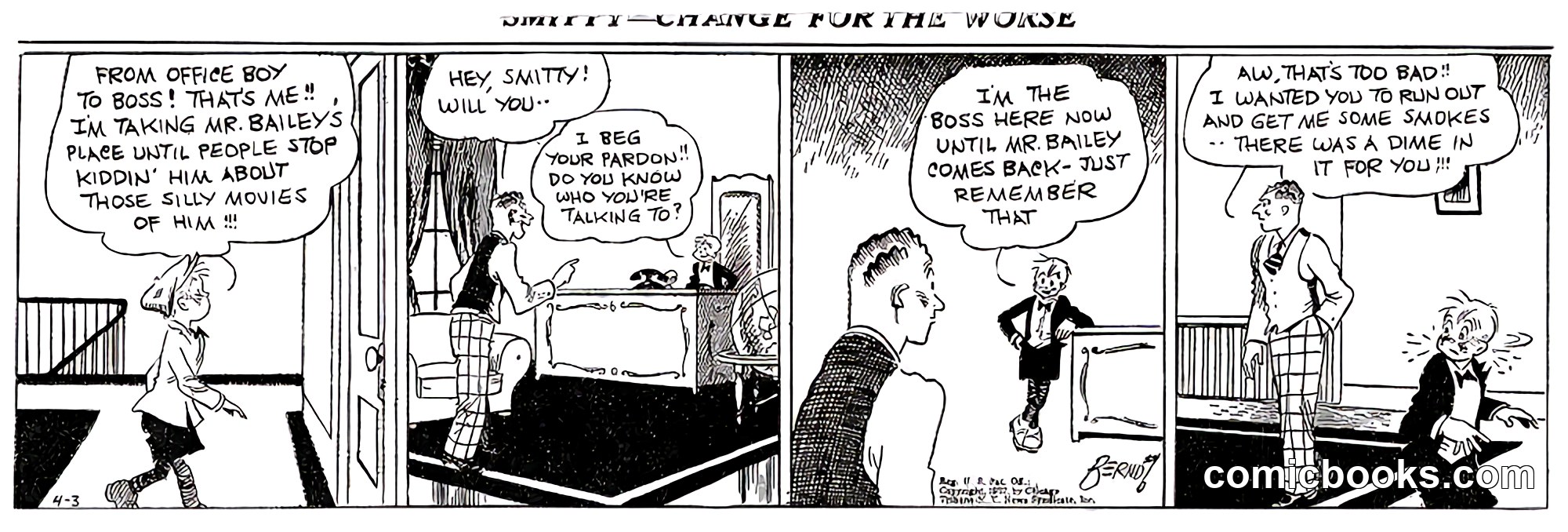
This daily strip follows Smitty, an office boy, as he attempts to warn his boss about Mr. Bailey's return by running errands. The four-panel sequence uses the visual grammar of newspaper comics: sequential panels with dialogue balloons, character reactions across frames, and escalating physical comedy. Smitty's exaggerated proportions and energetic poses typify the style of 1930s dailies. The strip relies on workplace humor—a staple of Depression-era papers—where lower-ranking characters navigate office hierarchies. Recurring boy characters like Smitty became templates for comic strips, establishing visual conventions that would influence comic books. The strip's economical linework and clear panel-to-panel narrative flow demonstrate how newspaper comics trained readers in the visual language of sequential art.
Public domain, restored and presented by comicbooks.com public-domain
