From the exhibition
Smitty—A Nature Lover
· circa 1920s–1930s
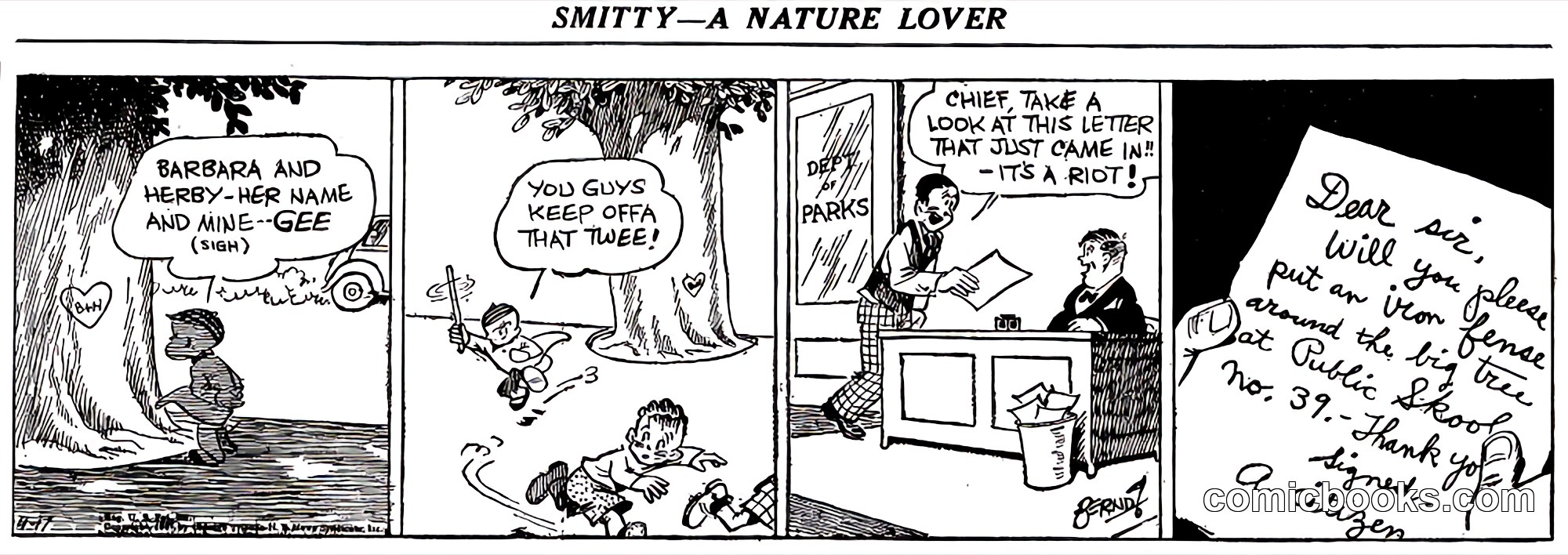
This Sunday strip exemplifies the visual conventions that defined early American comics. Arranged in a four-panel grid, the narrative follows children named Barbara, Henry, and Smitty as they venture into the woods. The cartoonist uses speech balloons to convey dialogue and comedic timing, while sequential panels establish cause-and-effect storytelling. The final panel breaks format with a letter—a device that extends the gag beyond traditional panel borders. Smitty was among the newspaper strips that established the template for comic-book layout and character-driven humor, reaching millions of readers through daily and Sunday editions before the format migrated to the comic books themselves.
Public domain, restored and presented by comicbooks.com public-domain
