From the exhibition
Smitty
· 1920s–1930s
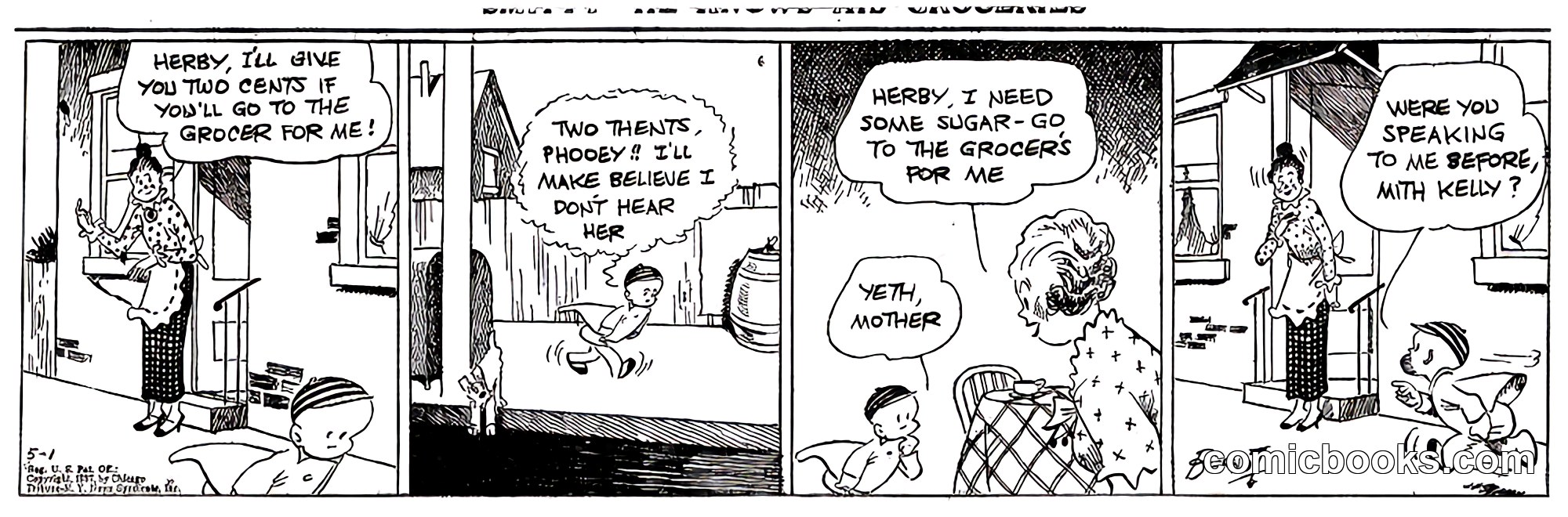
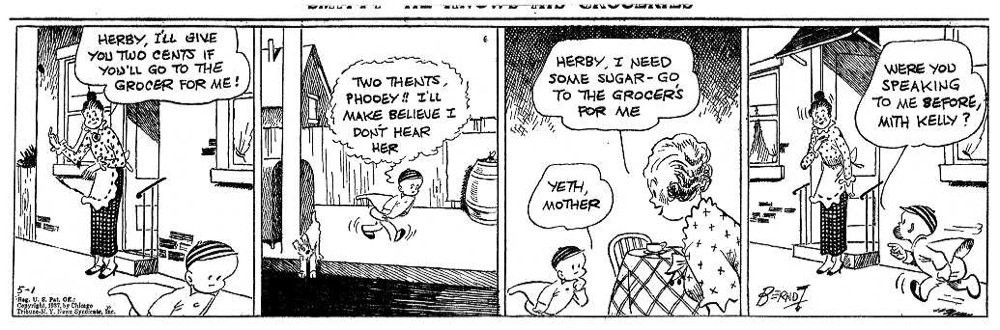
This strip follows the schemes of a young office boy navigating urban life and small-time hustles. The four-panel sequence shows Smitty attempting to secure pocket money through various ploys—bribing a friend with two cents to run an errand, then recruiting another boy to help persuade the grocer. The humor turns on the circular logic of his machinations and the adults' exasperation. Smitty exemplifies the daily newspaper comic strip format that emerged in the early 20th century, using sequential panels, speech balloons, and a recurring cast of characters. The strip's urban setting and focus on a resourceful boy reflected Depression-era audiences' interest in street-smart protagonists. Artists working in this period established the visual conventions—panel borders, word placement, facial expression—that became foundational to the comic book medium that followed.
Public domain, restored and presented by comicbooks.com public-domain