From the exhibition
Smitty — Circumstantial Evidence
· circa 1920s
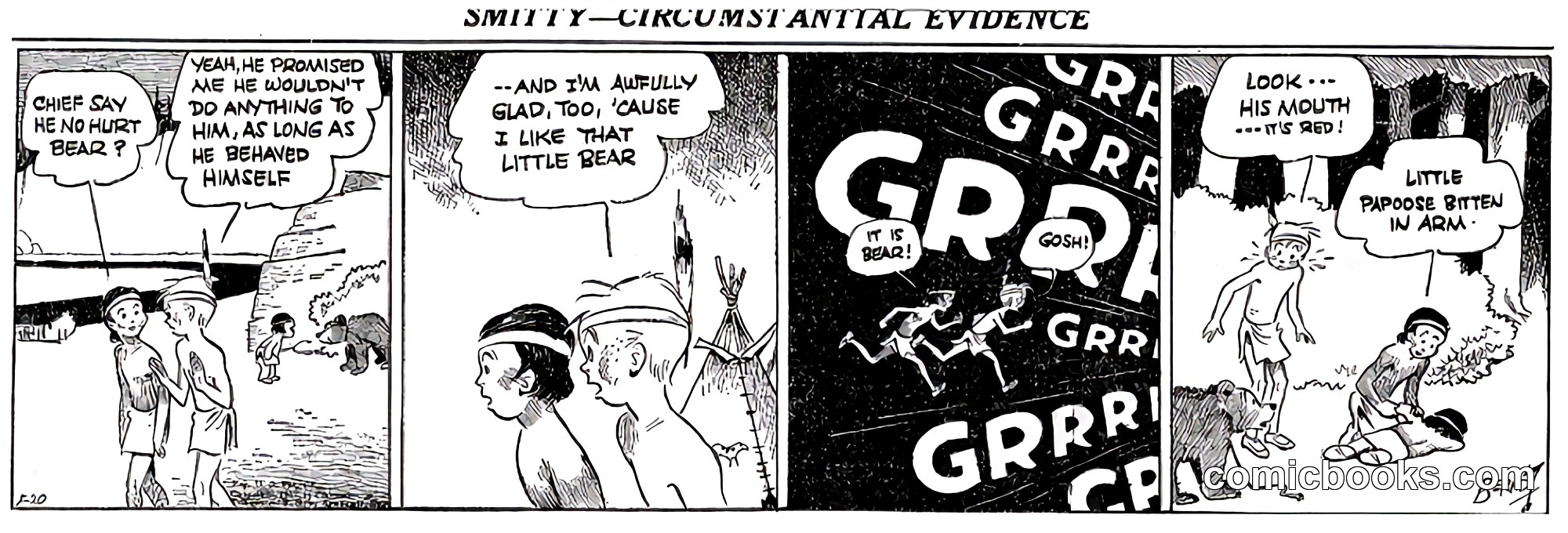
This Sunday comic strip follows the visual conventions that defined early newspaper comics: multiple panels arranged left-to-right, speech balloons for dialogue, and a recurring cast of characters in a narrative sequence. The strip employs slapstick humor typical of the era—a child misunderstood as guilty of theft, leading to physical comedy and chase sequences. The artist uses bold linework and dramatic scale shifts between panels to convey motion and urgency. Newspaper comic strips of this period established the formal grammar that would become foundational to comic books: sequential art, panel transitions, and character-driven storytelling. These daily and Sunday strips reached millions of readers and trained audiences in the visual language of comics before the medium migrated to dedicated comic books in the 1930s and beyond.
Public domain, restored and presented by comicbooks.com public-domain
