From the exhibition
Smitty
· early 1930s
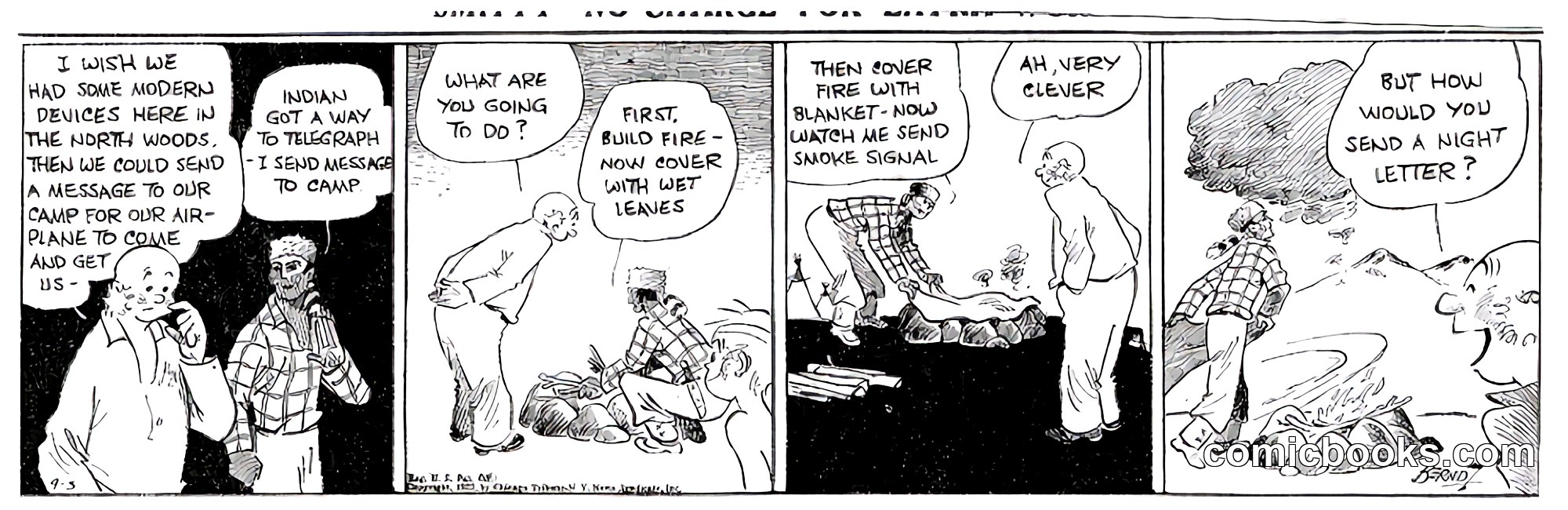
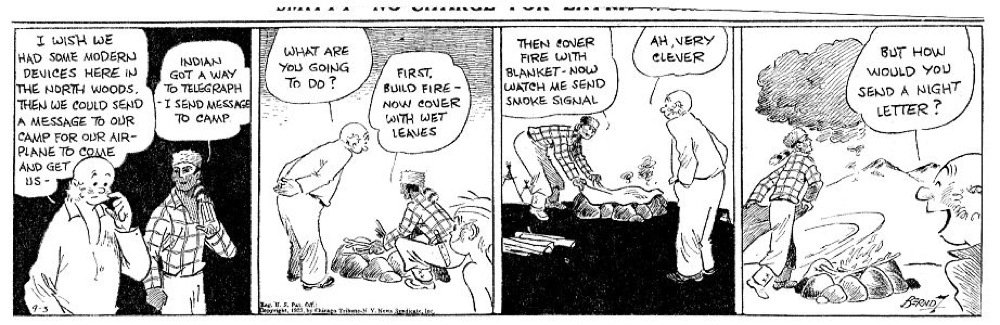
This strip follows two characters solving a practical problem in the woods: how to signal for help when stranded. The narrative unfolds across four panels with clear sequential logic—each step builds on the last, from deciding on a fire signal, to building the fire with wet leaves to produce smoke, to the successful rescue. The artist uses speech balloons and panel borders to control pacing and guide readers through cause and effect. By the 1930s, such strips appeared daily and Sunday in American newspapers, establishing the visual grammar—recurring characters, panel flow, and dialogue integration—that would become the foundation of comic books. These newspaper installments trained readers in how to read sequential art and created a mass audience for the form.
Public domain, restored and presented by comicbooks.com public-domain