From the exhibition
Smitty: Don't Look Now
· Early 1930s
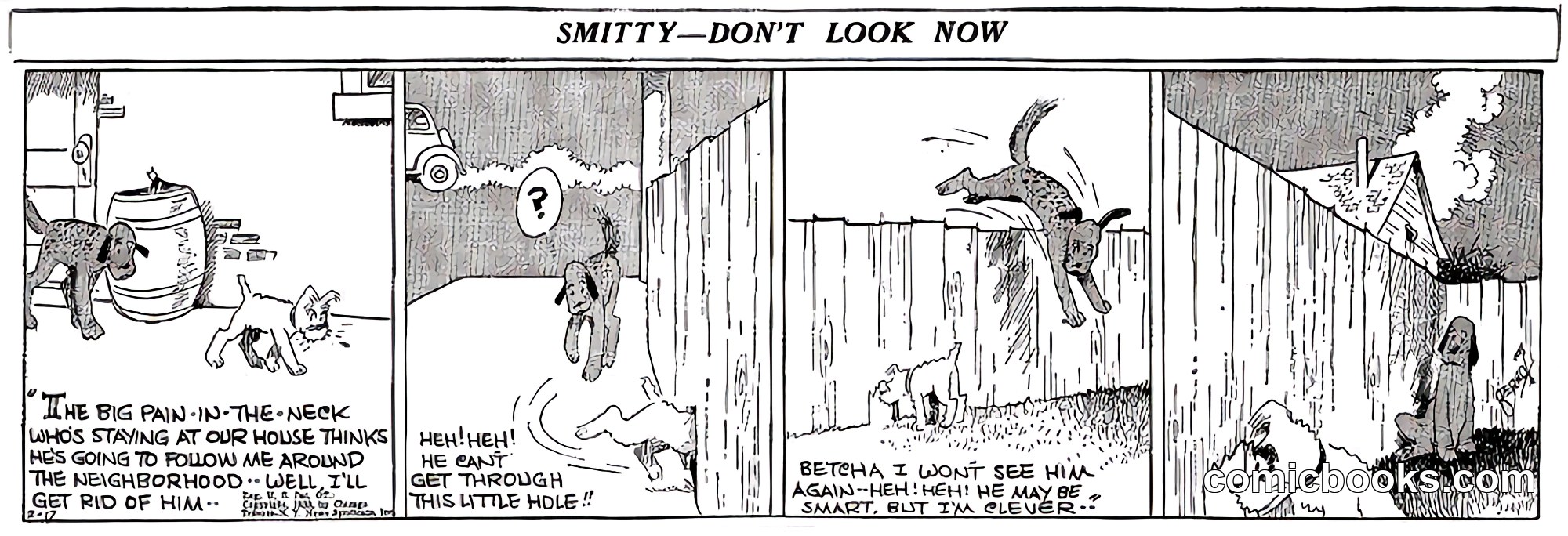
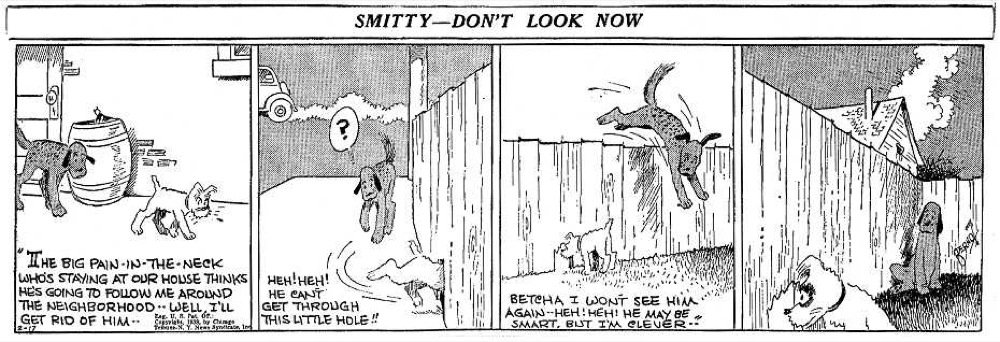
This daily strip follows Smitty and his dog as they attempt to evade a neighborhood bully. The four-panel sequence uses sequential art conventions—distinct panels, speech balloons, and visual continuity—that became standard in newspaper comics. The gag relies on physical comedy and timing across panels, with the final reveal depending on reader comprehension of the sequence. Smitty exemplifies the daily strip format that dominated newspapers from the 1920s onward, featuring recurring characters in episodic situations. Such strips established the visual language that would later define the comic book industry, training readers in panel-to-panel narrative flow and dialogue integration.
Public domain, restored and presented by comicbooks.com public-domain