From the exhibition
Such Is Life
· March 12, 1926
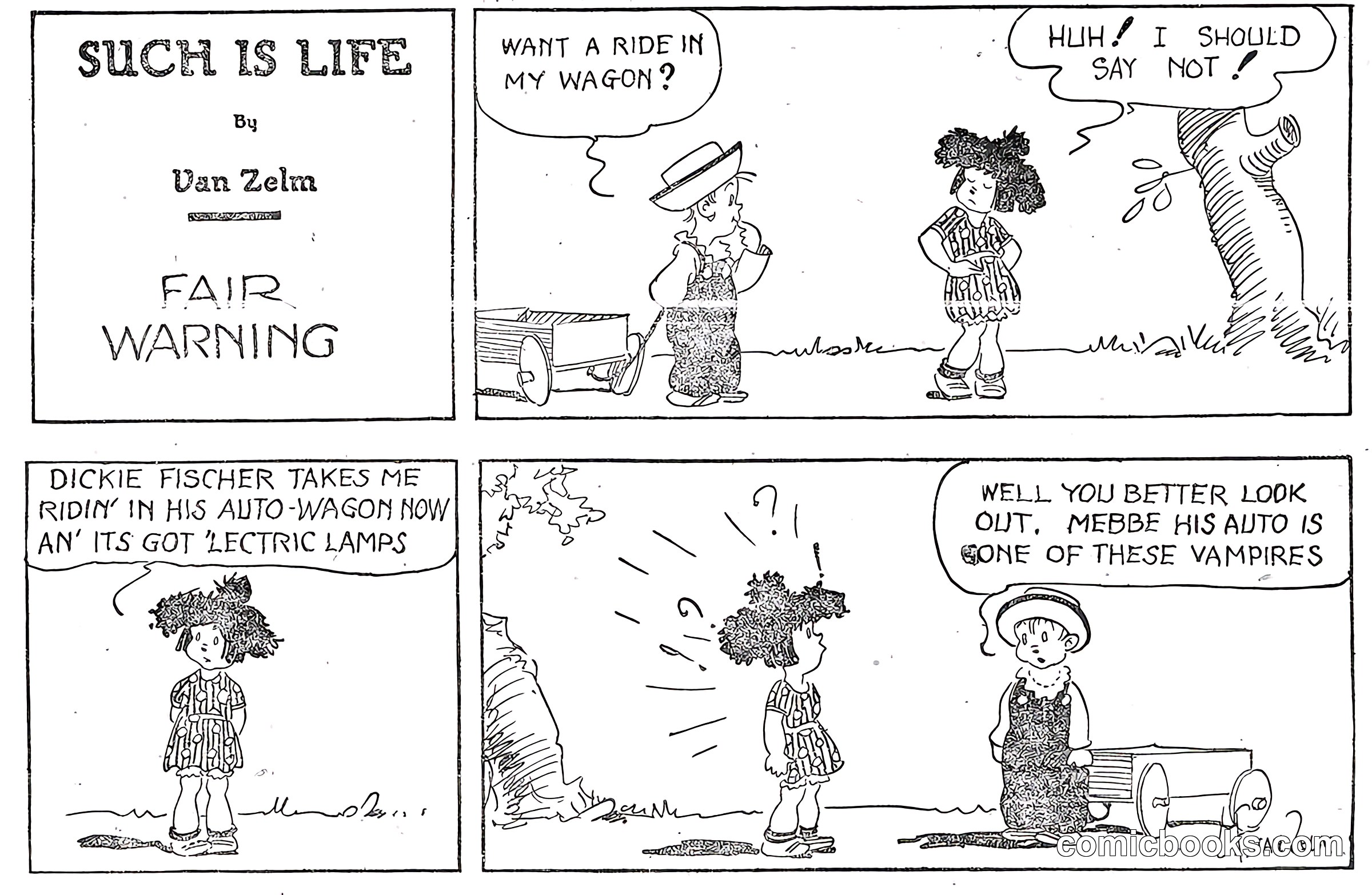
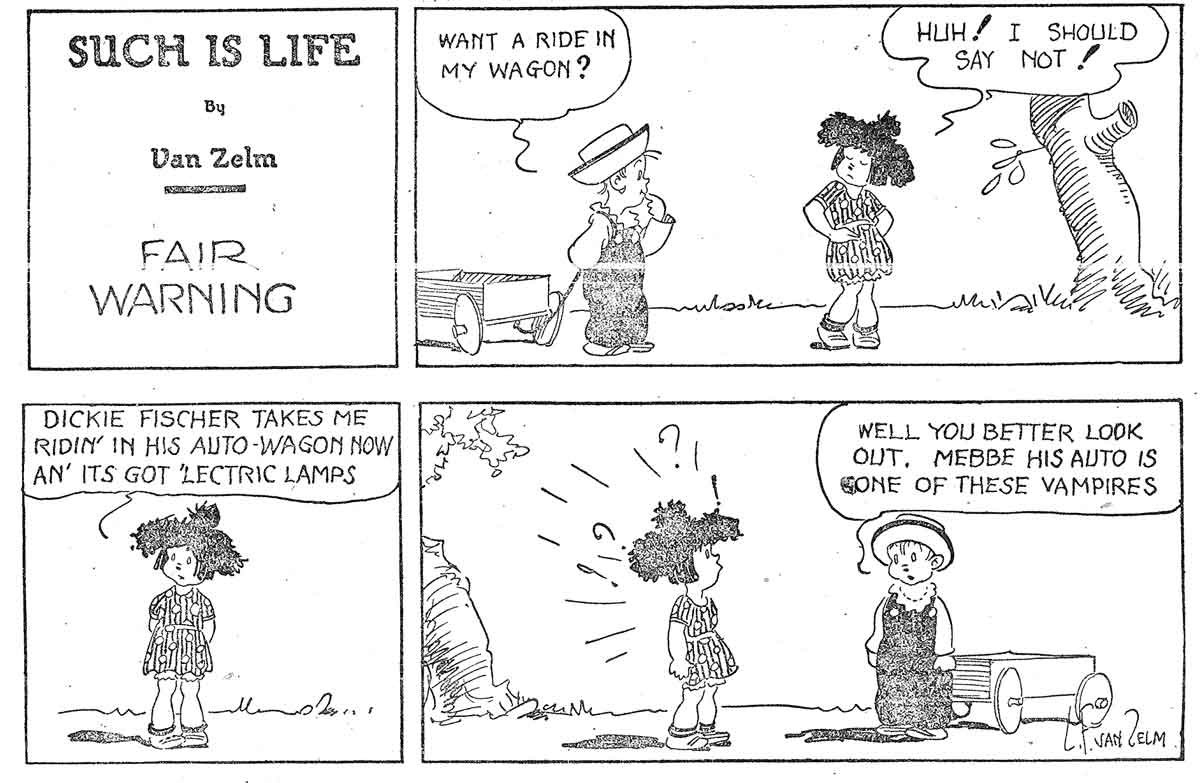
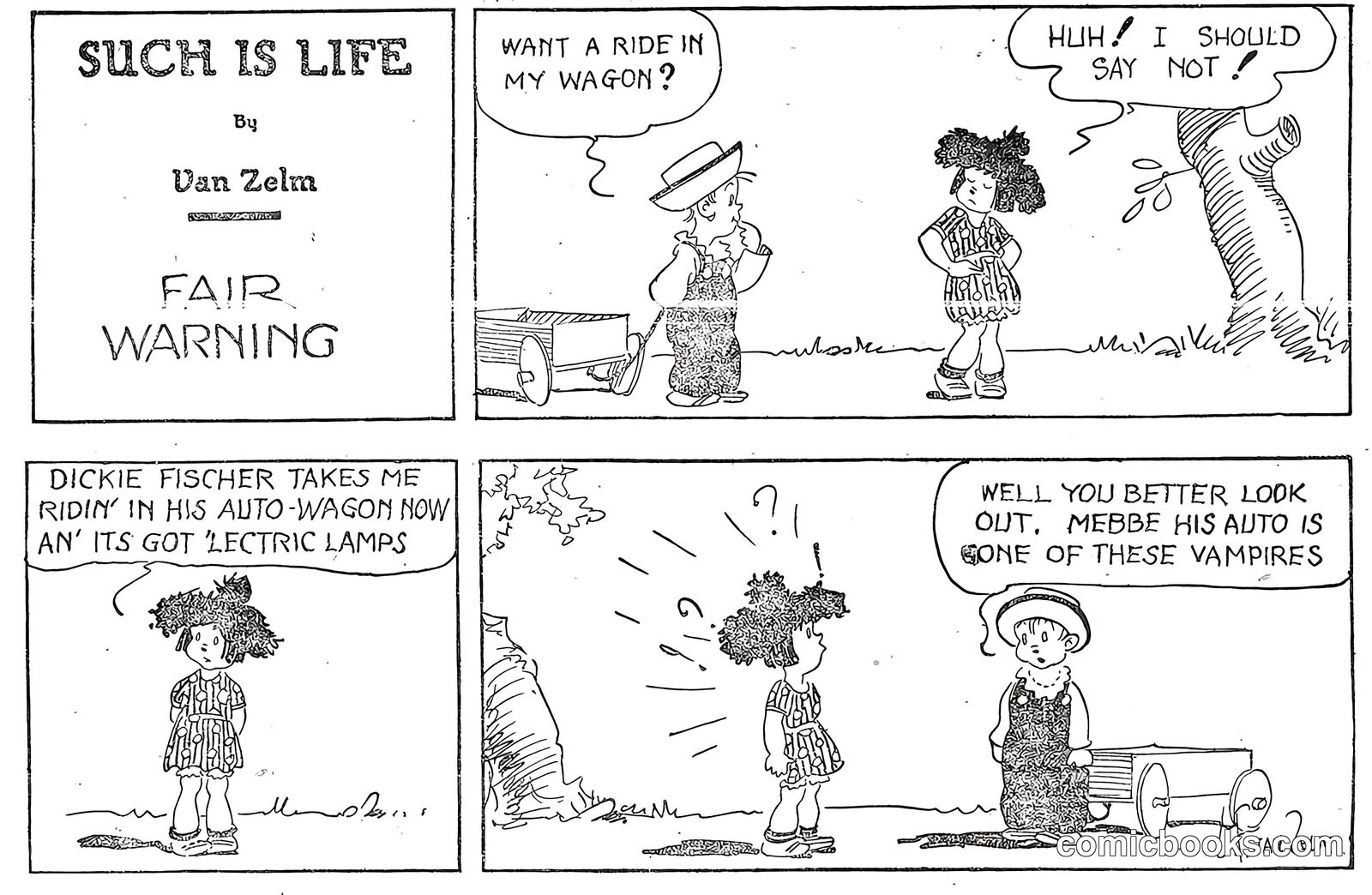
Van Zelm's *Such Is Life* strips the comedy down to basic human contradiction: a child refuses a wagon ride, then immediately regrets it when Dickie Fischer upgrades to a motorcar with electric lamps. The narrative unfolds across four panels with economical line work and clear sequential staging—speech balloons anchor character voice while action lines convey movement and emotion. By the 1920s, the daily newspaper strip had become the dominant form for comics, establishing the visual language that would define the medium: recurring characters in ongoing situations, panel layouts guiding eye movement, and dialogue integrated into drawings rather than captions below. Artists like Zelm helped systematize these techniques into an accessible, reproducible format that newspapers syndicated nationwide, laying the groundwork for the comic book industry to follow.
Public domain, restored and presented by comicbooks.com public-domain