From the exhibition
Buster Brown: Boy Scout Adventure
Richard Felton Outcault · 1917
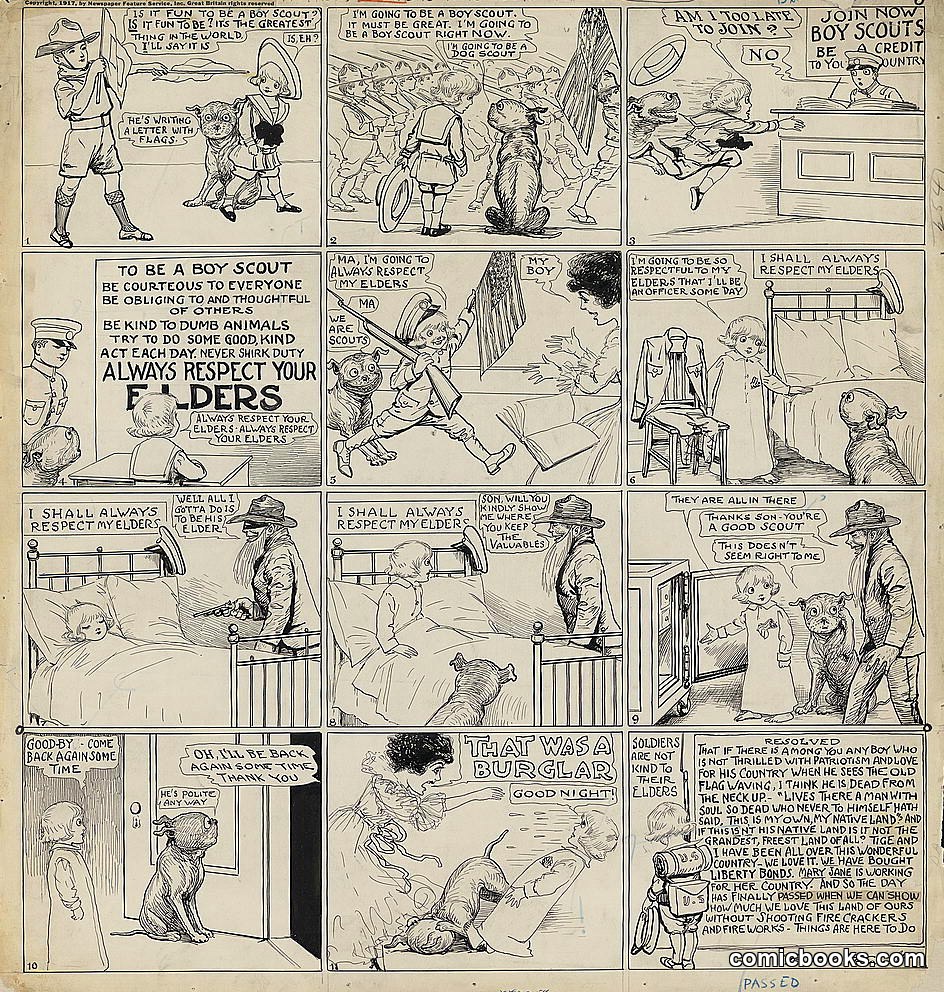
Richard Felton Outcault's *Buster Brown* strip follows the mischievous title character and his dog Tige through a Boy Scout recruitment narrative. The Sunday page demonstrates the visual vocabulary that defined early comics: sequential panels with speech balloons, recurring characters, sight gags, and a moral lesson embedded in entertainment. Outcault pioneered this grammar in the 1890s; by 1917, newspaper comics had become a mass medium teaching values alongside humor. Here, Buster's initial resistance to Scouting dissolves into enthusiastic commitment after witnessing the movement's discipline and patriotic purpose. The strip's casual caricature of elderly men reflects period conventions. This page exemplifies how comics functioned as both popular entertainment and vehicles for civic instruction in early twentieth-century American newspapers.
Public domain, restored and presented by comicbooks.com Public domain
