From the exhibition
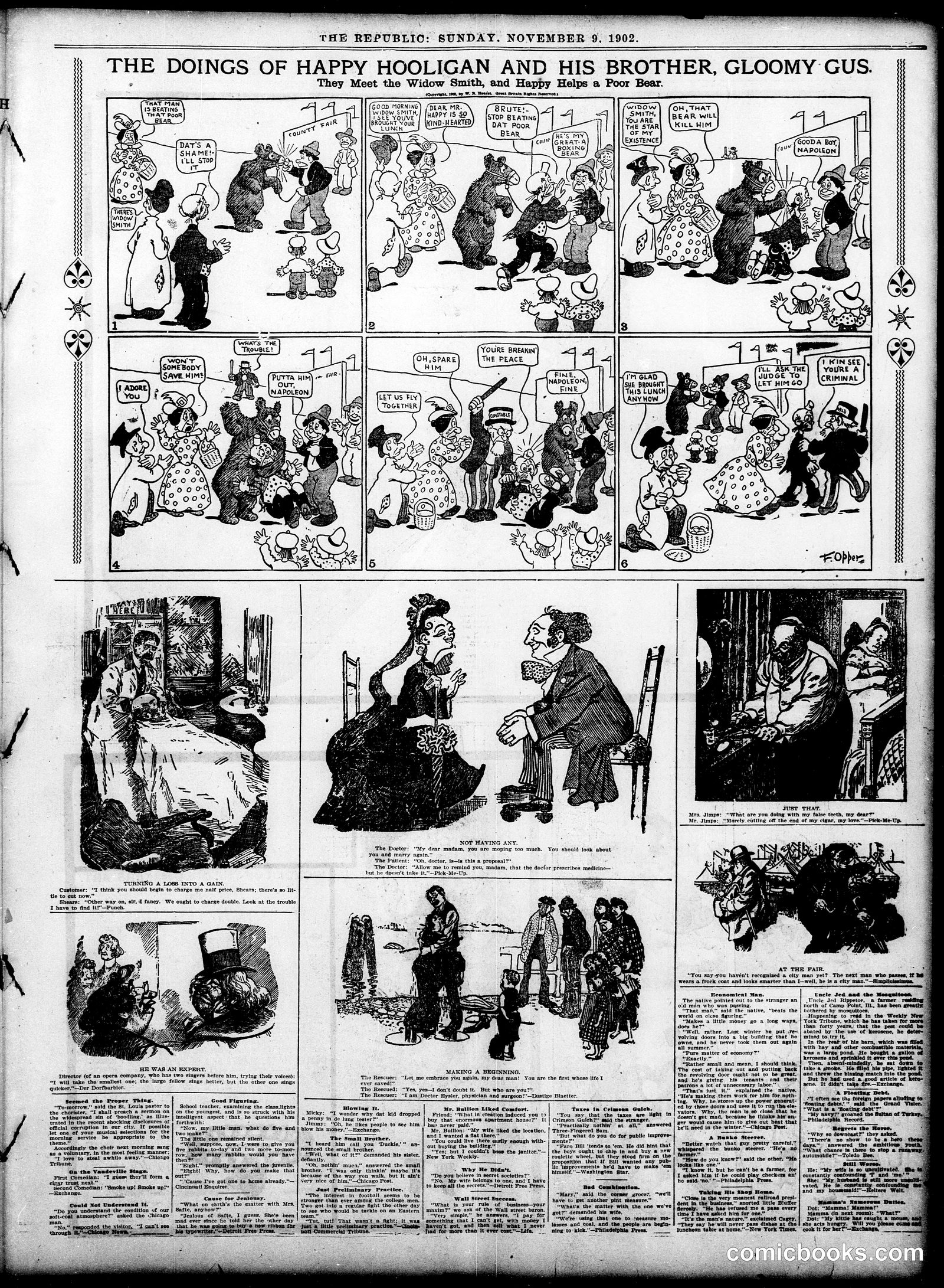
Happy Hooligan — St. Louis Republic, November 9, 1902
· Published November 9, 1902
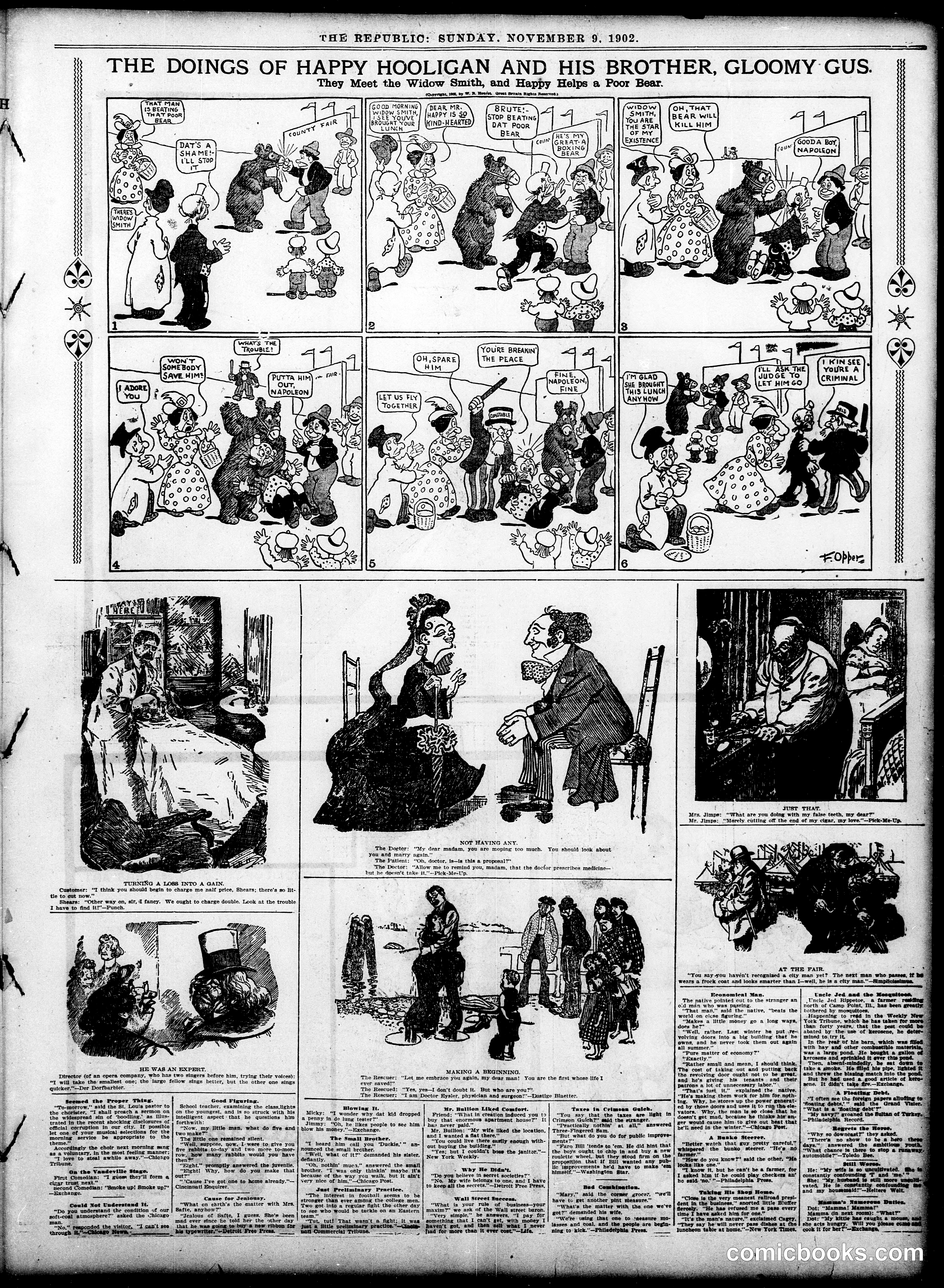
Frederick Opper's *Happy Hooligan* runs six panels across two tiers here, following the tin-can-hatted tramp and his brother Gloomy Gus as they encounter a widow, a bear named Napoleon, and the inevitable policeman. Opper's line is loose and physical — bodies lurch, hats fly, speech balloons carry overlapping crosstalk — and the gag machine resets cleanly panel to panel. Launched in 1900 for Hearst's syndicate, *Happy Hooligan* was among the first strips built around a fixed recurring character with a consistent visual signature, a structure that would define the medium. These color Sunday pages, printed in millions of copies and read aloud in tenements and parlors, established the grammar — sequential panels, dialogue balloons, weekly continuity — that the comic book would later inherit wholesale.
Public domain, restored and presented by comicbooks.com public-domain