From the exhibition
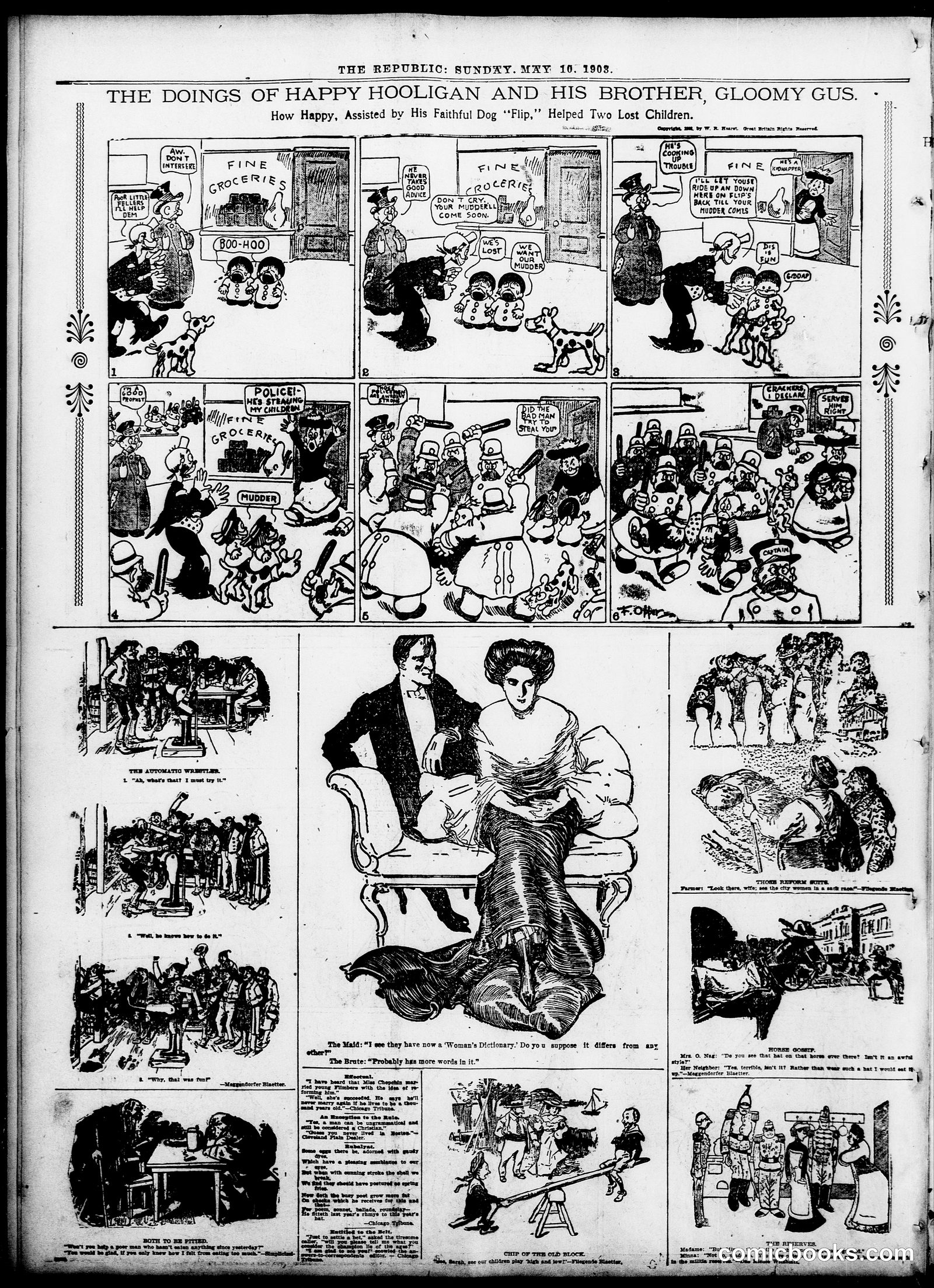
Happy Hooligan — St. Louis Republic, May 10, 1903
· Sunday, May 10, 1903
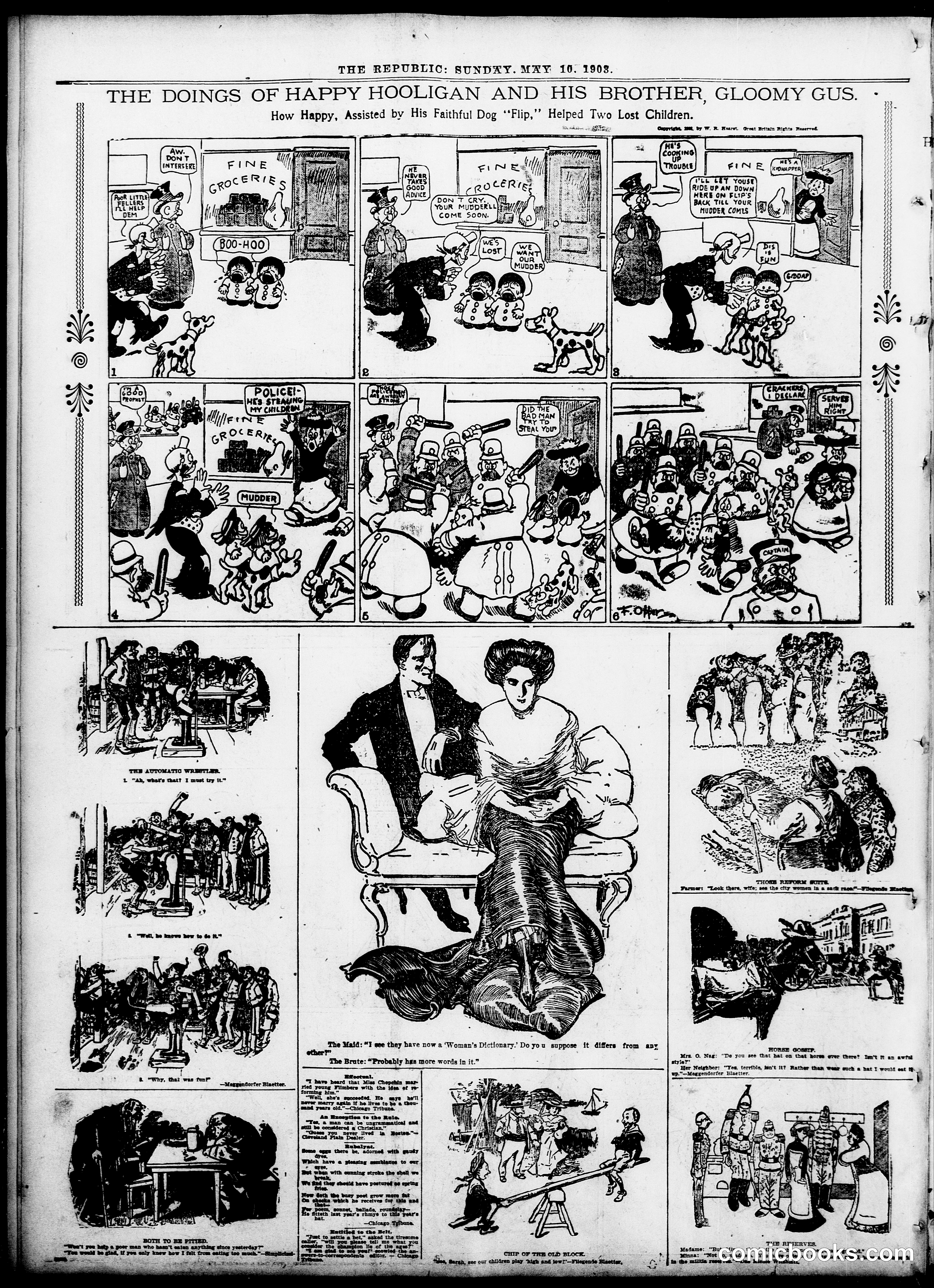
Frederick Opper's Happy Hooligan runs six panels across two tiers on this full Sunday page, its subtitle spelling out the gag: Happy and his dog Flip reunite two lost children with their mother, only for Happy—tin-can hat askew, coat too small—to be mobbed by police and an indignant crowd in the chaotic finale. Opper's line is loose and kinetic; speech balloons carry dialect phonetically; crowd scenes pile bodies into overlapping confusion that reads left to right with instinctive clarity. Launched in 1900 for Hearst's syndicate, *Happy Hooligan* helped establish the recurring character as the engine of newspaper comics—same face every week, new disaster. The Sunday color page, pioneered through the 1890s newspaper wars, is the direct ancestor of the comic book: collected Sunday strips were bundled and sold as pamphlets within decades, the format arriving fully formed.
Public domain, restored and presented by comicbooks.com public-domain