From the exhibition
Happy Hooligan — St. Louis Republic, May 17, 1903
· Published May 17, 1903
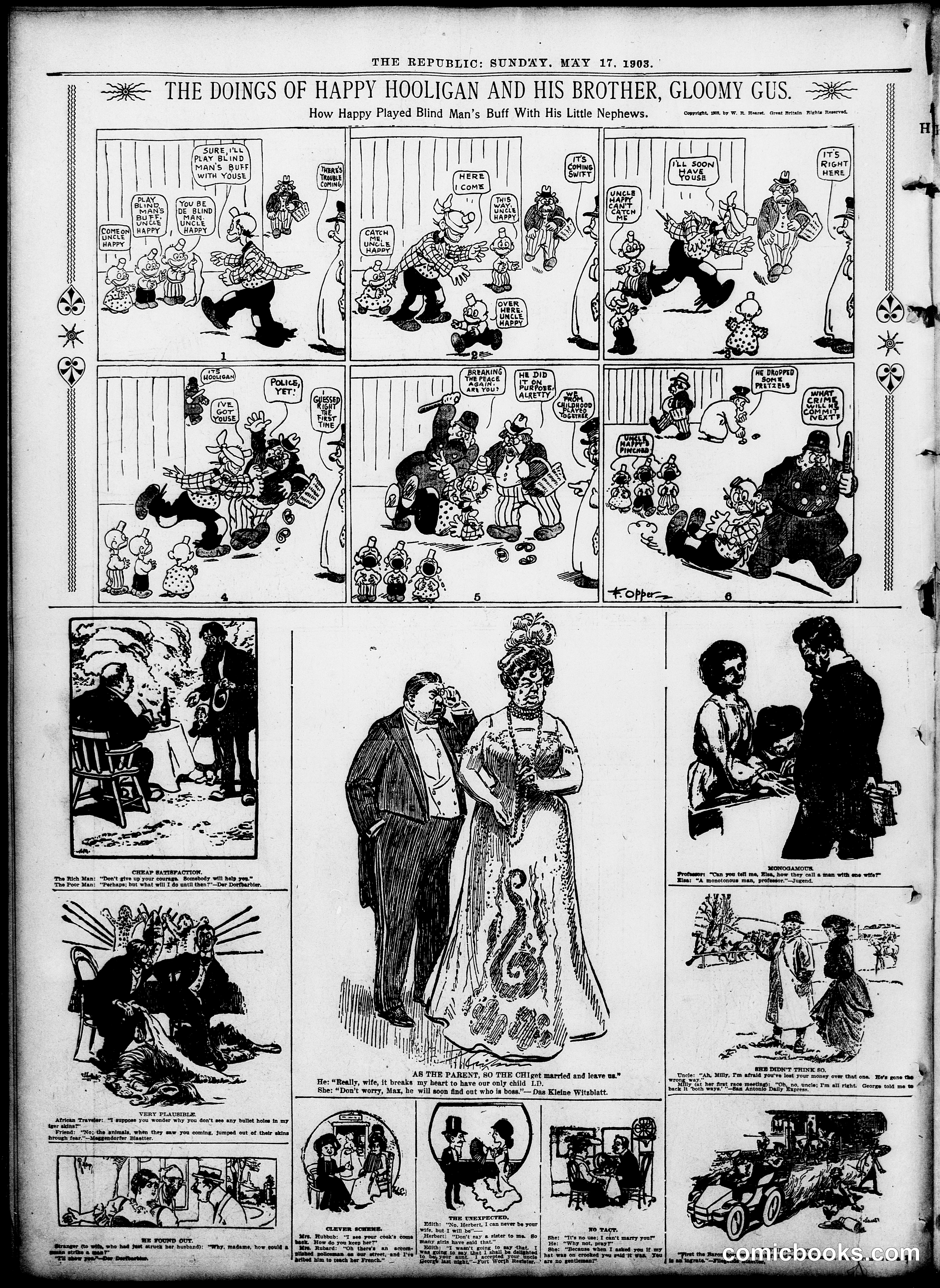
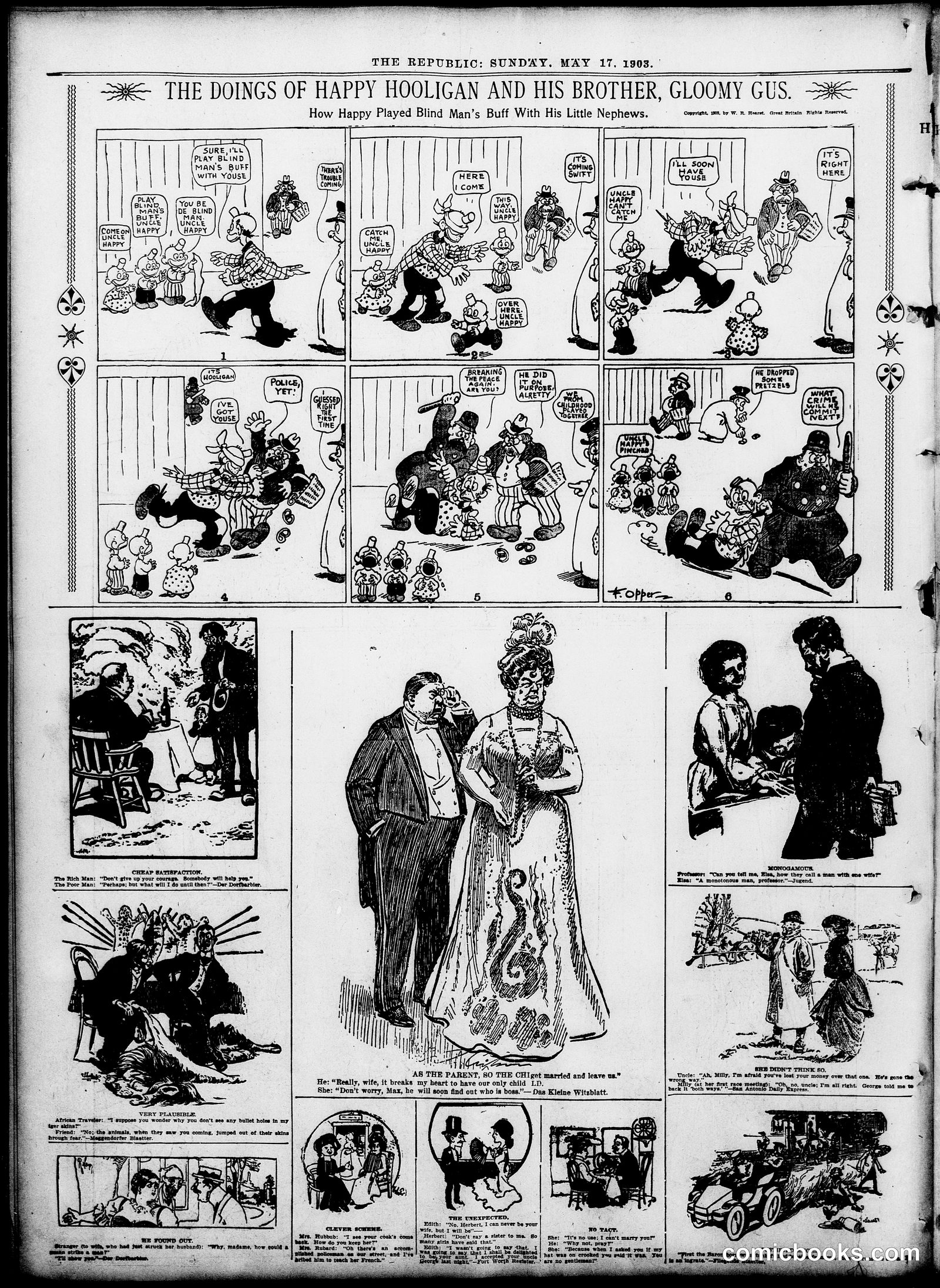
Six panels across two tiers show Happy Hooligan — the lovable tramp in his tin-can hat — playing blind man's buff with his small nephews. The gag escalates predictably: blindfolded Happy lurches into furniture and bystanders, the nephews scatter gleefully, and a policeman inevitably appears to haul him off. Fred Opper's draftsmanship is economical and kinetic, speech balloons packed with phonetic dialect, figures rubbery and expressive. Opper had launched *Happy Hooligan* for Hearst's syndicate in 1900, and by 1903 it ran in dozens of Sunday supplements nationwide. Those full-color Sunday pages — alongside Outcault's *Yellow Kid* and Dirks's *Katzenjammer Kids* — established the recurring character, the sequential panel grid, and the integrated speech balloon as permanent fixtures of visual storytelling, the direct ancestors of the comic book form.
Public domain, restored and presented by comicbooks.com public-domain