From the exhibition
Happy Hooligan — St. Louis Republic, March 13, 1904
· Sunday, March 13, 1904
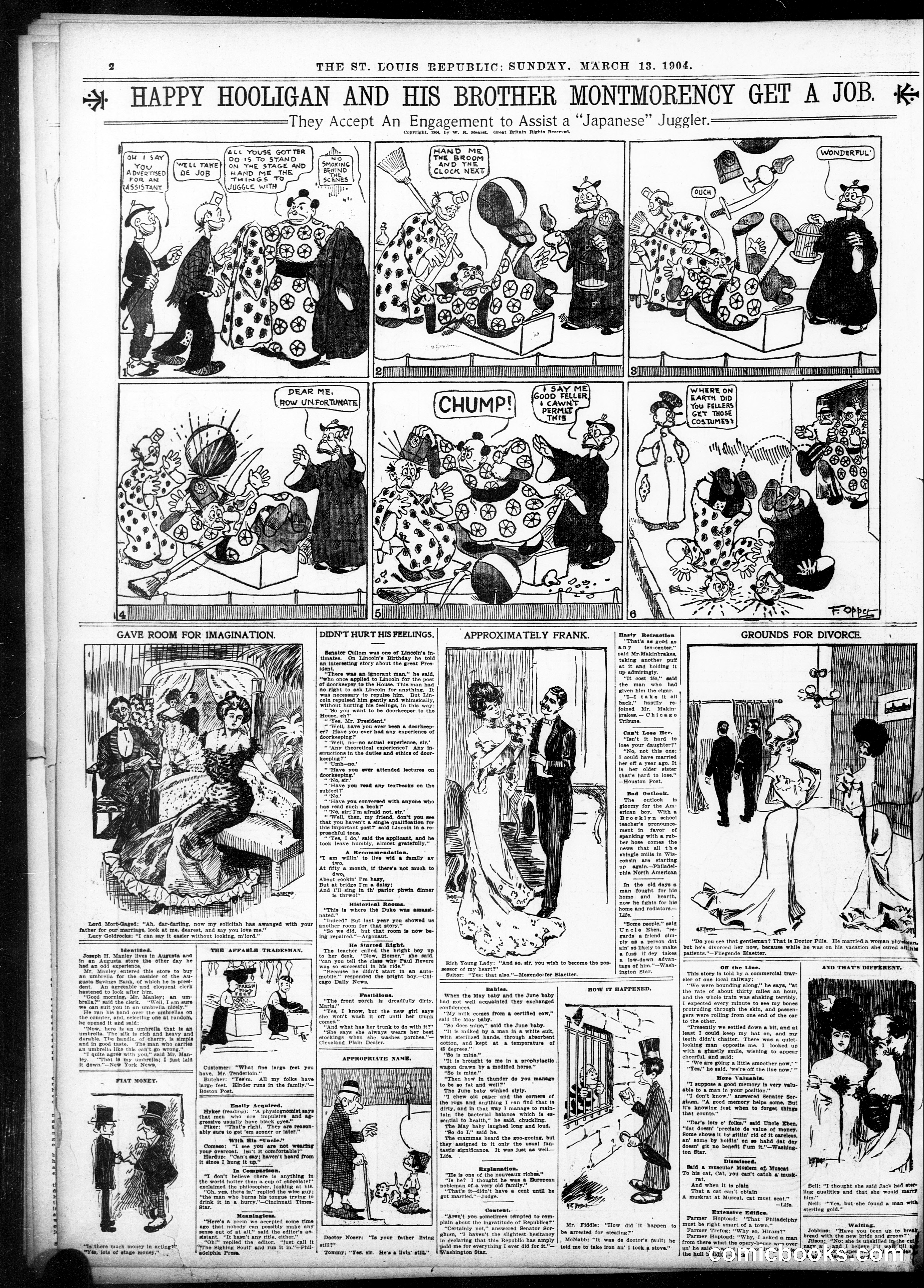
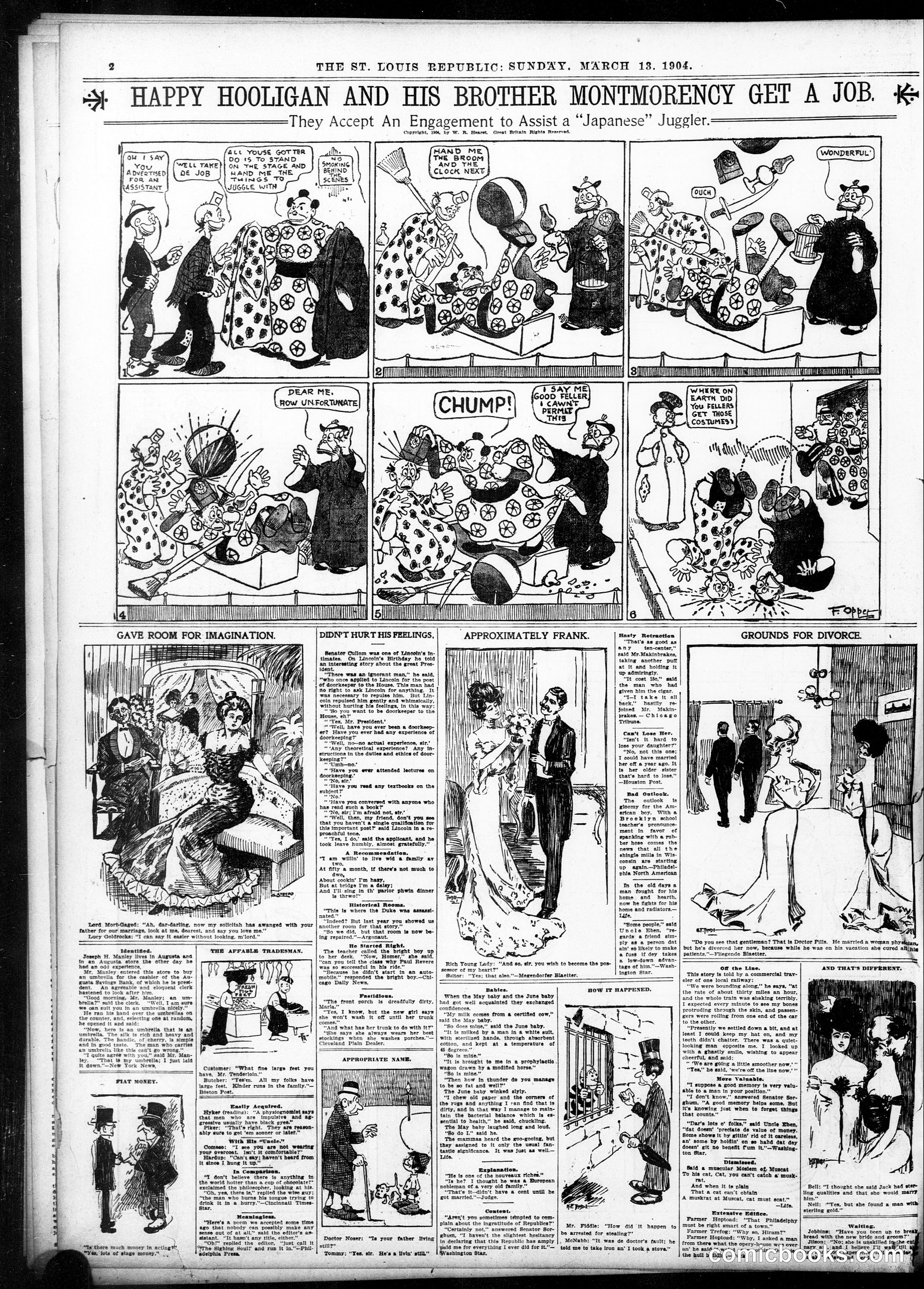
Six large panels fill this full-color Sunday page from Frederick Opper's long-running strip. The titular tramp — tin-can hat, ragged coat — and his brother Montmorency hire themselves out as assistants to a juggler billed as Japanese, handing up brooms, scissors, and a clock to be kept aloft. Predictably, the act collapses into tumbling props and an outraged employer. Opper's line is economical and rubbery; his speech balloons anchor each beat of slapstick with crisp, colloquial dialogue. *Happy Hooligan* launched in 1900 in Hearst papers, joining Outcault's *Yellow Kid* and Dirks's *Katzenjammer Kids* as the founding repertory of American comics. These weekly Sunday pages — printed in color on rotary presses — established the grammar of sequential art: fixed recurring characters, panel-to-panel continuity, and integrated text-image storytelling that would migrate intact into the comic book format three decades later.
Public domain, restored and presented by comicbooks.com public-domain