From the exhibition
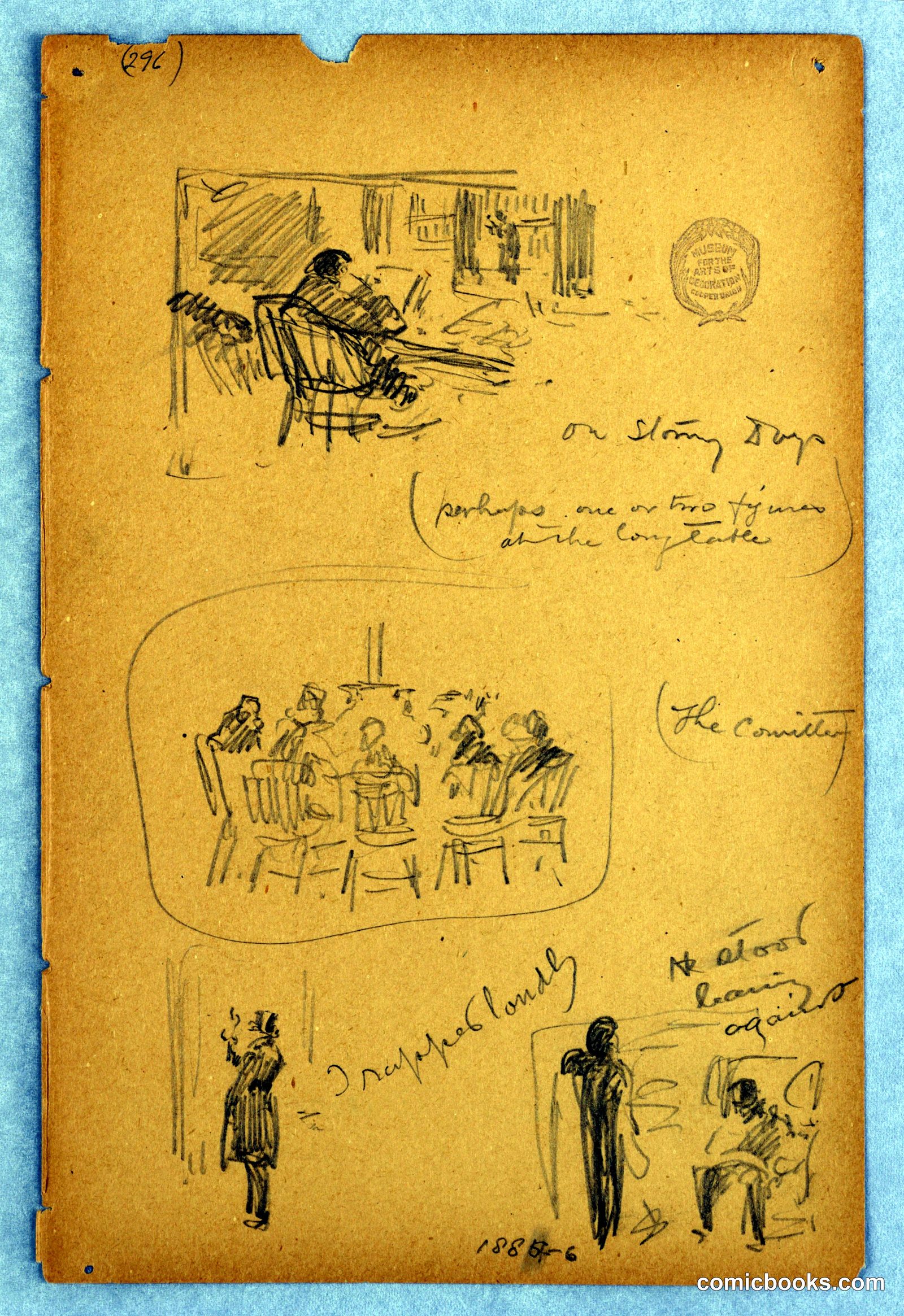
Study Sketches for Comic Narratives
Robert Frederick Blum, American, 1857–1903 · circa 1885
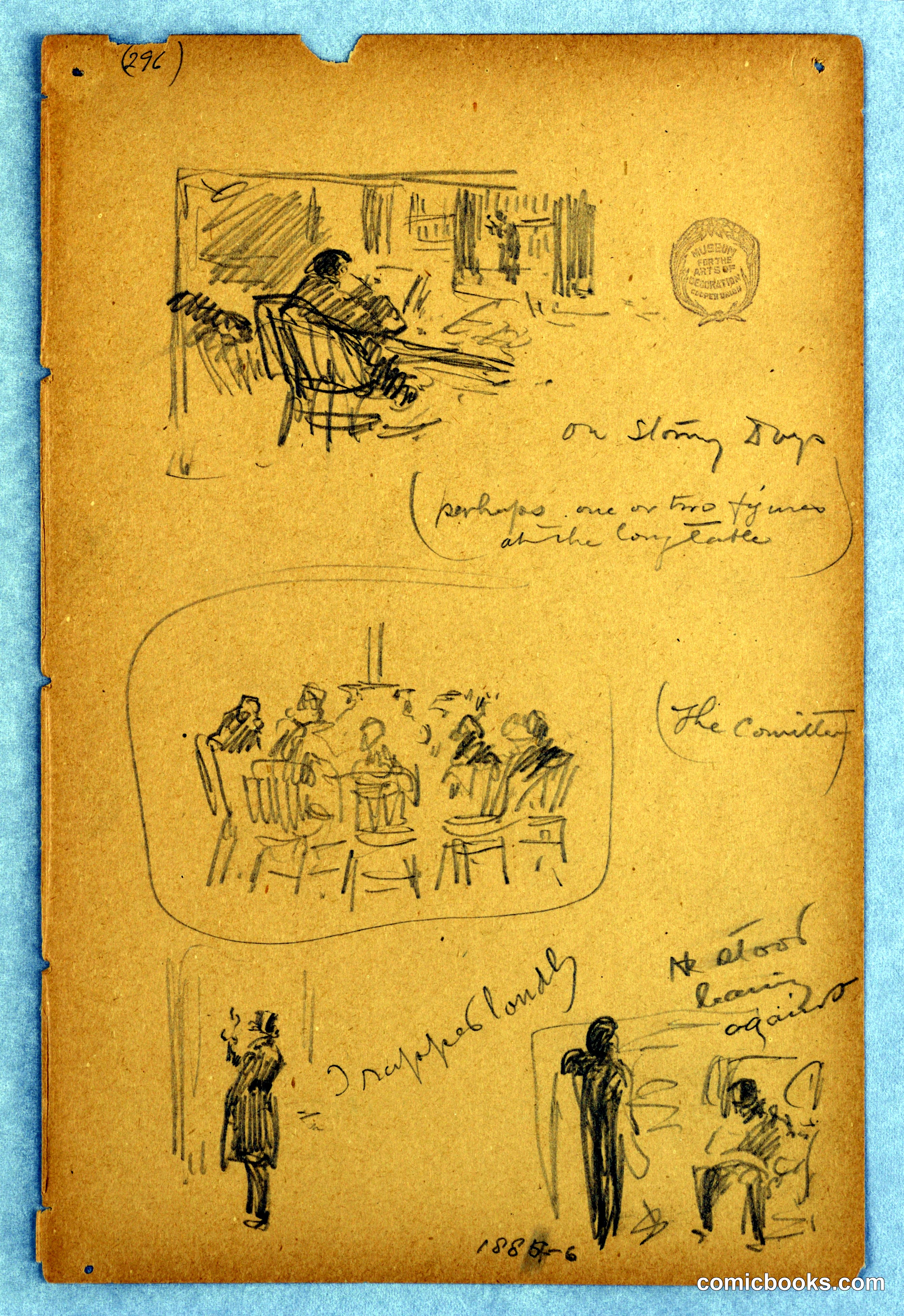
Robert Frederick Blum's preparatory sketches reveal the visual experiments that shaped early American sequential art. The page demonstrates key innovations: multiple panels containing connected action, figures responding to unseen stimuli, and gestural drawing that conveys personality through economy of line. The top scene shows a man in exaggerated posture; below, a seated group suggests social comedy; lower sketches explore character types and spatial relationships. Blum worked during the transition from single illustrations to narrative sequences—before speech balloons became standard. These studies document the visual language newspapers would soon standardize: panel borders, recurring characters, and expressive poses that told stories without words. Such working pages were crucial to the medium's development, establishing conventions that comics would inherit.
Public domain, restored and presented by comicbooks.com CC0