From the exhibition
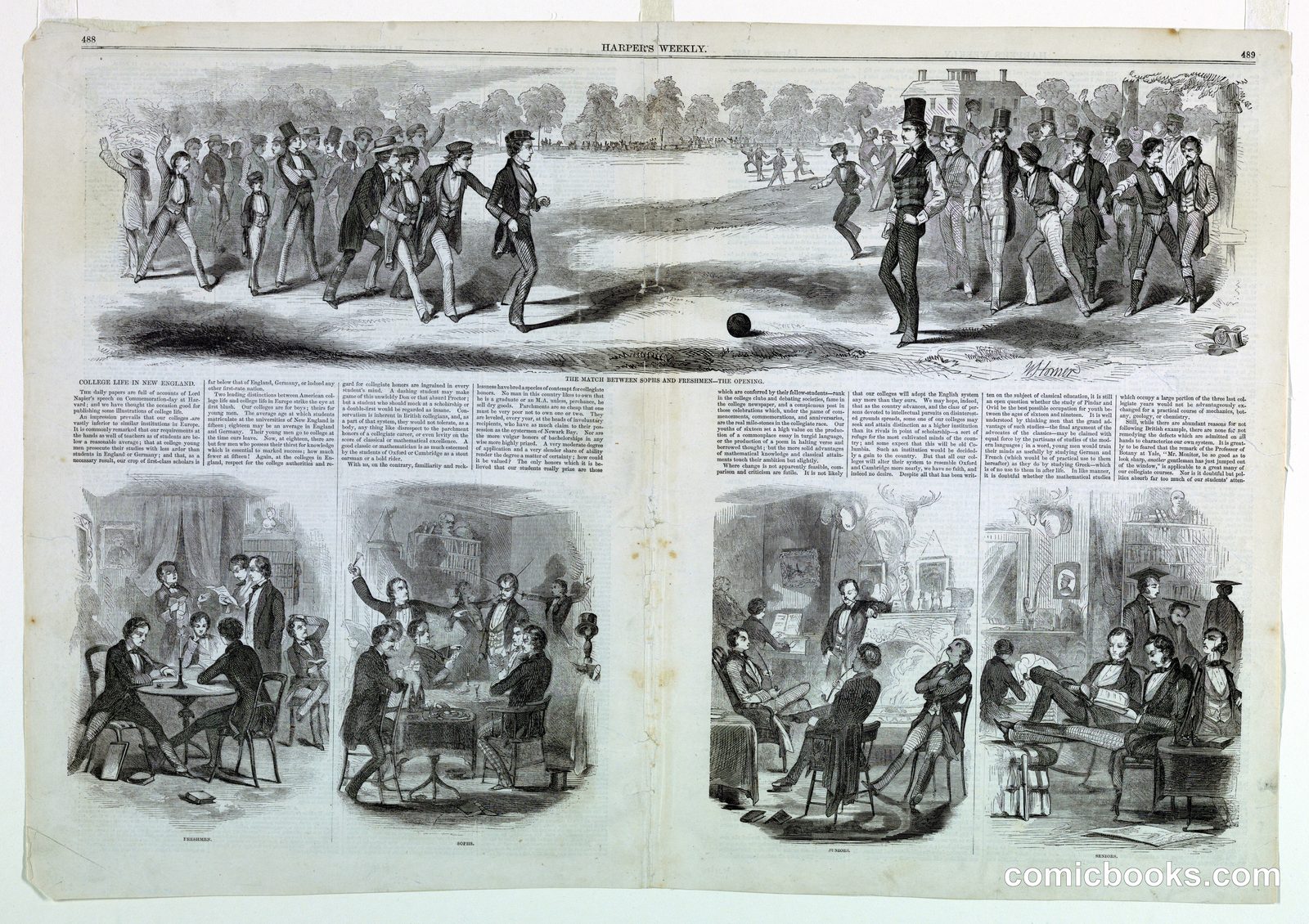
College Life in New England
Winslow Homer, American, 1836–1910 · 1857
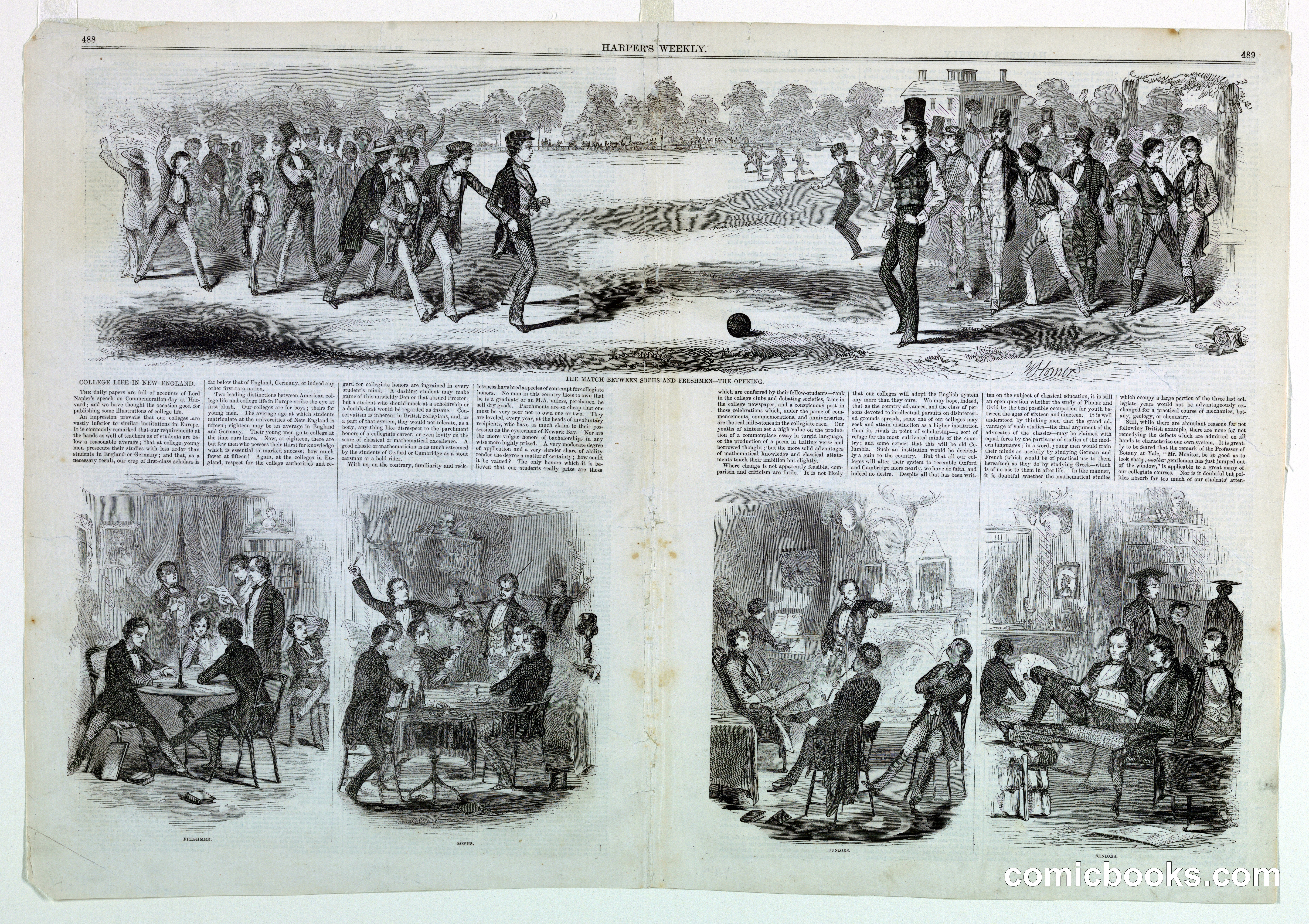
Winslow Homer's multi-panel narrative combines sequential illustration with integrated text—a visual strategy that prefigures the modern comic strip. The page depicts campus scenes across discrete moments: outdoor games, dormitory gatherings, and social interactions among students. Homer employs consistent character types and recurring situations across panels, establishing visual continuity while advancing a narrative through spatial arrangement. Published in Harper's Weekly, such illustrated sequences demonstrated how panels, typography, and sequential action could tell complex stories. This approach influenced the development of newspaper comics in the 1890s, establishing conventions—distinct frames, character consistency, narrative progression—that became foundational to the medium. Homer's work exemplifies the nineteenth-century illustrated press's role in inventing the visual grammar later codified in comic strips and books.
Public domain, restored and presented by comicbooks.com CC0