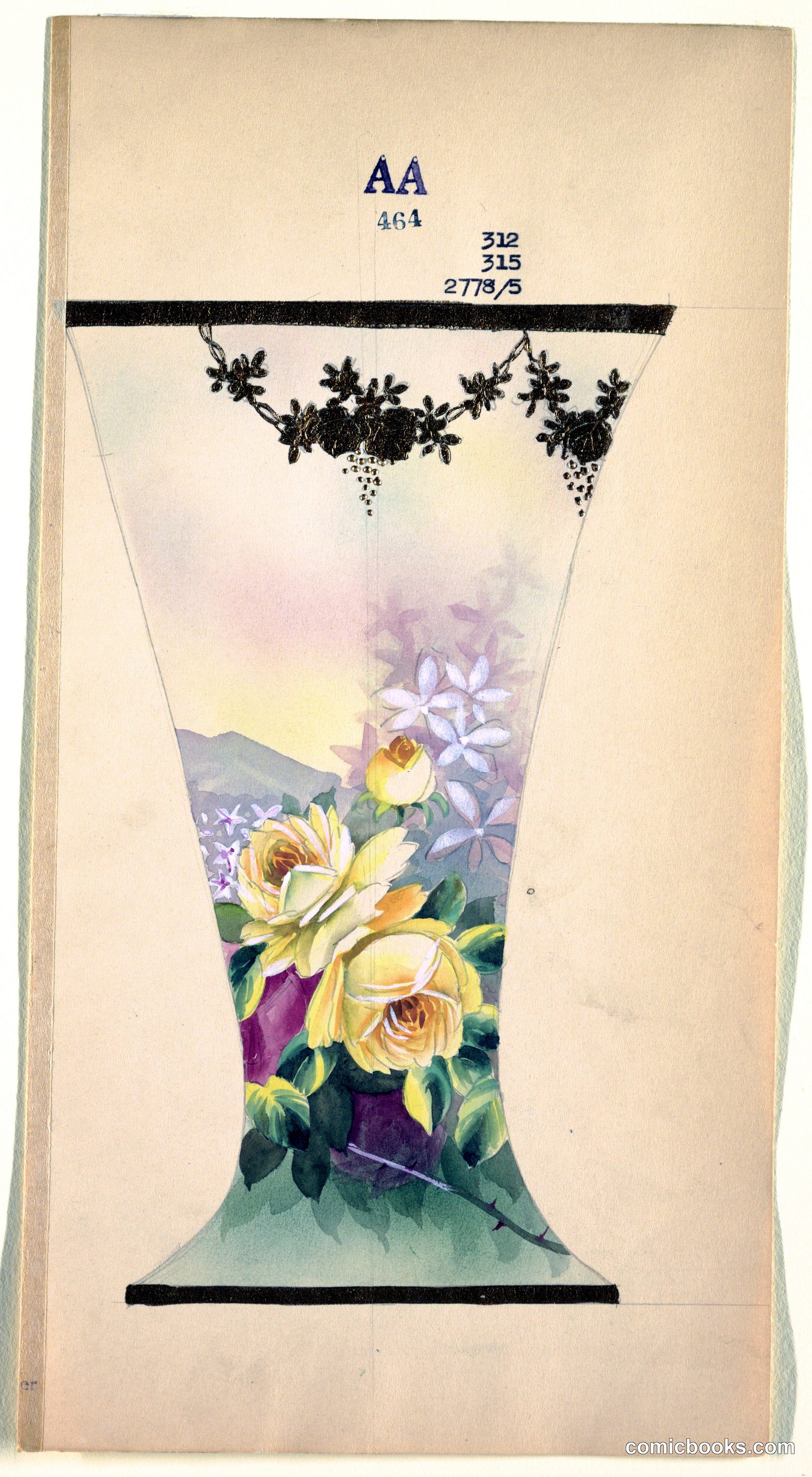
From the exhibition
Design for a Vase
Noritake, Japan and New York, New York, USA · circa 1880
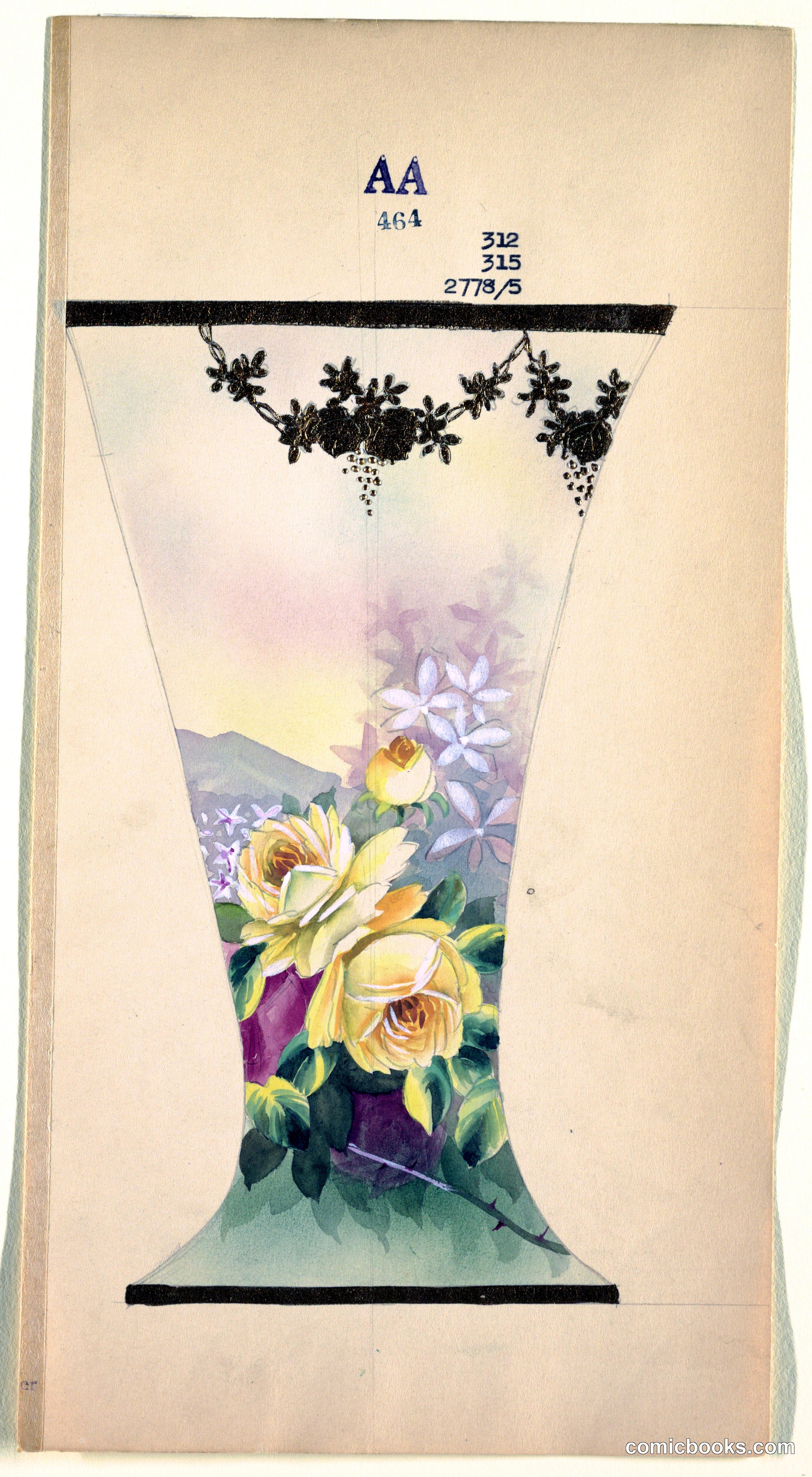
This decorative vase design exemplifies the japonisme movement that swept through Western applied arts in the late nineteenth century. The composition features a trapezoid form with contrasting ornamental registers: the upper portion displays a delicate lace-like border in black against cream, while the lower section showcases a naturalistic landscape with yellow roses, purple clematis, and distant hills rendered in watercolor. The design reflects the aesthetic principles of Noritake, the Japanese porcelain manufacturer founded in 1876, which exported hand-painted ceramics to American and European markets. The combination of Western floral painting techniques with Japanese compositional sensibilities—particularly the integration of decorative borders and landscape recession—demonstrates how international trade and artistic exchange shaped ornamental design in the Gilded Age.
Public domain, restored and presented by comicbooks.com CC0