From the exhibition
Thomas Nast (c. 1860–1870)
attributed to the Mathew Brady Studio · Attributed to the Mathew Brady Studio, c. 1860–1870. Glass plate collodion negative. National Portrait Gallery, Smithsonian Institution (NPG.81.M1232). CC0.
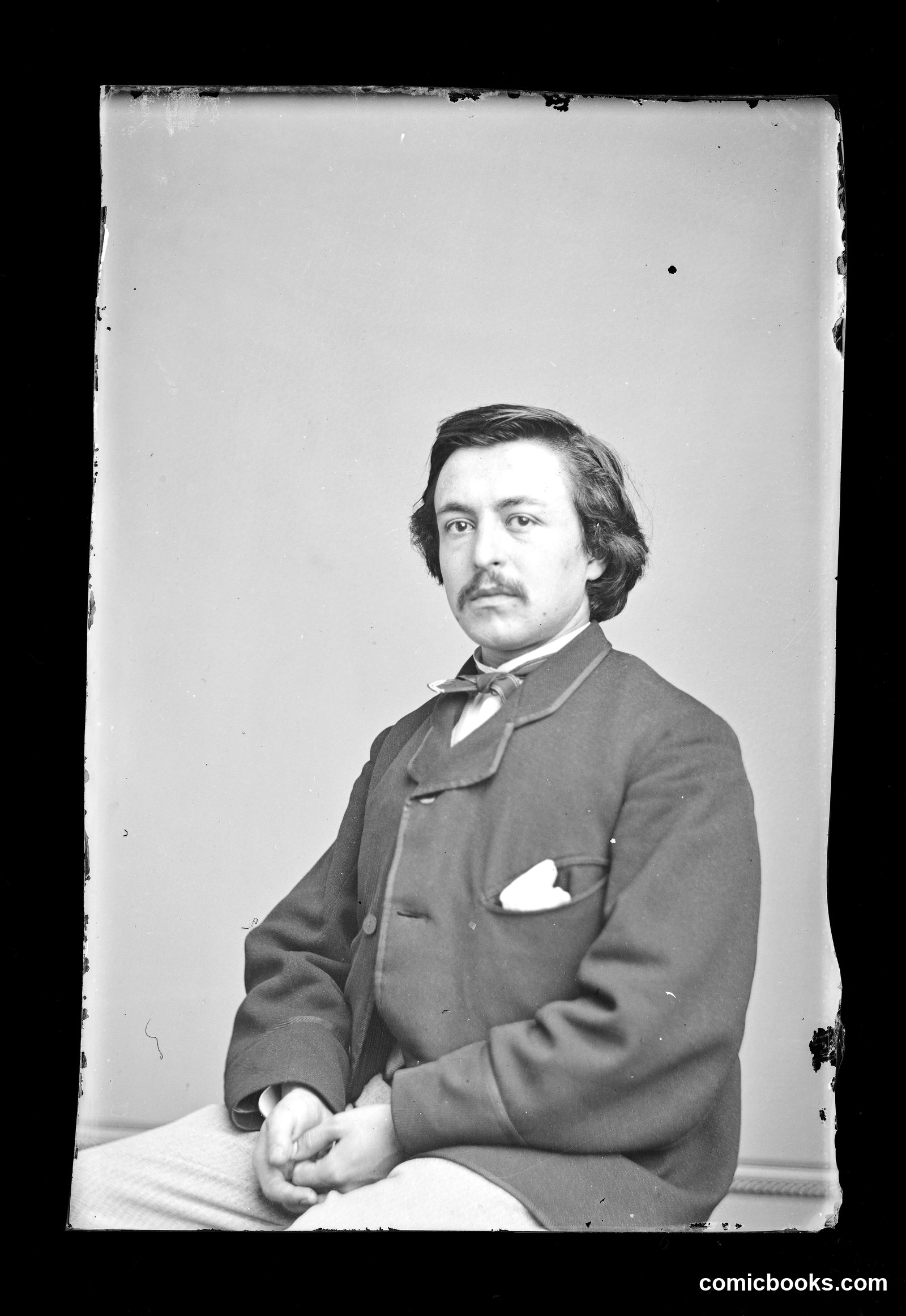
This studio portrait captures Thomas Nast — Harper's Weekly's dominant visual voice from 1862 through the 1880s — as a young man in his twenties, seated with hands clasped, wearing a dark frock coat, waistcoat, and bow tie, his dark hair worn long and a mustache trimmed close. The Mathew Brady Studio, the era's foremost portrait operation, photographed nearly every notable American of the period. Nast would go on to invent the visual grammar of American political cartooning: the Republican elephant, the Democratic donkey, Uncle Sam's modern silhouette, and a rotund, fur-trimmed Santa Claus. His sustained campaign against William "Boss" Tweed's Tammany Hall machine — conducted entirely in ink — contributed directly to Tweed's 1871 prosecution.
attributed to the Mathew Brady Studio Public domain
