From the exhibition
Compromise with the South
Thomas Nast · 1864
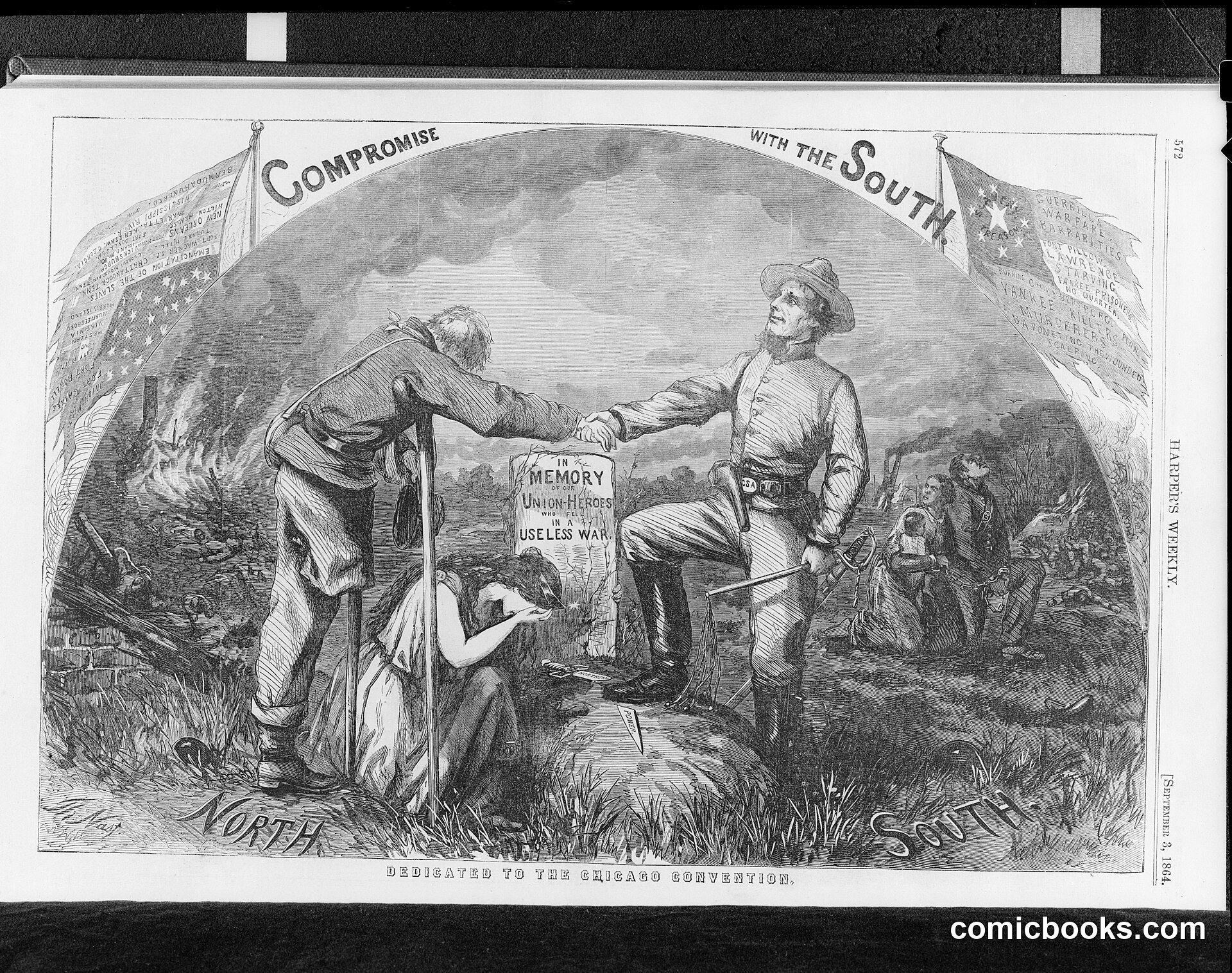
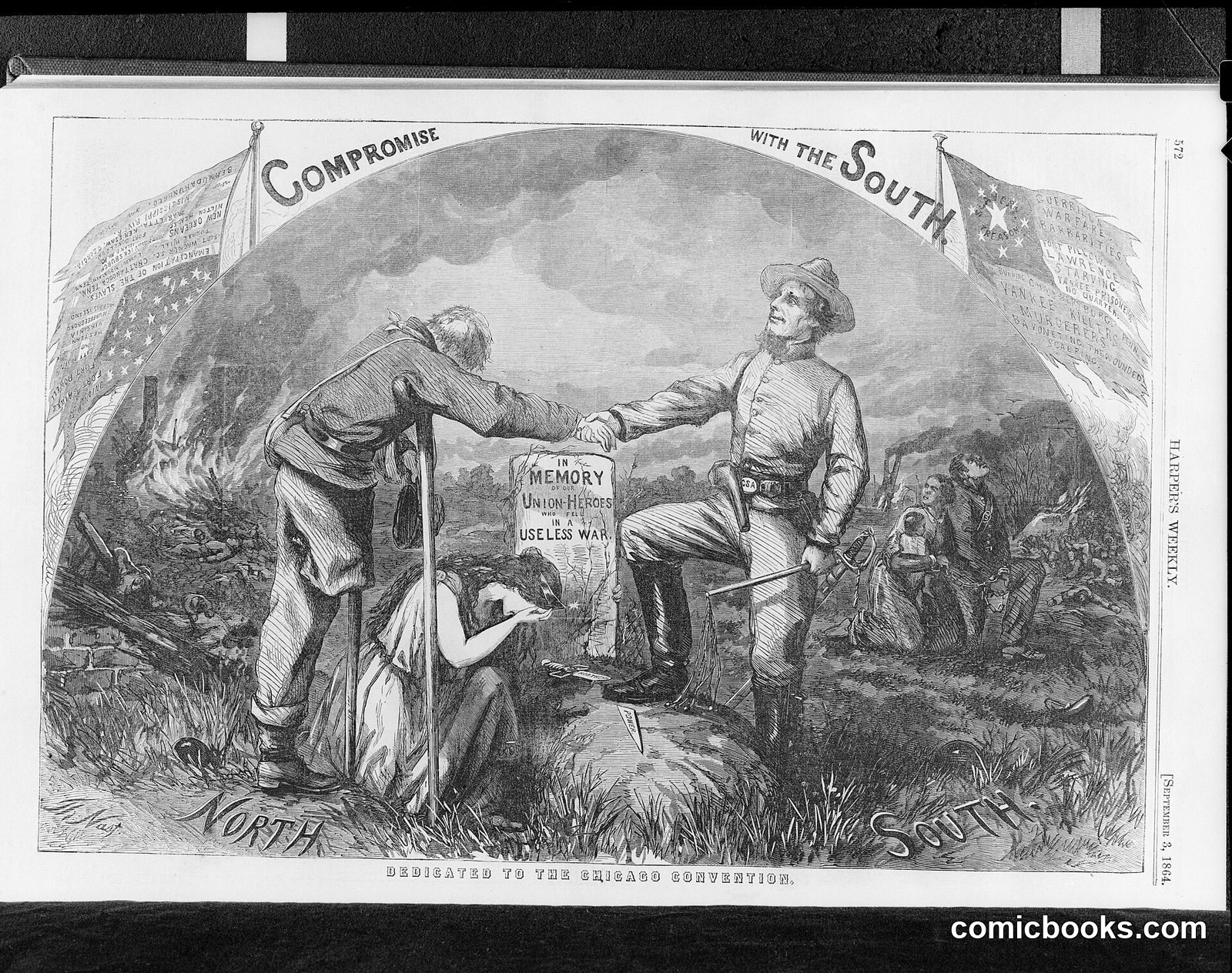
Thomas Nast's "Compromise with the South," published in Harper's Weekly in 1864, is one of the most powerful political images ever drawn in America, and a towering example of how a single cartoon could shape a nation's argument with itself. Appearing at a bleak moment in the Civil War, when war-weariness tempted the North toward a negotiated peace, Nast answered not with words but with a devastating tableau: a triumphant, defiant Confederate figure clasping hands with a broken, mourning Union over the grave of Northern dead, the sacrifice of the war rendered meaningless by surrender. The image struck like a thunderclap. It is widely credited with helping stiffen Northern resolve and aid Lincoln's reelection, a vivid demonstration that pictures could move public opinion where editorials could not. For the story of comics, Nast's work is foundational. He showed that sequential, symbol-rich cartooning could carry the deepest moral and political weight, that drawing was a form of argument and conscience. Every editorial cartoonist, and every comic that dares to take on the powerful, works in the shadow of what Nast proved possible here.
Nast, Thomas, 1840-1902. Public domain