Exhibition · 1895–1906
The First Funnies
Two newspaper titans, one bald kid, and the accidental birth of comics.
At the close of the nineteenth century, New York's newspapers were locked in a spectacular battle for readers. Joseph Pulitzer's *World* and William Randolph Hearst's *Journal* poured money into color printing, sensational headlines, and Sunday supplements meant to be irresistible on the newsstand. Into that arms race stepped the cartoonists — and almost by accident, they invented the American comic.
The Circulation War
The comic strip did not arrive fully formed; it was pulled into being by commerce. Publishers discovered that a recurring cartoon character could do what a headline could not: bring the same reader back, week after week. When Richard F. Outcault's grinning slum urchin — soon known as the Yellow Kid — became a sensation in the *World*, Hearst simply hired him away. The tug-of-war over that single bald, nightshirted character helped give the era its enduring nickname, 'yellow journalism.' Comics, it turned out, sold papers, and that commercial proof changed everything.
A New Visual Language
Freed to experiment on the vast color pages of the Sunday supplement, cartoonists assembled the grammar we still use. They built the recurring cast, so readers returned for characters they already loved. They broke the single cartoon into sequences of panels, letting a joke unfold in time. And they moved words inside the picture — most decisively in the speech balloon, which let characters seem to talk. Rudolph Dirks's Katzenjammer Kids, adapted from the German mischief of Wilhelm Busch's *Max und Moritz*, helped make panels and balloons standard equipment rather than novelties.
What began as ammunition in a newspaper war became a permanent art form. Within a decade the funnies had their own stars — tramps, grandpas, and rascally children — and their creators had become celebrities in their own right. Outcault would go on to turn Buster Brown into a licensing empire, hinting at the commercial machine comics would become. The heroes in capes were still four decades away, but the tools that would carry them were forged here, on cheap newsprint, in the scramble to sell one more paper.
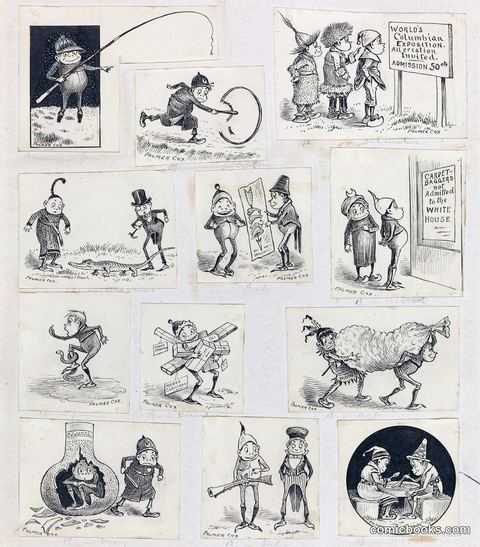 Sheet of Brownie DrawingsPalmer Cox c. 1890s
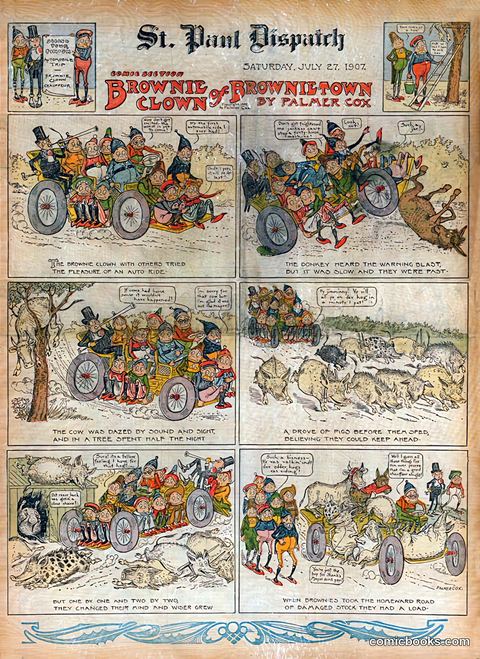 The Brownie Clown of BrownietownPalmer Cox 1907
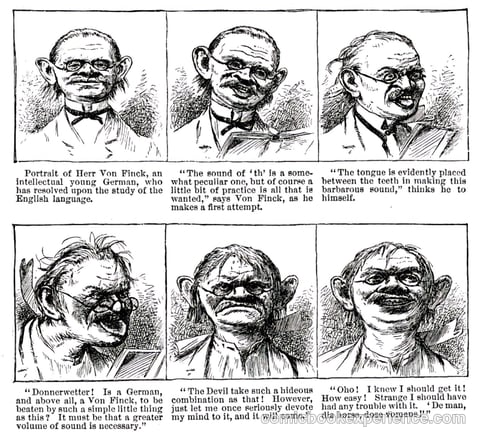 Herr Von Flinck Studies EnglishA. B. Frost c. 1880s
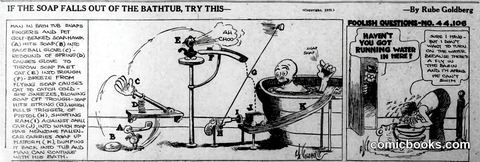 If the Soap Falls Out of the Bathtub, Try This—Rube Goldberg 1921
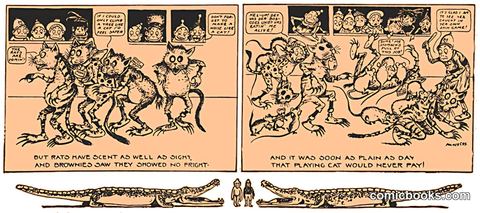 The Brownies Play CatPalmer Cox c. 1900s
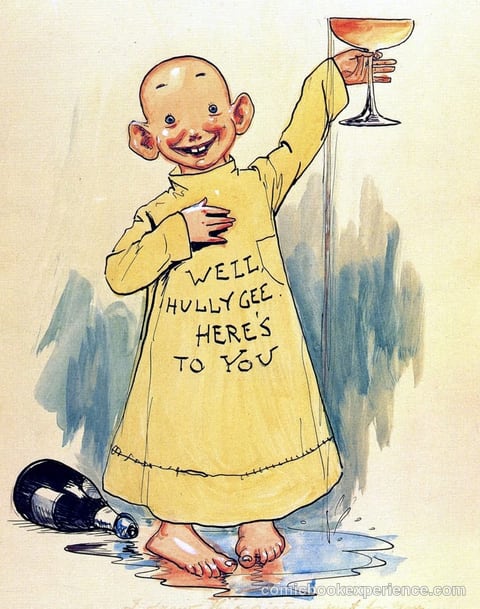 The Yellow KidRichard F. Outcault 1896
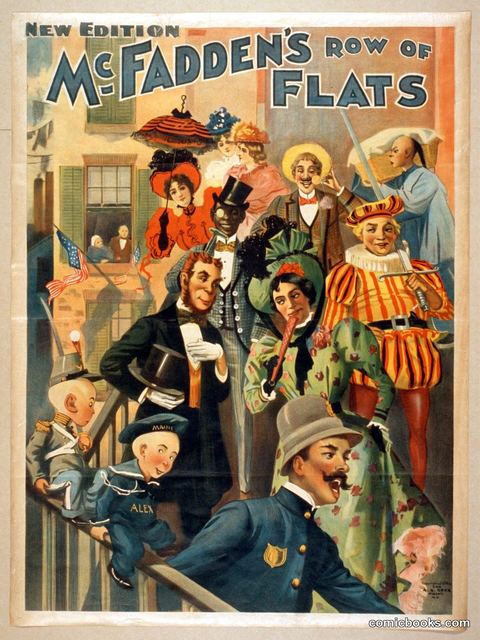 McFadden's Row of FlatsRichard F. Outcault 1896
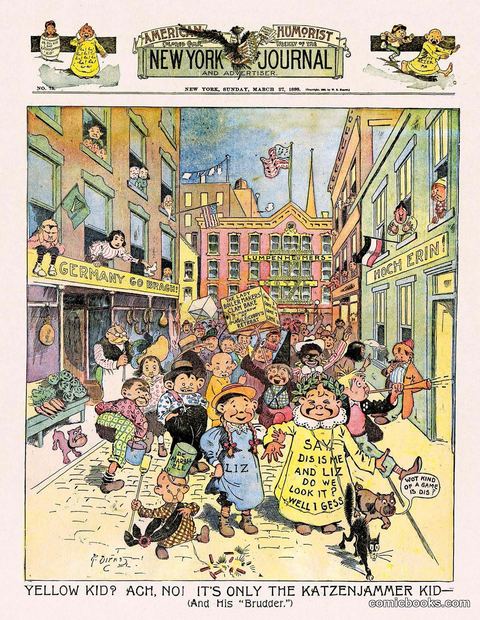 The Katzenjammer KidsRudolph Dirks 1898
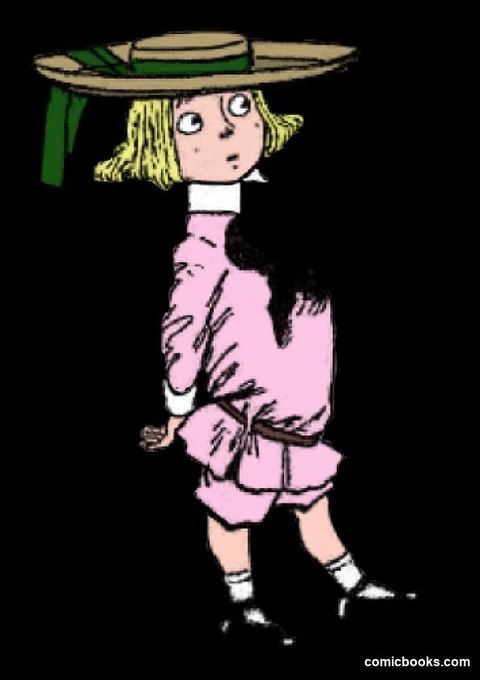 Buster BrownRichard F. Outcault 1906
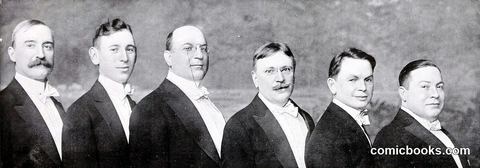 Cartoonists of the Lambsphotographer unknown 1900
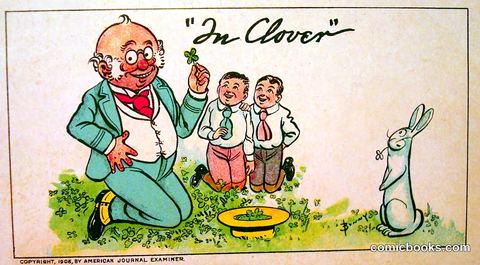 Foxy GrandpaCarl Schultze 1902
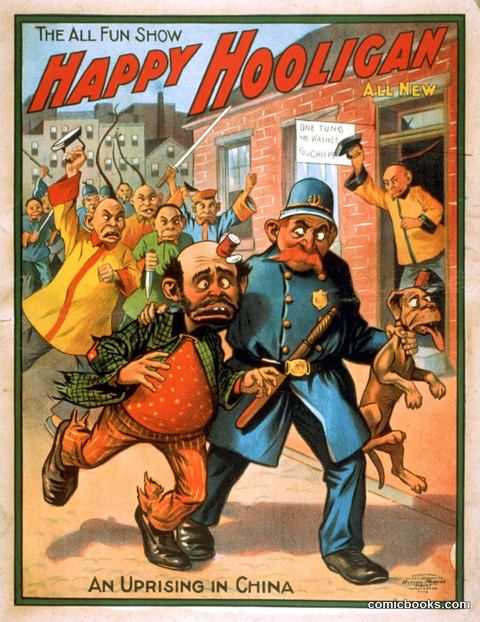 Happy HooliganFrederick Burr Opper 1902
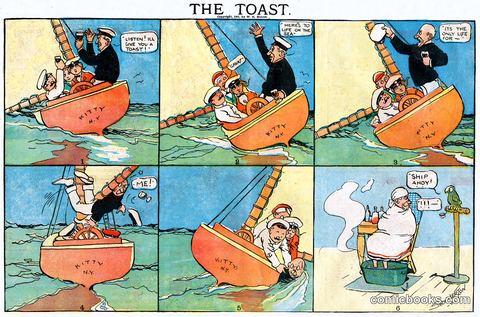 Little JimmyJames Swinnerton 1901
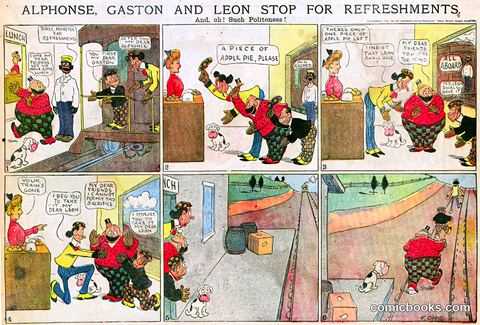 Alphonse and GastonFrederick Burr Opper 1903
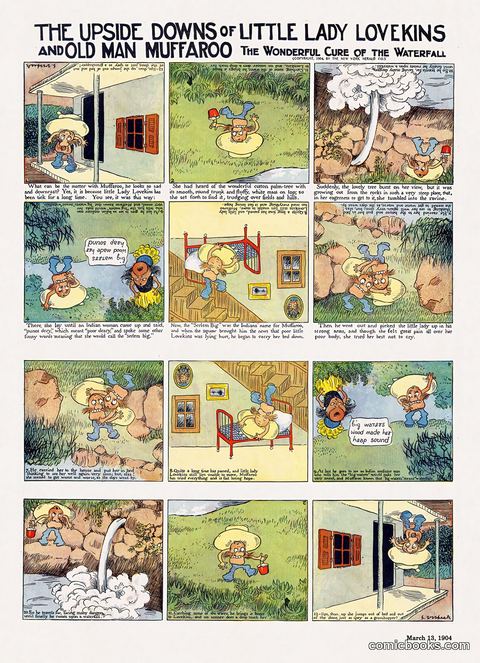 The Upside-Downs of Little Lady LovekinsGustave Verbeek 1904
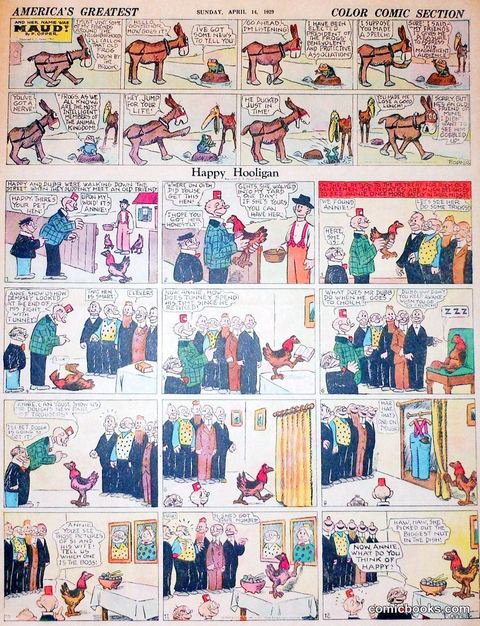 And Her Name Was MaudFrederick Burr Opper 1904