judge
Judge — April 4, 1931
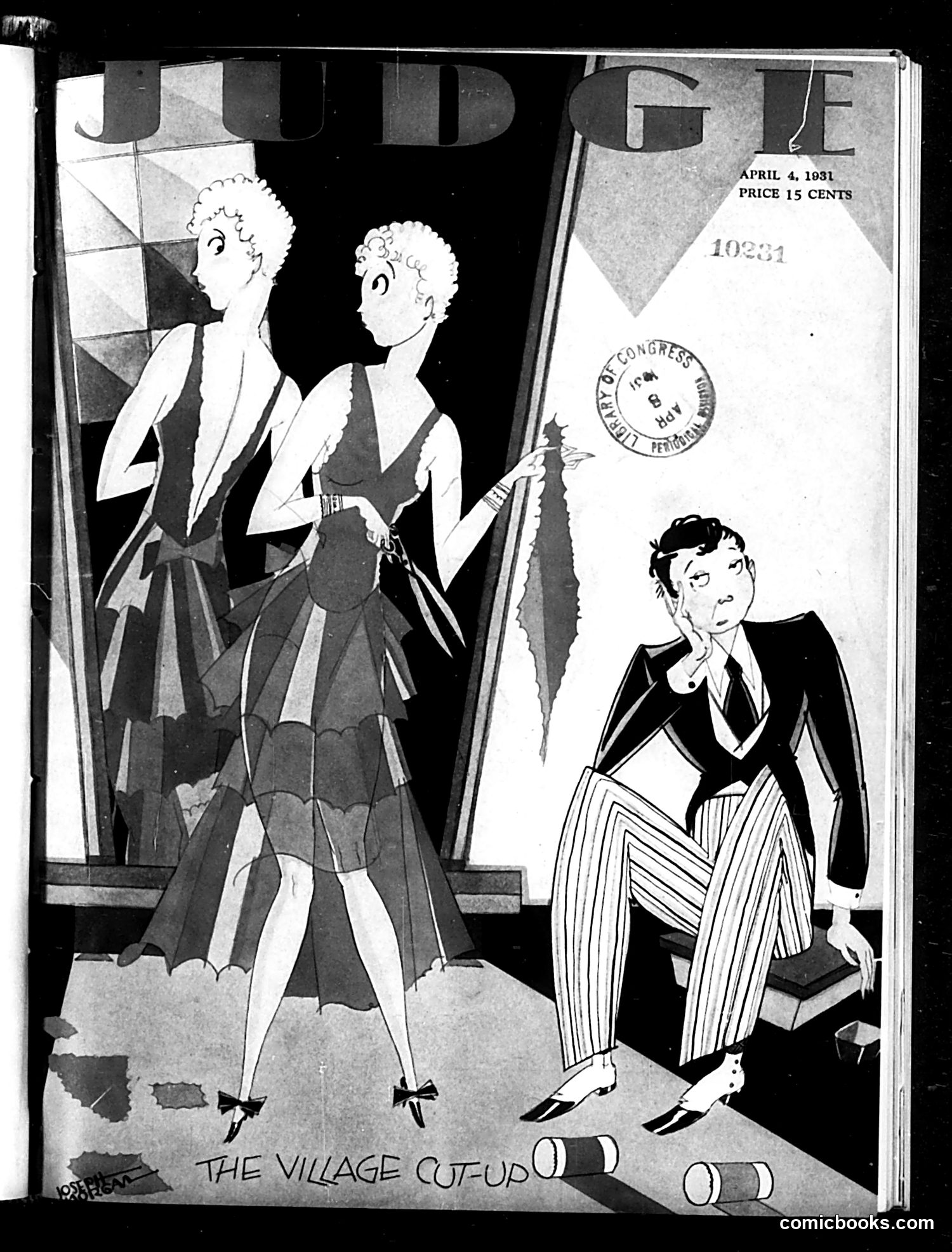
"The Village Cut-Up" — Judge Magazine, April 4, 1931 This cartoon satirizes the contrast between fashionable women and a disapproving man, likely a conservative figure representing traditional morality or village respectability. The two elegantly dressed women display the modern "flapper" style of the 1920s-30s—short skirts, bobbed hair, and confident bearing—embodying the social freedoms that shocked conservative America during this era. The scowling man on the right, labeled "The Village Cut-Up," appears to represent the hypocrite or killjoy who publicly condemns modern women's fashion and behavior while privately enjoying their company or struggling with his own contradictions. The satire mocks small-town moral gatekeepers who lectured against changing social norms they couldn't prevent.

Analysis of Ethyl Gasoline Advertisement This is not a satirical cartoon but rather a straightforward product advertisement for Ethyl Gasoline, published in Judge magazine. The page uses a panther climbing a tree as a metaphor for controlled power and efficiency. The accompanying text compares the gasoline's performance to the panther's muscular control—"every muscle is under control." The advertisement explains that Ethyl fluid additive prevents engine "knock" and uneven combustion, delivering smoother, more powerful performance. The chemical formula shown (lead-based additives, though not explicitly stated here) was standard in mid-20th century gasoline marketing. This represents typical vintage advertising that appeared in satirical magazines, though the content itself is purely promotional rather than satirical.
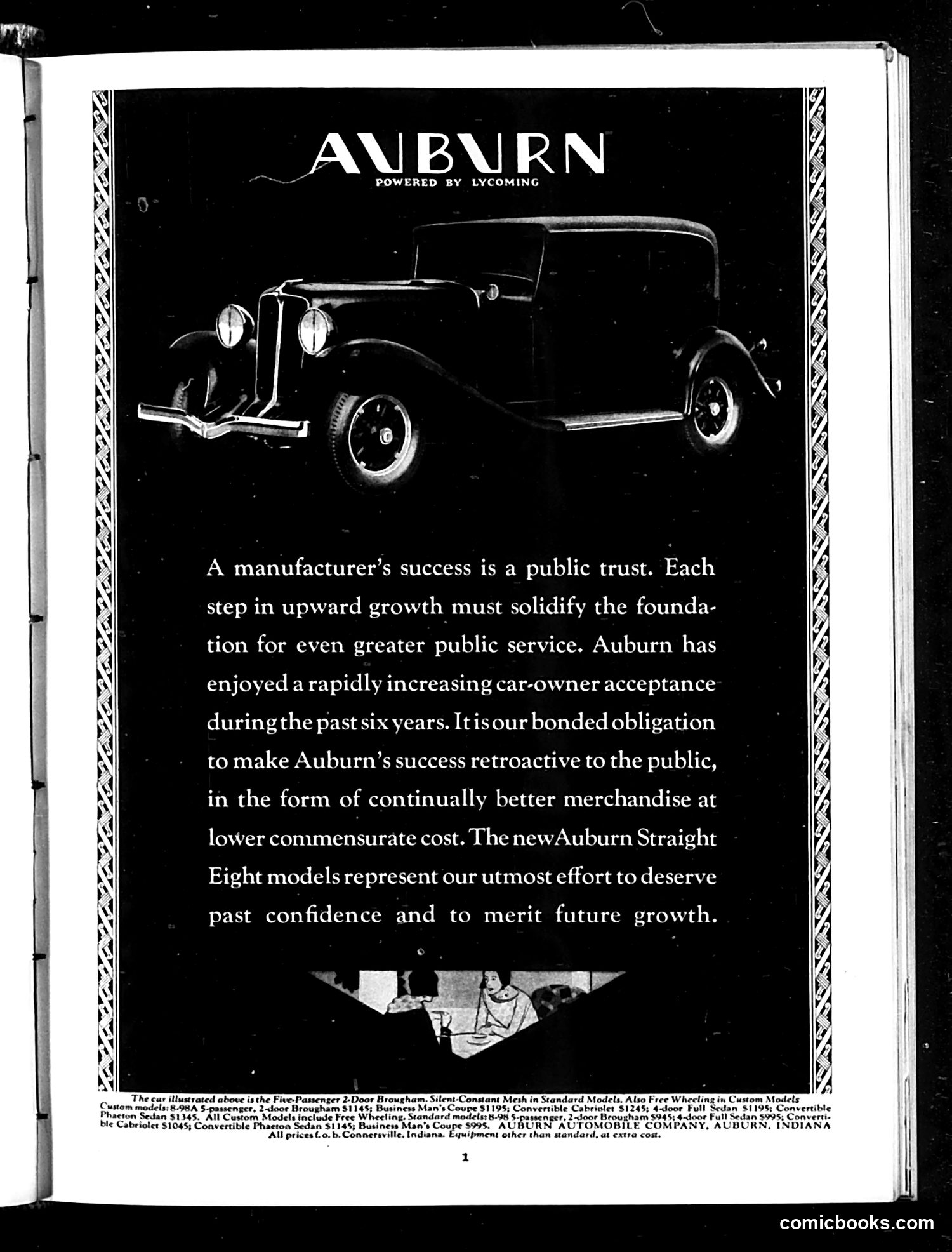
Auburn Automobile Advertisement This page is primarily an advertisement, not a political cartoon. It promotes Auburn automobiles, specifically their new "Straight Eight" models, powered by Lycoming engines. The ad uses rhetorical appeals rather than satire: it frames Auburn's manufacturing success as a "public trust," arguing the company has earned customer loyalty over six years and now owes continued improvement. The messaging suggests Auburn is delivering better cars at lower costs to deserve "past confidence and merit future growth." The image shows a sleek 1920s-era automobile. The small photograph at bottom appears to show factory workers or manufacturing scenes, reinforcing Auburn's commitment to quality production. This represents typical early automotive-era advertising that emphasized reliability, value, and the manufacturer's social responsibility to consumers.
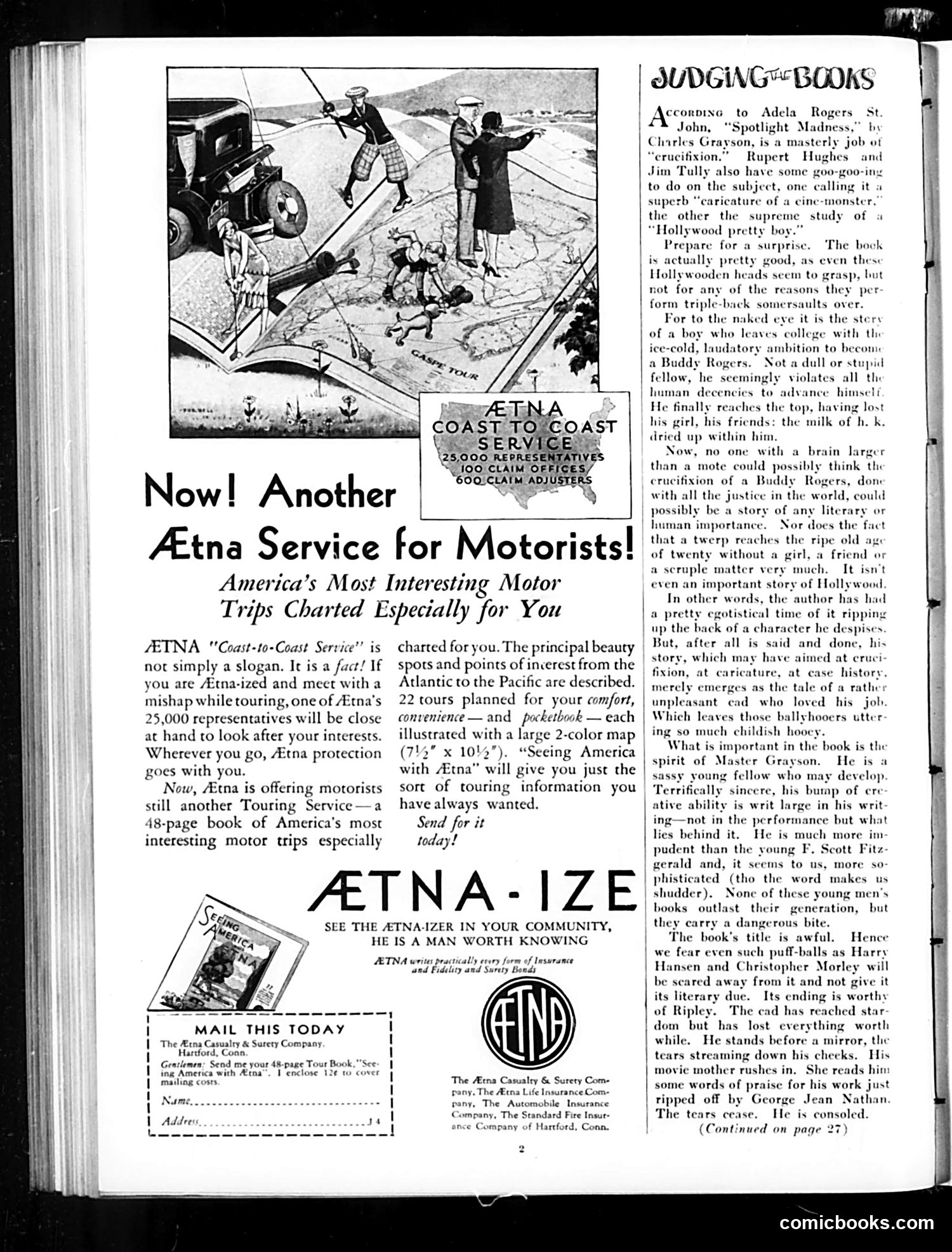
Analysis of This Judge Magazine Page This page is primarily advertising content rather than political satire. The main feature promotes Ætna Insurance's new "Coast-to-Coast Service" for motorists, offering touring guides and roadside assistance across America. The cartoon at top illustrates the service's appeal: a motorist's car has broken down, and Ætna representatives arrive to help while the family waits. The map shows Ætna's 25,000 representatives and claim offices nationwide. The right column contains a book review ("Judging the Books") critiquing what appears to be a Hollywood novel about an ambitious young man. The reviewer notes the story lacks substance despite competent writing. The page reflects 1920s consumer culture: automobile travel was becoming popular, and insurance companies were marketing protection and peace-of-mind to middle-class drivers.
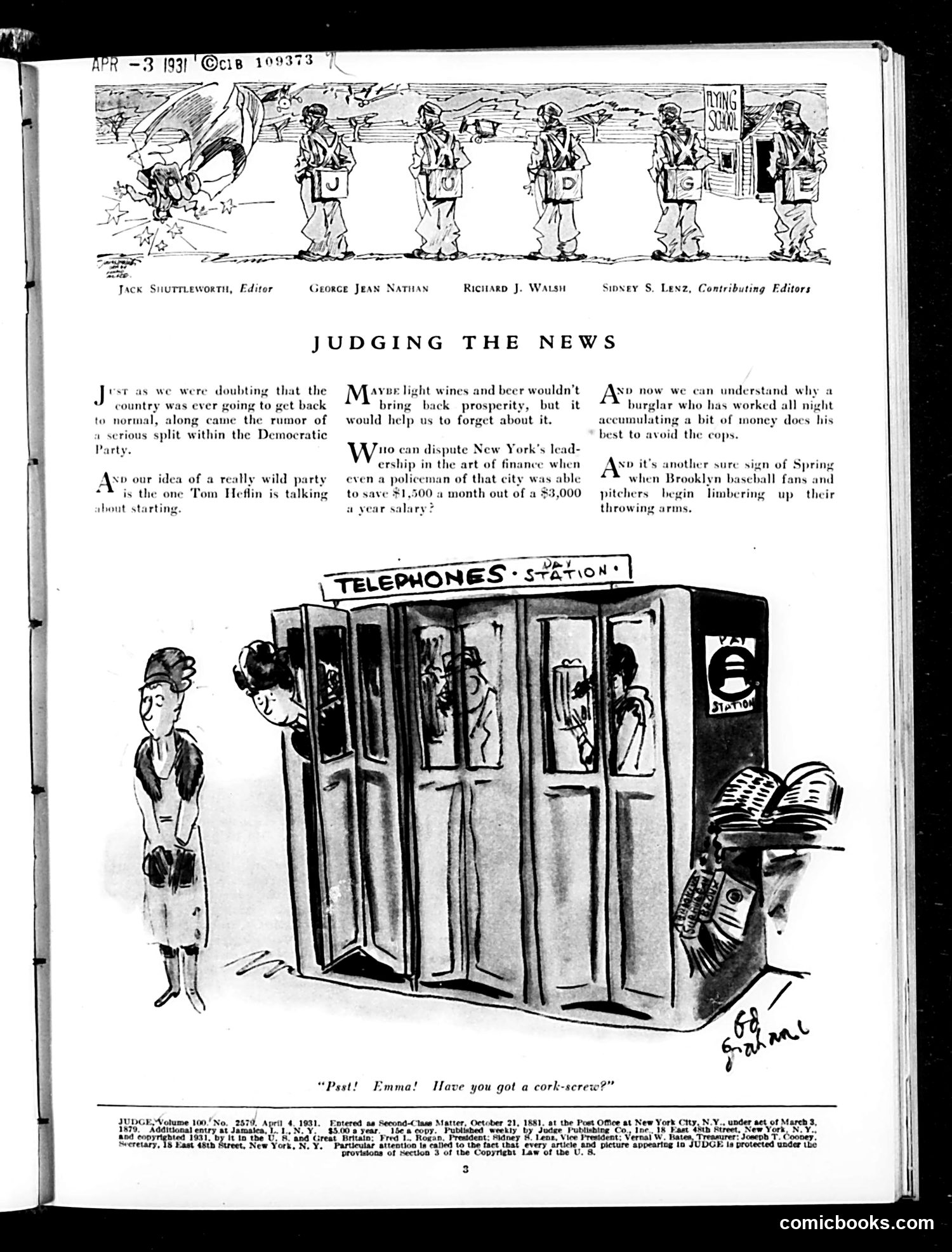
Explanation for Modern Readers This 1931 *Judge* magazine page contains two elements: "Judging the News" (top): A brief editorial section commenting on current events, including remarks about Democratic Party divisions, a "wild party" involving Tom Heflin, light wines/beer, New York's financial leadership, and Brooklyn baseball season. Main Cartoon (bottom): Depicts a "Telephone Station" with multiple phone booths. A woman outside asks another, "Pest! Emma! Have you got a cork-screw?" The joke appears to reference Prohibition (which ended in 1933)—the woman is seeking a tool to open bottles, suggesting people were circumventing alcohol restrictions through phone booths or other hidden means. The cartoon satirizes how commonplace illegal drinking had become during the late Prohibition era.
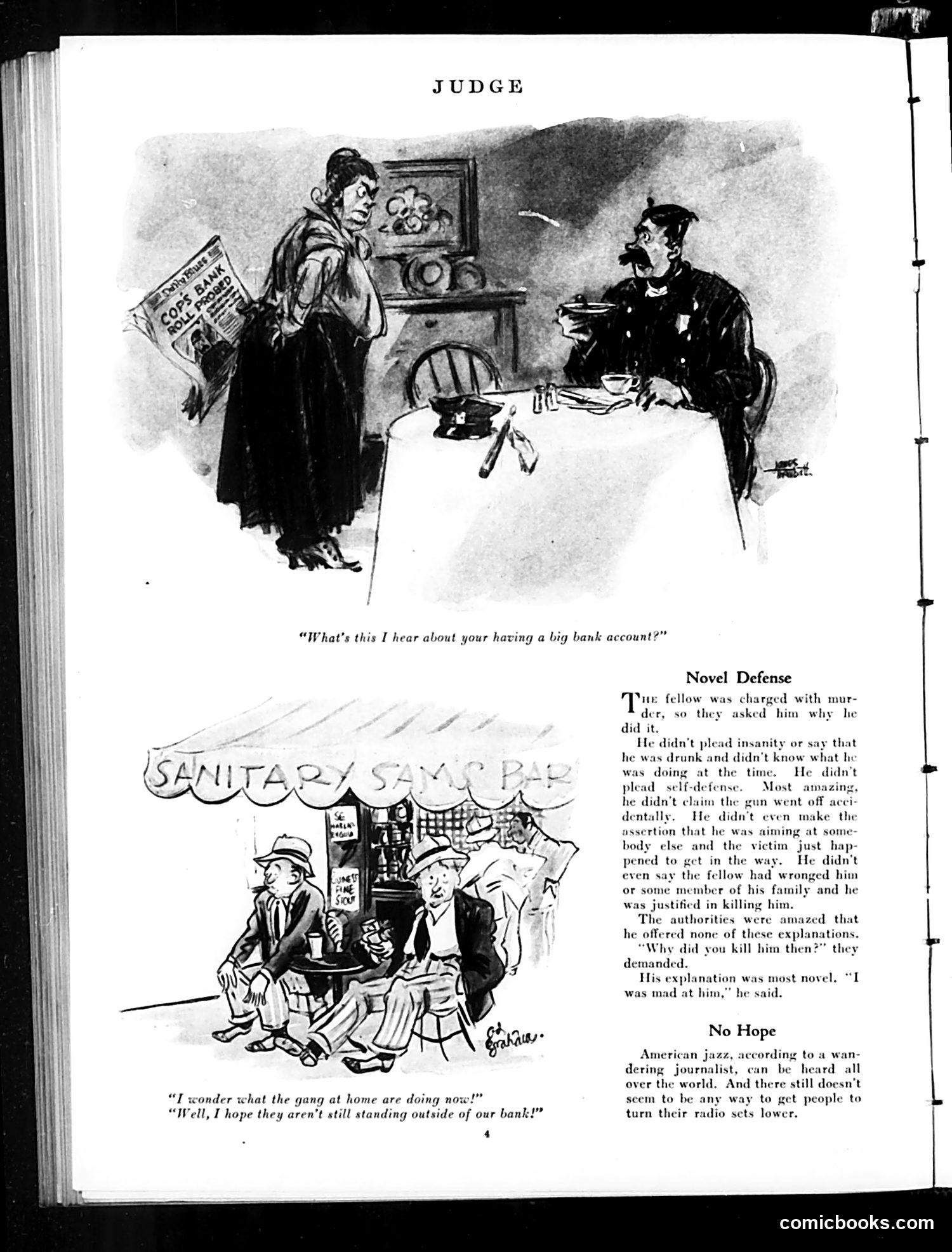
Analysis of Judge Magazine Page Top Cartoon ("Judge"): A man holding a newspaper reading "COTT BANK" stands before a judge's desk. The judge asks about his "big bank account," suggesting he's being questioned about substantial finances—likely during legal proceedings. The satire appears to mock either wealth inequality or the assumption that financial status automatically grants judicial favor. Bottom Cartoon ("Sanitary Sarcasm"): Two men in a tenement or poor neighborhood discuss a gang, hoping "they aren't still standing outside of our bank." The humor is bitterly ironic: impoverished residents jokingly reference protecting *their* bank—suggesting they have no real bank account or assets worth protecting. "No Hope" Section: Commentary on American jazz's global spread and radio's inability to control public listening habits.
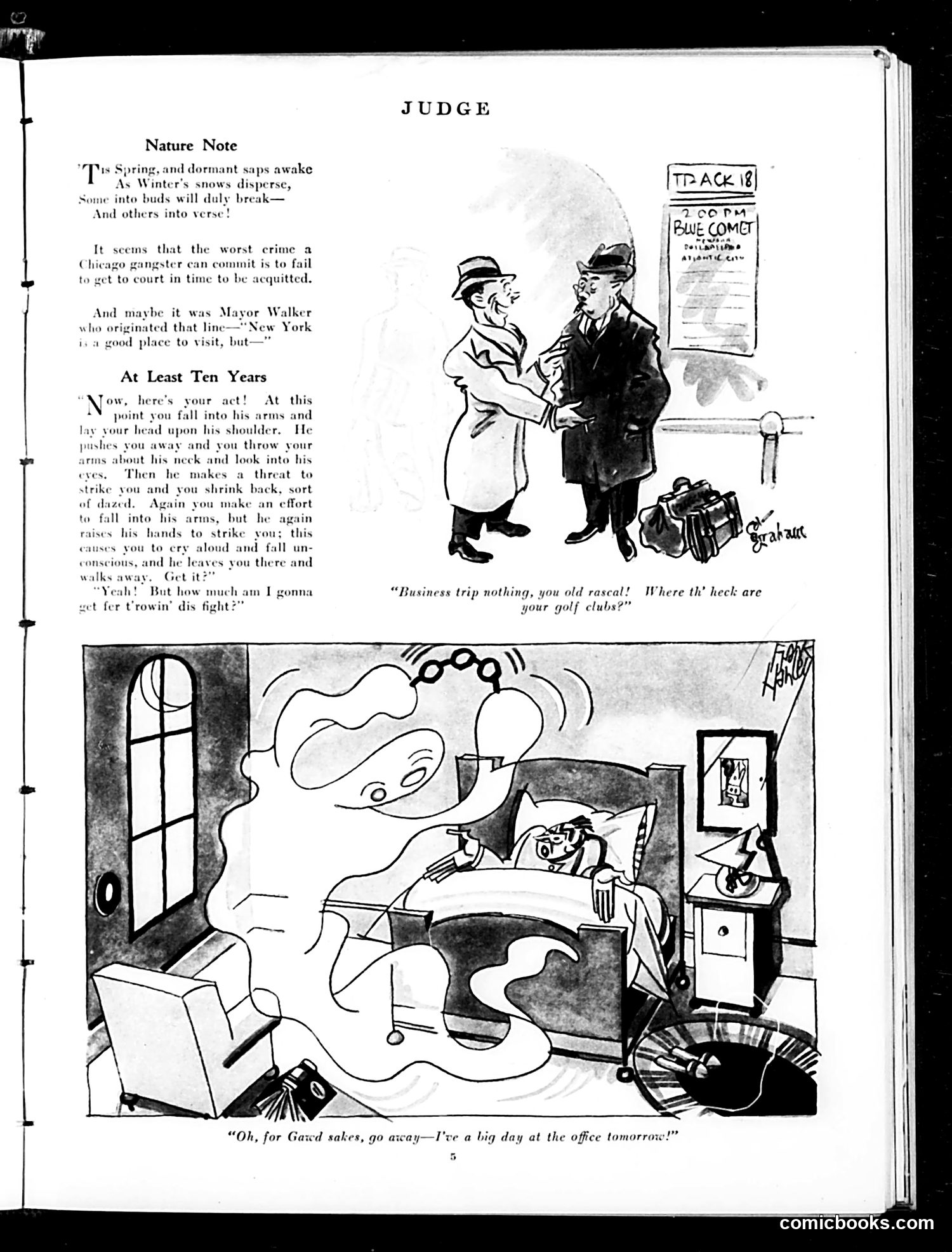
Analysis of Judge Magazine Page This page contains three distinct pieces: "Nature Note" (top): A brief poem about spring and an editorial jab at Chicago's crime problem, sarcastically suggesting Mayor Walker made New York a better tourist destination than Chicago—likely referencing Mayor Jimmy Walker's well-known but corrupt administration in the late 1920s-early 1930s. "At Least Ten Years" (middle): A instructional diagram showing how to stage a convincing fight, presented as dark satire about courtroom perjury and staged evidence. Bottom cartoon: Shows someone in bed having nightmares about work ("I'm a big day at the office tomorrow"), depicting anxiety about the workplace—a relatable theme about pre-work stress that remains timeless. The overall tone is cynical political and social satire typical of Judge magazine's editorial stance.
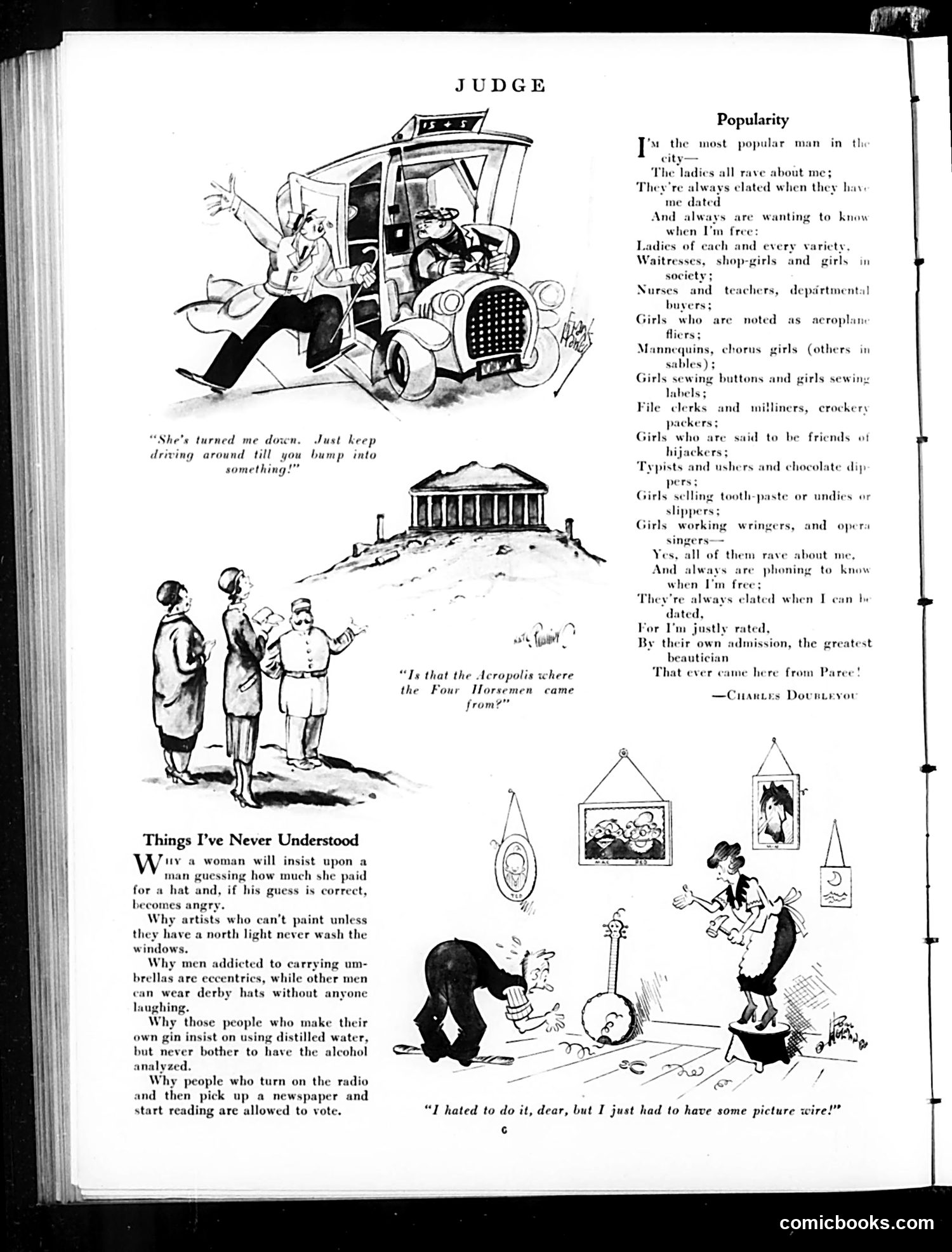
Analysis of Judge Magazine Page This page contains humorous social commentary typical of early 20th-century Judge magazine. The top section titled "Popularity" satirizes a vain man boasting about his appeal to various women—waitresses, nurses, teachers, shop girls, aeroplanes enthusiasts, and more. The joke mocks male vanity and the exaggerated self-importance of someone who claims widespread romantic attention. "Things I've Never Understood" presents absurdist observations about everyday puzzles: why women get angry over hat prices, why artists don't clean windows, why umbrella-carrying men are considered eccentric. The cartoons show physical comedy—a car accident, a man struggling with framed pictures. The overall tone is lighthearted domestic satire aimed at educated, urban readers familiar with modern conveniences and social pretensions of the era.
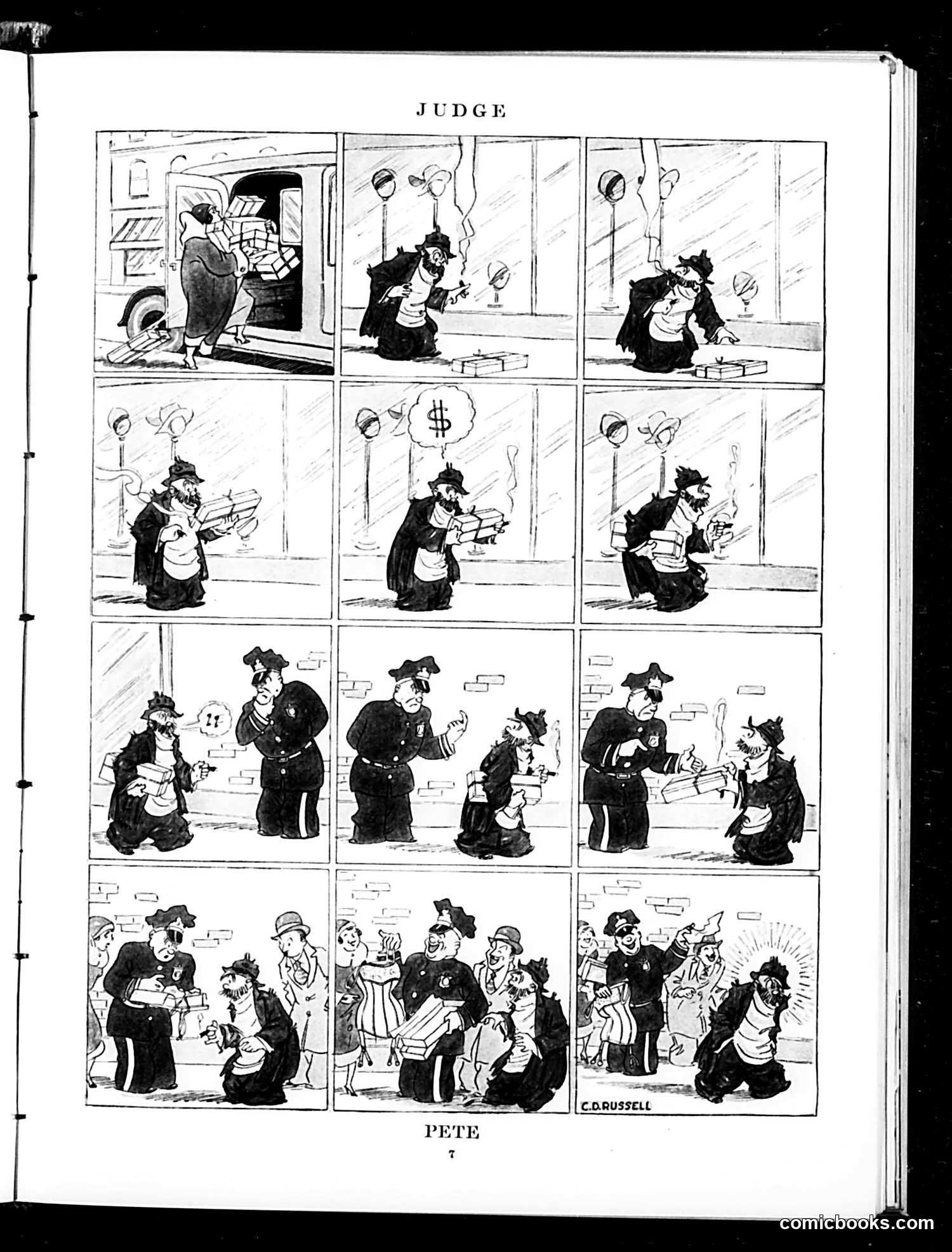
Judge Comic: "Judge Pete" This is a sequential comic strip titled "Judge Pete" (signed "Corussell"). The narrative follows a judge character through his day: The story: A judge accepts bribes (indicated by the "$" symbol), progressively becoming more corrupt. He's shown receiving money, then conducting an increasingly chaotic courtroom where justice is bought. By the final panels, the courtroom descends into complete pandemonium—multiple figures arguing, fighting, and generally causing disorder. The satire: The comic mocks judicial corruption and bribery in the American legal system. It suggests that when judges accept money illegally, the entire justice system collapses into chaos. The progression from orderly judge to surrounded by mayhem illustrates how corruption undermines institutional integrity. Without knowing the specific date, this appears to reflect general Progressive Era concerns about municipal corruption and judicial integrity.
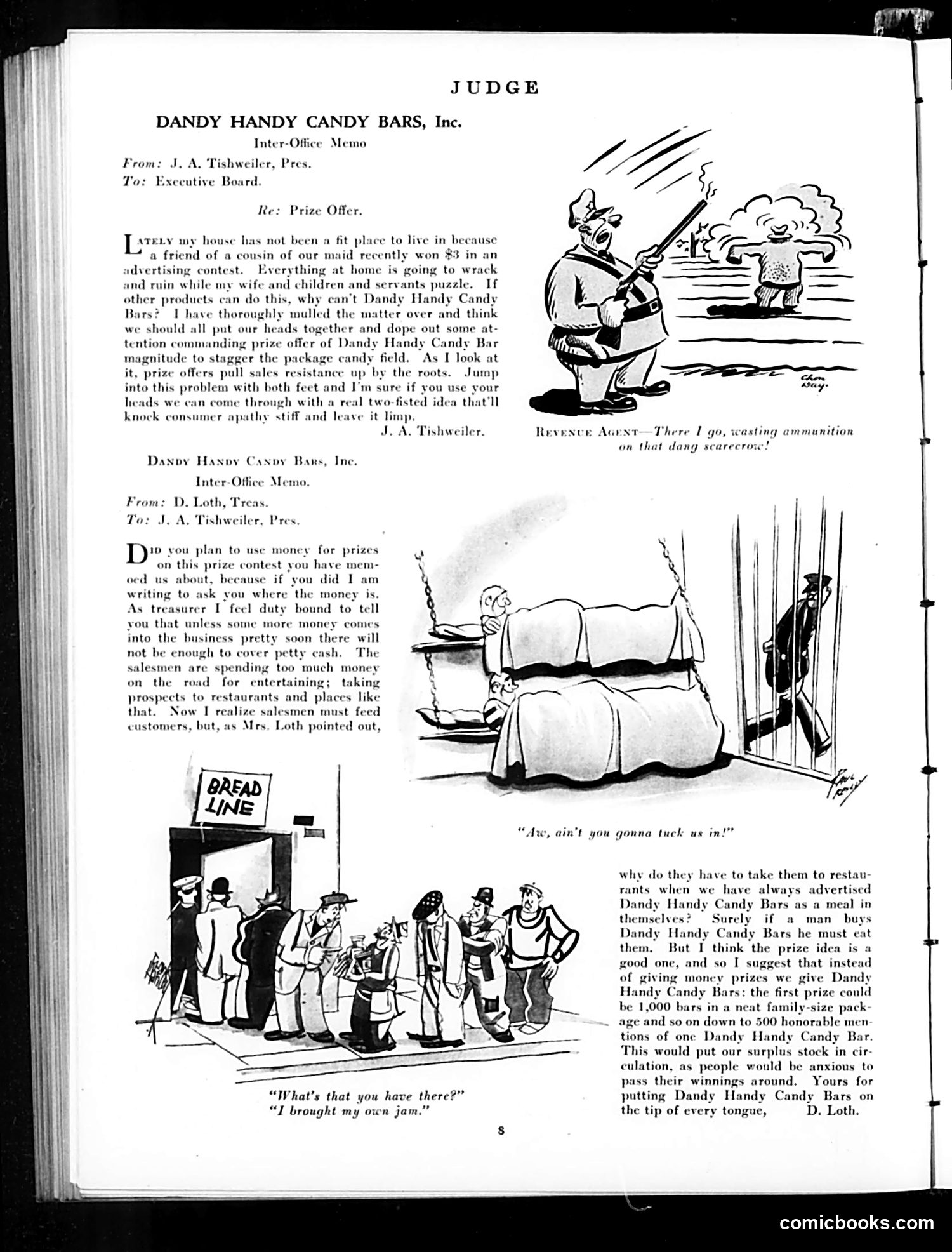
Summary for Modern Readers This is a satirical corporate memo exchange from *Judge* magazine mocking 1920s-30s business culture and advertising gimmicks. The company president wants to launch an attention-grabbing prize contest to boost candy bar sales, claiming a competitor's $3 prize caused domestic chaos in his household. The treasurer responds with fiscal reality: the company is nearly broke because salesmen are overspending on restaurant meals for clients. He sarcastically proposes replacing cash prizes with free candy bars as rewards, reasoning that customers who buy the product should eat it anyway—solving both the prize problem and the free-meal problem. The cartoons illustrate the absurdity: a revenue agent wasting ammunition on scarecrows (incompetent management), people standing in a bread line, and people sneaking their own food to restaurants. The satire targets corporate delusion, wasteful spending practices, and the desperate gimmickry of Depression-era marketing.
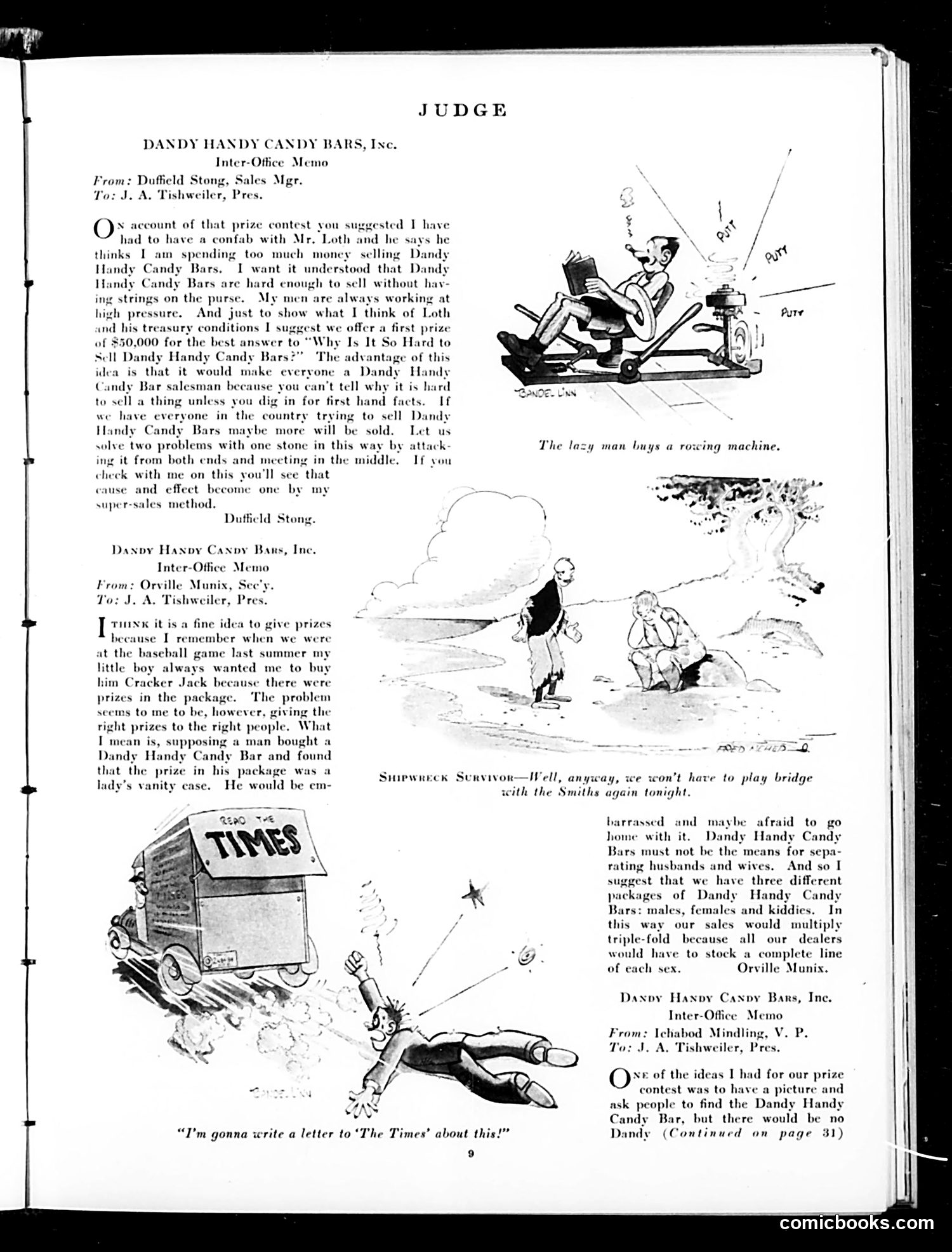
Judge Magazine Satire: "Dandy Handy Candy Bars" Contest This page satirizes corporate management through fake inter-office memos about a struggling candy company's promotional contest. The humor lies in increasingly absurd business logic: The Setup: Sales manager Duffield Stong proposes a $50,000 prize for essays answering "Why Is It So Hard to Sell Dandy Handy Candy Bars?"—ostensibly to get free market research while turning everyone into salesmen. The Mockery: Subsequent memos reveal the scheme's ridiculousness. One executive worries prizes might embarrass male buyers (suggesting gender-specific packaging), while another proposes a "find the candy bar" picture contest with no actual candy bar visible. Social Context: This reflects 1920s-30s corporate culture—the era of aggressive sales tactics, dubious marketing schemes, and management eager to solve problems through gimmicks rather than actual product improvement. The escalating absurdity satirizes how executives can justify increasingly convoluted ideas as "business innovation." The cartoons supporting the text show everyday frustration (lazy man buying rowing machines, people fleeing social obligations)—life's mundane ironies the candy presumably can't solve.
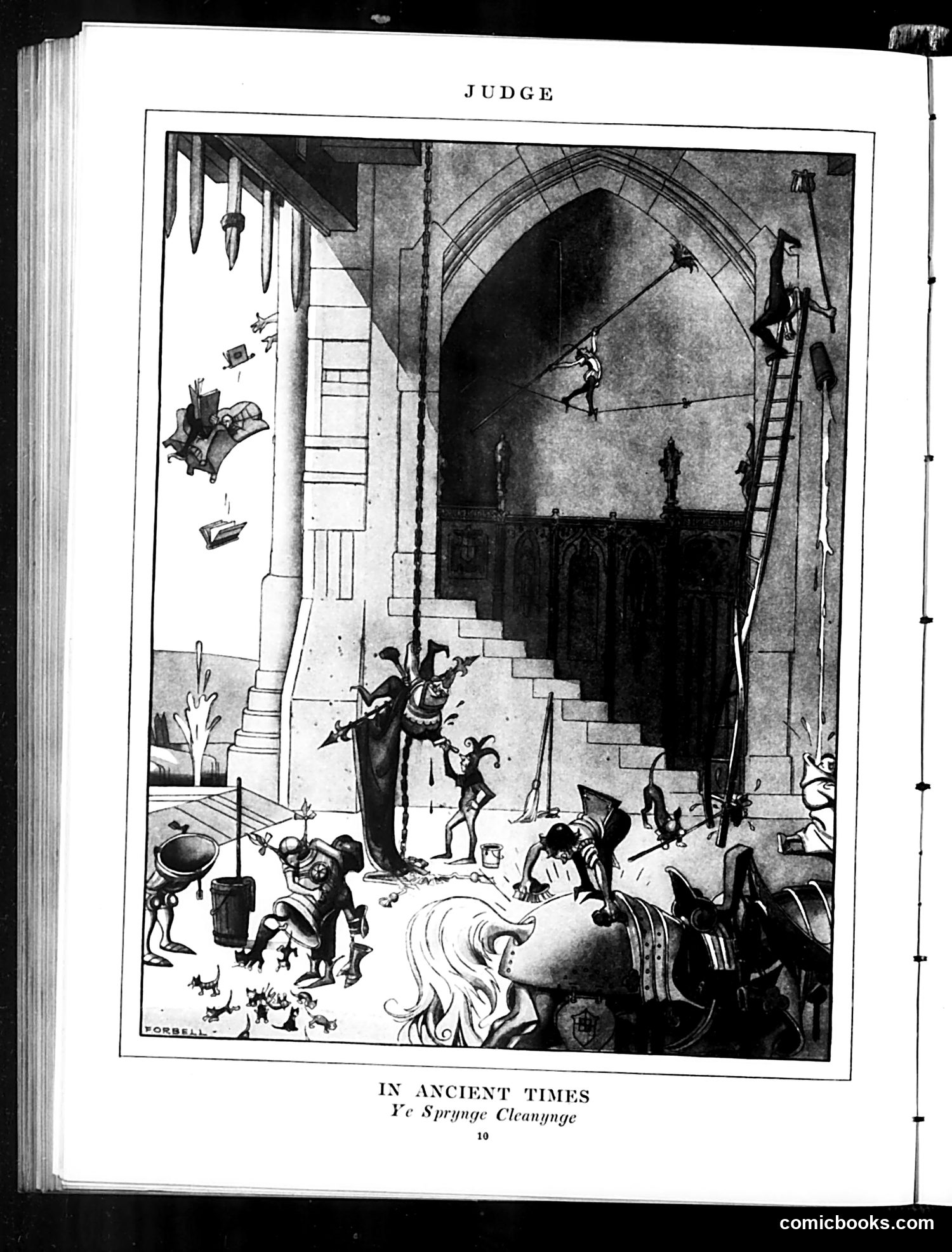
"In Ancient Times: Ye Sprynge Cleanynge" This Judge cartoon satirizes spring cleaning through a medieval/ancient setting. The elaborate scene depicts workers engaged in vigorous cleaning activities within a castle or cathedral-like structure—scrubbing, climbing ladders, hauling equipment, and disposing of debris. The satire appears to mock the chaotic, labor-intensive nature of spring cleaning as a seasonal ritual. By placing this thoroughly modern domestic chore in "ancient times," the artist suggests that spring cleaning is an age-old, almost primitive obligation that requires armies of workers and creates considerable upheaval. The signed artwork (appears to be by "Forbel" or similar) uses anachronistic humor—treating a contemporary household task as if it were a historical architectural undertaking. The joke likely resonates with readers who experienced spring cleaning's disruptive demands.
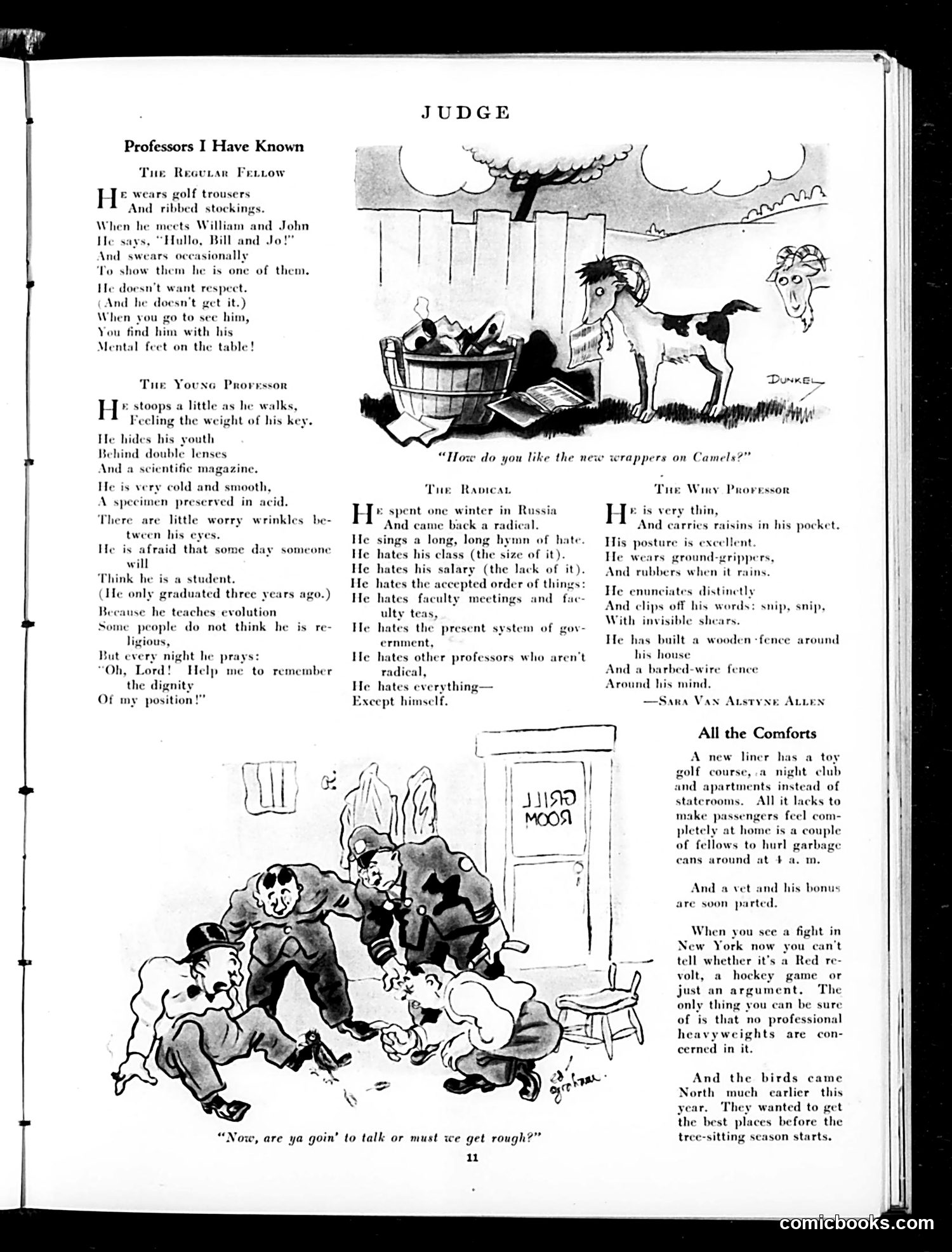
Explanation for Modern Readers This page satirizes academic professors through character sketches. "The Regular Fellow" affects casualness (golf trousers, swearing) to seem relatable but actually seeks no genuine respect. "The Young Professor" hides youthful insecurity behind academic affectations—double lenses and scientific magazines—while secretly fearing students will discover his inexperience. "The Radical" spent time in Russia and now hates everything systematically except himself, a jab at ideological purists. "The Wiry Professor" is uptight and emotionally guarded. The cartoons mock professorial pretense and affectation. The top illustration plays on cigarette advertising ("How do you like the new wrappers on Camels?"), suggesting professors are commodities. The "All the Comforts" section satirizes modern luxury ships and New York street violence—noting one can't distinguish between communist revolt, hockey brawls, or ordinary arguments. The closing joke about birds arriving early for "tree-sitting season" appears to reference some contemporary fad or practice now unclear.
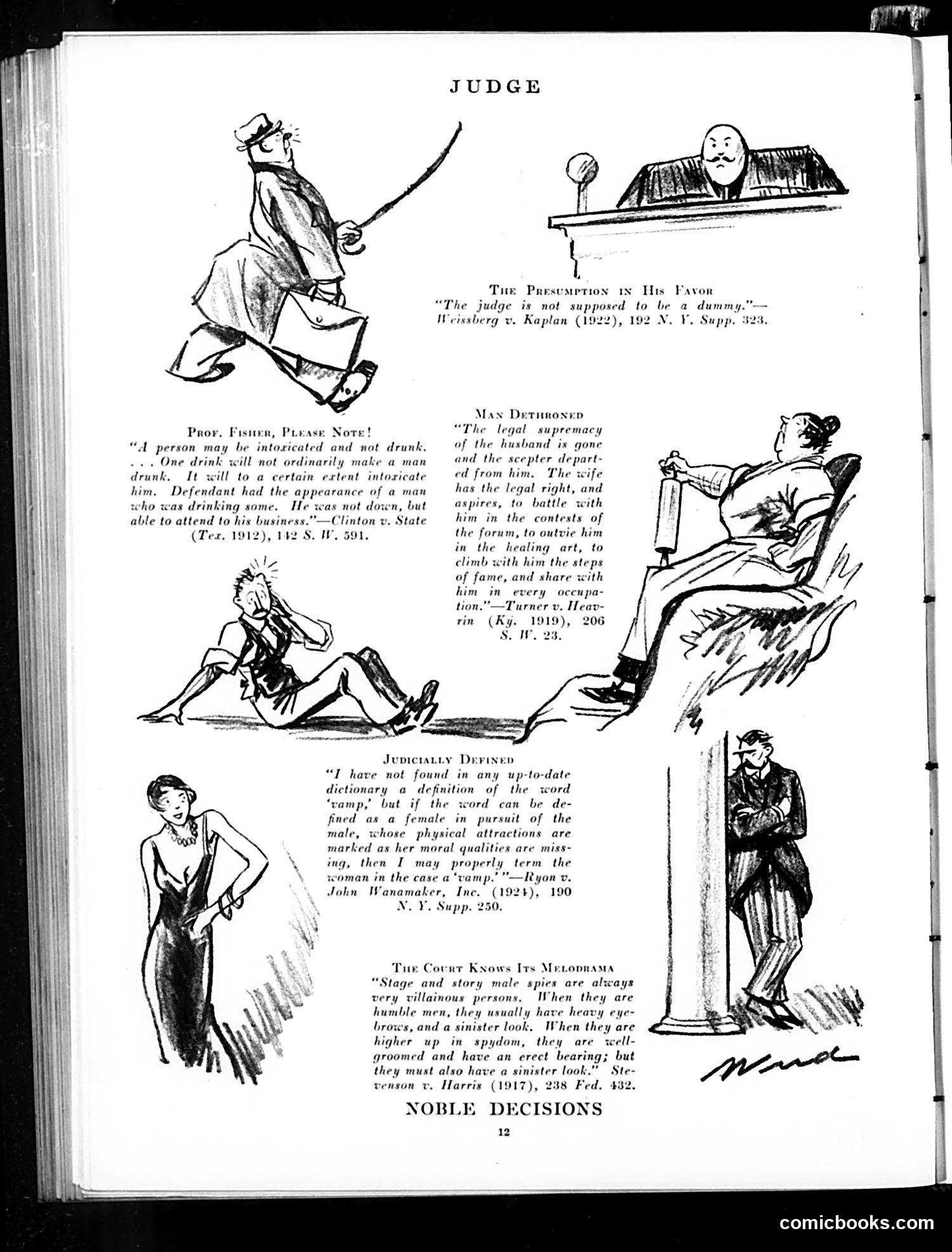
"Judge" Magazine Satirical Page: Legal Absurdities This page satirizes judges and courtroom decisions through illustrated vignettes paired with actual legal rulings. The cartoons mock judicial reasoning by pairing ridiculous quoted case law with visual humor. The illustrations show: - A man fishing (accompanying a ruling about intoxication levels) - A woman in pursuit of a man (illustrating a judge's definition of "vamp") - A well-dressed spy (referencing a judge's detailed observations about criminal appearance) The satire's point: judges issue absurdly specific, often contradictory or pedantic rulings that reveal their biases and poor reasoning. By presenting real case citations alongside comical drawings, the page suggests the legal system's decisions are equally ridiculous. The section title "Noble Decisions" is ironic—these rulings demonstrate judicial folly rather than wisdom, poking fun at the pretensions of the legal profession.
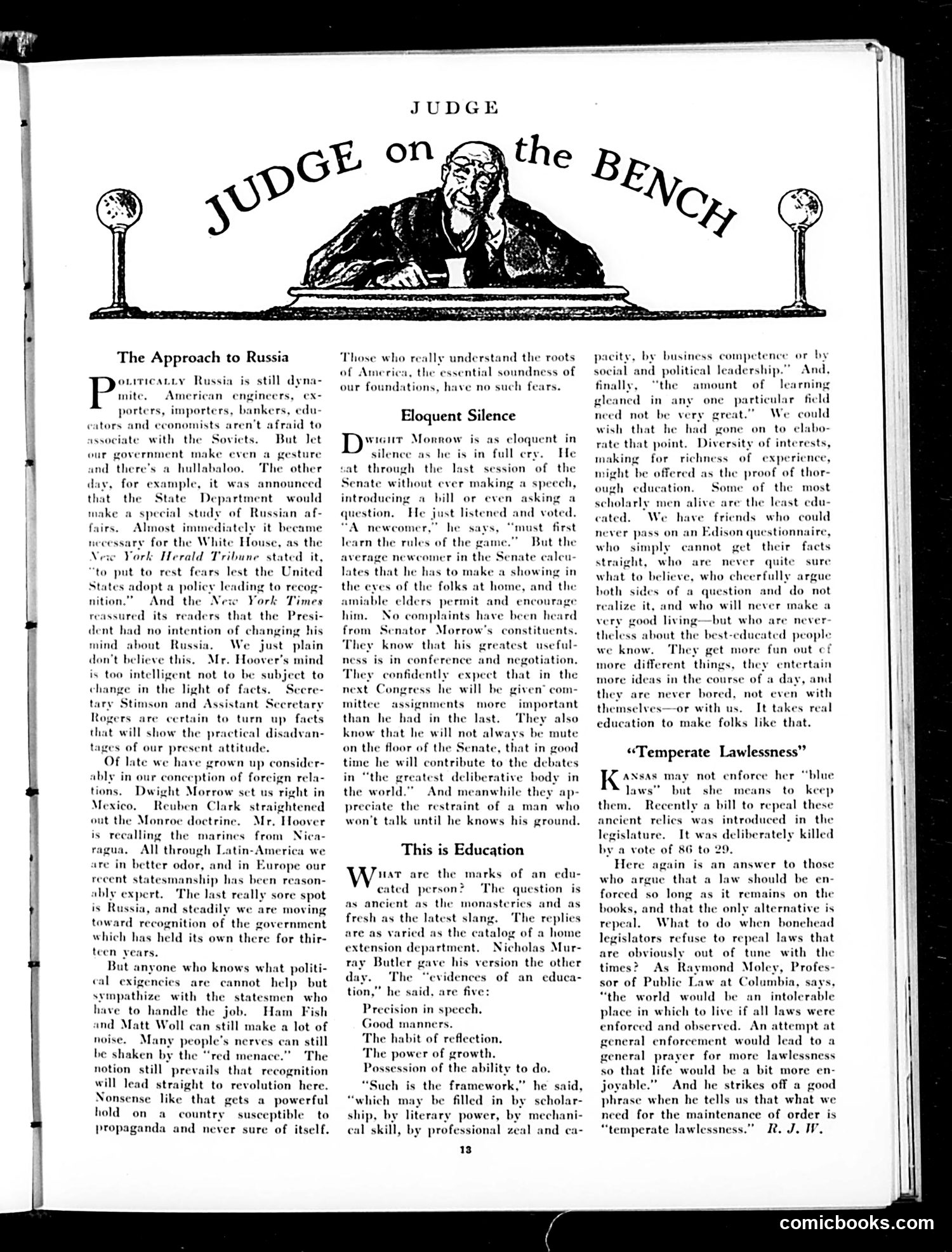
"Judge on the Bench" Analysis This page contains three opinion pieces rather than cartoons. The header illustration shows a judge in contemplation—a recurring *Judge* magazine device for presenting editorial commentary. "The Approach to Russia" argues for U.S. diplomatic recognition of the Soviet Union. The author criticizes American fear of Russia as irrational propaganda, noting that business leaders and diplomats already engage with Soviets while the government hesitates. References to Hoover, Stimson, and successful recent diplomacy (Morrow in Mexico, Clark on Monroe Doctrine) suggest this piece dates to the early Hoover administration (late 1920s–early 1930s). "Eloquent Silence" praises Senator Dwight Morrow's restraint—his refusal to make speeches or grandstand despite constituent pressure. It advocates for thoughtful leadership over performative politics. "This is Education" cites Nicholas Murray Butler's five marks of education (precision in speech, good manners, reflection, growth, ability to do) as a framework for understanding what makes an educated person. All three articles reflect *Judge*'s Progressive-era faith in expertise, diplomacy, and rational public discourse.
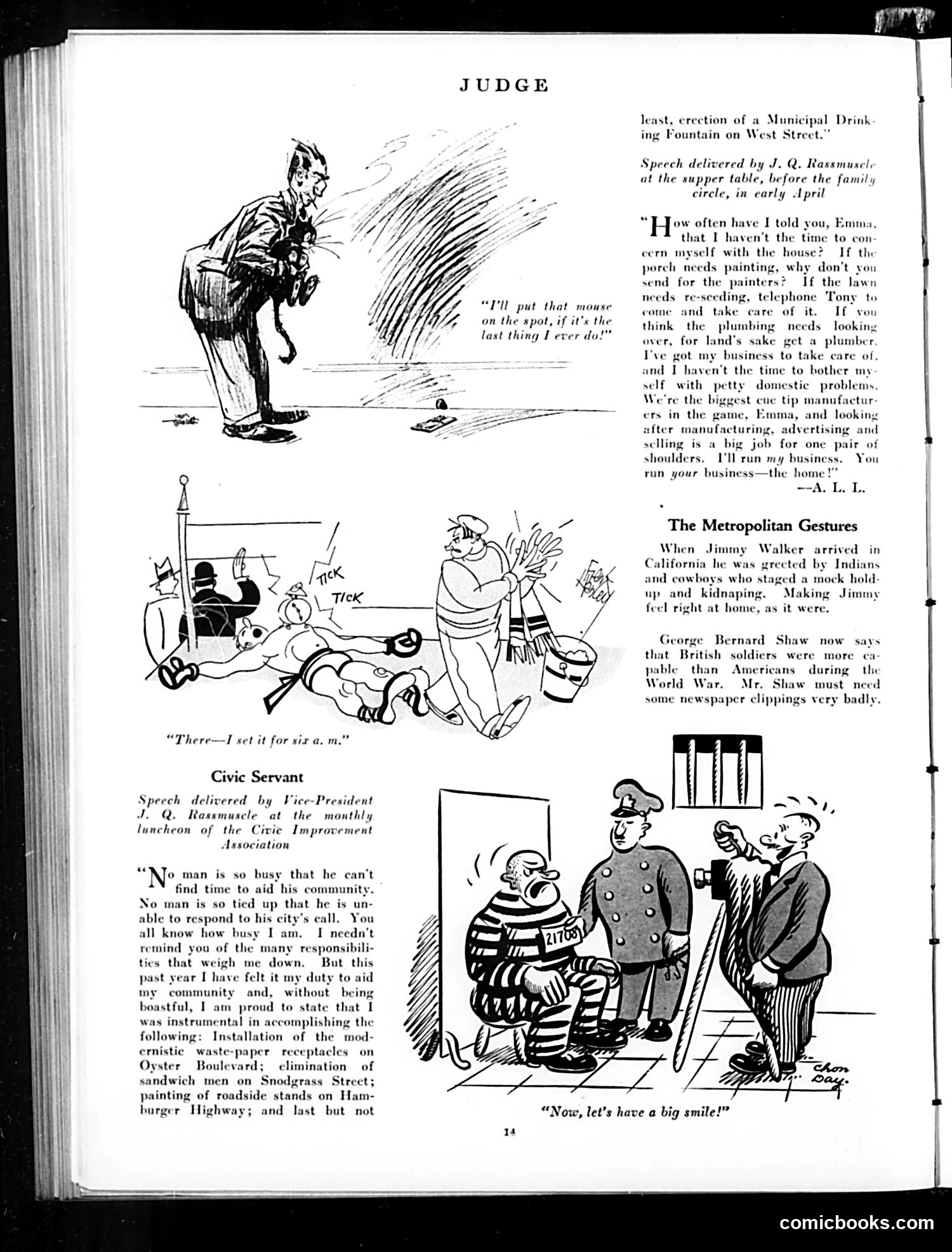
Political Satire Analysis: Judge Magazine Page This page satirizes prominent New York figures through the persona of "J. Q. Rassmuscle," a thinly-veiled caricature of a wealthy businessman (likely referencing actual New York civic figures of the era). The satire operates on two levels: 1. Upper cartoon: A busy industrialist lectures his wife Emma about not having time for household matters, yet paradoxically boasts of running a major business. The joke mocks wealthy men who neglect home responsibilities while demanding their wives handle everything. 2. "Civic Servant" speech: Rassmuscle brags about his "monumental" civic contributions—installing trash receptacles, removing sandwich vendors, painting roadside stands—trivial accomplishments he presents as major achievements. This ridicules self-aggrandizing wealthy citizens who claim civic virtue for minimal effort. The secondary references mention Jimmy Walker (NYC Mayor) and George Bernard Shaw, suggesting topical 1920s-30s content. The cartoons mock the hypocrisy of busy executives and the inflated self-importance of civic boosters.
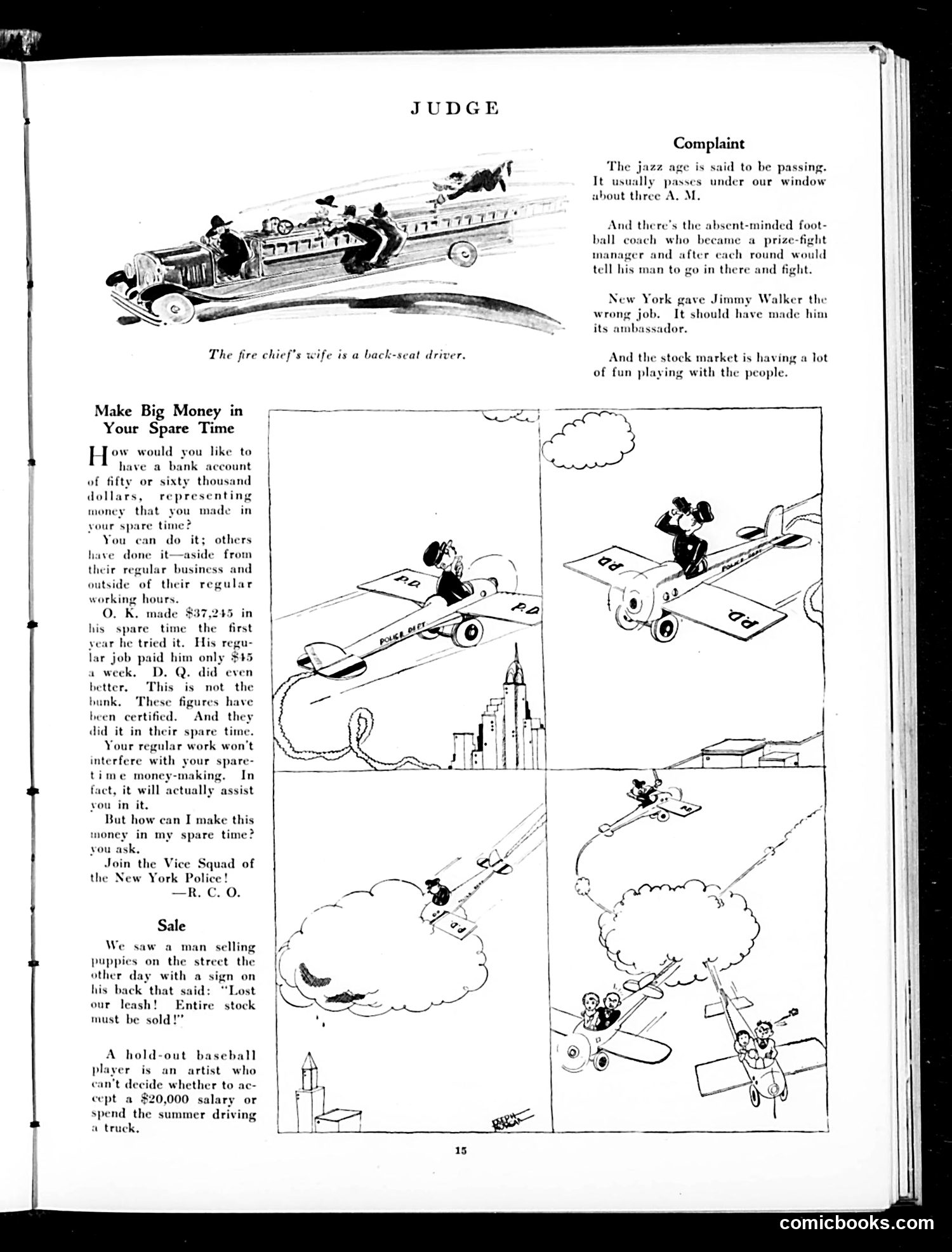
Judge Magazine Page Analysis This page from *Judge* contains multiple satirical commentaries on 1920s American life: Top Section ("Complaint"): Short quips mocking contemporary issues—the "jazz age" noise pollution, a boxing manager's incompetence, Jimmy Walker (NYC's mayor, implied corrupt), and stock market speculation. The fire chief's wife cartoon mocks reckless driving. Main Feature ("Make Big Money in Your Spare Time"): Parodies get-rich-quick schemes and dubious "work from home" advertisements common in the era. It mocks claims that ordinary people made $37,000+ in spare time while keeping regular jobs, presenting this as obviously false while sarcastically endorsing joining the "Vice Squad" as the real money-maker. Cartoon Panels: Whimsical illustrations showing people flying planes and engaging in aerial stunts—likely satirizing both aviation's growing popularity and the unrealistic fantasies peddled by these schemes. Bottom Section: Brief jokes about street con artists selling puppies and holdout baseball players facing salary disputes. The overall message: American consumer culture is filled with deceptive promises and absurd schemes.
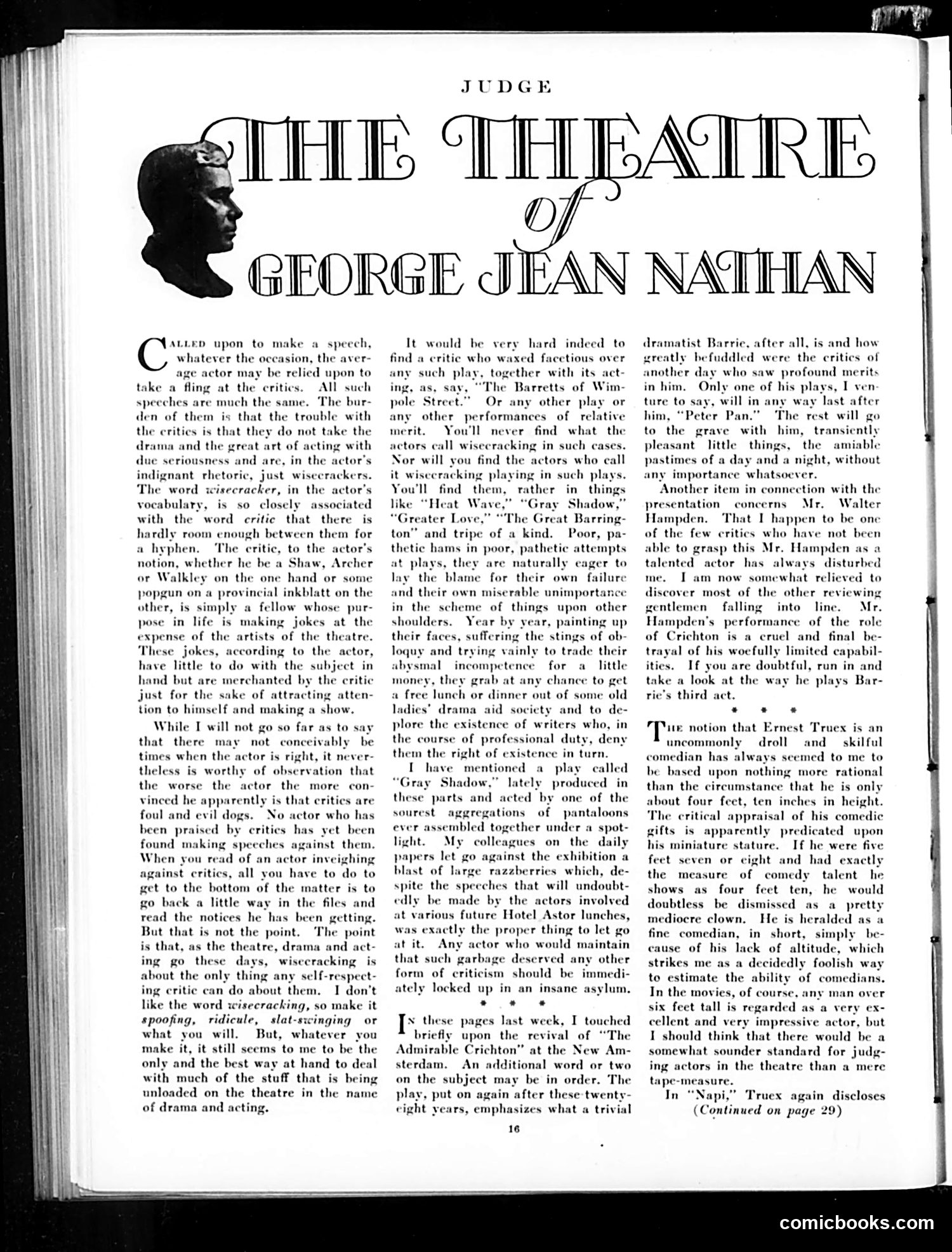
Analysis of "The Theatre of George Jean Nathan" This page is a theater criticism essay by Judge magazine's drama critic George Jean Nathan. Rather than a cartoon, it's a sardonic written commentary on theatrical practice. Nathan argues that actors habitually make speeches attacking critics, but all such speeches are identical in their complaints: that critics take drama too seriously rather than appreciating performances. He dismisses this as "wisecracking" and argues that critics, despite their flaws, serve a necessary function. The essay then offers specific reviews: he praises J.M. Barrie's work while criticizing actor Walter Hampden's performance in "Crichton" as a "cruel and final betrayal" of limited capabilities. He also dismisses Ernest Truex's comedic reputation, suggesting critics praise him primarily because of his short stature rather than actual talent. The tone is acerbic and dismissive toward both actors and his fellow critics.
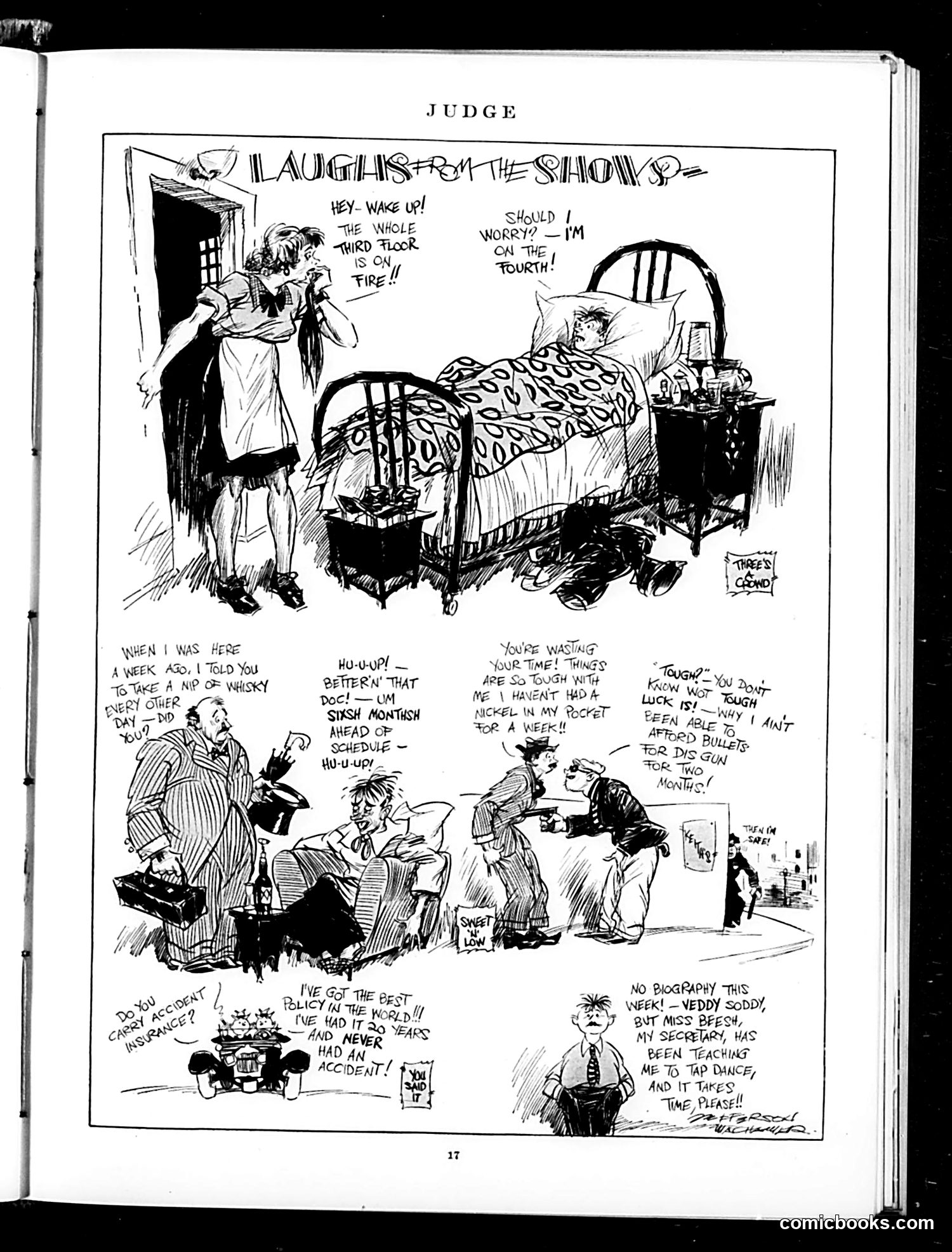
"Laughs for the Show" — Judge Magazine Cartoon This is a satirical domestic comedy strip poking fun at financial hardship during what appears to be the Great Depression era. The Setup: A wife discovers their apartment building is on fire, but her husband—lounging in bed—is more concerned about his own troubles. He's broke, hasn't had money in a week, and complains about financial difficulties. The Satire: The husband's self-centered obliviousness is the joke. While facing an actual emergency (the building burning), he prioritizes his personal grievances. The wife's exasperation contrasts with his complaints about minor luxuries he can't afford. Lower panel: A man boasts about never having had an accident in 20 years of "the best policy in the world," while another character mentions tap-dancing lessons—suggesting frivolous spending despite claimed financial struggles. The overall humor targets masculine self-absorption and the disconnect between actual dangers and petty monetary complaints, common satirical themes in Depression-era Judge magazine.
Judging the Movies: Pare Lorentz's Critique of Hollywood Censorship This 1930s *Judge* article by film critic Pare Lorentz satirizes Will Hays—the motion picture censor whose office enforced the industry's moral standards—by attacking the watering-down of the film adaptation of "June Moon," a Broadway play by George S. Kaufman and Ring Lardner Jr. Lorentz argues that Hays's censorship board has neutered the original comedy's sharp satirical edge. Characters were softened: the unsympathetic, hard-boiled wife became a whining complainer; the outrageously dumb protagonist became merely "cute"; biting Tin Pan Alley satire turned saccharine. The criticism targets not just censorship's moral policing but also its creative damage. Lorentz sardonically notes that if Hays wanted to ruin "June Moon," he couldn't have done worse—the implication being that strict censorship produces artistically bankrupt films. The article questions whether Hays's real concern is protecting morality or simply justifying his substantial salary to major studios (Warner, Brown, Zukor).
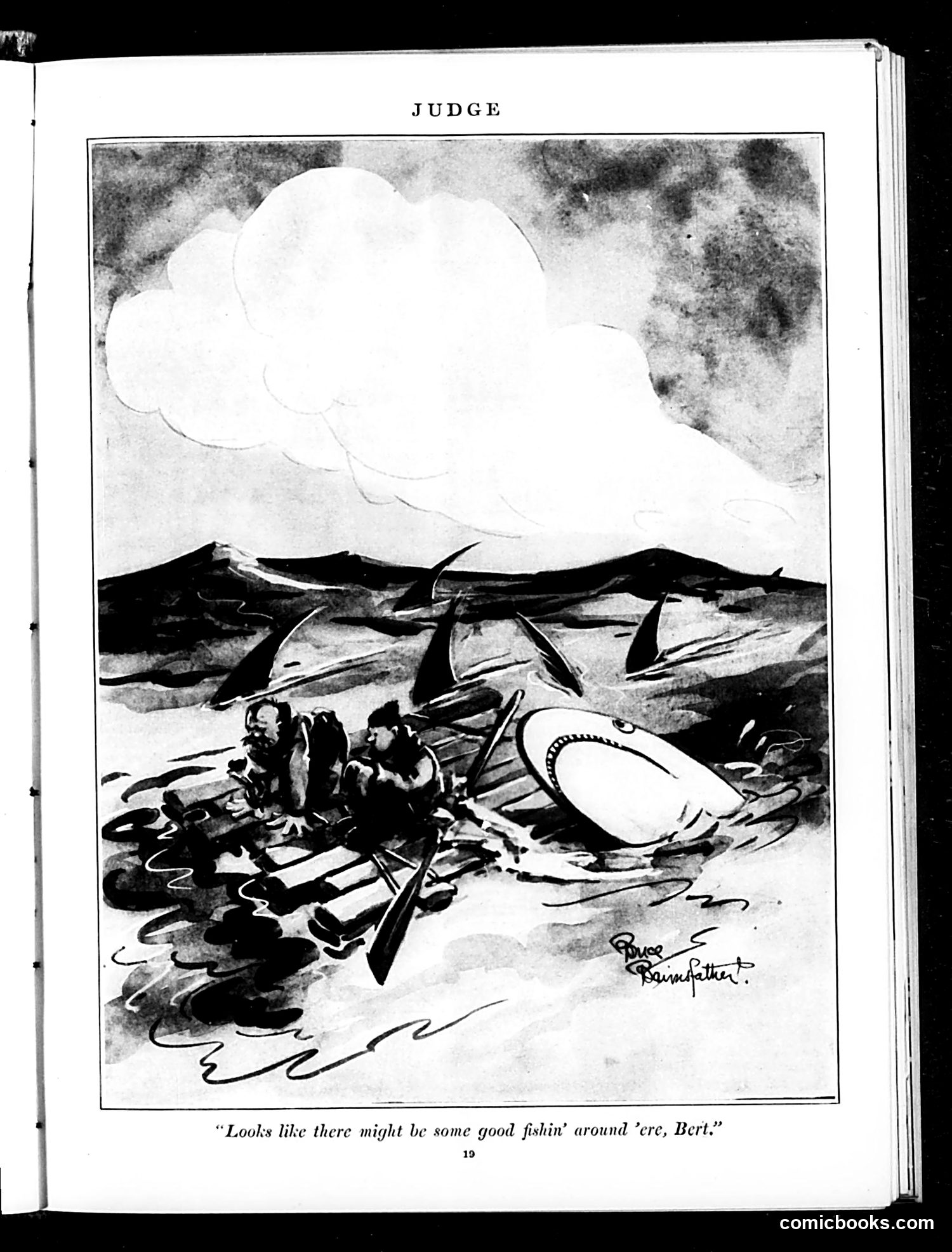
Analysis This is a single cartoon showing two figures in what appears to be a shipwreck or maritime disaster scene. Wreckage and debris litter a beach, with a large sail or canvas visible in the background. One character addresses another as "Bert," suggesting a dialogue between survivors or observers. The humor appears to be darkly comic: despite the obvious catastrophe surrounding them—destroyed vessels and wreckage—the characters are focused on an opportunity for fishing. The caption's casual, colloquial tone ("'ere" for "here") suggests working-class British characters finding a silver lining in disaster. The satire likely comments on human resilience, pragmatism, or obliviousness in the face of crisis—finding opportunity (or distraction) amid calamity. Without knowing Judge magazine's publication date, the specific historical context remains unclear.
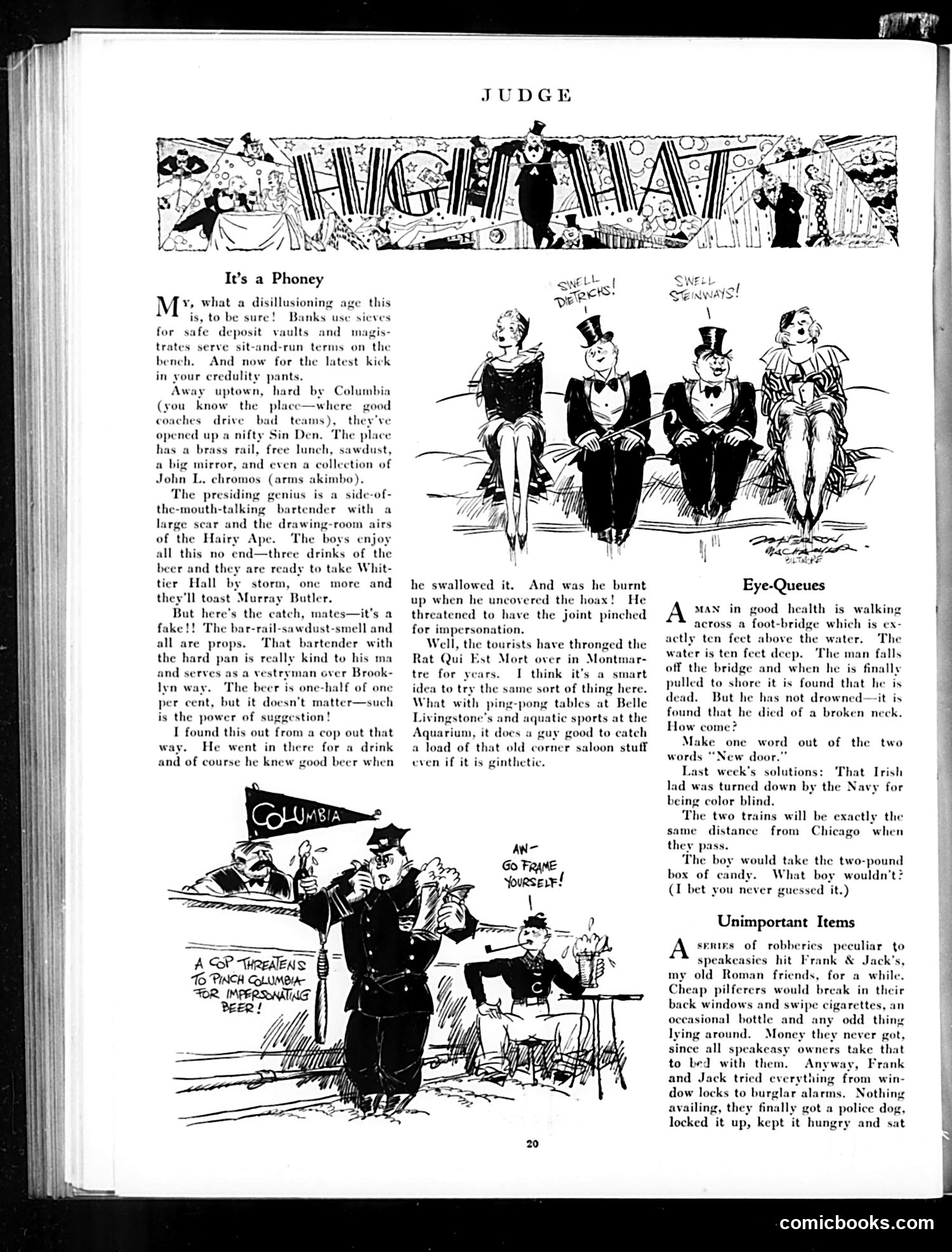
Judge Magazine Page Analysis This page contains three satirical pieces reflecting 1920s American concerns: "It's a Phoney" mocks a fake speakeasy disguised as a "Sin Den" near Columbia University. During Prohibition, illicit bars proliferated; this one fooled patrons with theatrical bartender aesthetics until discovered as a hoax. The satire targets both the phoniness of speakeasy culture and urban gullibility. The Columbia cartoon shows a police officer threatening to raid the fake bar, with patrons exclaiming "An go frame yourself!"—mocking the period's corrupt relationship between police and illegal establishments. "Eye-Queues" and "Unimportant Items" are brief humorous puzzle-riddles typical of Judge's lighter content. The overall tone reflects Jazz Age skepticism: even supposedly authentic urban vice establishments prove fraudulent. The page captures Prohibition-era humor about the gap between appearance and reality in speakeasy culture.
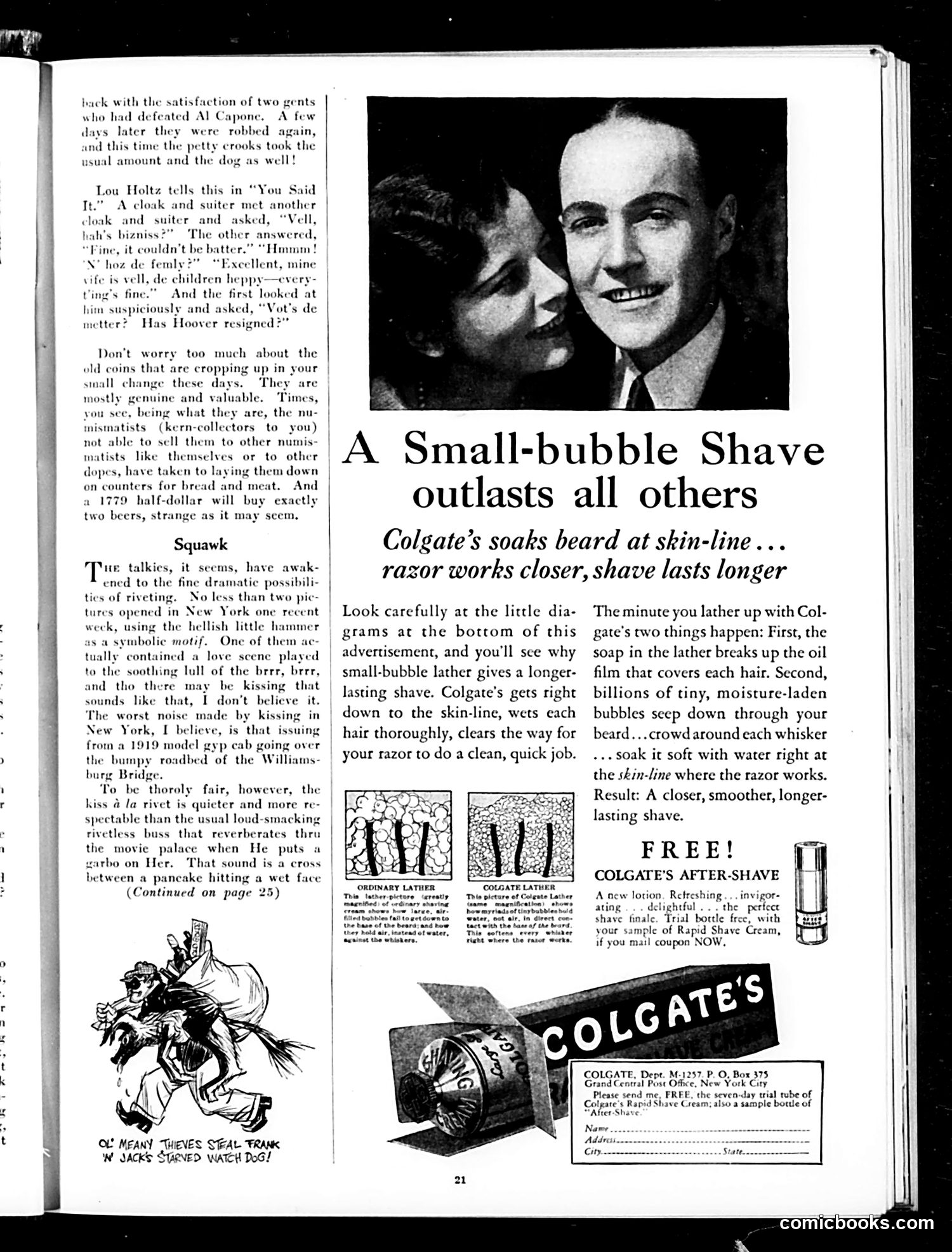
Analysis of Judge Magazine Page This page contains two distinct sections: humor columns and a Colgate advertisement. Left side content: The text references topical 1920s-30s humor: Al Capone (gangster era), petty street crime, and Herbert Hoover (president). A Lou Holtz routine mocks Yiddish-accented businessmen using "bizniss" dialect comedy, popular in that era. The "Squawk" column critiques recent movie "talkies" using riveting sounds as dramatic devices—mocking Hollywood's novelty-obsessed approach to early sound film. A final joke references 1919-era coins being spent for food due to economic hardship, satirizing Depression-era poverty. Right side: A full-page Colgate shaving soap advertisement with diagrams comparing ordinary vs. small-bubble lather. The ad claims superior performance through scientific explanation (moisture penetration, oil-film breaking). A free offer coupon advertises complimentary after-shave lotion to encourage mail response. The page exemplifies Judge's mix of satirical commentary on contemporary life alongside commercial advertising.
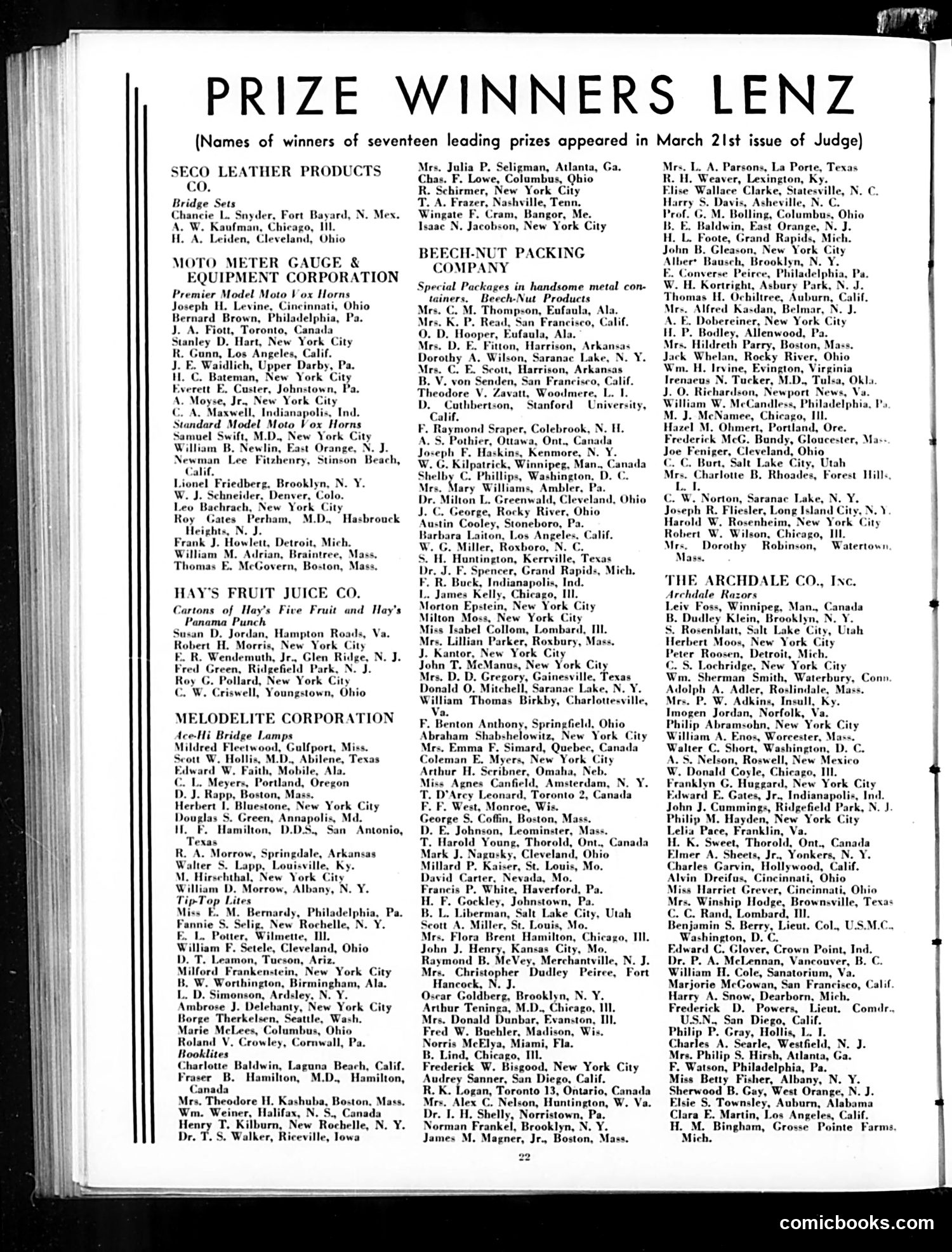
Prize Winners List from Judge Magazine This page is not a cartoon or satirical content—it's a straightforward advertising feature listing winners of contests run by various companies that advertised in Judge magazine's March 21st issue. The page catalogs prize winners across multiple product categories: Seco Leather Products (bridge sets), Moto Meter Gauge & Equipment Corporation (car horns), Hay's Fruit Juice Company (juice cartons), Melodelite Corporation (bridge lamps and lighting fixtures), Beech-Nut Packing Company (food products), and Archdale Razors. Each company lists dozens of winners' names and hometowns across the United States and Canada. This was a common advertising tactic in the 1920s-30s era: running contests and publishing winners' names encouraged magazine readership and product purchases. The "LENZ" in the header likely refers to the contest originator or publisher. This represents consumer capitalism and marketing of the period rather than satire.
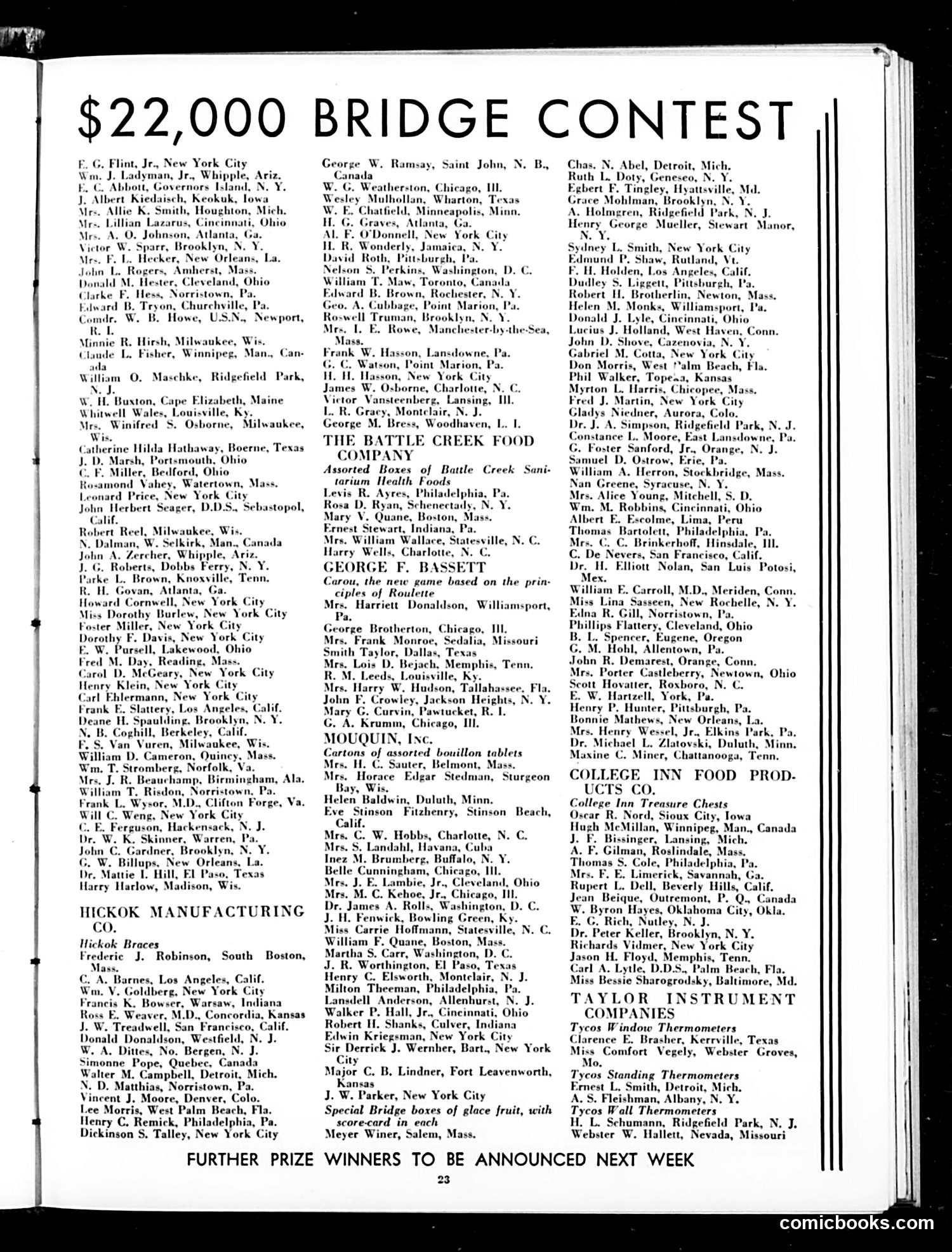
A $22,000 Bridge Contest Results Page This appears to be a prize announcement page from Judge magazine, listing winners of a major bridge contest. The page is primarily composed of: 1. Contest Winners' Names - Hundreds of names organized by prize categories (Battle Creek Food Company boxes, Moquin bouillon tablets, Hickok Manufacturing products, etc.) 2. Advertising Disguised as Content - The "prizes" are actually branded products: health foods, bouillon cubes, thermometers, and game boxes. This was common in early 20th-century magazines—contests simultaneously promoted consumer goods while generating reader engagement. 3. Geographic Reach - Winners span North America, suggesting the contest's broad national/continental distribution. The page contains no cartoons or satire—it's essentially a results listing and product advertisement masquerading as editorial content, typical of Judge's revenue model during this era. The real "joke" is commercial rather than political or social satire.
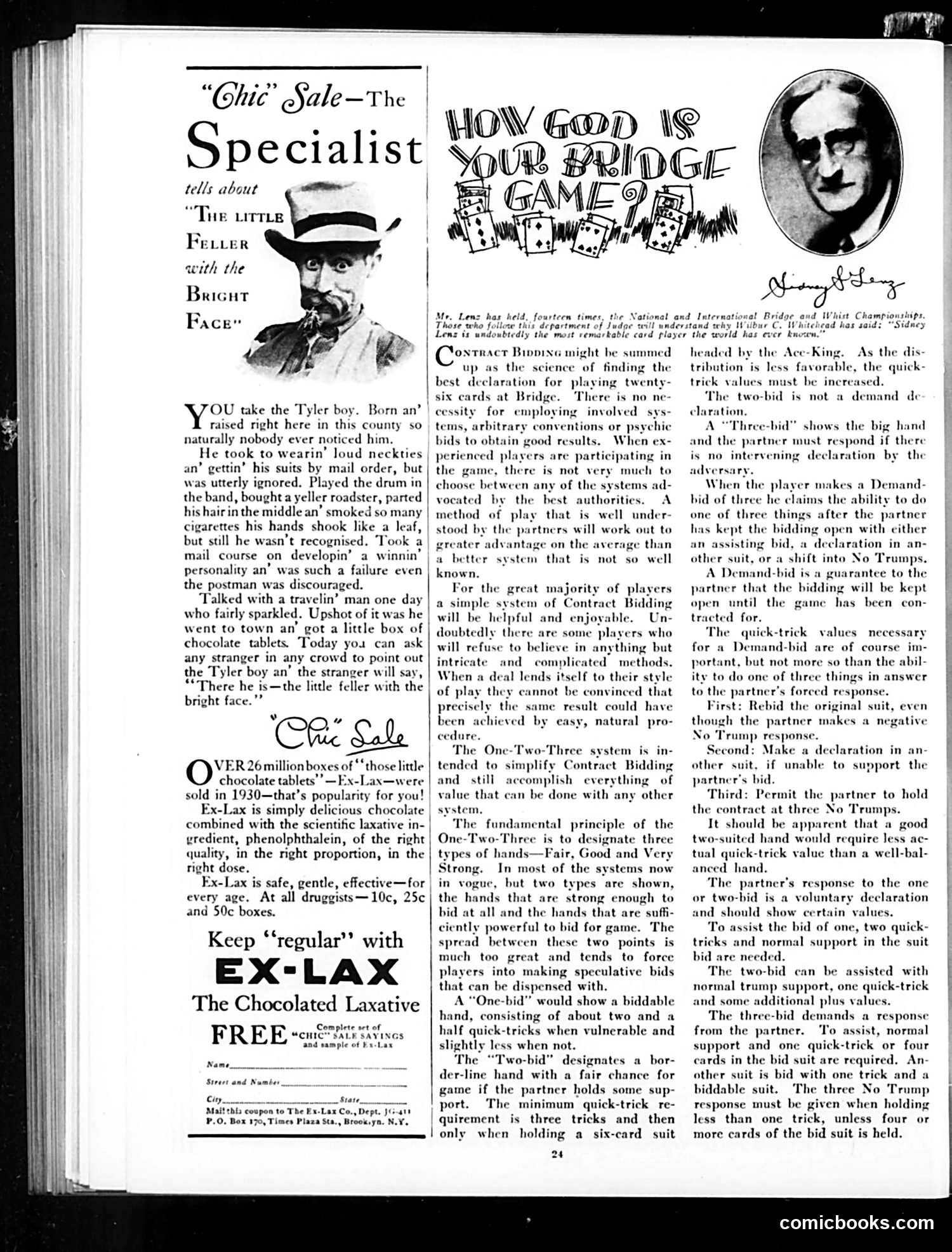
Analysis of Judge Magazine Page This page contains two distinct sections: an Ex-Lax laxative advertisement (left) and a bridge card-game instructional article (right). The ad uses humor through a narrative about an overlooked local boy ("the Tyler boy") who becomes socially noticed only after taking Ex-Lax, implying the product's popularity makes one stand out. It's a tongue-in-cheek sales pitch claiming 26 million boxes sold in 1930. The bridge article, attributed to someone named Lenz (visible in the signature), explains a simplified bidding system called "One-Two-Three." This targets the widespread popularity of contract bridge during the 1930s, when it was a major social activity among middle and upper-class Americans. The article aims to make the complex game more accessible by standardizing hand-valuation methods. Neither section contains overt political satire. This appears to be a magazine page mixing consumer advertising with entertainment/instructional content—typical Judge magazine fare from this era.
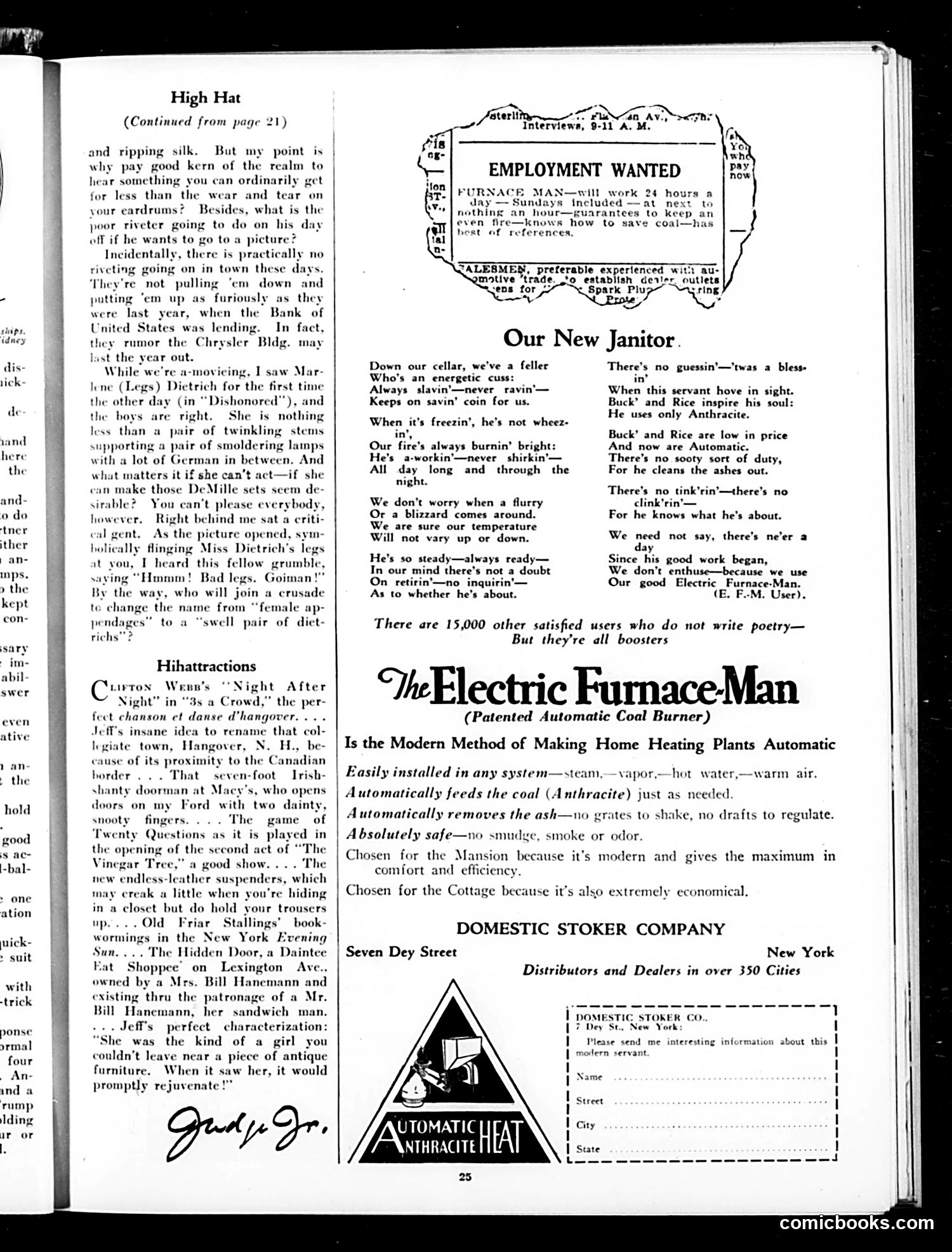
"Our New Janitor" and The Electric Furnace-Man Advertisement This page contains a light comic poem promoting the "Electric Furnace-Man," a patented automatic coal burner. The "janitor" is anthropomorphized as a hardworking, reliable servant who uses this device—personified as "Buck" and "Rice" (likely brand names or product nicknames). The satire is gentle: it mocks the anxiety of home heating while celebrating modern automation. The poem plays on class dynamics of the era, presenting an idealized working-class employee ("always slavin'—never ravin'") whose loyalty is secured through the efficiency of new technology rather than high wages. The accompanying advertisement emphasizes that the Electric Furnace-Man makes heating "automatic"—no ash removal, no temperature regulation needed. For 1920s readers worried about fuel costs and domestic comfort, this represented technological progress. The poem's repeated assurance that "there's no guessin'" reflects period anxieties about unpredictable, labor-intensive coal heating systems.
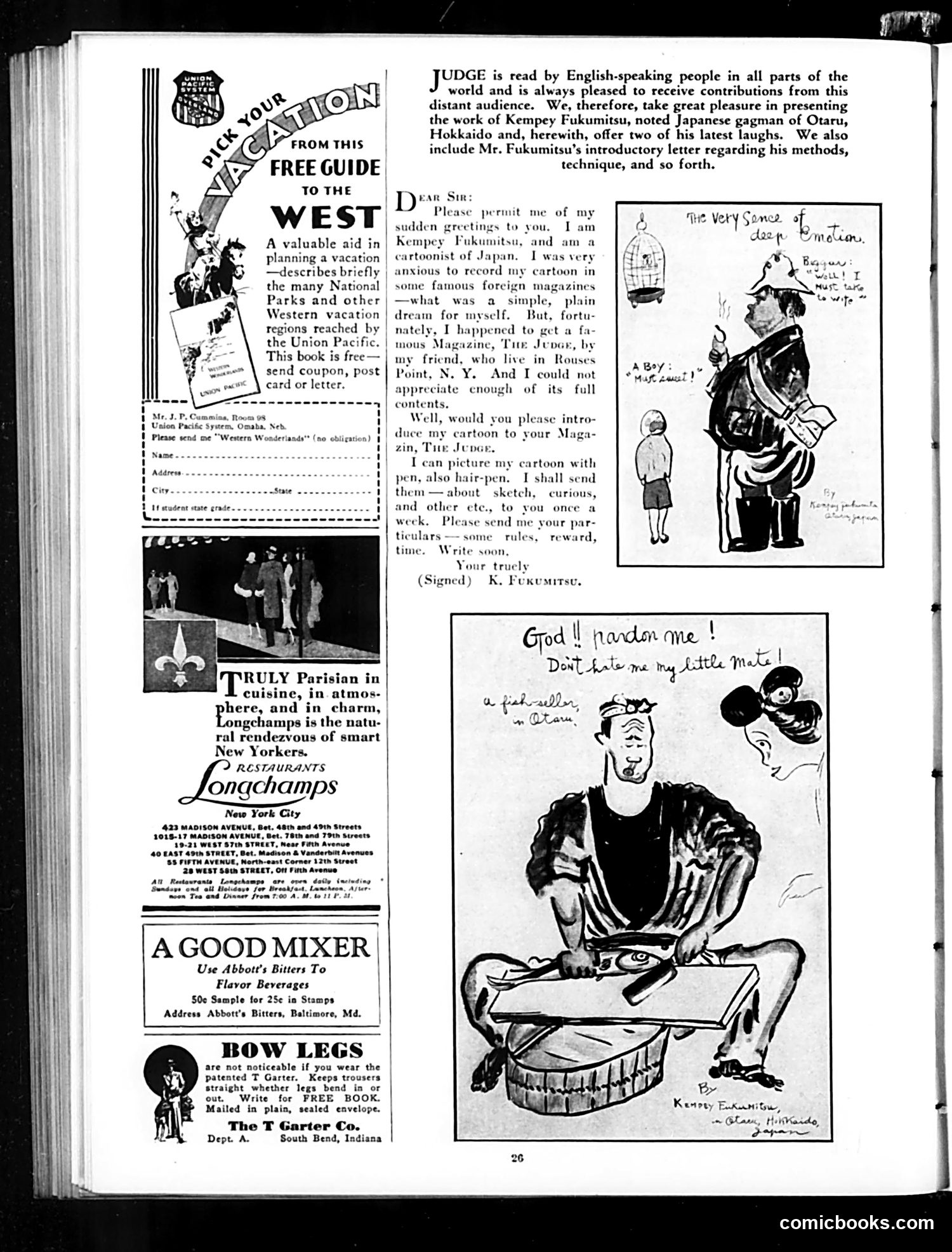
Judge Magazine Page Analysis This page primarily features advertising and editorial content rather than political satire. The main attraction is an introduction of Kempey Fukumitsu, a Japanese cartoonist from Otaru, Hokkaido, whose work Judge is presenting to English-speaking readers. Fukumitsu's introductory letter (with charming English-language errors) explains his desire to see his cartoons published in famous foreign magazines. His two submitted cartoons appear to depict everyday humorous scenarios: one shows what appears to be a domestic or social interaction, the other a figure working with a cooking implement, with captions suggesting simple, observational humor about daily life. The page contextualizes this as Judge's effort to showcase international cartooning talent. The surrounding advertisements (Western travel guides, restaurants, bitters, garters) are typical period commercial content. Fukumitsu's inclusion represents early 20th-century cross-cultural magazine practice—presenting "exotic" foreign contributors as novelty content for American audiences.
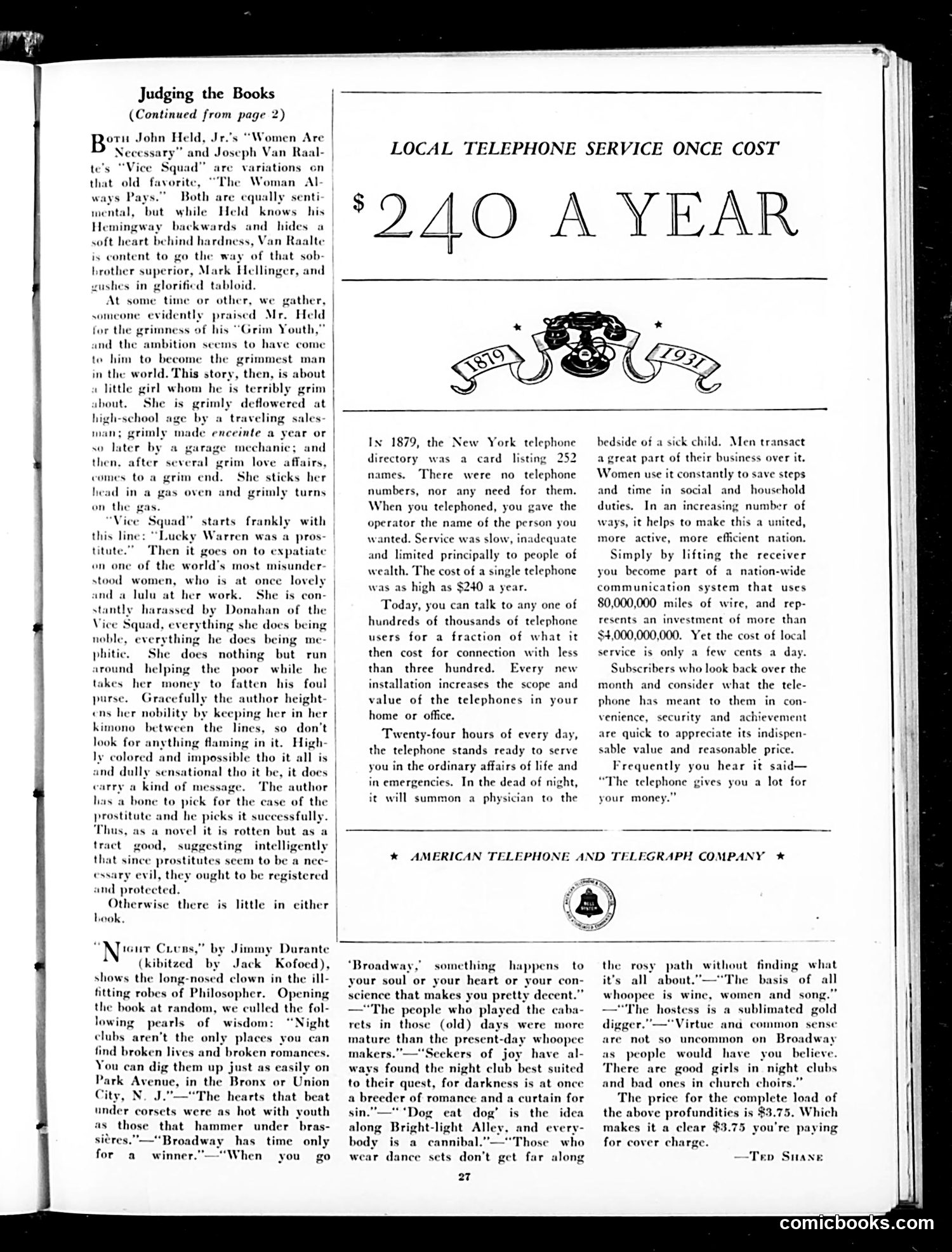
Analysis for Modern Readers This page contains book reviews (left) and advertising (right), not political cartoons. The reviews critique novels by John Held Jr. and Joseph Van Raalte about sex work and morality—standard 1920s-30s literary fare. The critic dismisses them as sensationalist but acknowledges their social arguments (notably, that prostitutes should be "registered and protected"). The right side is a AT&T advertisement celebrating telephone technology's progress. It contrasts 1879 service ($240/year for 252 users requiring operators to know names) with modern capabilities: instant connection to hundreds of thousands, 24/7 availability, medical emergencies, business efficiency. The ad's rhetoric—emphasizing national unity, efficiency, and modernization—reflects Depression-era corporate messaging: technology as social progress and economic infrastructure. The $240 historical price point (roughly $7,000 today) underscores how dramatically costs had dropped, positioning AT&T as a democratizing force. No satire is evident; this is straightforward period advertising and literary criticism.
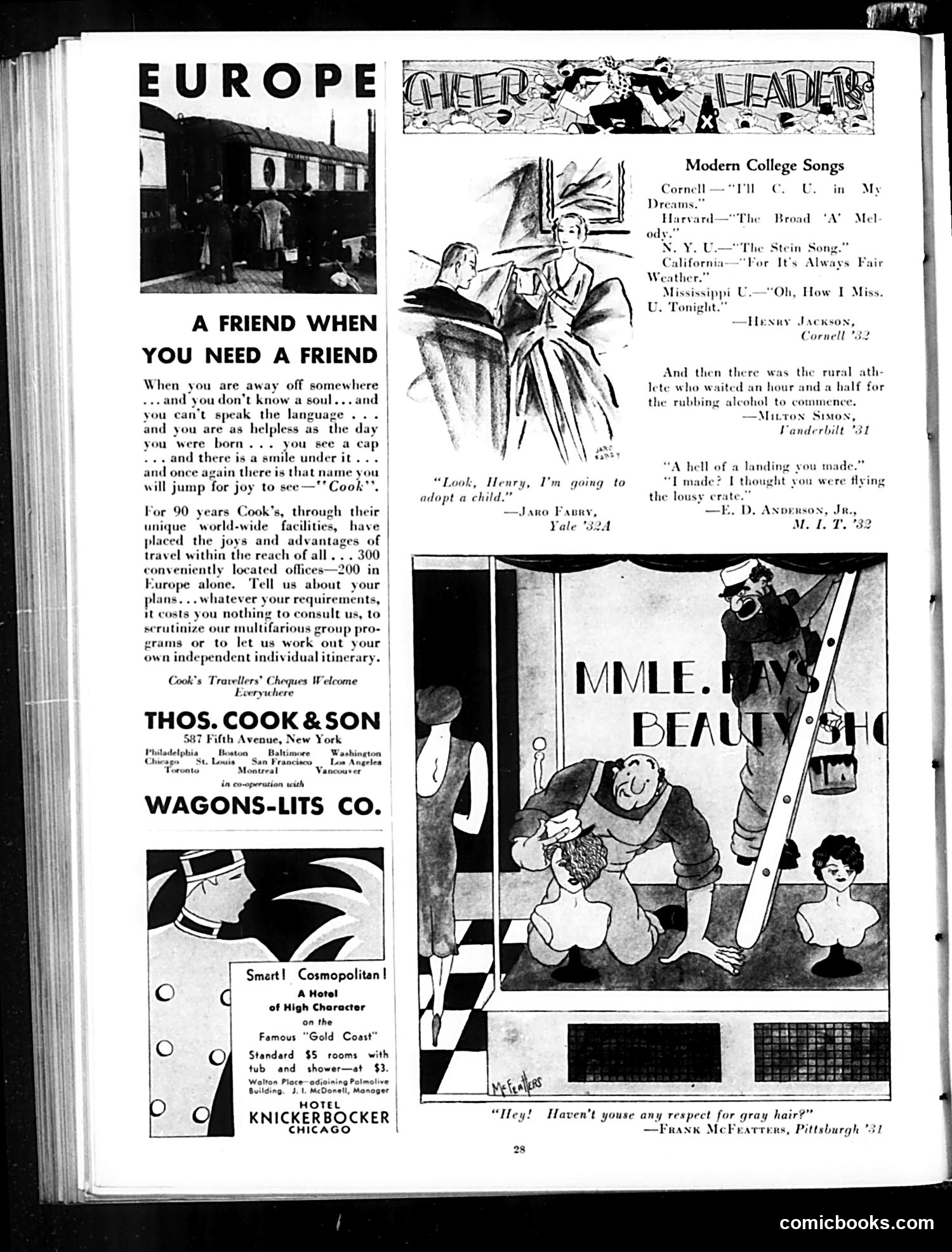
Page Analysis: Judge Magazine (Undated) This page mixes travel advertising with college humor. The left side features a Thomas Cook & Son travel agency advertisement, emphasizing their global network as a reassuring presence for travelers abroad—the "smile under" a Cook's cap representing reliable service in foreign lands. The right side contains "Modern College Songs"—humorous one-liners attributed to students from Cornell, Harvard, California, Mississippi, Vanderbilt, and M.I.T. These are brief jokes playing on college stereotypes and youthful mishaps: dreams of romance, drinking (the "rubbing alcohol" reference), flying mishaps, and generation gaps (the "gray hair" joke). The illustration depicts what appears to be a beauty salon or ship scene with exaggerated characters in period dress, likely accompanying one of the college quips. The humor is lighthearted, targeting college-age readers and travelers of the era. No political commentary is evident; this is primarily entertainment and commercial content.
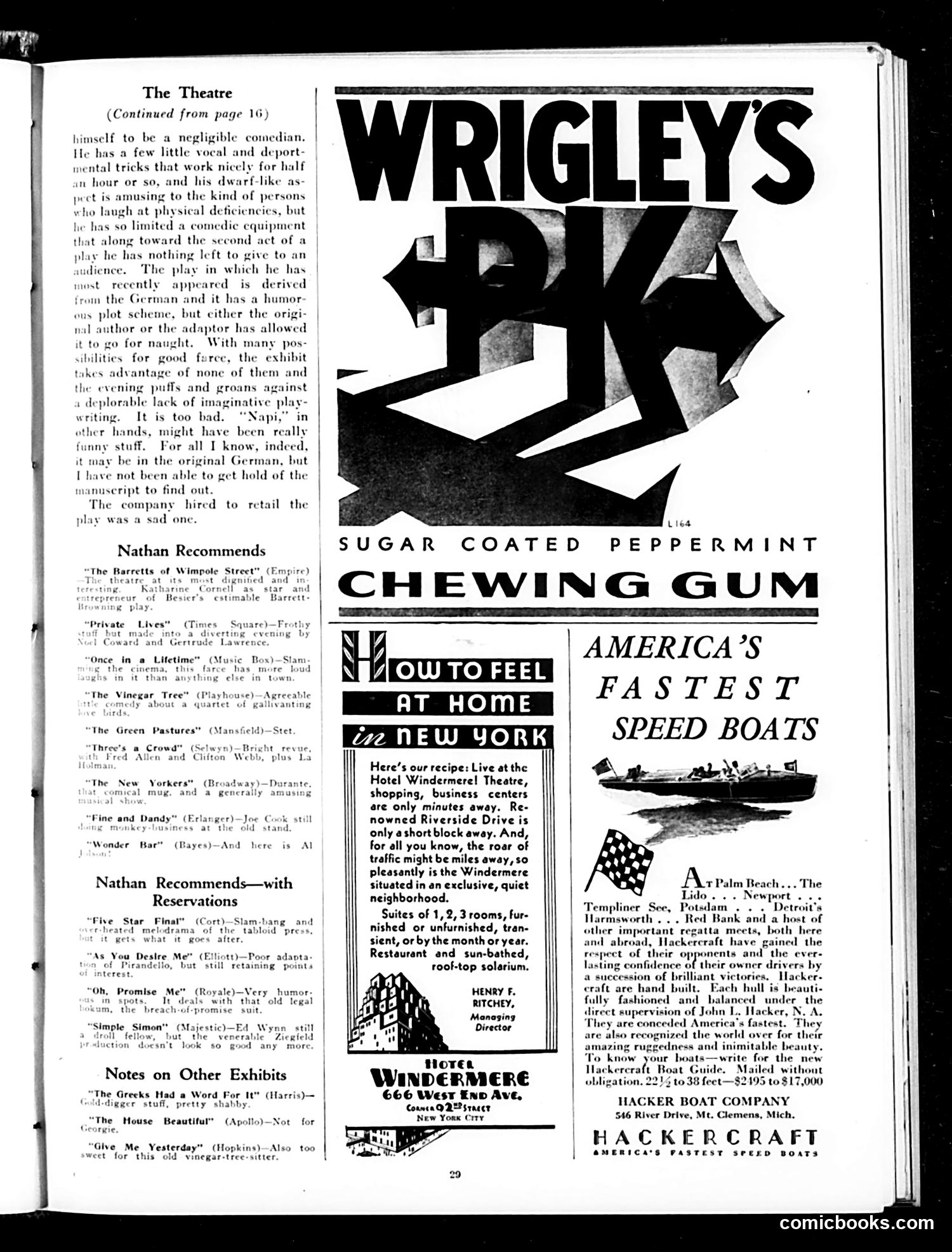
Judge Magazine Page Analysis This page is primarily advertising and theatrical reviews, not political satire. The dominant content consists of: Main Features: - Theater column continuing from page 16, reviewing Broadway plays with critic Nathan's recommendations and reservations - Large Wrigley's chewing gum advertisement (top right) with stylized geometric design - Hotel Windermere advertisement promoting Manhattan lodging near theaters - Hackercraft speedboat advertisements emphasizing American racing boats Context for Modern Readers: The theatrical reviews reference 1920s-30s Broadway productions now largely forgotten. The ads reflect period consumer culture: chewing gum as aspirational product, Manhattan hotels targeting theater-goers, and speedboats as luxury leisure goods during the pre-Depression era. No political cartoons or satire appear on this page. It represents Judge magazine functioning as entertainment and lifestyle publication alongside its satirical content, typical for American magazines of this era.
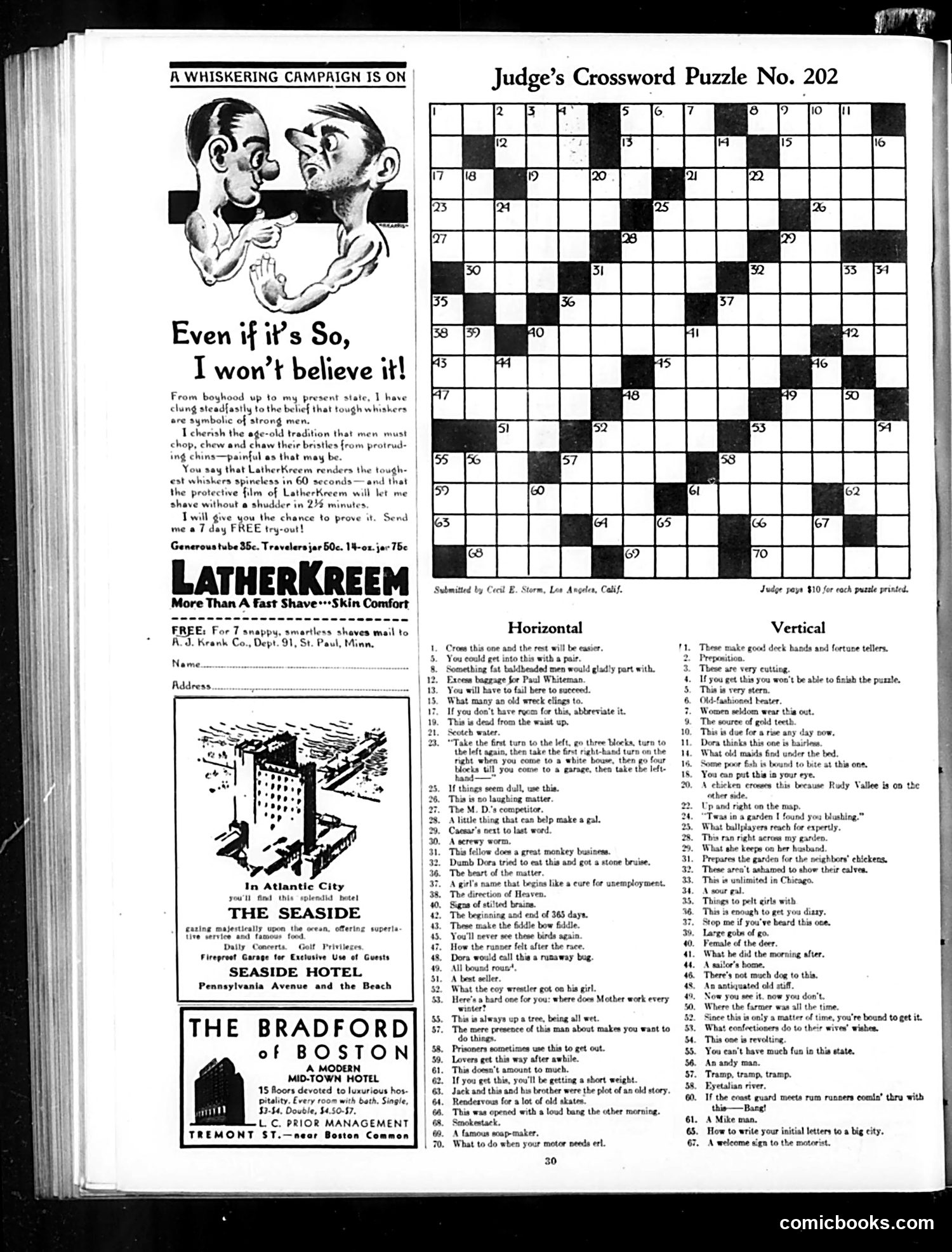
Judge Magazine Political Cartoon Analysis This page is primarily a crossword puzzle advertisement rather than a political cartoon. The small illustration at top shows two caricatured men in profile with the headline "A Whiskering Campaign Is On," introducing a LatherKreem shaving cream advertisement. The satire is commercial, not political: the ad presents a humorous character ("I won't believe it!") who stubbornly clings to the old belief that tough whiskers signify strong masculinity, yet grudgingly agrees to try the product. This parodies masculine vanity and advertising's ability to overcome consumer skepticism. The phrase "whiskering campaign" is a pun on political campaigns. The crossword puzzle itself contains various clues (some referencing Paul Whiteman, Dora—likely "Dumb Dora," a popular comic character—and other period references), but serves primarily as a vehicle for the advertisement. The page also contains hotel and hotel-related advertisements typical of the era.
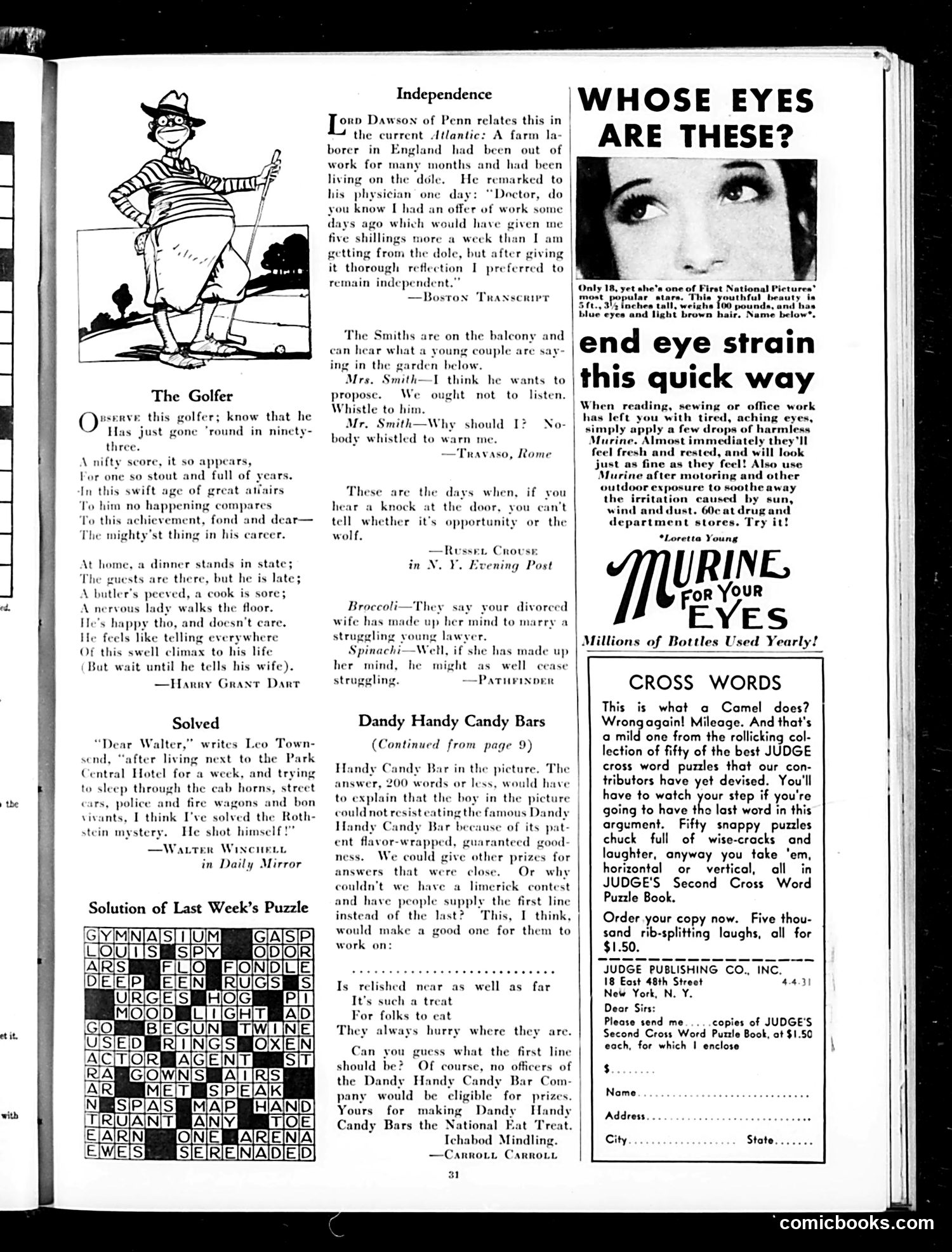
Judge Magazine Page Analysis This page from Judge (date unclear from image) contains several satirical pieces: "The Golfer" mocks bourgeois priorities—a stout, middle-aged man celebrates shooting 93 at golf as "the mighty'st thing in his career," while his dinner guests wait and his wife remains unimpressed. The satire targets how wealthy leisure-class men obsess over golf scores while neglecting family obligations. "Independence" presents a working-class anecdote: an unemployed English farm laborer on "the dole" (unemployment benefits) rejects a job offer paying five shillings more weekly, declaring he prefers to "remain independent" on welfare. The humor appears to satirize either working-class stubbornness or, possibly, the perverse incentives of relief systems. "Solved" is a cynical quip: after enduring noise near Park Central Hotel, a writer "solves" the Rothstein mystery (likely referencing a real crime), suggesting the noise drove someone to suicide—dark urban satire. The remaining content includes a crossword puzzle contest and Murine eye drops advertisement, typical magazine filler of the era.
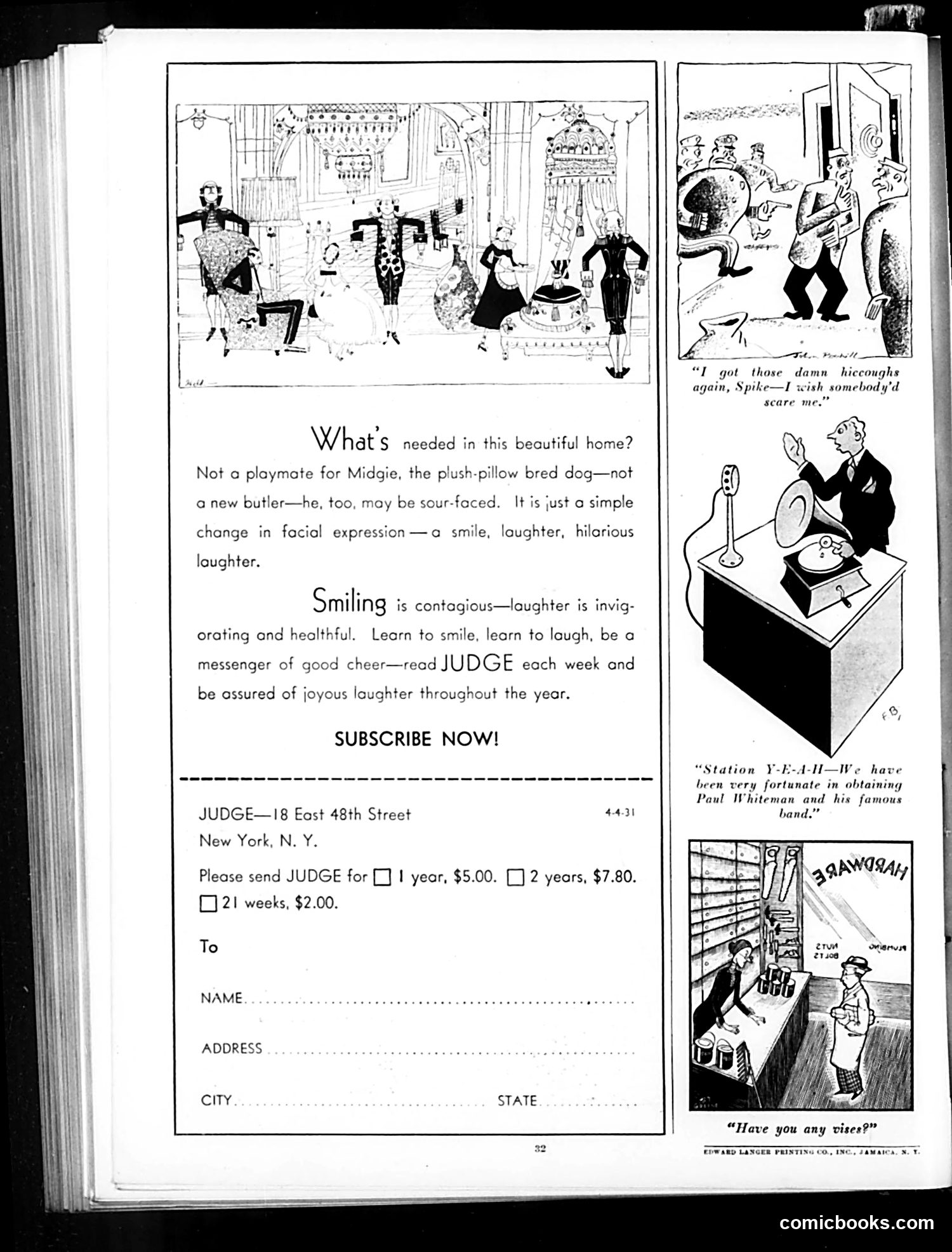
Judge Magazine Subscription Advertisement & Cartoons This page primarily advertises Judge magazine with a subscription form. The main message argues that wealthy households need only "a smile, laughter" rather than new servants or pets—promoting laughter as "contagious" and healthful. Readers should subscribe to Judge for guaranteed "joyous laughter throughout the year." The right-side cartoons illustrate comedic scenarios: one features a man bothered by hiccoughs asking someone named Spike to scare him; another references "Station Y-E-A-H" obtaining Paul Whiteman (a famous 1920s-30s bandleader) and his band; a third shows what appears to be a shop scene with the caption "Have you any vices?" These cartoons exemplify Judge's satirical humor style—mixing domestic situations, celebrity references, and wordplay puns typical of the era's comic magazines. The overall pitch positions Judge as essential entertainment for middle/upper-class readers seeking sophisticated wit and comic relief.
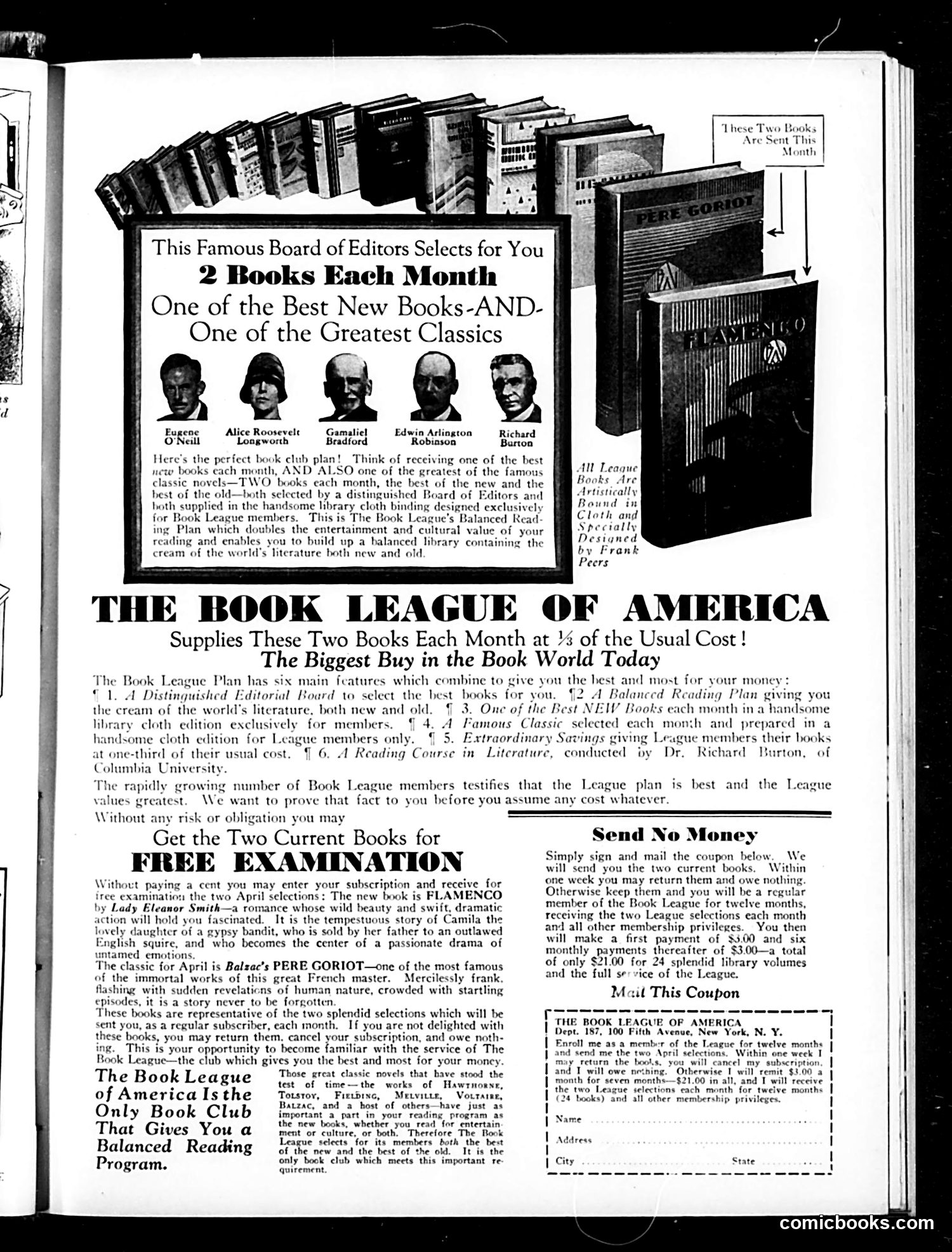
Analysis for Modern Readers This is primarily advertising copy, not satirical content. The page promotes The Book League of America, a mail-order book club service. The "Famous Board of Editors" pictured includes real historical figures: Eugene O'Neill (playwright), Alice Roosevelt Longworth (Theodore Roosevelt's daughter), Gamaliel Bradford (biographer), Edwin Arlington Robinson (poet), and Richard Burton (Columbia University literature professor). Their presence lends prestige to the club's selection process. The service pitch emphasizes receiving "2 Books Each Month"—one contemporary novel, one classic—at one-third retail cost, with handsome cloth bindings. The "free examination" offer was a common marketing hook: try books risk-free before committing. For modern readers, this reflects early 20th-century book-club culture, when curated selections by educated authorities held significant cultural weight. The appeal to "balanced reading" combining new and classic works reflects Depression-era or pre-war anxieties about maintaining literary standards amid mass publishing. This is marketing, not satire—Judge likely published it as paying advertisement.

Dentyne Chewing Gum Advertisement This is a commercial advertisement, not political satire. It promotes Dentyne brand chewing gum to a female audience, using a glamorous woman's portrait to sell the product. The ad's argument is straightforward: white teeth = attractive smile = romantic success. The copy claims Dentyne keeps teeth white while also strengthening gums through "extra chewy quality" providing "healthful exercise." The tagline "Chew Dentyne...and smile!" is the sales pitch. This reflects early 20th-century advertising that linked personal grooming (especially teeth whiteness) directly to social and romantic desirability—a common marketing strategy of the era. There's no satire here; Judge magazine apparently sold advertising space alongside its humorous content.