judge
Judge — June 20, 1931
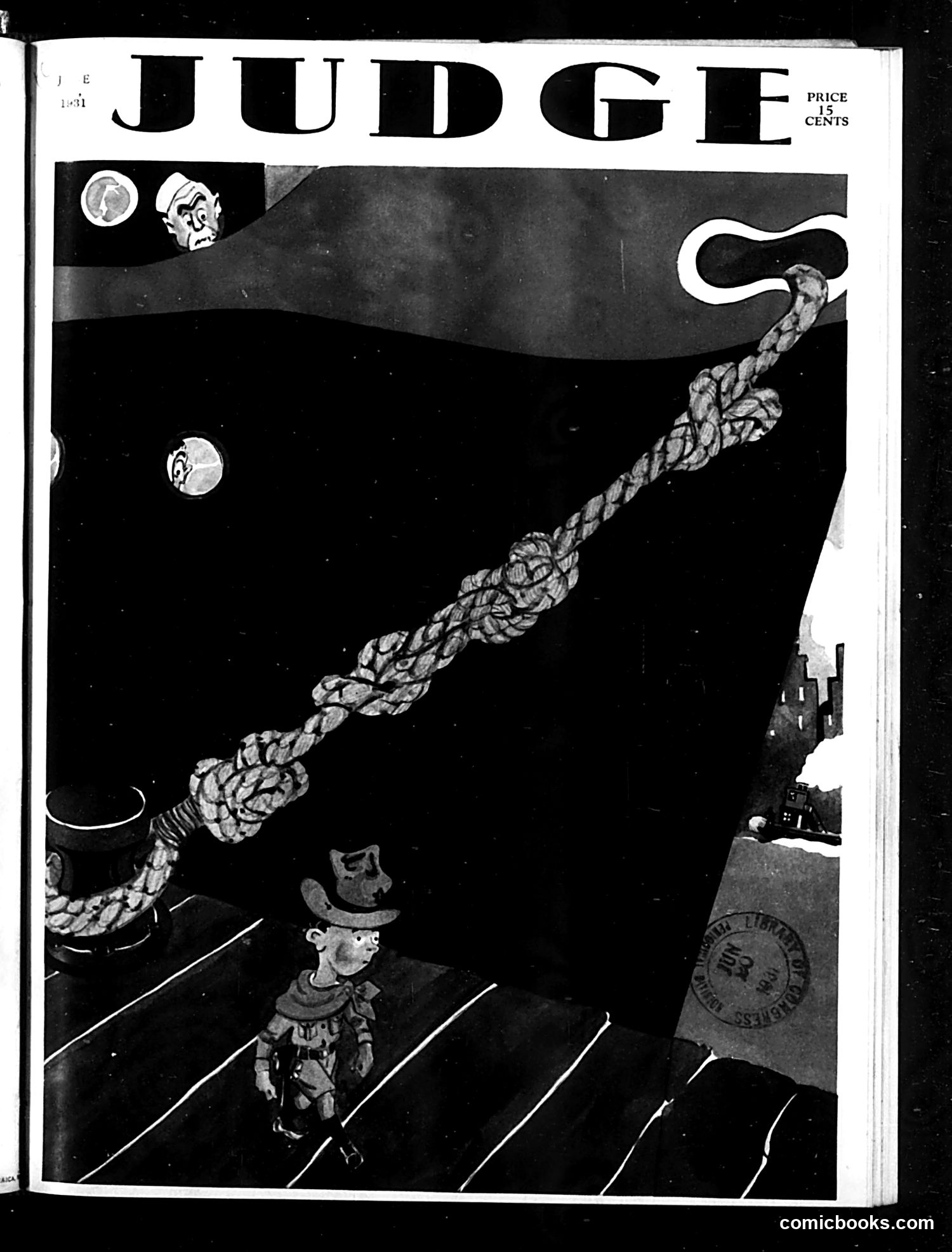
Analysis of Judge Magazine Cover This appears to be a Judge magazine cover featuring a political cartoon, though the OCR text provided contains only the magazine title and price information, offering no descriptive caption. The illustration shows a caricatured figure in formal dress (top hat and coat) standing below an enormous coiled rope with a noose at its end. The rope dominates the composition. Additional caricatured faces appear in the upper corners. Without the accompanying text or caption, I cannot definitively identify the specific political figure being depicted or the precise historical event being satirized. The noose imagery clearly suggests serious consequences or threat, typical of Judge's often dark political satire from the late 19th or early 20th century. Additional context would be necessary for accurate interpretation.
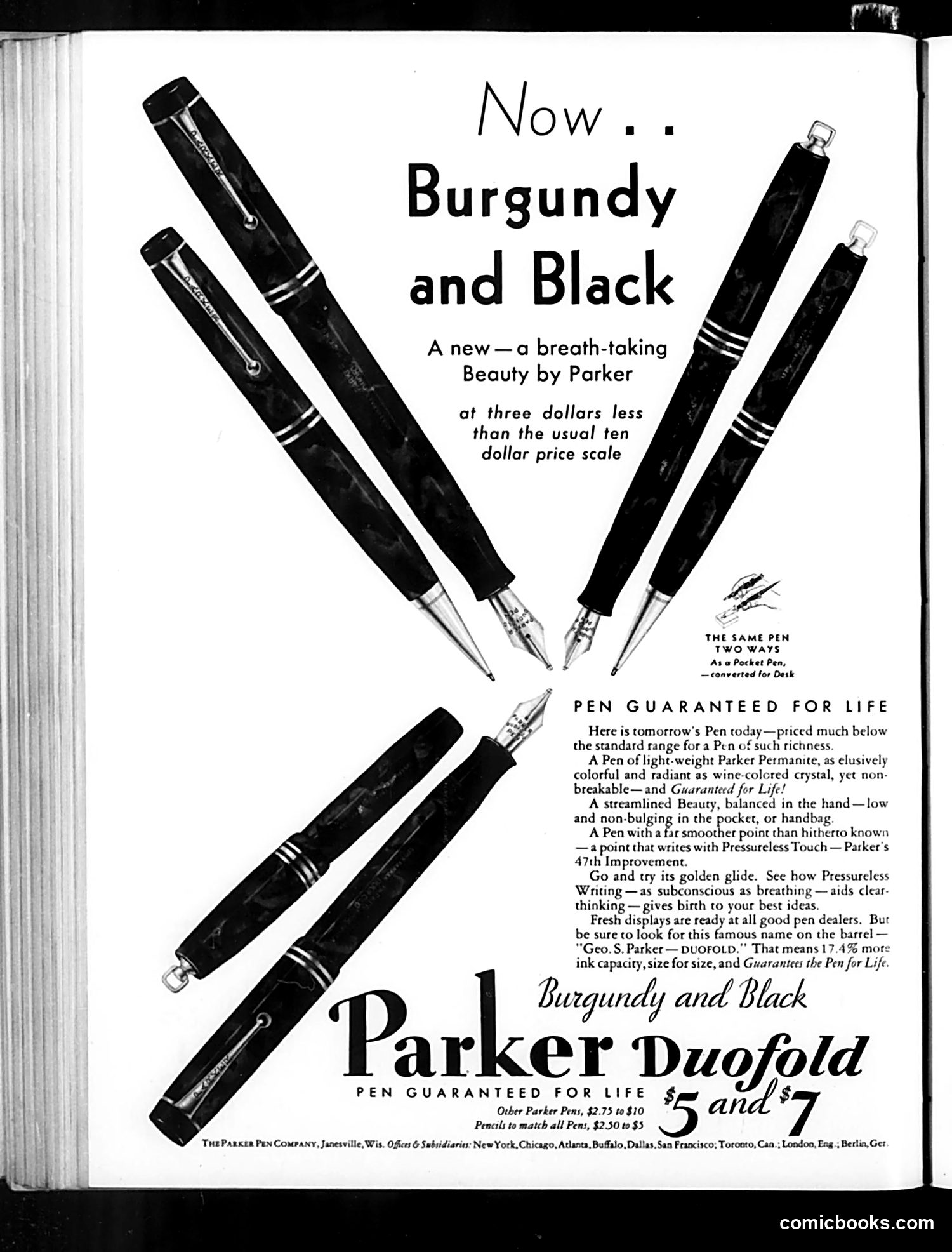
Analysis This page is not a cartoon or satirical content—it's a Parker pen advertisement, likely from the 1920s-1930s based on the design and pricing. The ad promotes the Parker Duofold fountain pen in new "Burgundy and Black" color options, priced at $5 and $7. Key marketing claims include: - "Guaranteed for Life" - "Pressureless Touch" writing technology - A streamlined, pocket-friendly design - Superior quality at lower cost than competitors The "Geo. S. Parker — DUOFOLD" branding appears as the brand's signature mark. Multiple pen angles showcase the product's appearance and dual functionality (as both pocket pen and desk pen). This represents vintage advertising rather than political or social satire.
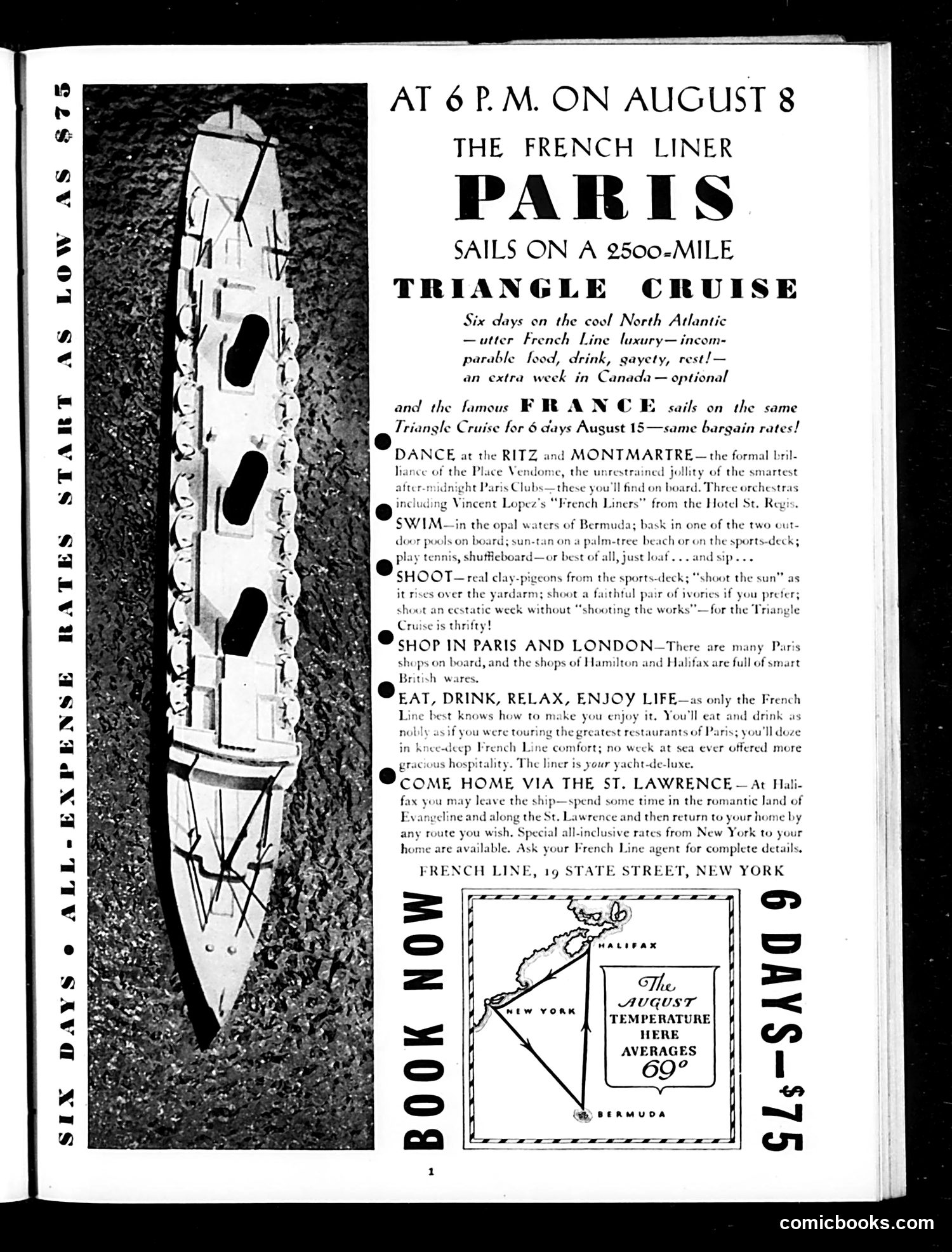
This page is primarily a travel advertisement, not a political cartoon. It promotes the French Line's luxury liner *Paris*, advertising a 2,500-mile "Triangle Cruise" departing August 8. The ship's image dominates the left side, shown from above. The ad emphasizes leisure activities aboard—dancing at high-end Paris nightclubs, swimming in pools, shooting clay pigeons, shopping, and fine dining. It promises French hospitality and luxury accommodations. A small map shows the route from New York to Halifax, Bermuda, and back via the St. Lawrence River. The appeal is purely commercial: targeting wealthy Americans seeking European sophistication and leisure during the interwar period. There is no political satire visible—this is standard period advertising in *Judge* magazine.
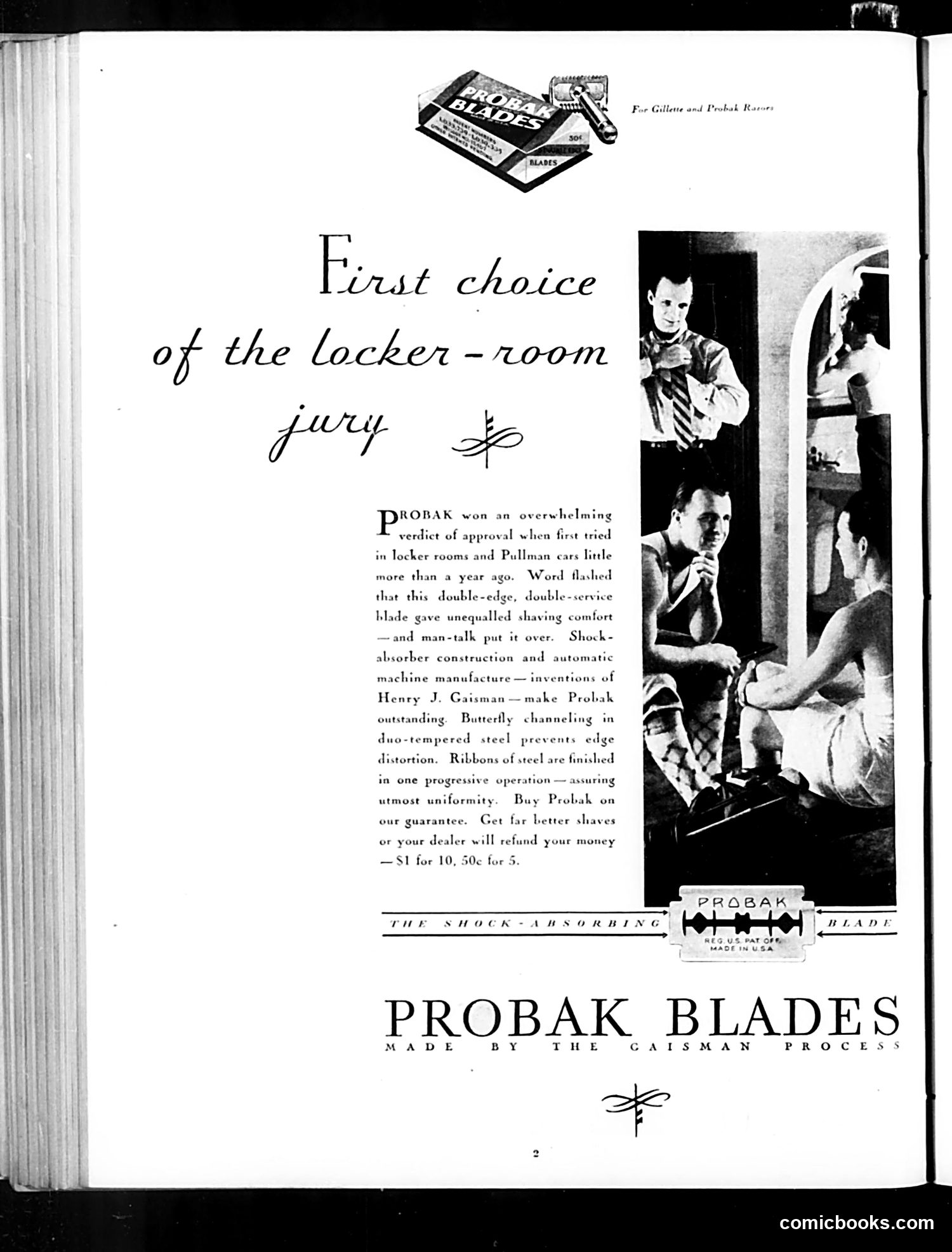
Probak Blades Advertisement This page is primarily a commercial advertisement, not satirical content. It promotes Probak razor blades with the tagline "First choice of the locker-room jury." The ad features photographs of men in what appears to be a locker room setting, presumably depicting athletes or soldiers. The marketing strategy emphasizes product approval through peer endorsement—the "locker-room jury" represents everyday male users vouching for the blade's quality. The copy highlights technical features: "double-edge, double-service blade," shock-absorber construction, and automatic manufacturing by Henry J. Gaisman's inventions. The money-back guarantee ("Get far better shaves or your dealer will refund your money") was a common sales tactic. This reflects early-to-mid 20th century masculine marketing targeting competitive male bonding and practical performance claims rather than luxury appeal.
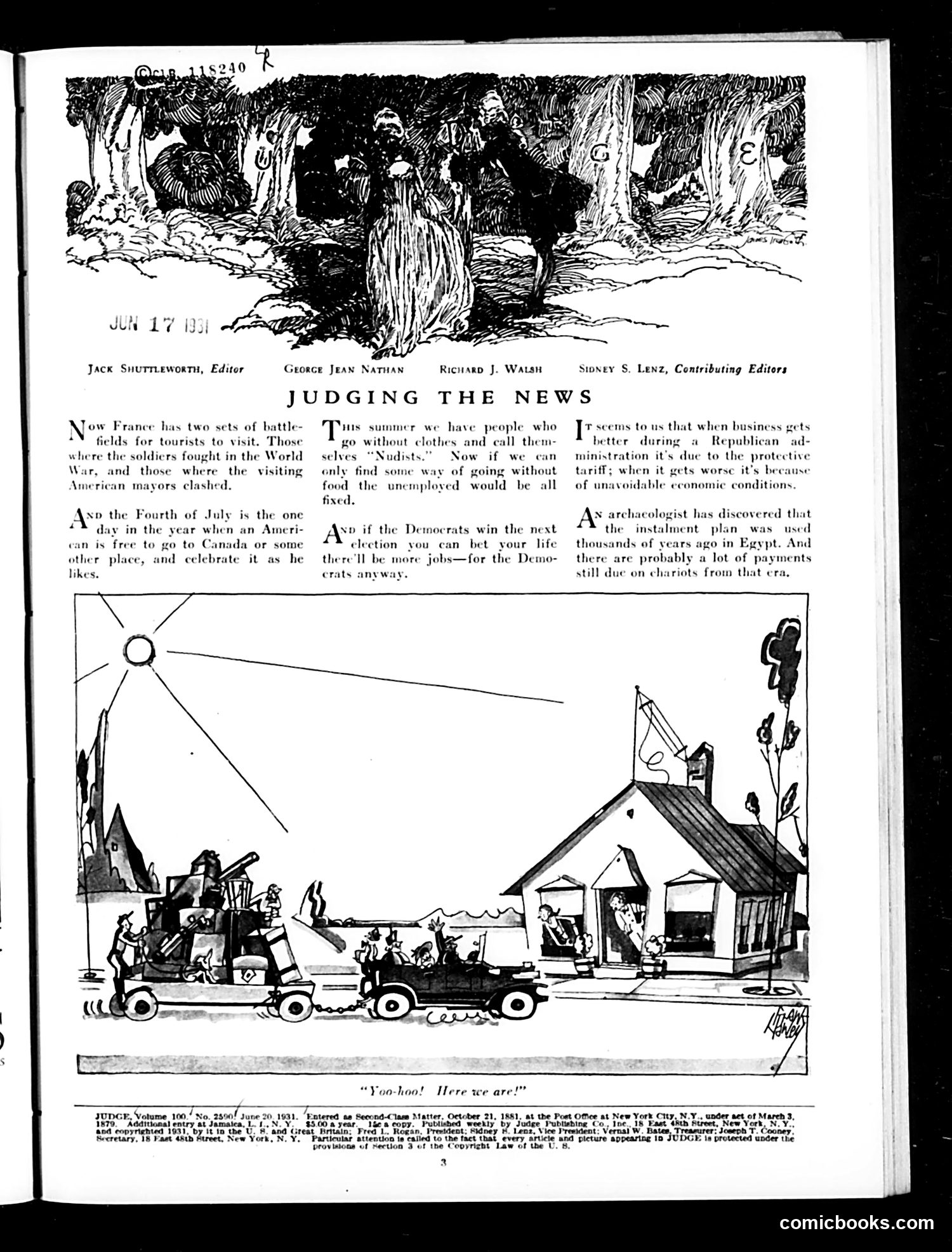
Analysis of Judge Magazine Page (June 20, 1931) The page features editorial commentary on contemporary issues under the heading "Judging the News." The main cartoon depicts a surreal carnival or fair scene with a train carrying visitors, labeled "You-hoo! Here we are!" The editorial text references: - France's World War battlefields as tourist attractions - Fourth of July celebrations in America - Unemployment and economic hardship (mentioning "nudists" and food for the unemployed) - The 1932 election and Democratic promises of jobs - Ancient Egyptian debts and archaeological discoveries The cartoon appears to satirize American optimism or escapism during the Great Depression era—depicting pleasure-seeking tourism amid economic crisis. The jovial tone of "Here we are!" contrasts sharply with the surrounding text about joblessness and economic suffering, suggesting ironic commentary on misplaced priorities.
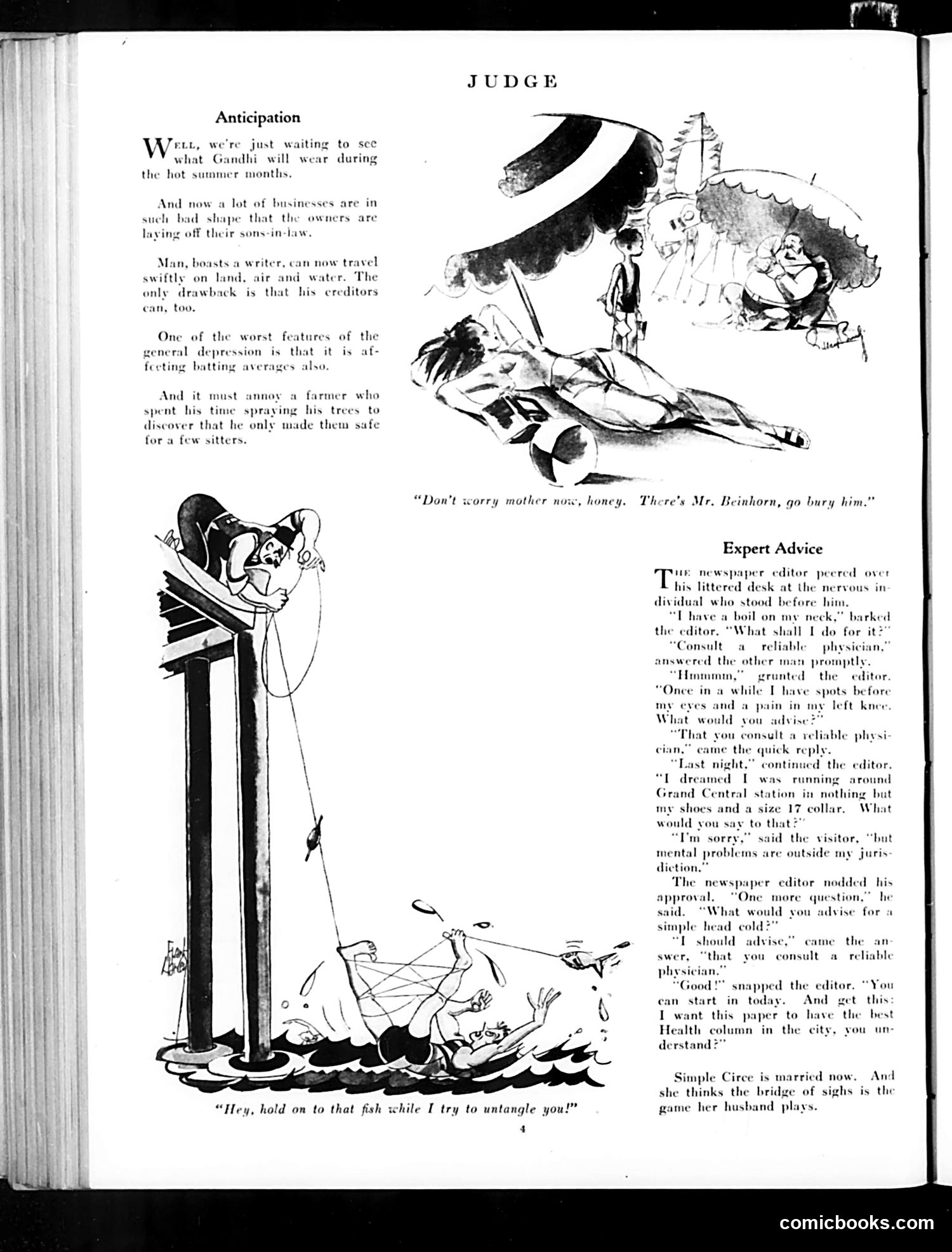
Analysis of Judge Magazine Page This page contains two separate satirical pieces: "Anticipation" (top): Mocks economic hardship during what appears to be the Great Depression. The cartoon depicts someone buried under fallen trees/debris, referenced to Gandhi and business failures. The joke critiques how Depression-era difficulties affect multiple social classes—writers can travel but creditors follow; farmers' tree-spraying efforts backfire. "Expert Advice" (bottom): Shows a newspaper editor receiving unwanted medical advice from a visitor. The visitor keeps suggesting he "consult a reliable physician" for various ailments (boil, spots, cold), despite the editor's sarcastic dismissals. The satire mocks both the visitor's repetitive pestering and the era's tendency toward unsolicited advice-giving. Both pieces use humor to comment on contemporary social frustrations and human behavior.
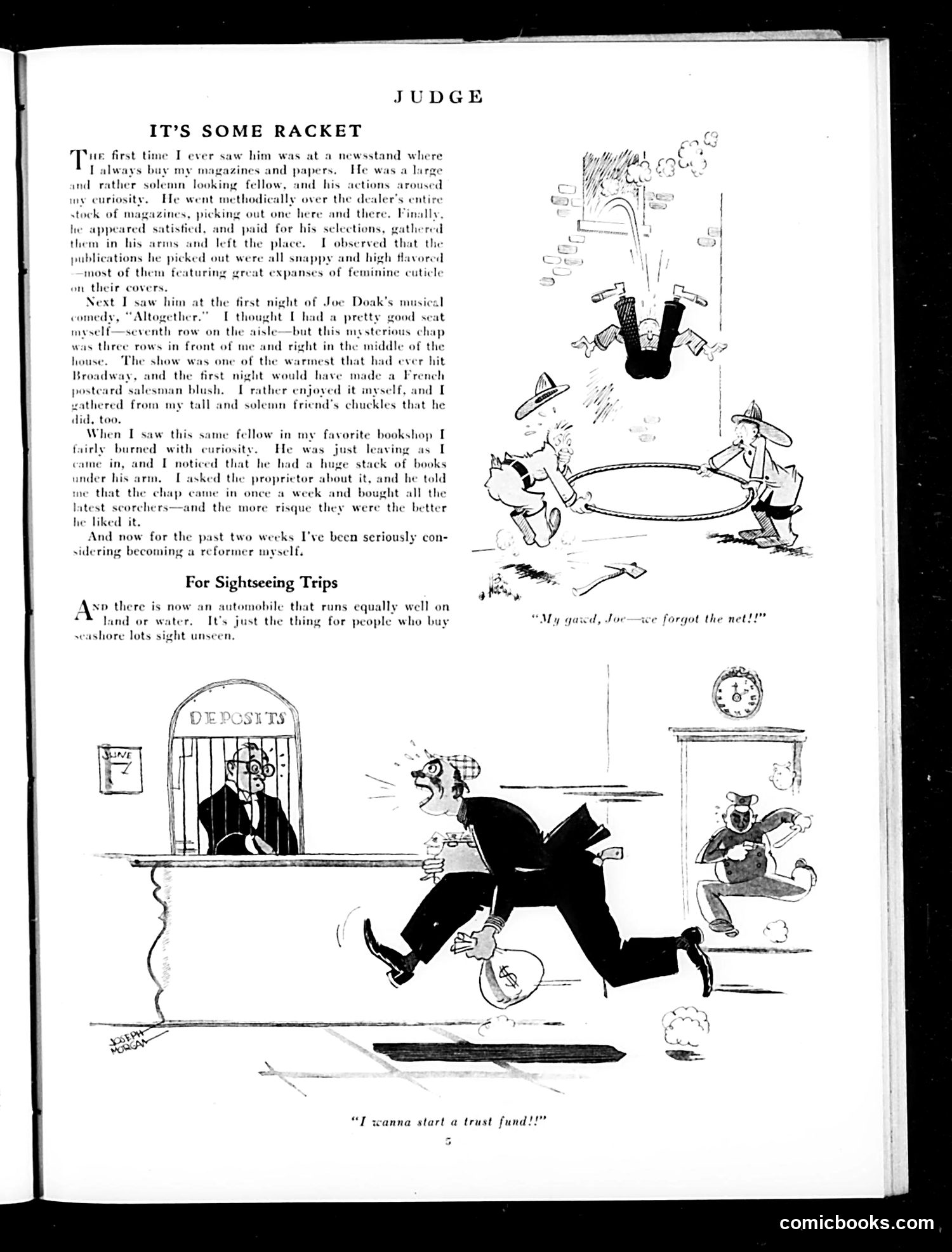
Analysis of Judge Magazine Page The page contains two distinct cartoons satirizing different topics: Top cartoon ("My gosh, Joe—we forgot the net!"): Shows people playing with what appears to be a hula hoop or similar circular object. The humor suggests they've forgotten essential equipment for their activity. Bottom cartoon ("I wanna start a trust fund!"): Depicts a man dramatically fleeing from a bank's "DEPOSITS" window, suggesting financial panic or distress. The figure appears to be reacting with exaggerated alarm, likely satirizing either banking anxiety, investment schemes, or financial instability during an unspecified period. The prose section discusses an encounter with a mysterious fellow at newsstands and bookshops who buys "snappy and high flavored" publications, followed by commentary on a newfangled amphibious automobile. The exact historical period remains unclear without additional context.
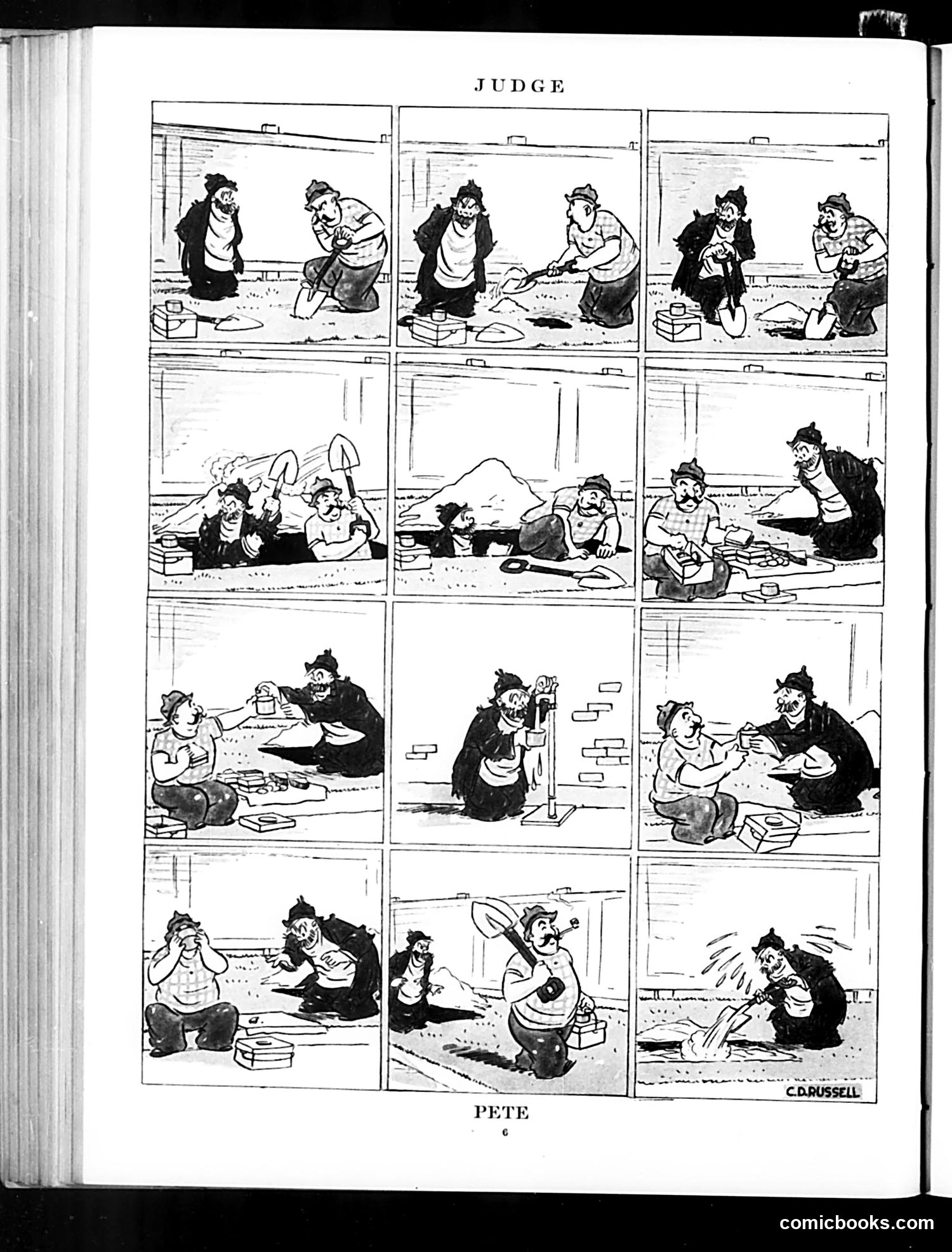
Judge Magazine Comic: "Judge" and "Pete" This appears to be a sequential comic strip by Carluselli showing a domestic dispute or conflict between two characters. The narrative follows one figure (appearing to be a judge or authority figure in dark clothing) and another character in lighter clothing through a series of escalating confrontations. The strip depicts physical comedy and slapstick humor typical of early 20th-century Judge magazine content. Characters are shown wrestling, struggling over objects, and engaging in roughhousing. The final panels show increasingly chaotic action with motion lines suggesting violence or intense physical struggle. Without clear historical context or captions visible, the specific social commentary or political reference remains unclear, though the domestic conflict theme was common in period humor.
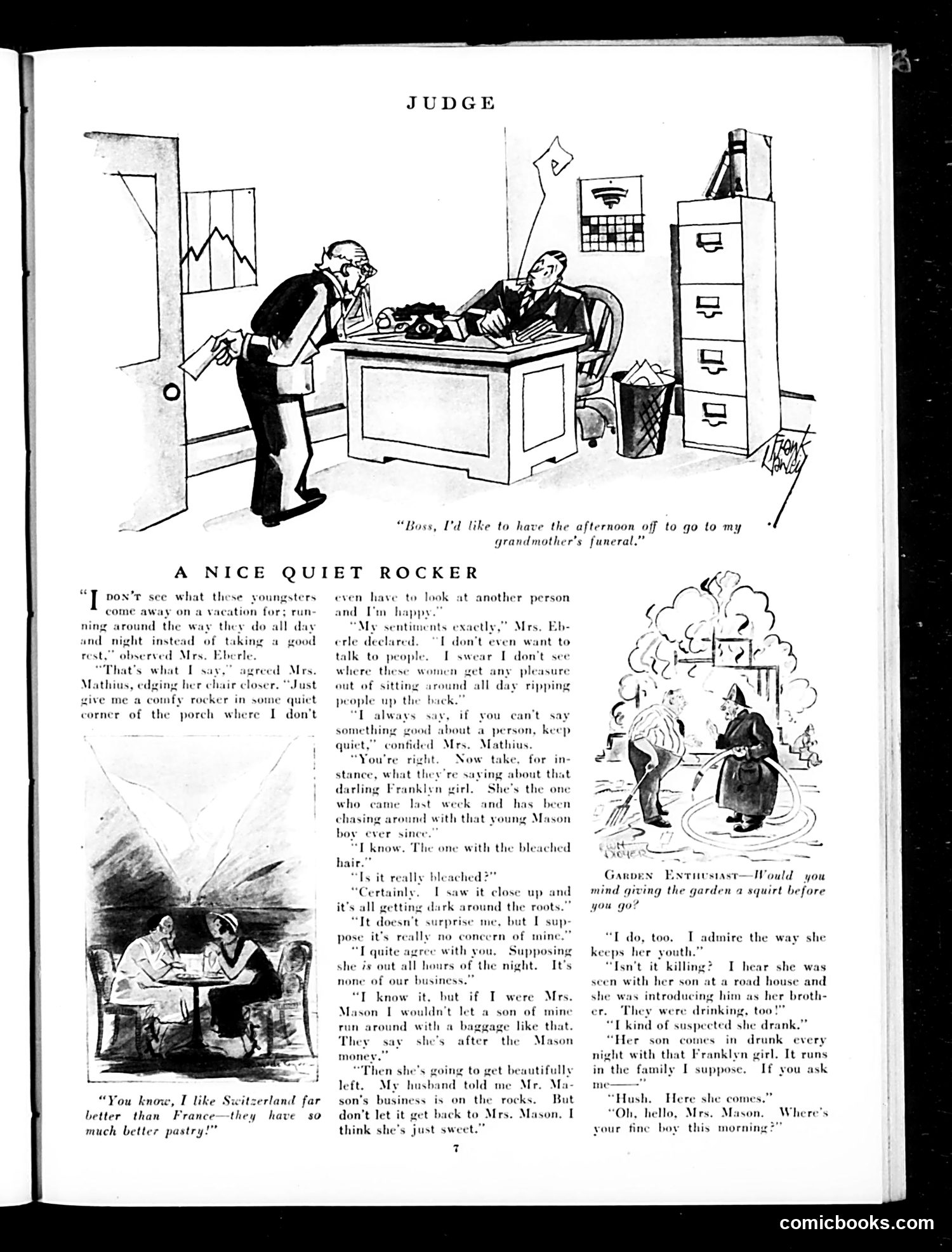
Satire of Gossip and Hypocrisy This page satirizes the disconnect between what respectable people *claim* to value and what they actually do. The top cartoon shows a boss denying an employee's request for a funeral—suggesting callous indifference to human dignity. The main story, "A Nice Quiet Rocker," depicts two women (Mrs. Eberle and Mrs. Mathius) who proclaim they dislike gossip and don't want to judge others. Yet they immediately proceed to viciously tear apart a young woman named Franklyn—criticizing her bleached hair, her romantic behavior, her family's finances, and her drinking. When Mrs. Mason appears, they instantly shift to false pleasantries. The satire's point: these women are hypocrites who engage in exactly the character assassination they claim to despise. The "nice quiet rocker" they desire masks their active participation in small-town rumor-mongering and social cruelty. It's a critique of how respectability and morality were performative—adopted for public appearance while private behavior told a different story.
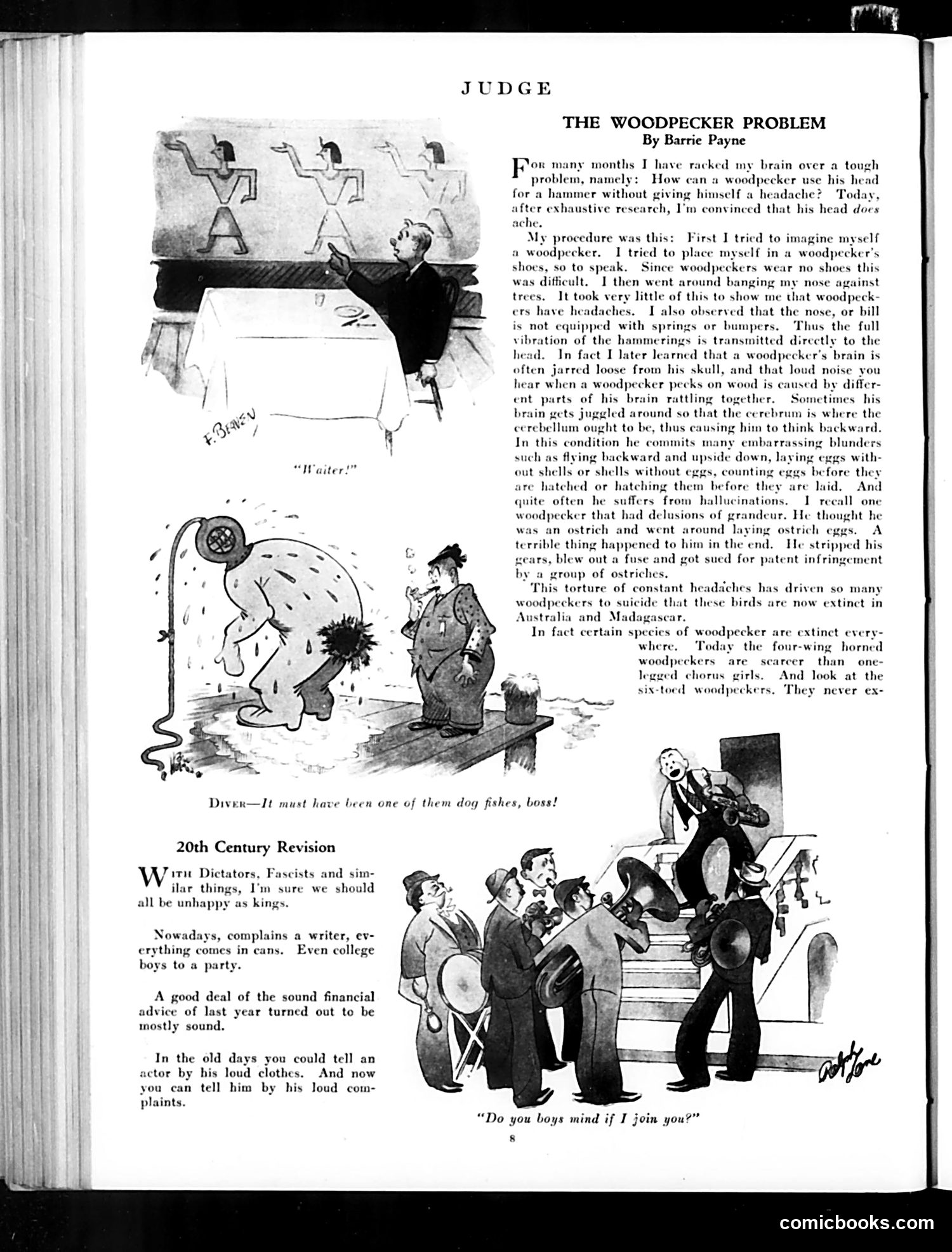
"The Woodpecker Problem" – Judge Magazine Satire This humorous article by Barrie Payne uses the woodpecker as a vehicle for absurdist comedy. The author facetiously investigates how woodpeckers avoid headaches while pecking, concluding they actually *do* get headaches—and suffer serious neurological damage. His "research" includes banging his own nose against trees. The satire escalates wildly: woodpeckers supposedly go mad from repeated head trauma, experiencing brain displacement, backward flight, and delusional behavior (one thinks it's an ostrich). The punchline claims this has driven entire woodpecker species to extinction. This appears to be pure nonsense humor—a parody of pseudo-scientific investigation popular in early 20th-century writing. The accompanying cartoons show absurd situations (a waiter bewildered by a diner's complaint; a diving accident blamed on "dog fishes"). The "20th Century Revision" section below shifts to brief social commentary on dictators, canned goods, and actors' loud complaints—typical Judge magazine satirical observations on contemporary life and manners.
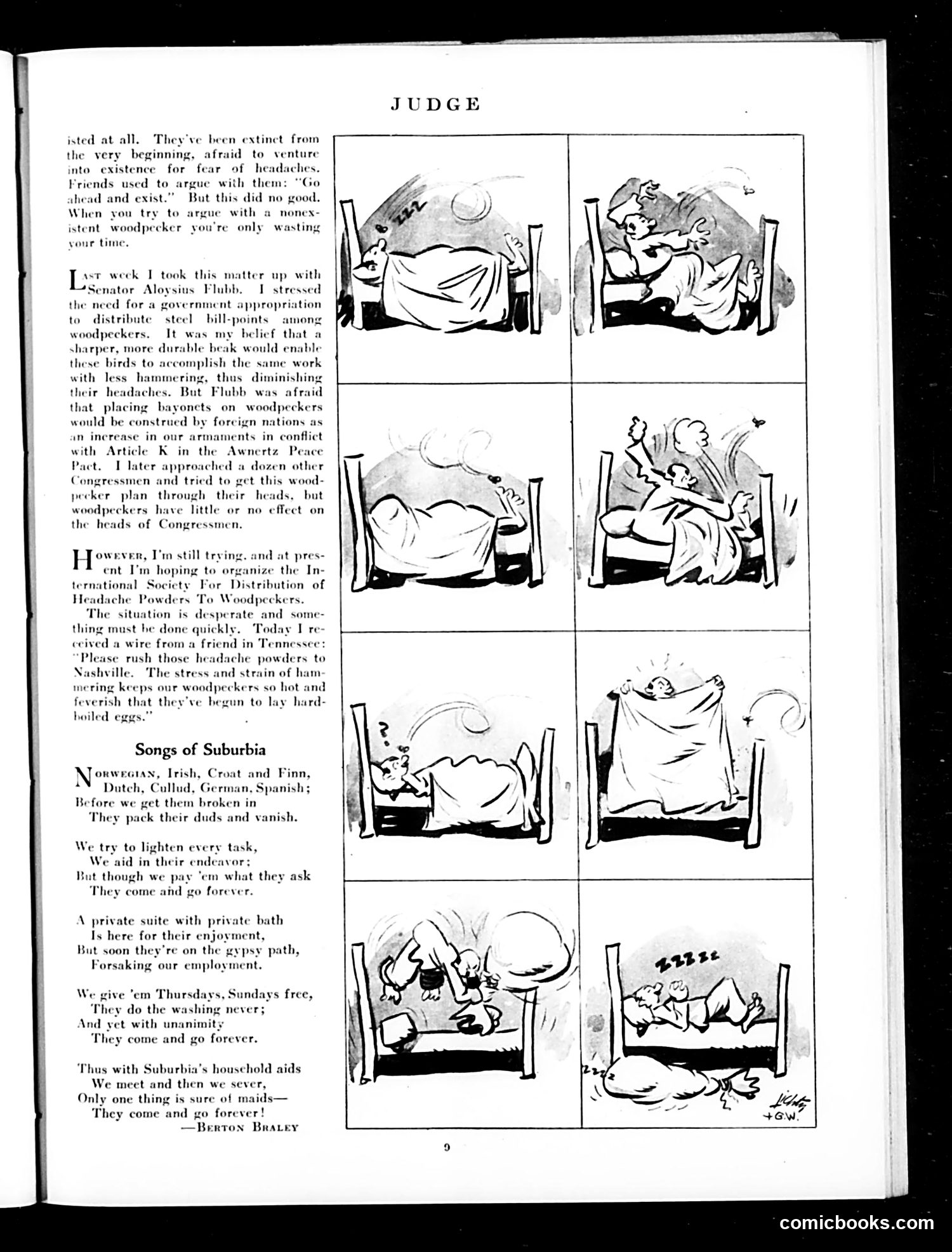
Judge Magazine Page Analysis This page contains two distinct pieces of satirical content: The Woodpecker Absurdist Satire: The main narrative mocks government inefficiency and Cold War anxiety. A narrator proposes distributing steel bill-points to woodpeckers to reduce their headaches from pecking. Senator Aloysius Flubb rejects this, fearing foreign nations might interpret it as an armament increase violating the "Anwertz Peace Pact" (a fictional reference). The satire targets politicians' paralysis over trivial matters due to international relations paranoia—suggesting Congress is so concerned with appearing non-threatening abroad that it cannot address even absurd domestic problems. "Songs of Suburbia" Poem: This light verse by Berton Blakey satirizes the servant/domestic help problem in American suburbs. It humorously catalogs immigrant and ethnic workers (Norwegian, Irish, Croatian, Dutch, etc.) who quit domestic positions despite good wages and working conditions. The repetitive refrain "They come and go forever" mocks suburban employers' frustration with high turnover while implicitly acknowledging their inadequate treatment of staff. Both pieces reflect post-war American anxieties: Cold War paranoia and changing labor dynamics.
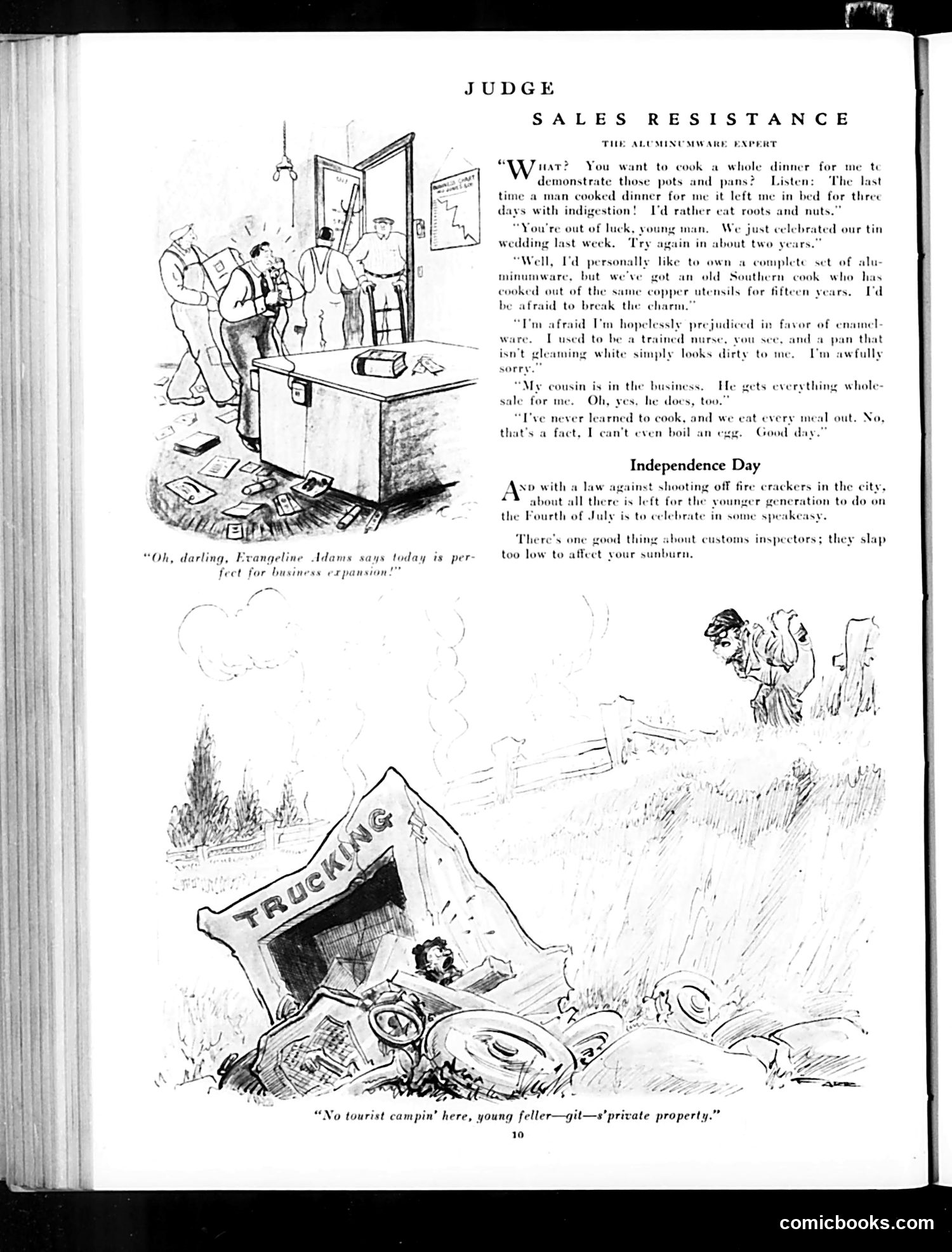
Analysis of Judge Magazine Page This page contains two satirical pieces about American consumer culture and social customs. "Sales Resistance" depicts a salesman's failed pitch for aluminum cookware. The humor lies in the excuses given by resistant housewives: one claims previous cooking gave her indigestion; another just celebrated a tin wedding and won't replace cookware; a third trusts her Southern cook's copper pans; a fourth, a former nurse, insists only gleaming enamel looks sanitary; a fifth never learned to cook. The final woman mentions her cousin in business gets wholesale rates—implying she'll buy through him anyway, undercutting the salesman. The satire mocks both aggressive sales tactics and consumer reluctance to adopt new products. "Independence Day" comprises two cartoons: one about fireworks bans leaving youth with "soot-black" sunburns from customs inspectors, and another showing a man in a broken-down truck on private property being told to leave. The humor targets holiday restrictions and property rights enforcement.
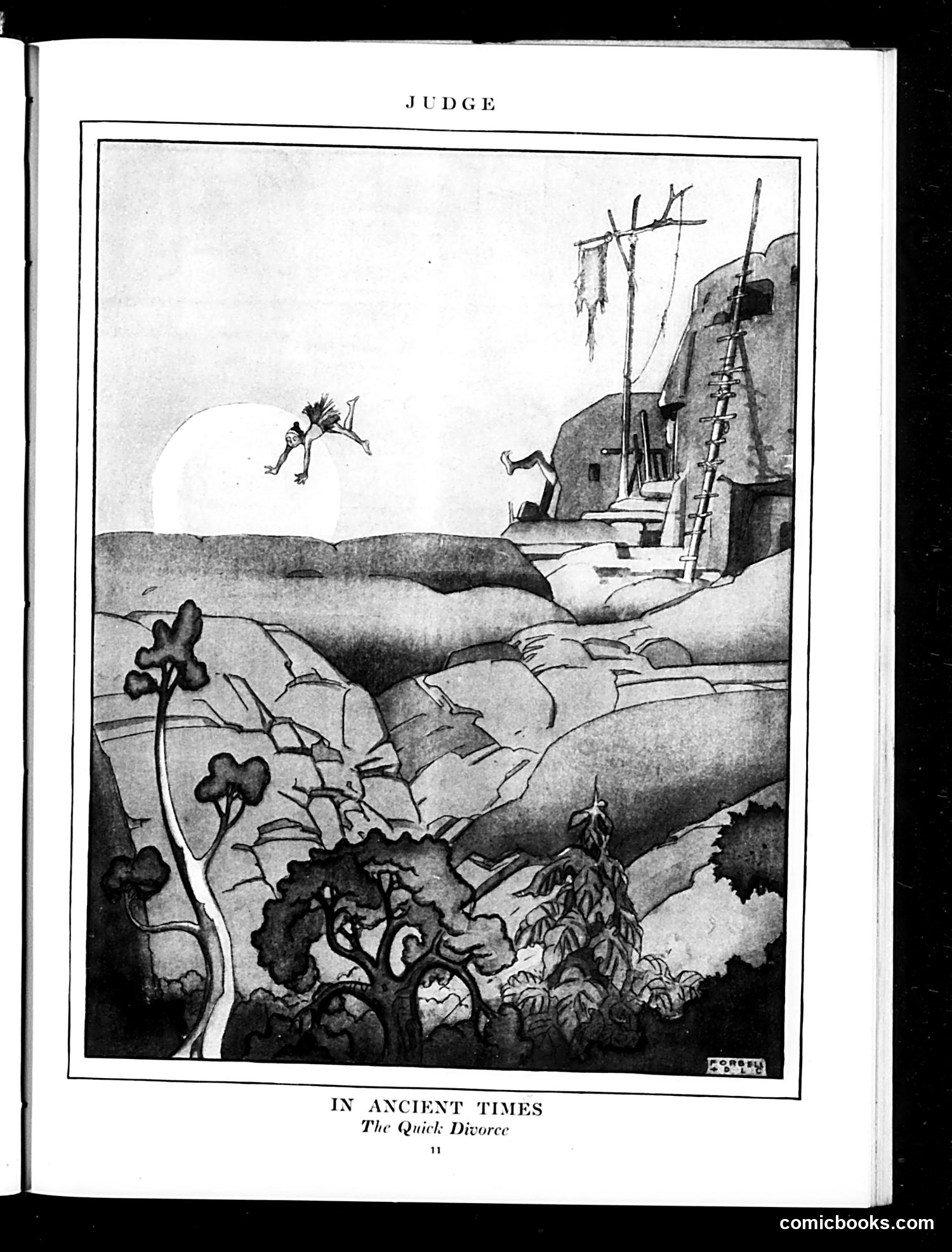
Analysis This satirical cartoon from *Judge* magazine depicts "The Quick Divorce" in ancient times. The illustration shows a primitive landscape with what appears to be a caveman being ejected or thrown from a crude dwelling (built into a hillside or cave), while a woman stands nearby. The title suggests satire about divorce procedures—specifically, that in prehistoric times, separation was apparently a more immediate, physical process than the legal complexities of the cartoonist's contemporary era. The humor likely critiques modern divorce law's bureaucratic delays and complications by contrasting them with this imagined "quick" prehistoric alternative. The caveman's airborne trajectory emphasizes the speediness and forcefulness of ancient separation, mocking the slow legal machinery of the cartoonist's own time.
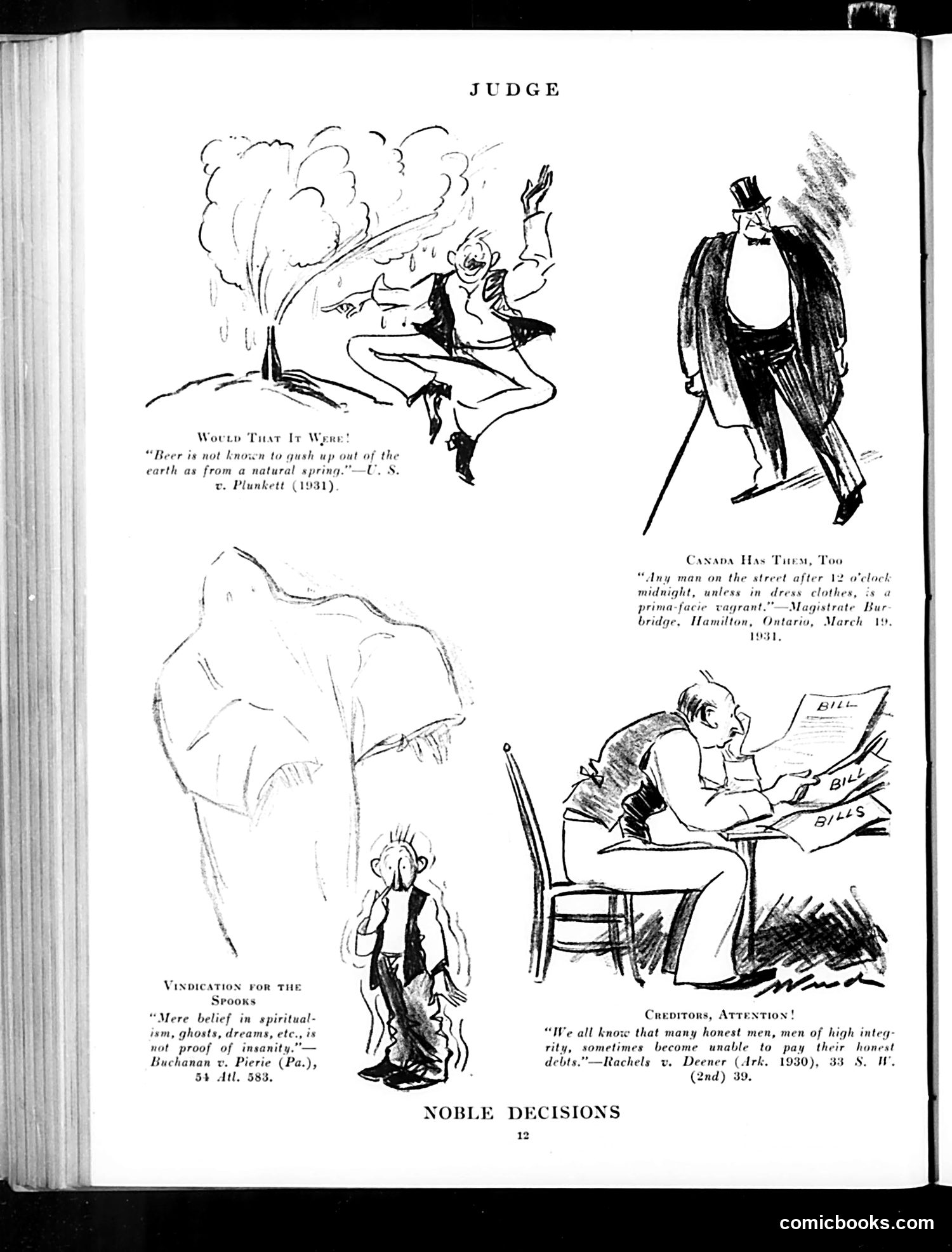
Judge Magazine: "Noble Decisions" Page This page satirizes absurd court rulings through legal citations. Each cartoon mocks a judicial decision by illustrating its logical consequences: "Would That It Were": References a 1931 U.S. v. Plunkett case about beer emerging from natural springs—the cartoon shows men wildly celebrating beer fountains, mocking the court's apparently naive reasoning. "Canada Has Ties, Too": Lampoons a Hamilton magistrate's ruling that men on streets after midnight without formal dress are vagrants—depicting an overdressed gentleman as the implied "solution." "Vindication for the Spooks": Illustrates a Pennsylvania case denying that belief in ghosts proves insanity, showing a terrified man confronted by a specter. "Creditors, Attention!": Shows a man drowning in bills, sardonically quoting an Arkansas ruling acknowledging honest men sometimes can't pay debts—the joke being this obvious fact hardly needed judicial confirmation. The satire targets judicial reasoning perceived as either overly technical, absurdly literal, or stating the obvious while ignoring practical justice.
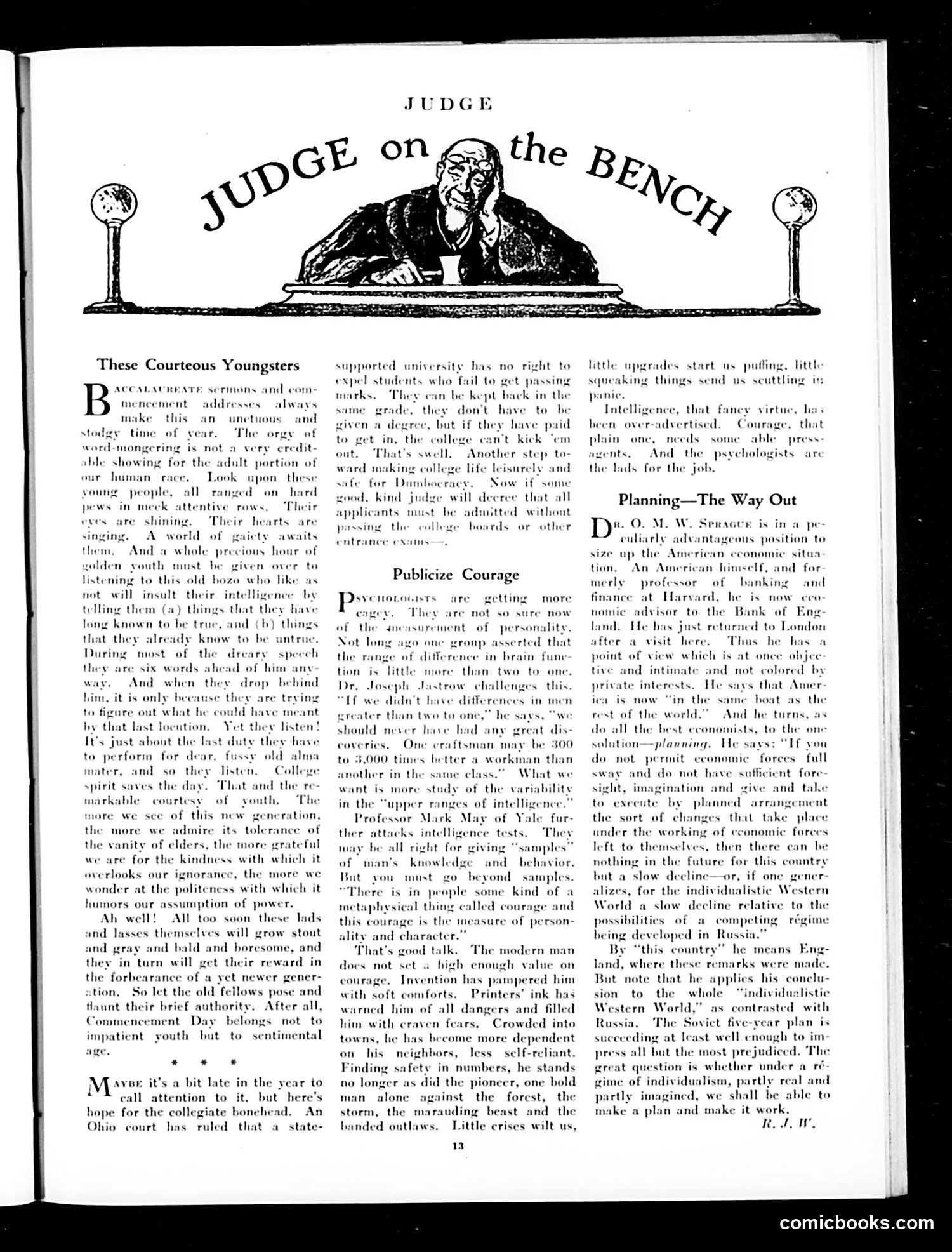
"Judge on the Bench" – Analysis This page contains two satirical pieces: "These Courteous Youngsters" critiques commencement speakers. The cartoon shows a judge presiding over the topic. The satire mocks elderly speakers who bore college graduates with platitudes, yet young people politely endure them. The writer argues this reflects generational courtesy—young people tolerate pompous authority figures with grace, while elders selfishly waste youth's time delivering predictable moral lectures. "Publicize Courage" discusses psychologists' work measuring intelligence. It references Dr. Joseph Jastrow's challenge to intelligence testing, arguing that "courage" and "character" matter more than standardized samples. The piece laments that modern comfort and crowded urban life have made Americans soft and dependent—unlike hardy pioneers—causing people to panic at minor difficulties. Both pieces reflect 1920s anxieties: respect for tradition versus frustration with elders' irrelevance, and concerns about American resilience in an increasingly comfortable, urbanized society.
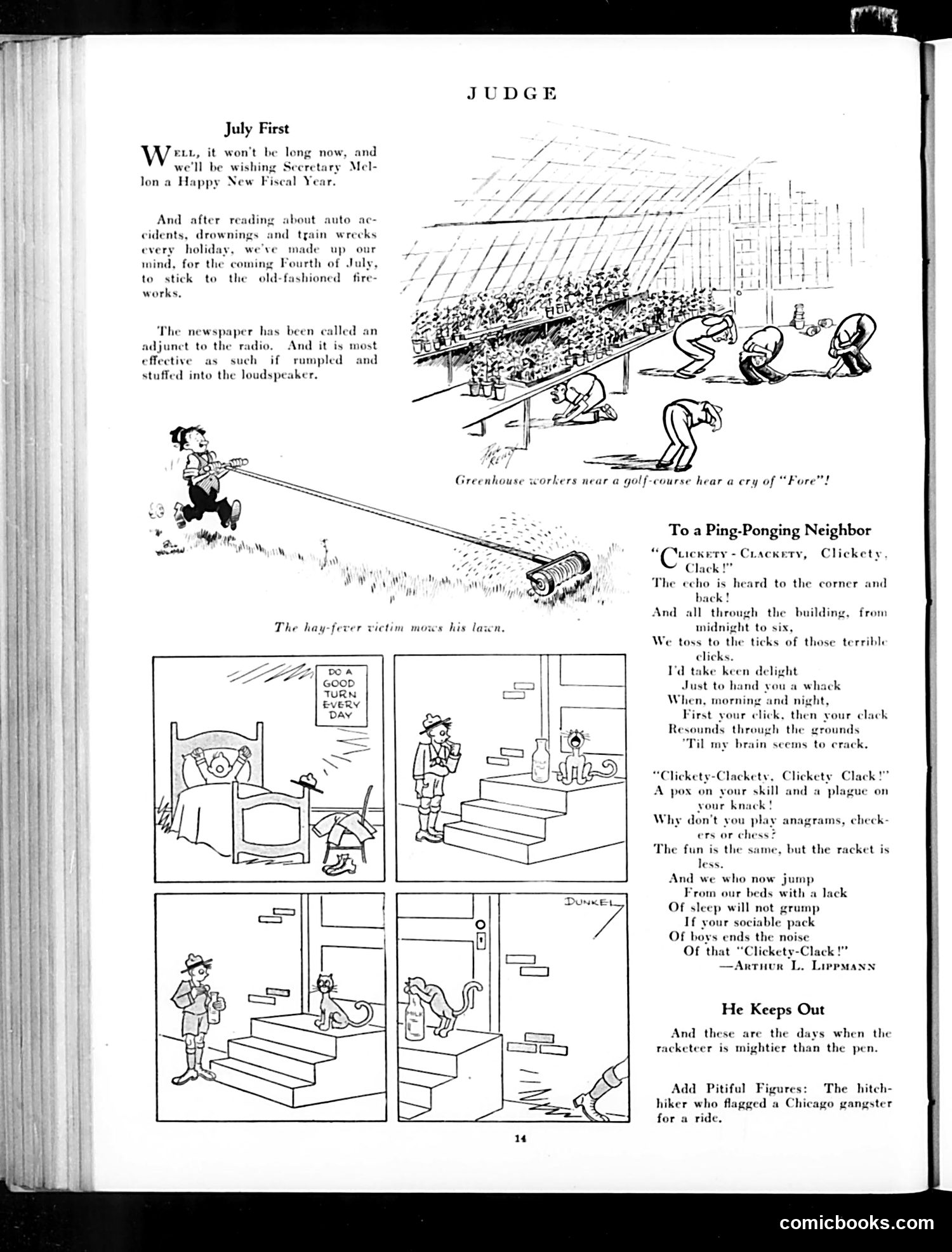
Judge Magazine Satire Analysis This July 1st editorial page from *Judge* contains several interconnected jokes about early 1930s American life: The opening: References Secretary Mellon (Andrew Mellon, Treasury Secretary), joking that after reading holiday accident reports, they'll stick to old-fashioned fireworks instead of modern dangers. The newspaper/radio joke: Satirizes newspapers becoming obsolete "adjuncts to the radio"—papers work best when "rumpled and stuffed into the loudspeaker," suggesting their only remaining use is as packing material. Main cartoon strip: Shows someone repeatedly entering/exiting a building, likely illustrating the "hay-fever victim mowing his lawn"—a humorous depiction of seasonal allergies. "Clickety-Clackety" poem (by Arthur L. Lippmann): Complains about neighbors playing ping-pong through the night, creating endless annoying noise that prevents sleep—a relatable urban complaint about noisy recreation. Final note: "He Keeps Out" bitterly observes that "the racketeer is mightier than the pen," with a dark joke about a hitchhiker flagging a Chicago gangster—referencing 1930s organized crime and Depression-era danger.
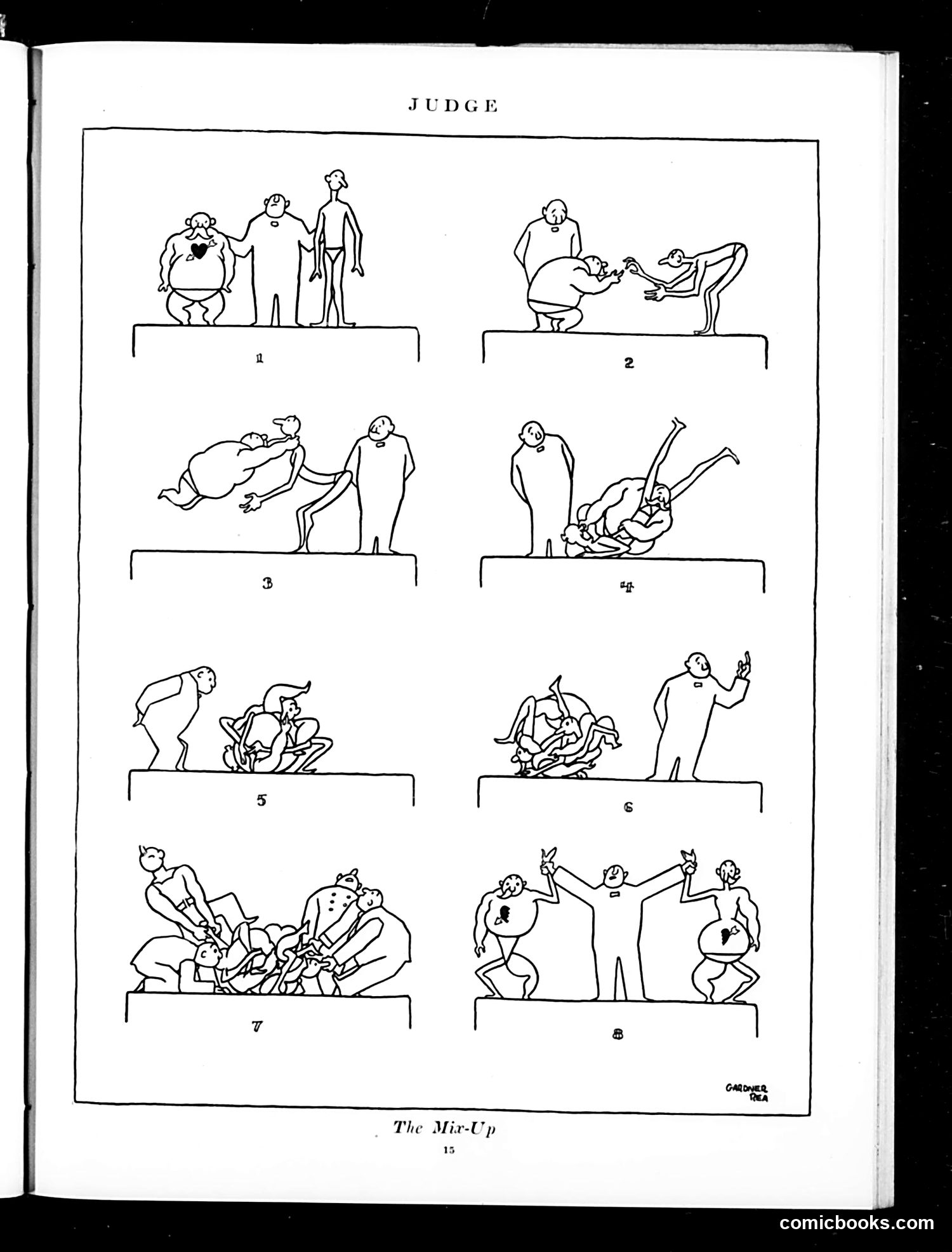
"The Mix-Up" - Judge Magazine This page presents eight sequential cartoon panels titled "The Mix-Up," depicting a judge's increasingly chaotic interactions with various figures. Panel 1 shows the judge with what appears to be three well-dressed men. Subsequent panels show the judge in progressively absurd situations—examining a reclining figure, dealing with prone bodies, confronting tangled people, and finally in panel 8, seemingly overwhelmed while holding multiple figures. The satire appears to mock judicial confusion or incompetence—the judge loses control as situations escalate from orderly to completely chaotic. The "mix-up" likely satirizes either a specific legal case's confusion or more broadly critiques judicial mismanagement. Without additional context about the publication date or specific events referenced, the exact political target remains unclear, though the humor relies on visual escalation of disorder.
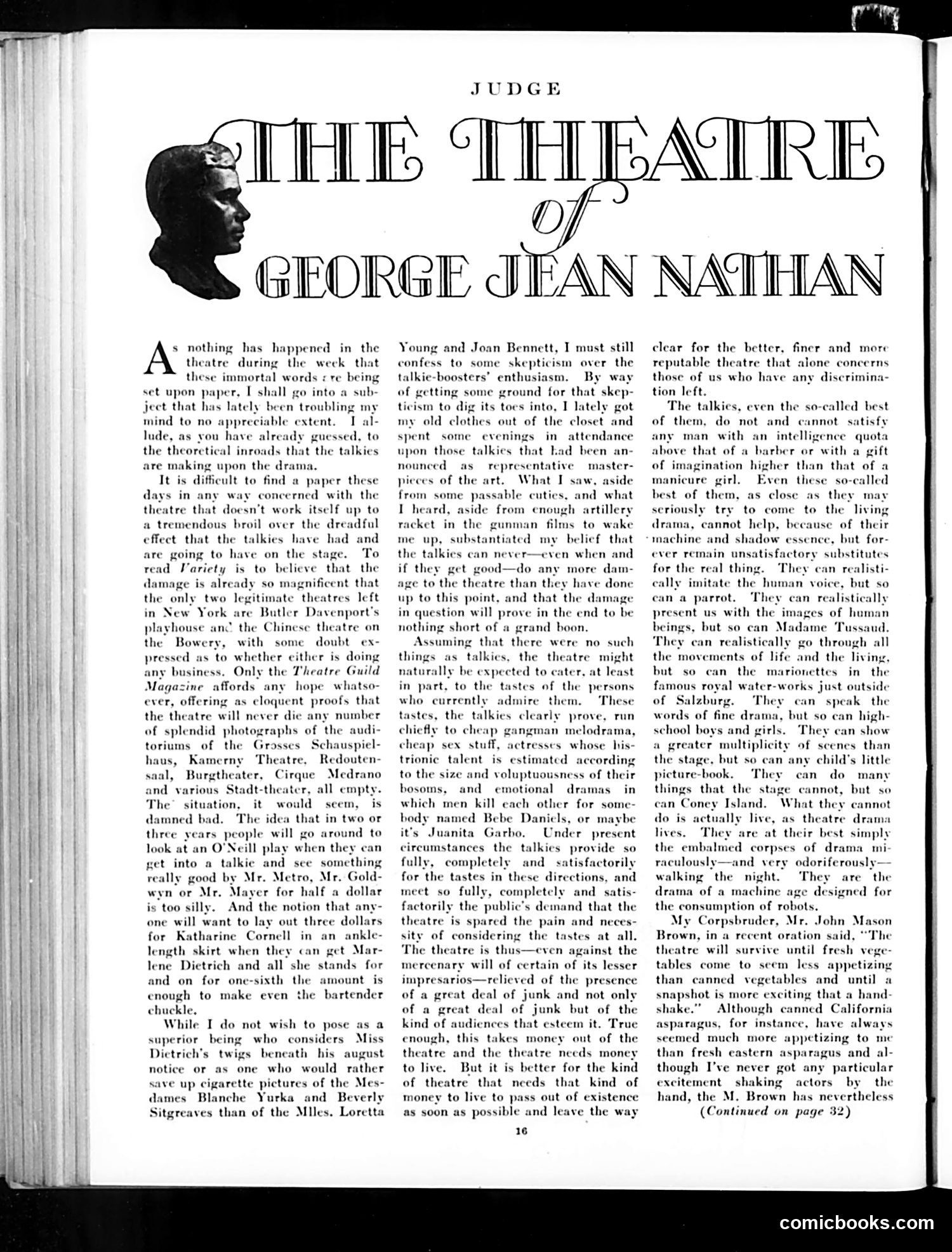
"The Theatre of George Jean Nathan" — Judge Magazine This page is not a cartoon but rather a theater criticism essay by Judge's drama critic. The header features a classical bust portrait of the author George Jean Nathan, a prominent theater critic of the era. Nathan argues that talking pictures (talkies) will actually benefit legitimate theater by filtering out lowbrow audiences. He contends that movies satisfy public demand for cheap gangster films, sex content, and melodrama featuring actresses like Marlene Dietrich and Bebe Daniels — thereby *relieving* theaters from having to stage such material. His point: Broadway theaters can now focus on serious drama (O'Neill plays, Katharine Cornell performances) without competing for audiences who prefer cinema's sensational offerings. Rather than destroying theater, talkies will purify it by separating audiences by taste level. This reflects 1920s-30s anxieties about film's impact on live theater, with Nathan taking an optimistic, elitist position that the medium will create a beneficial cultural division.
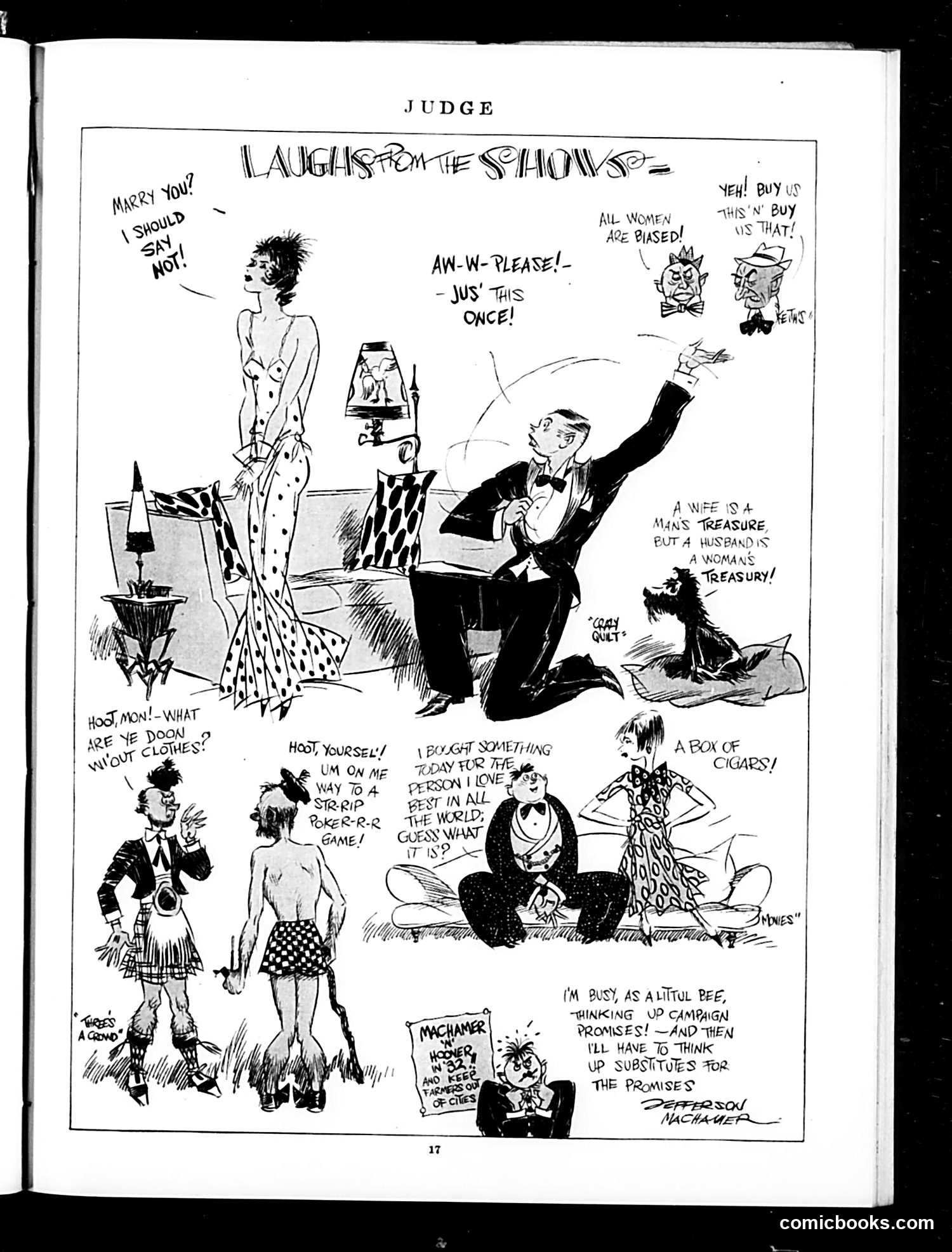
"Laughs at the Shows" - Judge Magazine Satire This single-panel cartoon satirizes early 20th-century gender relations and male behavior. A well-dressed man lounges contentedly while a woman stands nearby; he's surrounded by various vignettes depicting stereotypical masculine pursuits: purchasing gifts for romantic conquests, gambling, smoking cigars, and making empty campaign promises. The satire targets male hypocrisy and self-indulgence. Men claim women are "treasures" while behaving irresponsibly—buying frivolous items, engaging in vices, and making hollow political pledges they never intend to keep. The bottom caption about "campaign promises" and "substitutes" explicitly mocks politicians' dishonesty. The cartoon reflects Judge magazine's satirical approach to social commentary, poking fun at contemporary male attitudes toward marriage, romance, and civic duty through exaggerated scenarios and crude caricature.
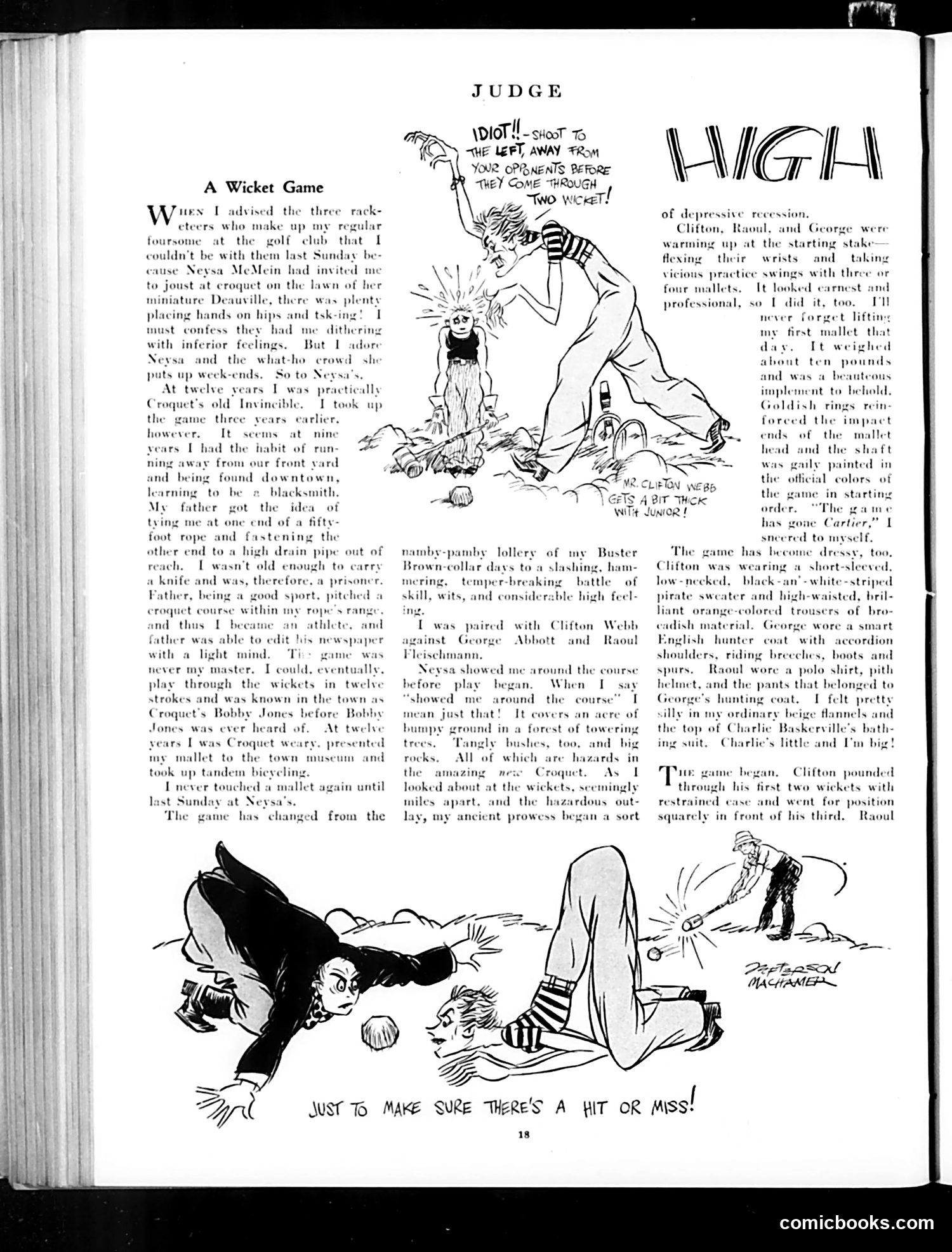
A Wicket Game: Judge Magazine Satire This page satirizes the evolution of croquet from a genteel Victorian parlor game into a competitive, aggressive sport among wealthy socialites. The narrator recounts being invited to play by the fashionable Neysa McMein (a real 1920s artist and socialite), contrasting his childhood mastery with his rusty adult return to the game. The humor centers on the players' exaggerated competitiveness and pretension. The illustrations show them taking croquet absurdly seriously—practicing their swings like golfers, wearing elaborate sporting attire (Clifton in a pirate sweater, others in hunting gear and polo shirts), and treating the game as intense athletic competition rather than casual lawn entertainment. The opening cartoon mocks the unsportsmanlike behavior, with one player berating another for shooting poorly. The satire targets 1920s upper-class leisure culture: how wealthy New Yorkers transform even recreational games into status displays requiring specialized equipment and serious training.
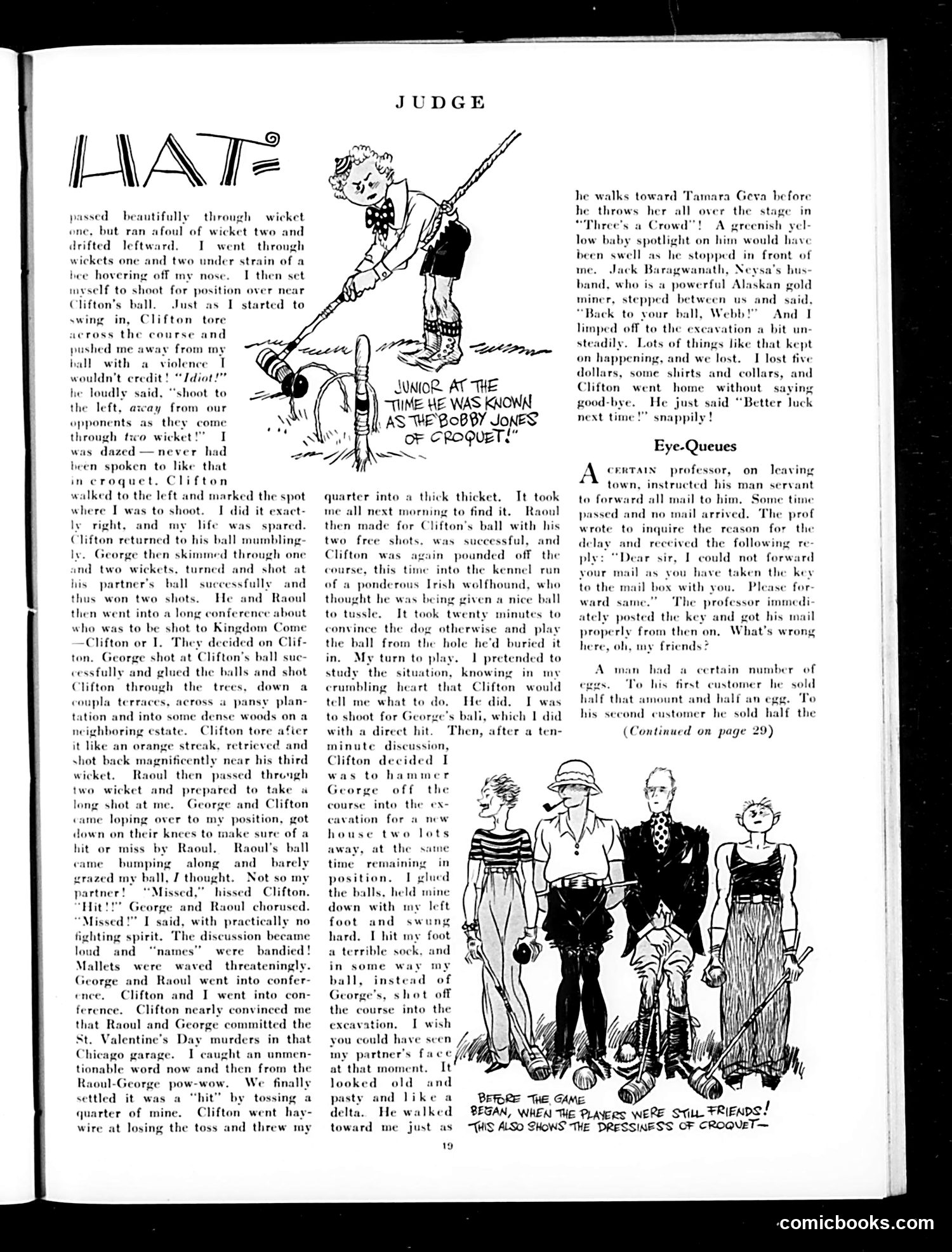
Judge Magazine Croquet Story: Context for Modern Readers This page presents a humorous narrative about a croquet game gone wrong, written in the first-person voice of someone named Webb. The story satirizes the supposedly genteel sport of croquet by depicting it devolving into chaos and near-violence. Key figures mentioned: - Clifton: An aggressive, domineering player who bullies Webb - George and Raoul: Clifton's allies who plot against him - Jack Baragwanath (identified as "Neysa's husband"): A real person—a powerful Alaskan gold miner who intervenes to prevent a fight - Tamara Geva: A Broadway performer referenced for dramatic effect The satire: Judge mocks how a "civilized" sport becomes crude and violent, with players cursing, threatening each other, and nearly fighting. The reference to the "St. Valentine's Day murders" (a 1929 gangster killing) humorously compares the croquet conflict to organized crime. The illustration shows the players afterward, dressed formally—ironic given their behavior. The piece skewers upper-class pretension by showing that refined people engage in decidedly unrefined conduct.
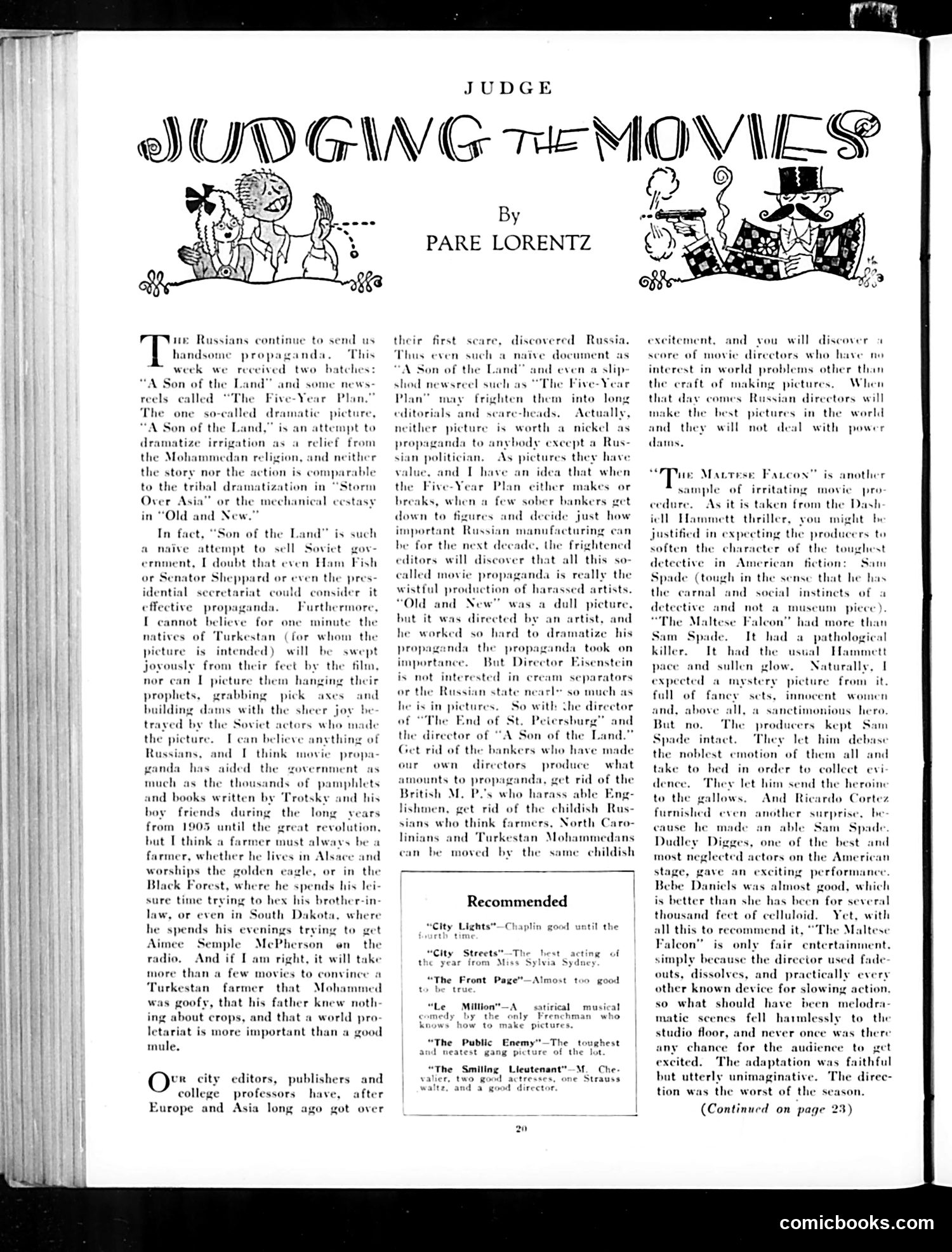
Judge Magazine Film Criticism: Soviet Propaganda Films This page critiques Soviet propaganda films sent to America, particularly "A Son of the Land" and "The Five-Year Plan." Pare Lorentz, the author, argues these Russian films fail as propaganda because they misunderstand their audience—specifically Central Asian farmers and Turkestan Muslims. He claims no amount of cinematic dramatization about irrigation dams and Soviet achievement will convince traditional farmers to abandon their way of life. Lorentz's satire targets both Soviet propagandists and American intellectuals (editors, publishers, professors) who take such films seriously. He suggests the real problem isn't the films themselves but the Soviet politicians and British MPs pushing them. The underlying joke: propaganda movies assume people's beliefs can be easily manipulated through cinema, when fundamental worldviews—religious, cultural, economic—remain unchanged by entertainment. This reflects 1930s Cold War anxieties about competing ideologies and American skepticism about Soviet methods.
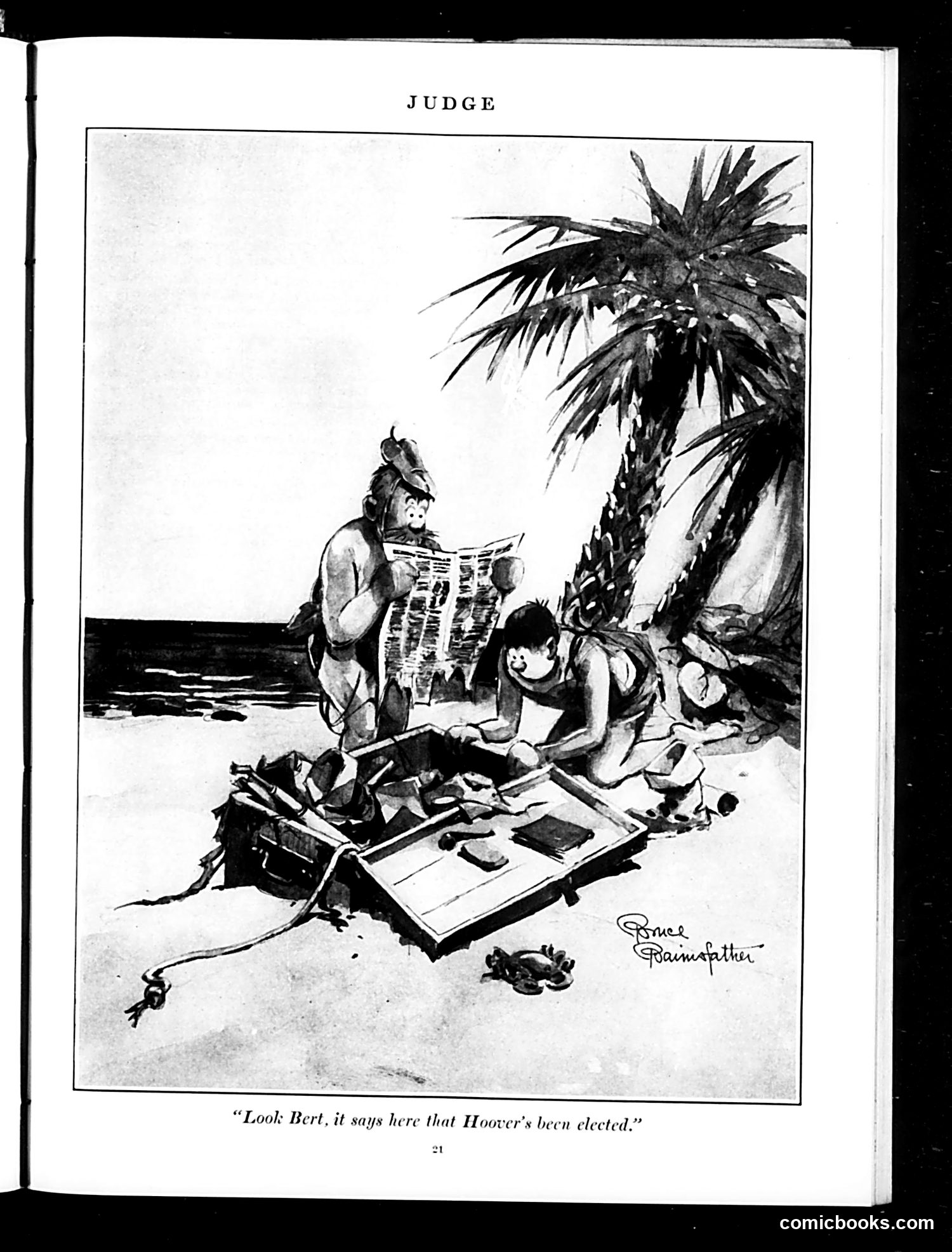
Political Cartoon Analysis This Judge magazine cartoon satirizes the 1928 U.S. presidential election of Herbert Hoover. The scene shows two figures on a beach near a palm tree examining what appears to be shipwreck debris or castaways' belongings. The caption suggests they've discovered news of Hoover's election through wreckage—implying the election result is as surprising or shocking as finding unexpected items washed ashore on a remote island. The satire likely critiques either Hoover's unexpected victory or expresses editorial disapproval of his election, presenting it as an astonishing development worthy of comic bewilderment. The isolated beach setting emphasizes the remoteness of the discovery, suggesting even castaways can't escape this news.
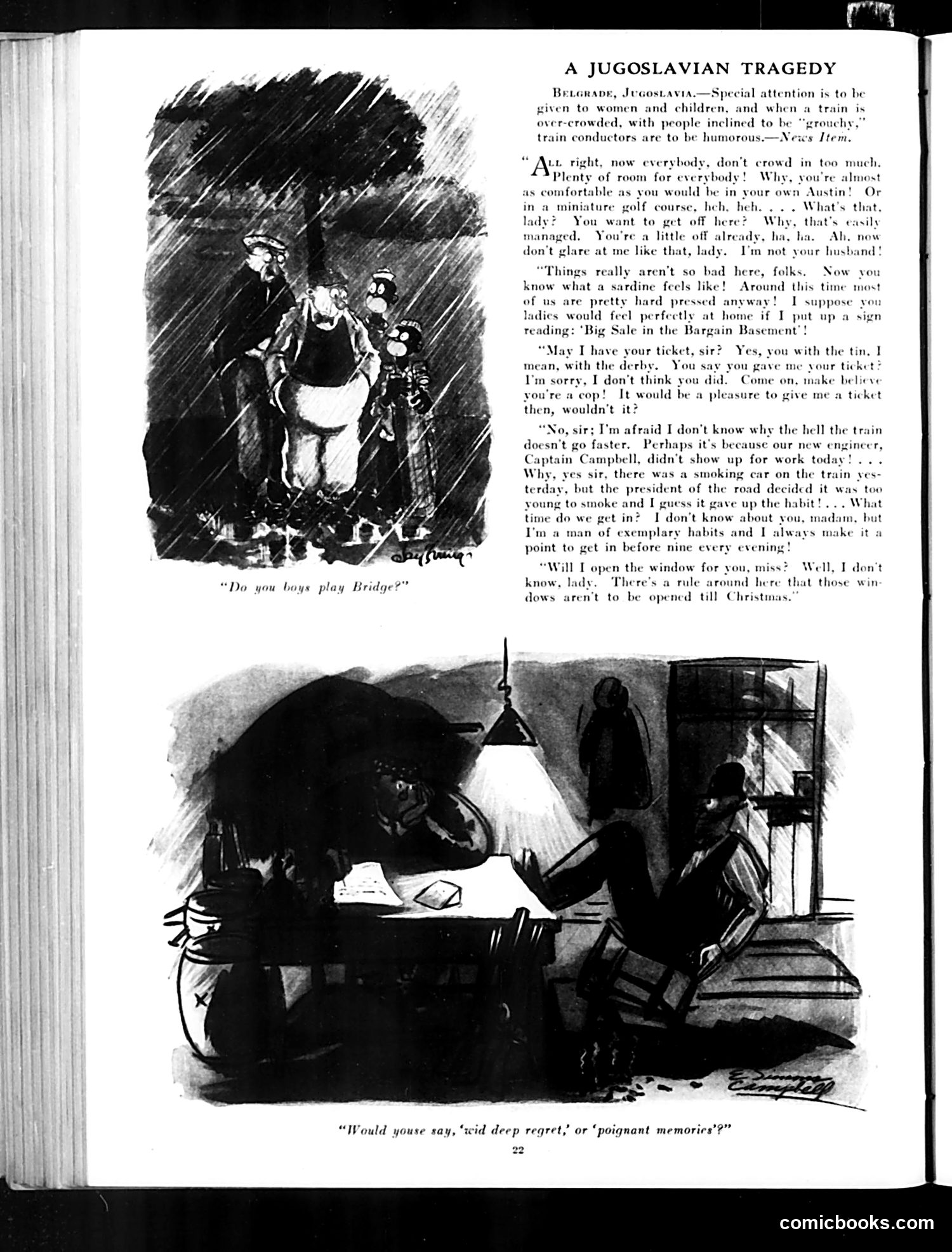
"A Yugoslavian Tragedy" This page satirizes the absurdity of enforcing cheerfulness on overcrowded Yugoslav trains. A news item apparently mandated that conductors remain "humorous" on crowded trains to manage passenger irritability. The top cartoon shows a conductor joking with sardine-packed passengers during heavy rain. The accompanying text presents his relentless, unfunny banter—comparing the train to a miniature golf course, making fun of women's clothing, joking about missing tickets and a captain who didn't show up, and absurdly claiming windows can't open until Christmas. The bottom cartoon depicts what appears to be passengers or officials in dim lighting, with one asking how to phrase regret or sorrow. The satire targets the disconnect between bureaucratic policy (forced humor to mollify crowds) and reality: crushing discomfort and passenger misery cannot be joked away. The conductor's increasingly strained wisecracks highlight how ridiculous it is to demand cheerfulness amid genuine suffering—hence the "tragedy" of the title.
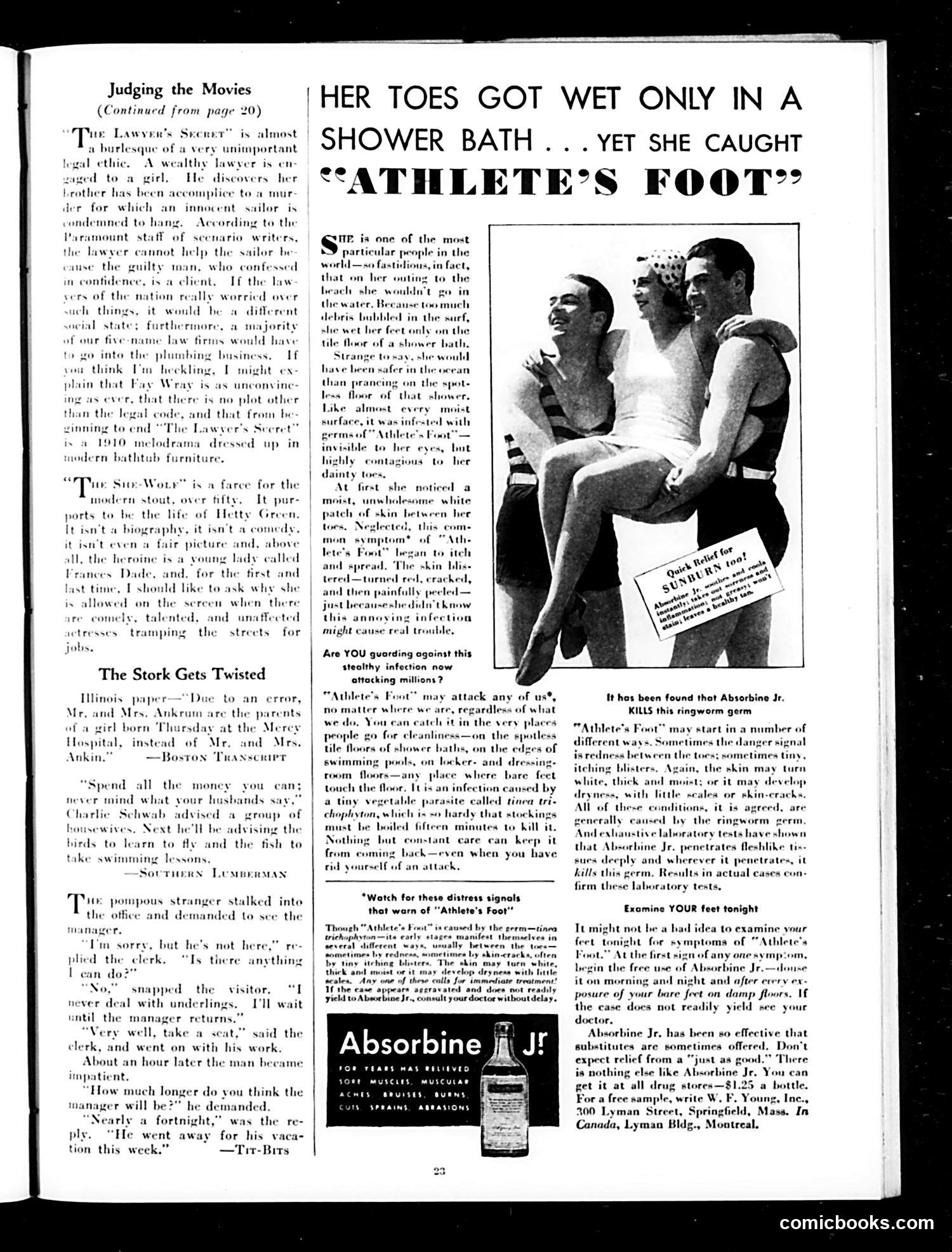
"Athlete's Foot" Advertisement Disguised as Editorial Content This page mixes satirical movie reviews with what appears to be a fake medical advisory. The large headline warns women about contracting "Athlete's Foot" from shower baths—a fungal infection typically associated with poor hygiene or public facilities. The central image shows a doctor examining a woman's feet while she sits with legs elevated. The text presents "Athlete's Foot" as a serious health threat spread through contaminated shower floors and swimming pools, describing symptoms like red, cracked skin and itching. However, this is primarily advertising for Absorbine Jr., a commercial remedy product. The "medical information" and cautionary tone are marketing tactics designed to create health anxiety and drive product sales. The inclusion between movie reviews makes the advertisement appear editorial rather than promotional—a common early 20th-century advertising strategy that blurred the line between news, entertainment, and commerce.
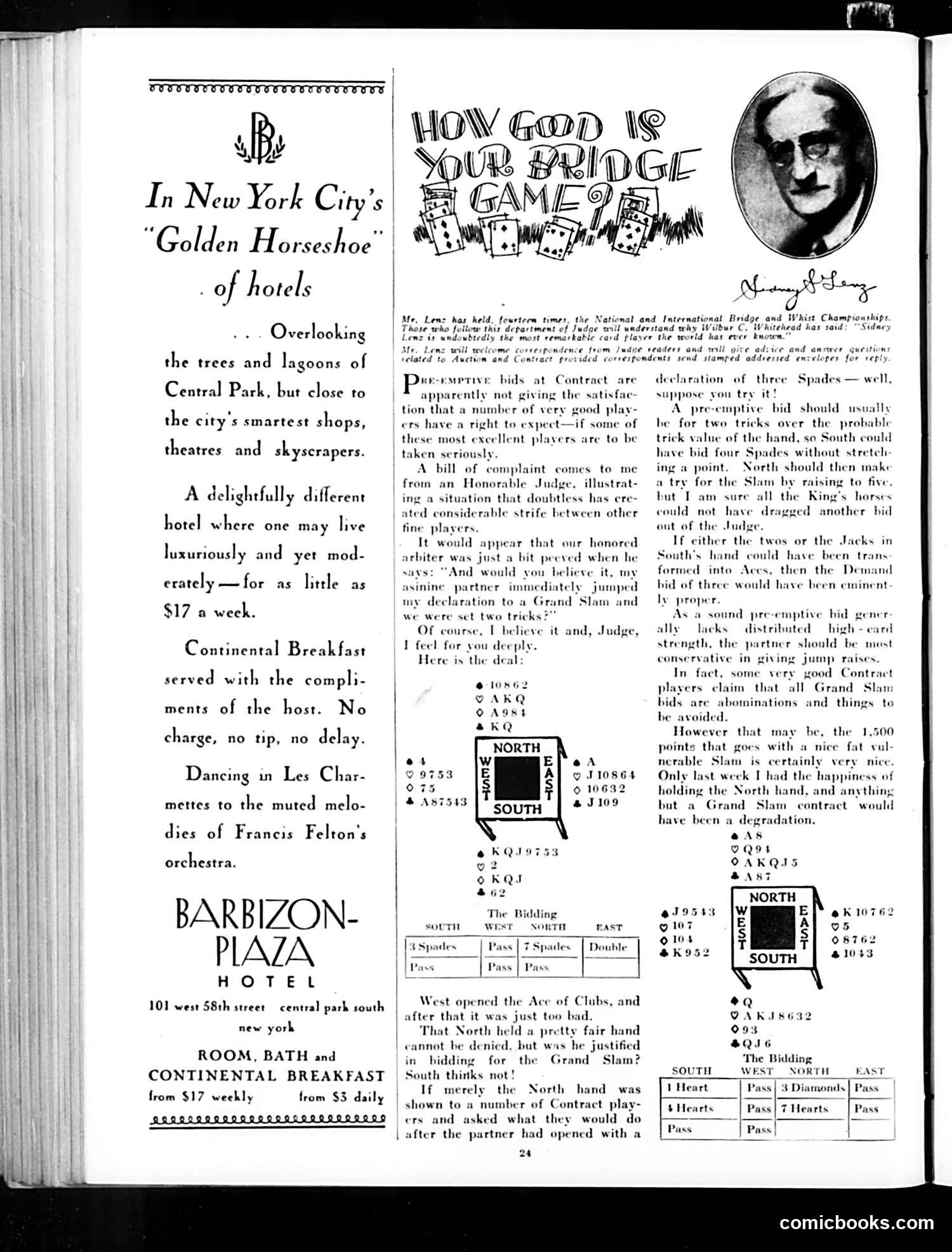
Explanation for Modern Readers This page is primarily advertising and bridge instruction, not political satire. The left side features a hotel advertisement for the Barbizon-Plaza. The right side is a bridge (card game) advice column by someone named Lenz, who appears to be a famous bridge player (the text identifies him as having won fourteen national and international championships). The "cartoon" is actually a bridge hand analysis—diagrams showing card positions and bidding strategies. The humor is entirely within bridge circles: Lenz is gently mocking an "Honorable Judge" for making an overly aggressive bid that resulted in failure, then providing technical instruction on proper bidding strategy. There is no political content or social satire here. This is specialized entertainment for Judge magazine's readers interested in contract bridge, which was extremely popular in the 1920s-30s among educated, affluent audiences. The "judge" referenced is not a political figure but rather someone who apparently plays bridge and made a questionable move.
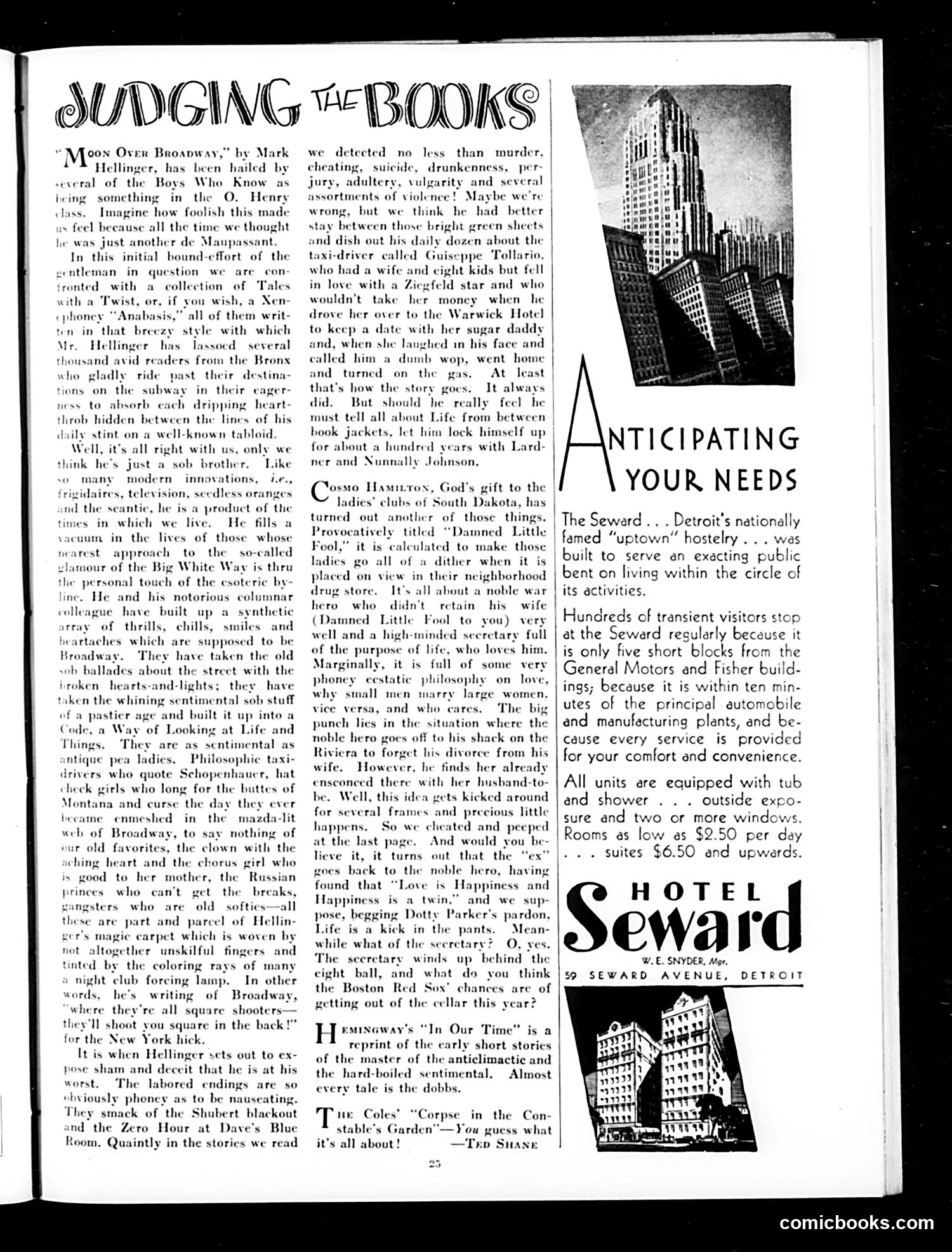
Judging the Books: A Critic's Takedown of Mark Hellinger This is a book review column criticizing Mark Hellinger's short story collection "Moon Over Broadway." The reviewer dismisses Hellinger as a "sob brother"—a sentimental writer who traffics in clichéd Broadway melodrama: broken-hearted chorus girls, tragic taxi drivers, noble war heroes, and self-sacrificing secretaries. The satire targets Hellinger's formulaic sentimentality and his reputation as a newspaper columnist who mines tabloid drama for literary effect. The reviewer argues his stories are artificially constructed and "nauseating" in their phoniness, filled with contrived tragic endings. The piece also reviews Cosmo Hamilton's "Damned Little Fool" and Cole's "Corpse in the Constable's Garden" in passing. The right page contains a Hotel Seward advertisement, unrelated to the book criticism.
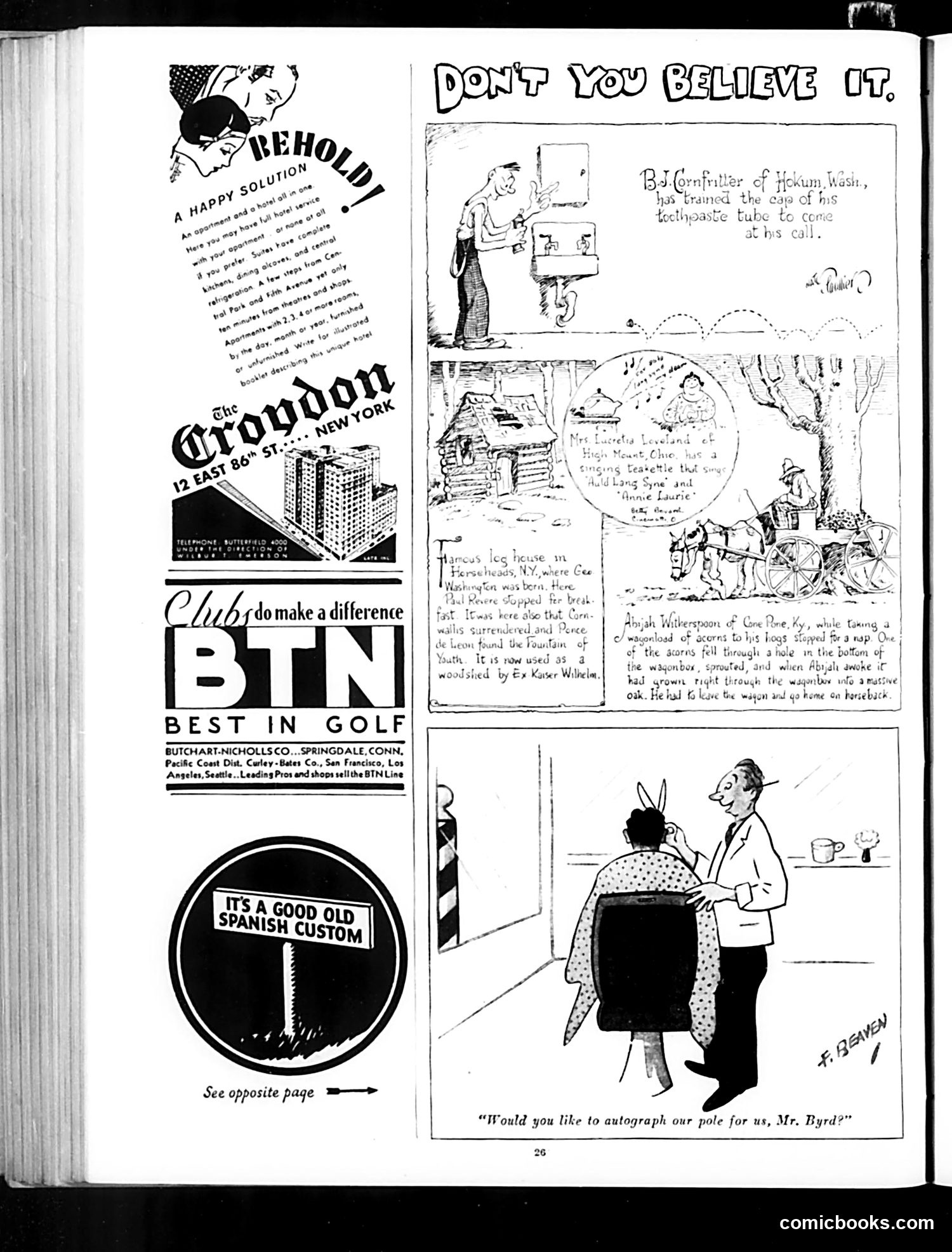
Page Analysis This Judge magazine page is primarily advertising and filler content rather than political satire. The left side features ads for the Croydon Hotel (New York) and BTN golf clubs. The right side contains three unrelated humor pieces: 1. "Don't You Believe It" — A tall-tale column with anecdotes, including one about Commander Byrd (likely Richard Byrd, the Arctic explorer) training his toothpaste tube and another about a woman's wagon axle growing into an oak tree. 2. Bottom cartoon — A woman with a distinctive large nose asks a man to "autograph our pole." The joke appears to rely on physical appearance humor common to the era, though the specific reference is unclear. The page lacks coherent political commentary. It represents typical early-20th-century magazine filler: light humor, advertisements, and miscellaneous anecdotes designed to amuse rather than critique.
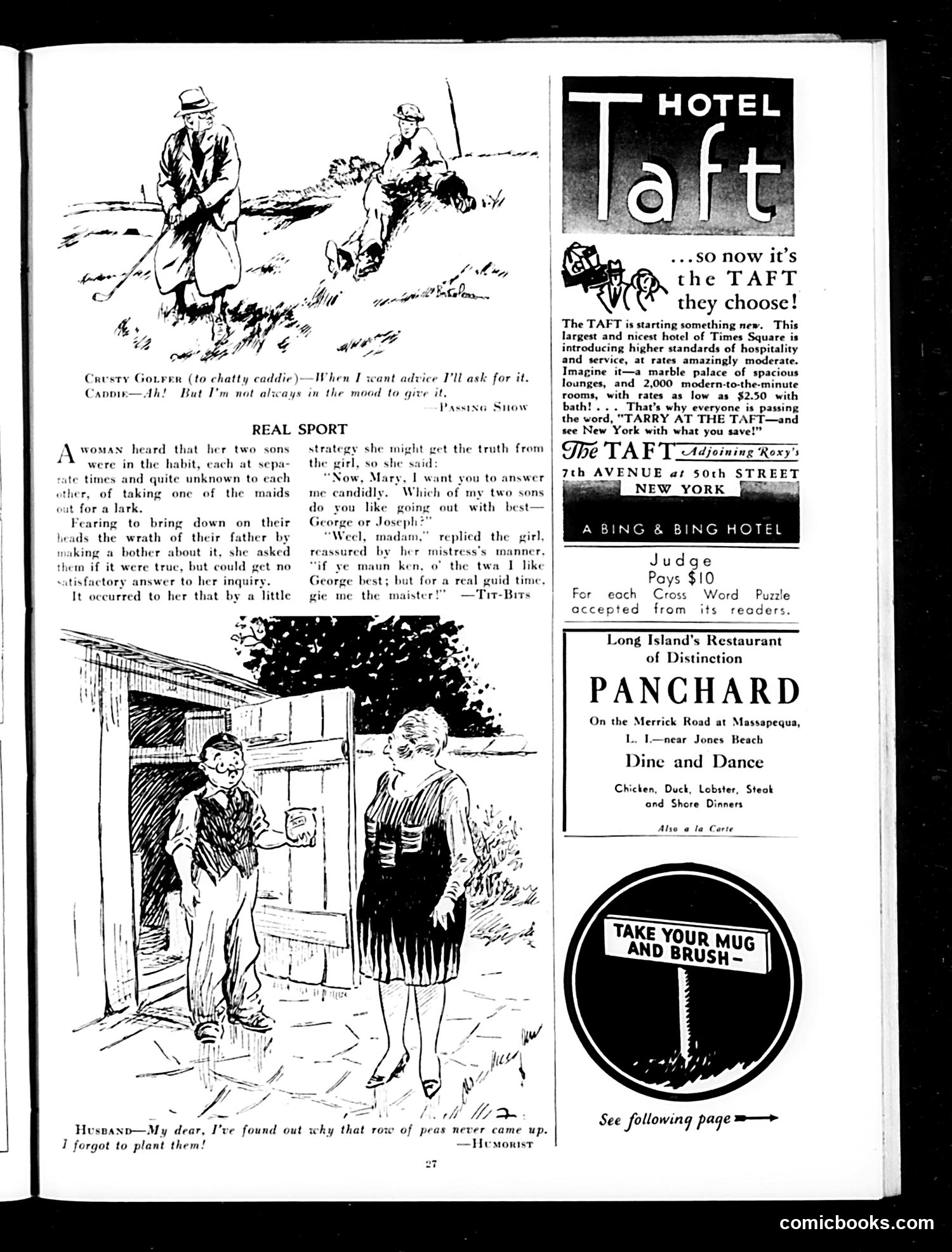
Judge Magazine Page Analysis This page contains two unrelated humor comics and advertisements typical of 1920s Judge magazine. "Real Sport" presents two domestic jokes: The first shows a "crusty golfer" dismissing a caddie's advice—satirizing male stubbornness. The second, longer anecdote depicts a mother cleverly extracting truth from a maid about which son she prefers dating. The humor lies in the maid's candid admission that she likes one son better "for a real guid time" but prefers the other because he's "the master"—satirizing working-class deference to social hierarchy and suggesting the maid values respectability over romance. The advertisements promote the Hotel Taft in Times Square and Panchard restaurant on Long Island, typical of era marketing emphasizing modernity and value. The page is primarily entertainment-focused rather than politically satirical—reflecting Judge's shift toward general humor and lifestyle content alongside social commentary in this period.
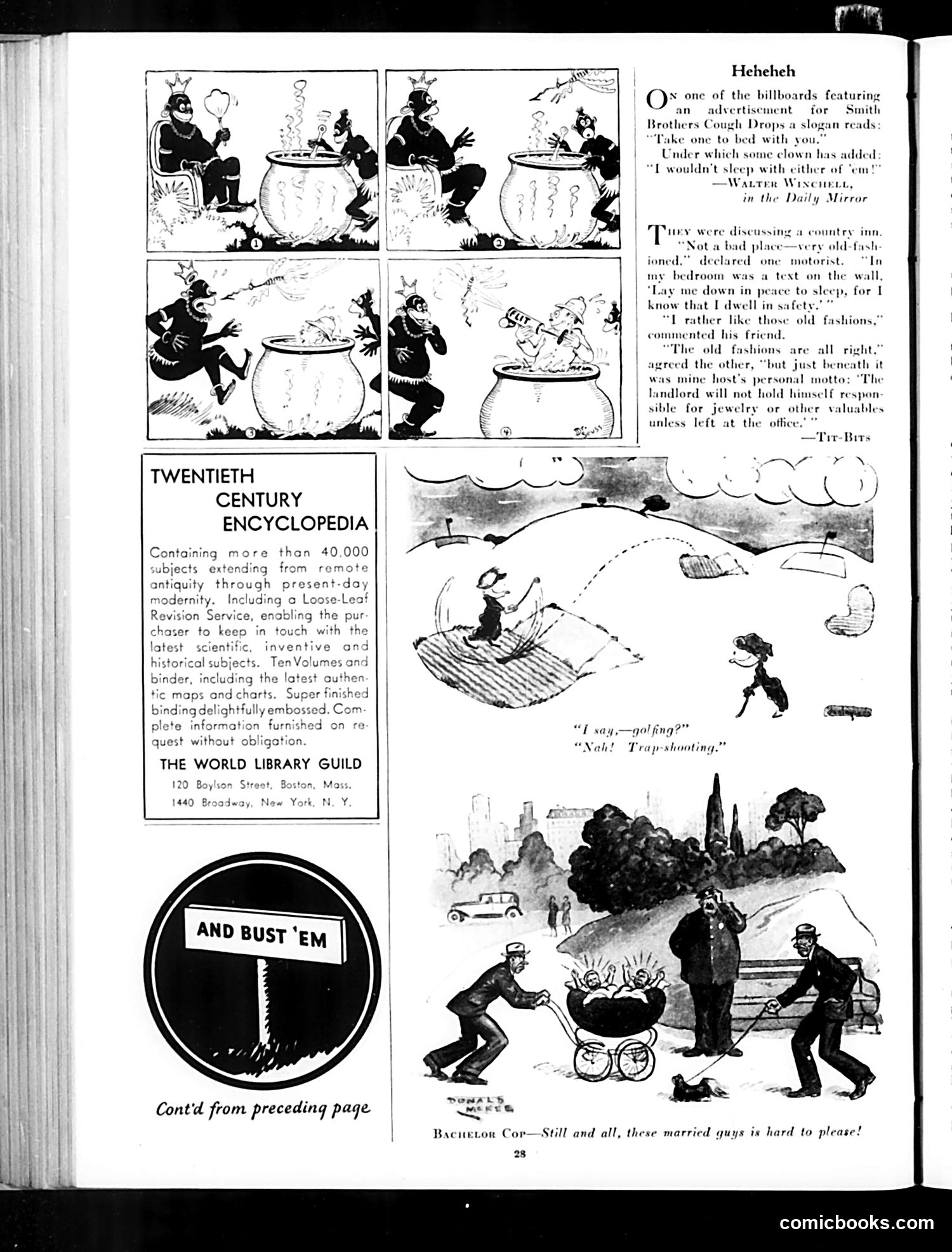
Analysis for Modern Readers This page contains three distinct humor pieces from *Judge* magazine: Top Comic Strip (four panels): A king and jester interact with a large cauldron, likely depicting a fairy tale or nursery rhyme scenario (possibly related to witchcraft or magical brewing). The joke's specific reference is unclear without more context. Middle Anecdotes: Two brief humorous stories—one about a billboard for cough drops vandalized with a crude punchline, and another about motorists discussing an old inn with religious texts that humorously mask the landlord's self-interested motto about not covering lost valuables. Bottom Cartoon: Labeled "Bachelor Cop," depicts what appears to be a chaotic domestic scene with a baby carriage, suggesting humor about the challenges married men face managing household duties—the title's final line implies marriage complicates life more than bachelorhood. The page is primarily entertainment/humor content rather than political satire, typical of *Judge's* general satirical approach to everyday social situations and domestic life in early 20th century America.
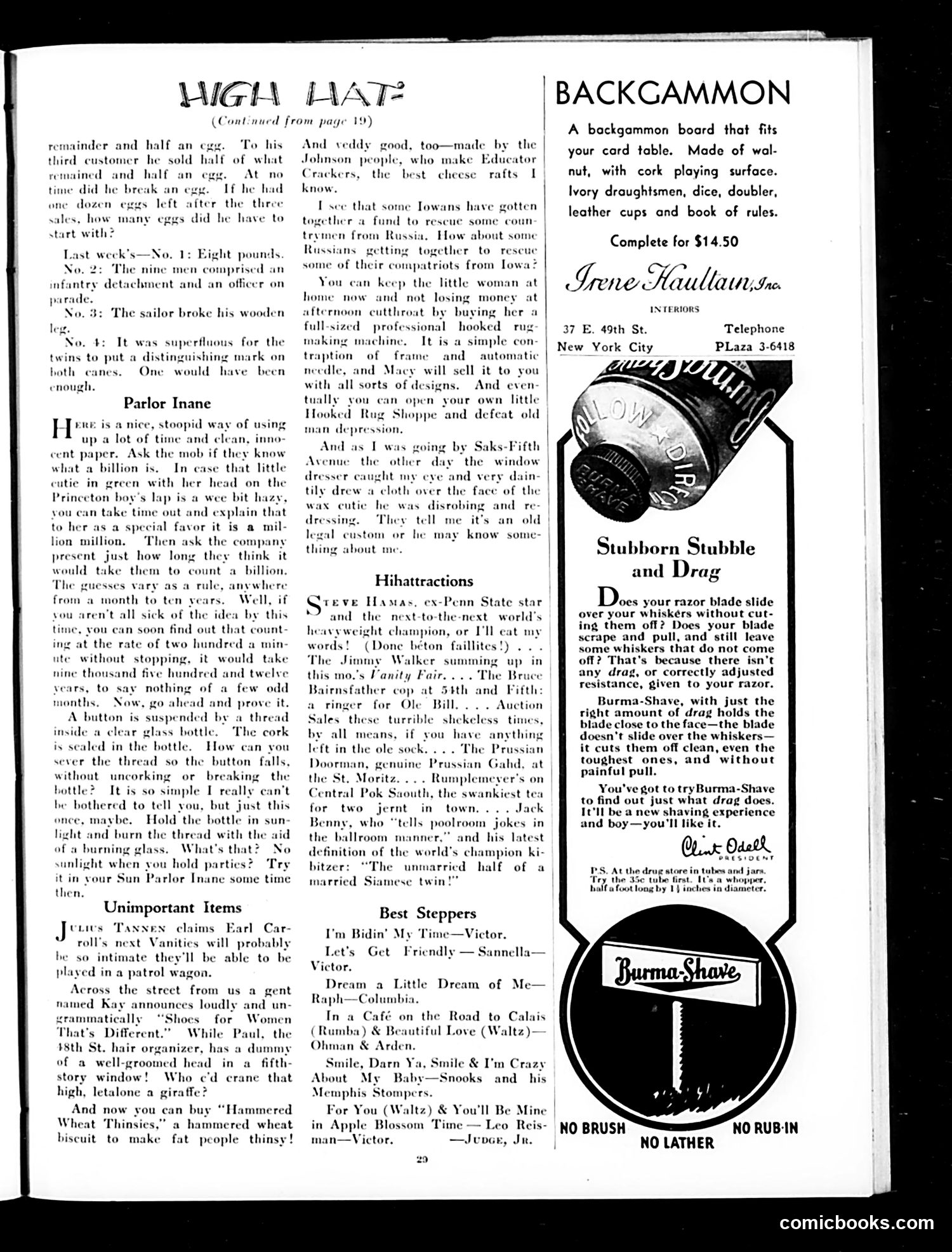
Judge Magazine Page Analysis This page is primarily advertising and humor columns rather than political cartoons. The main content includes: "Parlor Inane" — a humor column presenting absurd logic puzzles (counting to a billion, severing a thread in a sealed bottle) meant to waste time at social gatherings. "Unimportant Items" — satirical social commentary mocking contemporary absurdities: Earl Carroll's risqué theater productions, misleading shoe advertisements, and diet biscuits ("Hammered Wheat Thinsies") falsely promising weight loss. "Hihattractions" — brief celebrity gossip references, including boxer Steve Hamas and Jimmy Walker (NYC mayor), mostly incomprehensible without contemporary context. The dominant feature is a Burma-Shave advertisement with an illustration of a shaving product, promoting "No Brush, No Lather, No Rub-In" features. This represents the magazine's primary revenue source: commercial advertising alongside satirical content.
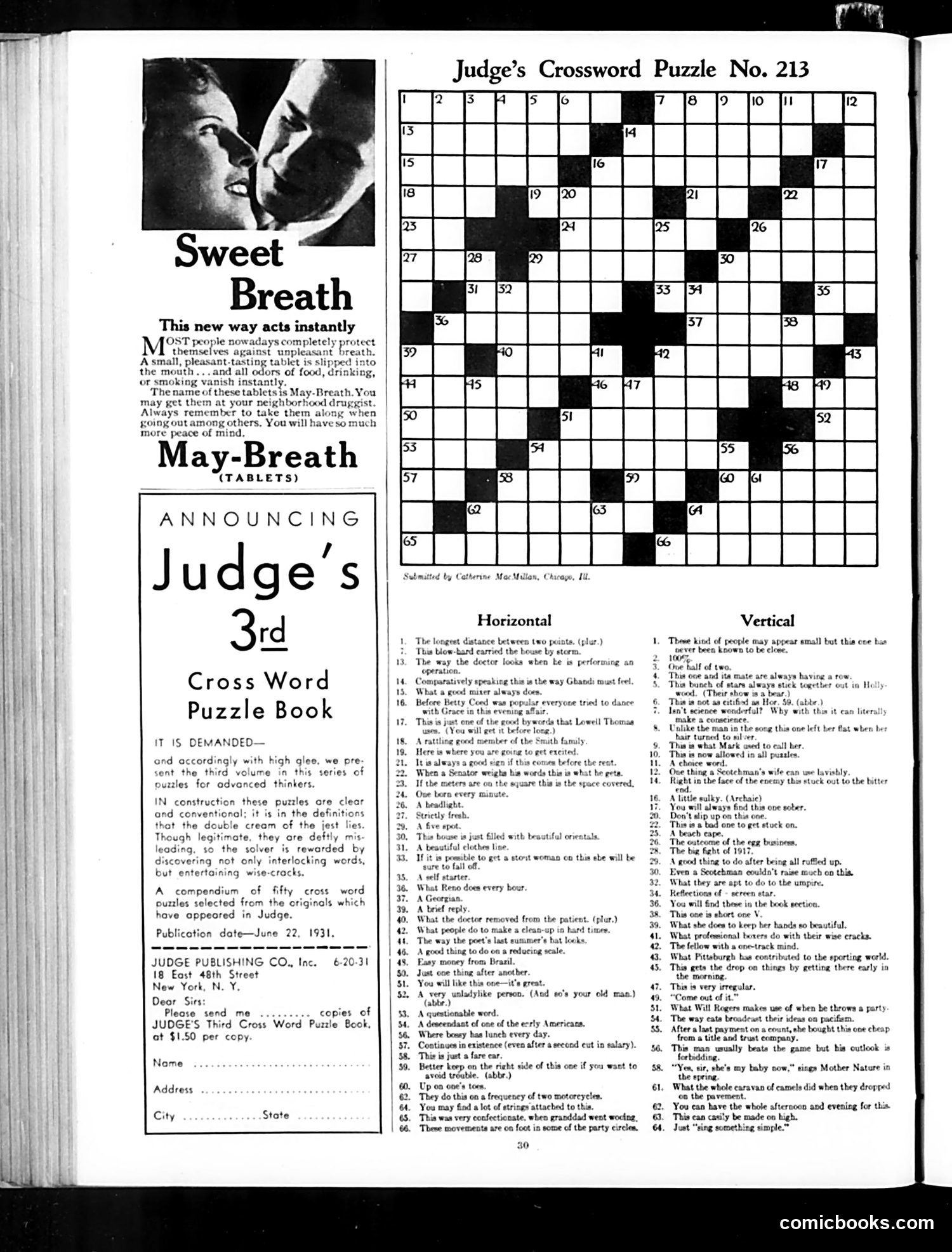
Judge Magazine Crossword Puzzle No. 213 (1931) This page is primarily a crossword puzzle with accompanying advertisements, not a political cartoon. The main content is Judge's third crossword puzzle book advertisement, dated June 22, 1931. The actual satire lies in the puzzle clues themselves, which are topical jokes and references. For example, clues mention Lowell Thomas (famous radio broadcaster), Mohandas Gandhi, Reno (Nevada's divorce capital), and contemporary figures and events. The clues function as miniature wisecracks—the puzzle's "double cream of jest," as stated in the ad copy. The May-Breath tablet advertisement above the puzzle represents 1930s consumer marketing for breath mints, emphasizing social anxiety about personal hygiene when "going out among others." The crossword represents Judge's style of "entertaining wise-cracks" embedded in intellectual entertainment for "advanced thinkers," combining wordplay with topical humor.
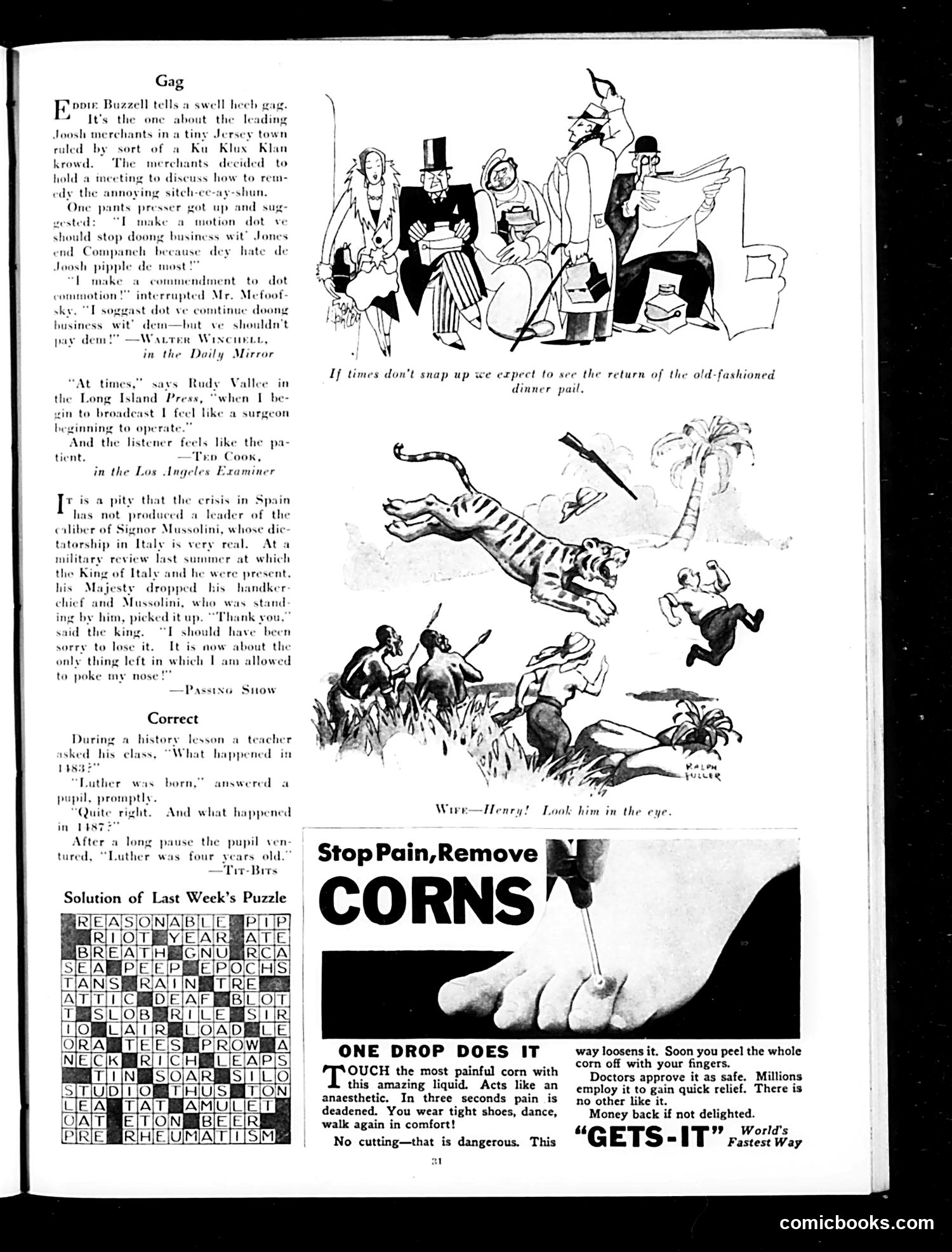
Political Satire Analysis The top section contains ethnic humor reflecting 1920s-30s attitudes. The "gag" mocks Jewish merchants in a New Jersey town controlled by the KKK, depicting them in exaggerated dialect. The joke's premise—that antisemitic business boycotts should continue without payment—reveals antisemitic attitudes presented as comedy. The middle cartoon references Mussolini's dictatorship in Italy approvingly, suggesting admiration for authoritarian leadership. The anecdote about him picking up the King's handkerchief implies obsequious loyalty. The bottom cartoon likely comments on economic depression—the caption about expecting "the old-fashioned dinner pail" references Depression-era poverty and the need for basic survival, contrasting with earlier prosperity. These pieces reflect Judge magazine's editorial stance: casual antisemitism, fascist sympathies, and commentary on economic hardship—attitudes common in American publications of this era but deeply offensive by modern standards.
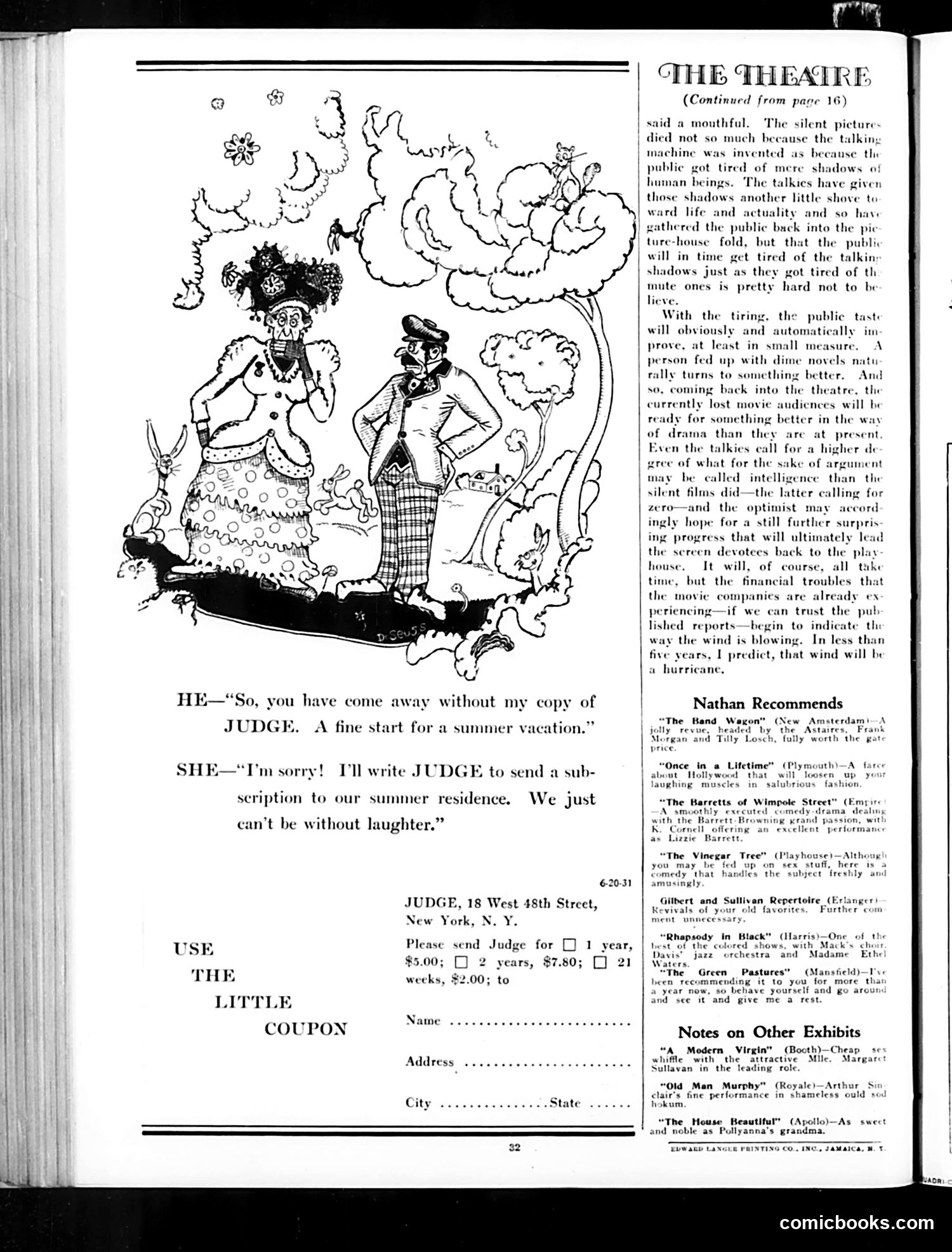
Cartoon Analysis This page contains a domestic humor cartoon advertising Judge magazine itself. A couple prepares for summer vacation; the husband discovers his wife forgot to pack his copy of Judge. She apologizes and promises to have the magazine sent to their summer residence, declaring "We just can't be without laughter." The joke is straightforward advertising humor: it presents Judge as an essential household item—so indispensable that the couple cannot vacation without it. The cartoon gently mocks the couple's dependency on the magazine for entertainment while simultaneously promoting subscription sales through the coupon below. The page also includes theatre reviews by "Nathan" (likely George Jean Nathan, the era's prominent drama critic) discussing the transition from silent films to "talkies" and recommending current Broadway productions. This content reflects Judge's role as a sophisticated humor and arts magazine aimed at educated urban readers circa early 1930s.

Analysis This is primarily a book advertisement, not a cartoon or satire. It promotes "The World's 101 Best Detective Stories," a mail-order collection compilation published by Walter Black, Inc. The page lists classic detective fiction authors (Conan Doyle, Chekhov, Maupassant, Boccaccio, etc.) to establish credibility. The marketing pitch emphasizes value: 101 stories from world literature, bound in one volume, priced at 98 cents—remarkably cheap for the era. The sales mechanism uses classic early-20th-century direct-mail tactics: "Send No Money," examine-before-purchase terms, and a money-back guarantee. The book's production quality (thin paper, readable type, decorative cover) is highlighted as justification for the low price. There is no political satire or social commentary on this page—it's straightforward commercial advertising typical of Judge magazine's revenue model, targeting readers seeking affordable access to classic literature during the Depression-era or post-Depression period.
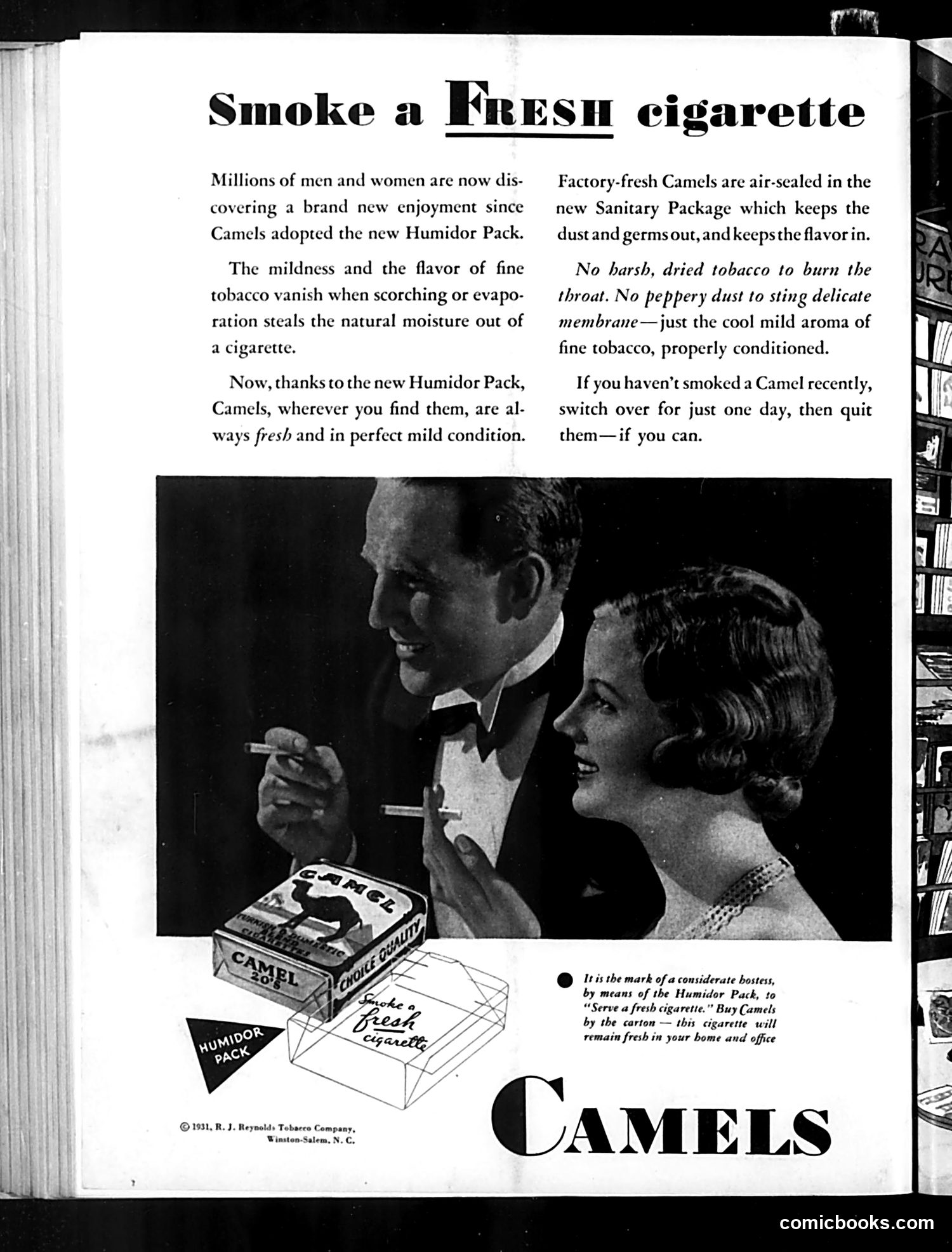
Analysis This is a cigarette advertisement, not a political cartoon or satire. It's a Camel cigarettes ad from Judge magazine (copyright 1931, per the fine print). The page promotes Camel's new "Humidor Pack"—a sealed packaging innovation claimed to keep cigarettes fresh by maintaining moisture. The advertisement features a well-dressed couple in formal attire smoking cigarettes, presenting smoking as a sophisticated social activity. The ad's rhetoric emphasizes luxury and health claims common to 1930s tobacco marketing: "mild," "fresh," "no harsh...tobacco," and "no peppery dust." It even frames buying cigarettes as a mark of being a "considerate hostess." For modern readers: This represents pre-regulation cigarette advertising when health warnings were absent and smoking was openly marketed as desirable and healthful. The aspirational imagery and pseudoscientific claims about freshness would later become prohibited under modern advertising standards.