judge
Judge — November 28, 1931
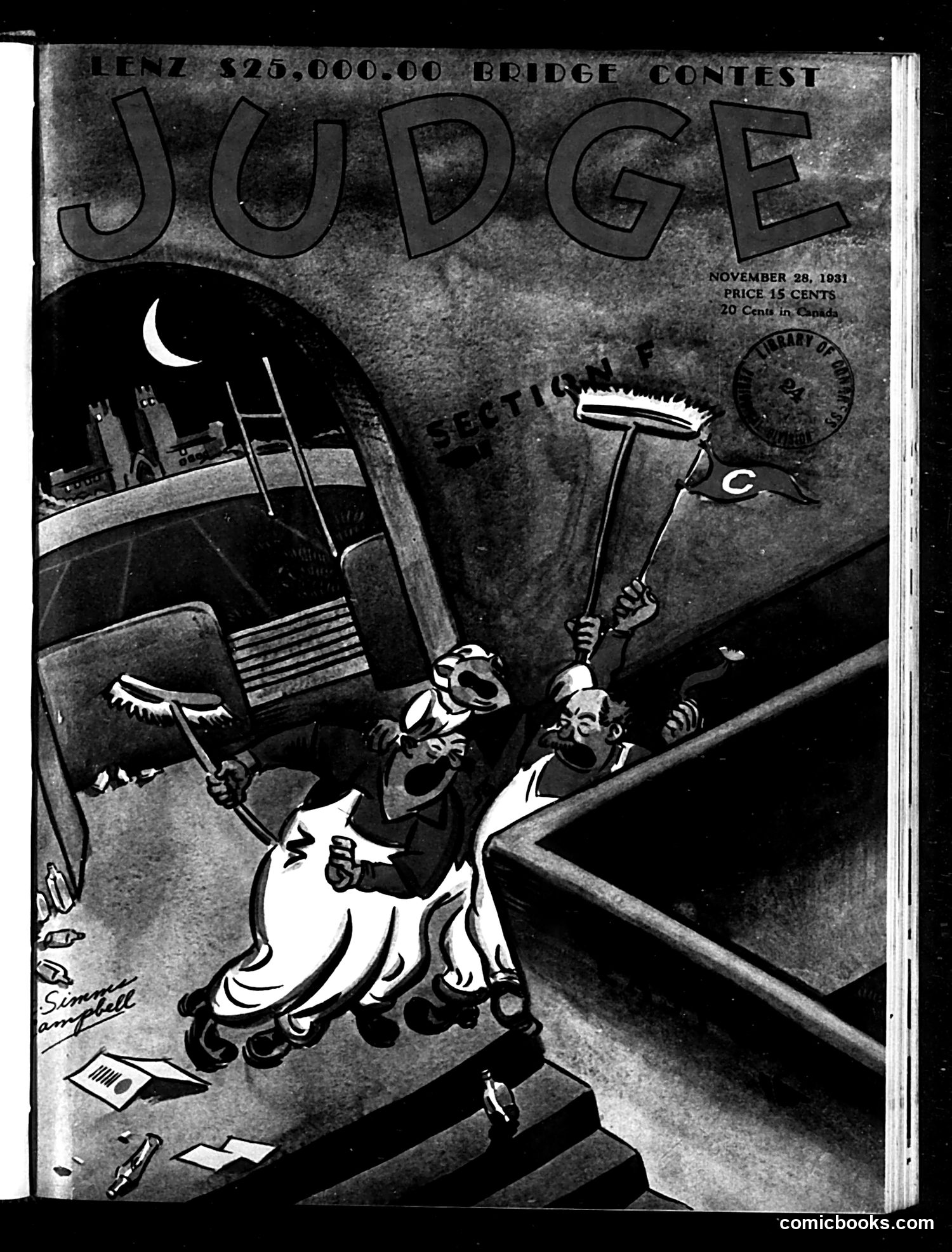
Judge Magazine Cover Analysis This November 28, 1931 *Judge* cover depicts a bridge-building contest with exaggerated cartoon figures attempting to construct or repair a bridge structure. The imagery appears to be satirizing political or economic efforts during the Great Depression—a period when Americans were desperate for solutions to economic collapse. The "bridge" likely symbolizes economic recovery or financial restoration. The cartoonish workers struggling with their tools suggest satire about politicians' or leaders' incompetent attempts to fix the economy. The nighttime setting and precarious positioning emphasize the danger and difficulty of the situation. The Heinz $25,000 prize contest reference in the header suggests this ties to a contemporary commercial competition, possibly used as commentary on misplaced priorities during economic crisis.
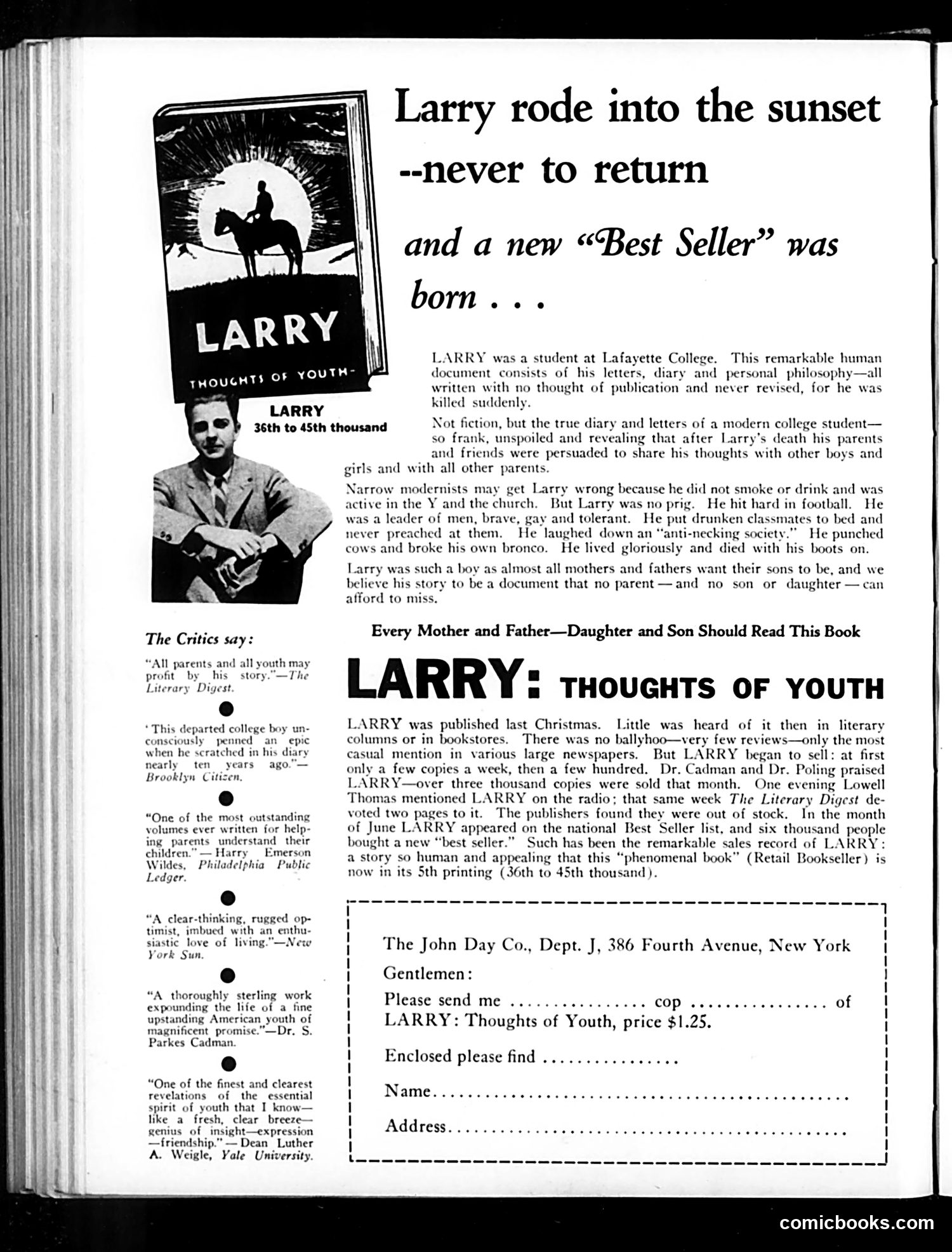
Analysis of Judge Magazine Page This page is primarily a book advertisement, not political satire. It promotes *"Larry: Thoughts of Youth,"* a posthumous publication of letters and diary entries from Larry, a Lafayette College student who died suddenly. The marketing emphasizes Larry's everyman appeal: he was athletic, irreverent toward authority, drank and fought, yet morally earnest—a "boy as almost all mothers and fathers want their sons to be." Contemporary critics praised it as authentic youth commentary. The advertisement targets parents and families, positioning the book as essential reading that candidly reveals modern college student life. The dramatic "rode into the sunset—never to return" framing romanticizes the deceased author, marketing his tragic early death as adding poignancy to his genuine voice. This reflects early-20th-century publishing trends valorizing authentic youth narratives.
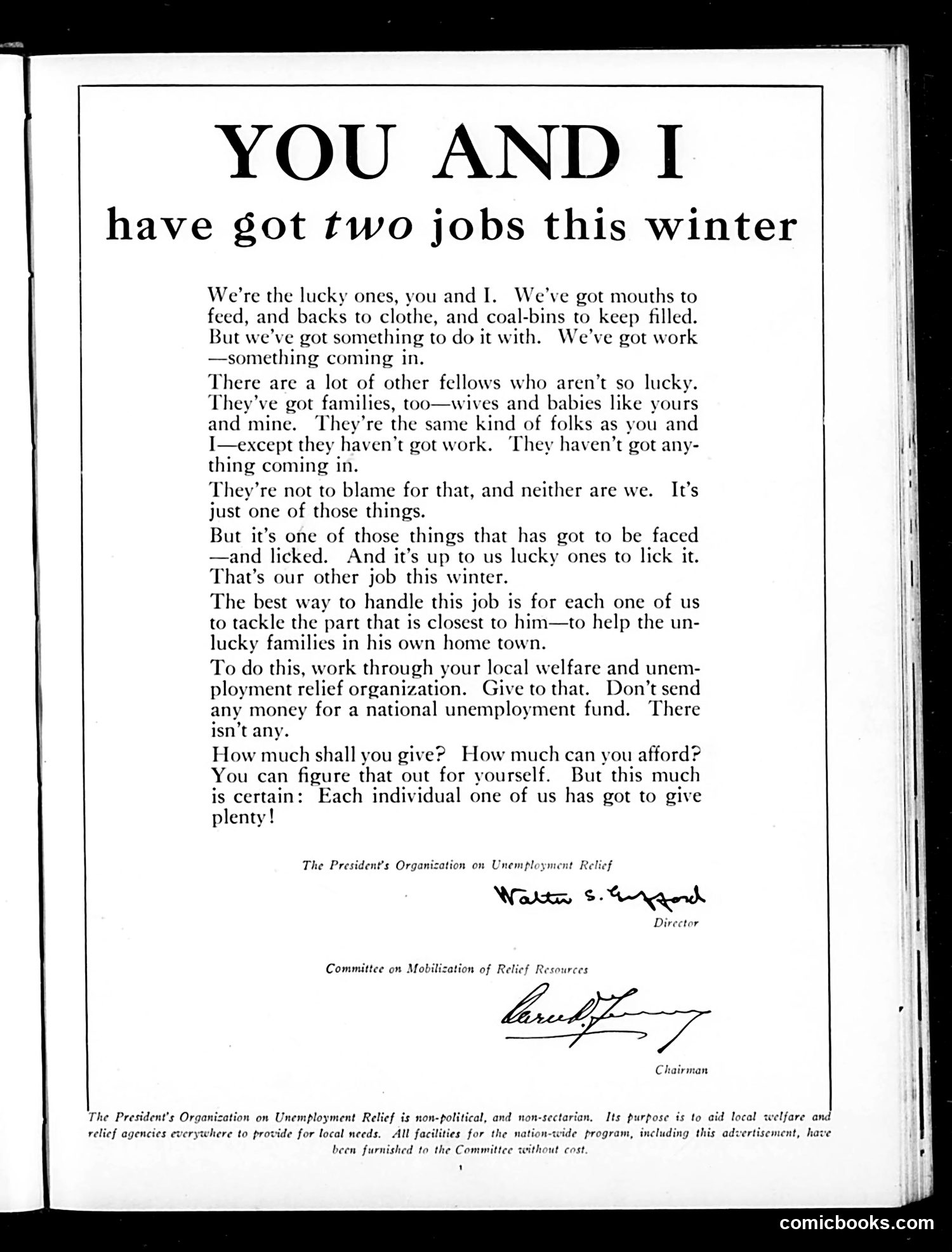
Analysis This page contains a serious public service announcement, not satire. It's signed by Walter S. Gifford (Director of The President's Organization on Unemployment Relief) and appears to reference Depression-era relief efforts, likely early 1930s based on the language about winter hardship. The message appeals to employed citizens to help unemployed families through local welfare organizations rather than national funds. It emphasizes personal responsibility: those with jobs should donate "plenty" to aid their less fortunate neighbors. Rather than humor or satire, *Judge* magazine here uses its platform for civic advocacy—urging readers with employment to contribute locally to unemployment relief during economic crisis. The formal signatures and earnest tone reflect the gravity of Depression-era poverty.
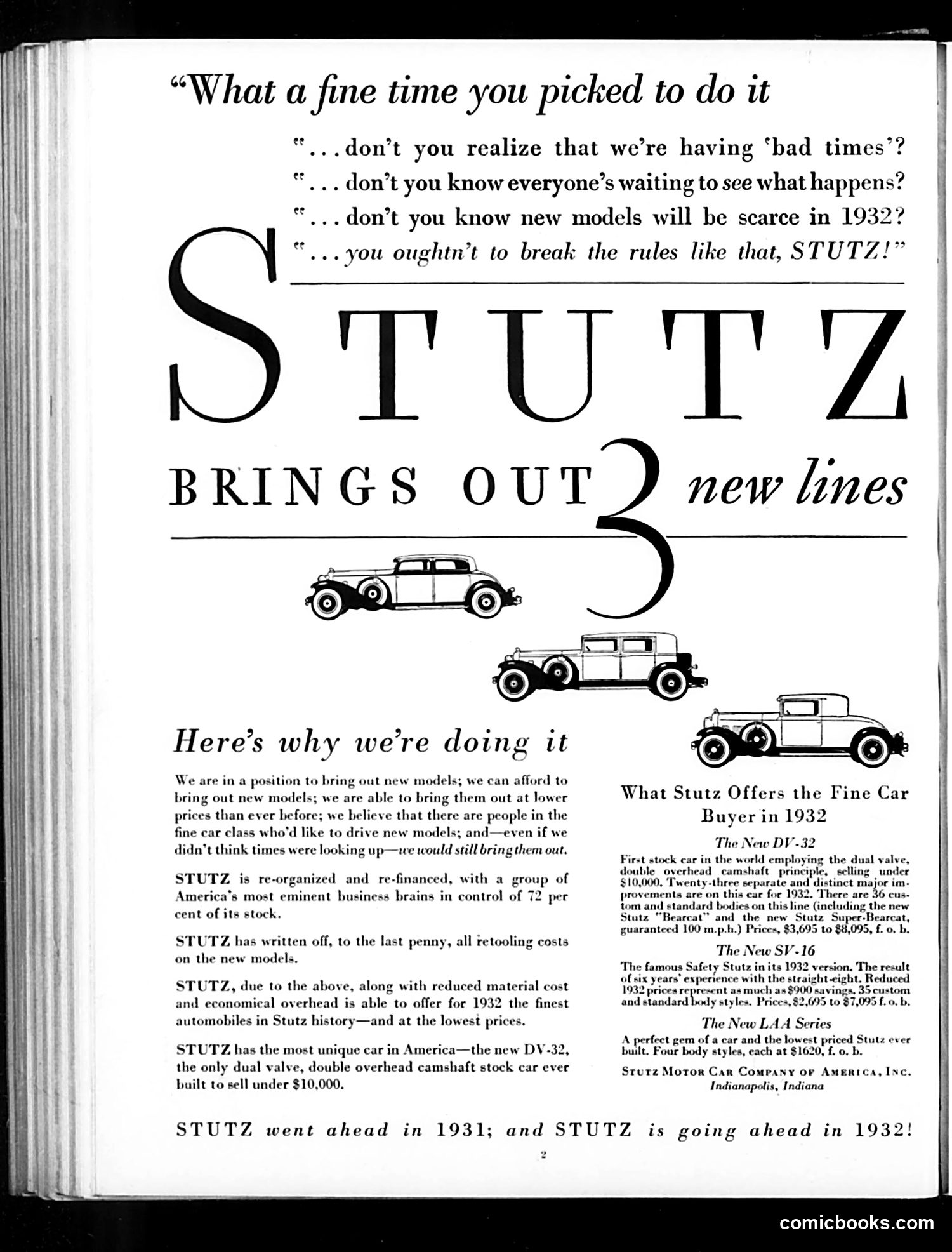
Analysis This is primarily a Stutz automobile advertisement, not political satire. The page features dialogue criticizing Stutz's decision to launch three new car lines during the Great Depression (1932). The opening quote frames the announcement as poor timing—the public questions why the company would introduce new models when "we're having 'bad times'" and "new models will be scarce in 1932." The accusatory tone ("you ought to break the rules like that, STUTZ!") is sarcastic. However, the ad then pivots to justify the decision: Stutz claims reorganization and refinancing allowed them to afford new production while maintaining low prices. The advertisement emphasizes innovation (the dual-valve DV-32 model) and affordability as countercyclical strategies. Rather than satire, this represents Depression-era marketing: using apparent criticism as a rhetorical device to demonstrate confidence and business acumen during economic crisis.
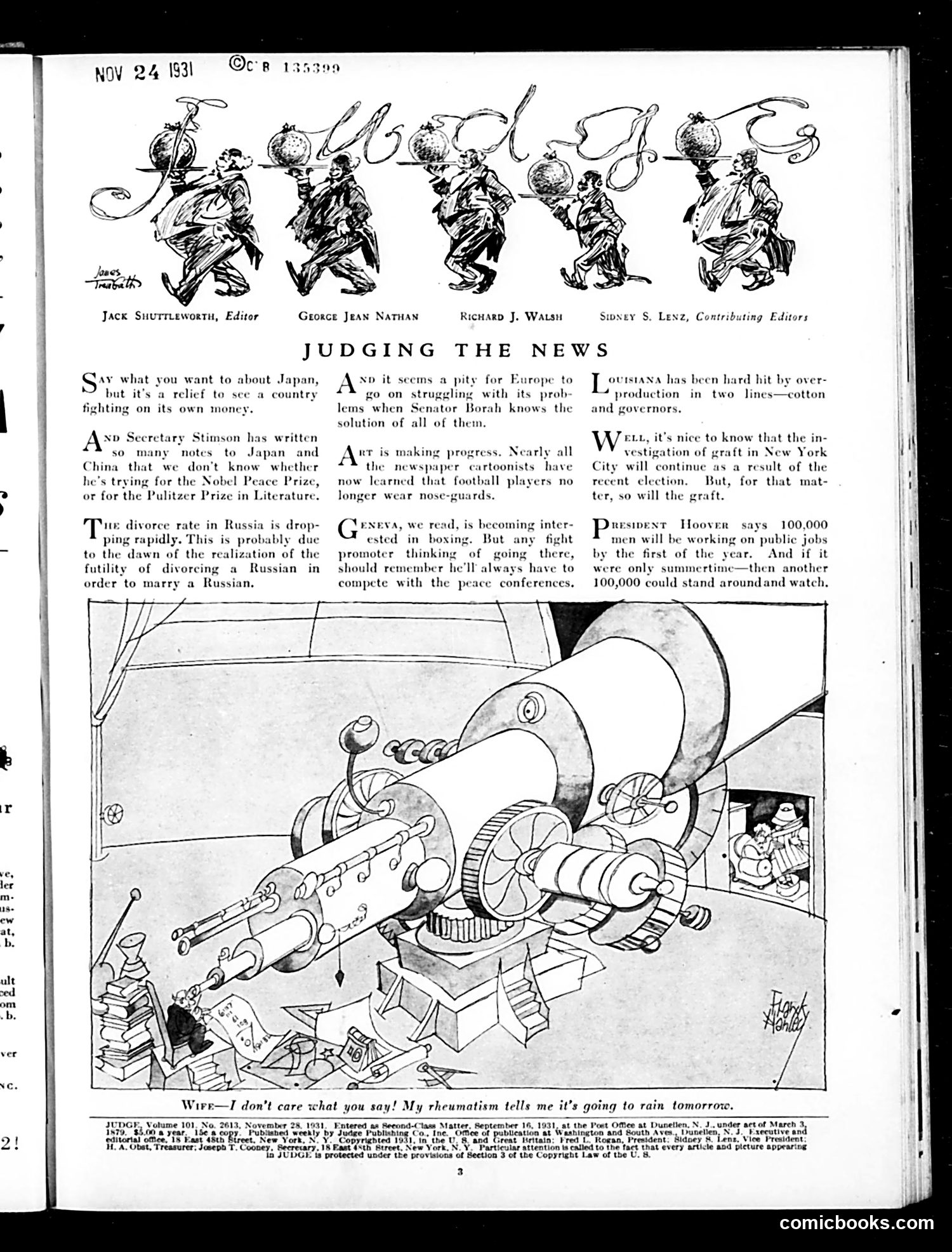
Analysis of Judge Magazine Page, November 24, 1931 The page's main cartoon depicts an elaborate, absurdly complex mechanical contraption labeled "Wife—I don't care what you say! My rheumatism tells me it's going to rain tomorrow." The Satire: This illustrates a common domestic joke—a wife claiming she can predict weather through her physical ailments, despite her husband's skepticism. The ridiculously over-engineered machine represents his futile attempt to "scientifically" prove her wrong. The humor derives from the contrast between masculine rationality (represented by the complicated apparatus) and intuitive, body-based female knowledge that often proves correct anyway. The upper section features editorial commentary on contemporary issues: Japan's internal problems, European struggles, Russian divorce rates, boxing, newspaper cartoons, New York graft investigations, and public employment under President Hoover—typical satirical fodder for 1931's Great Depression era.
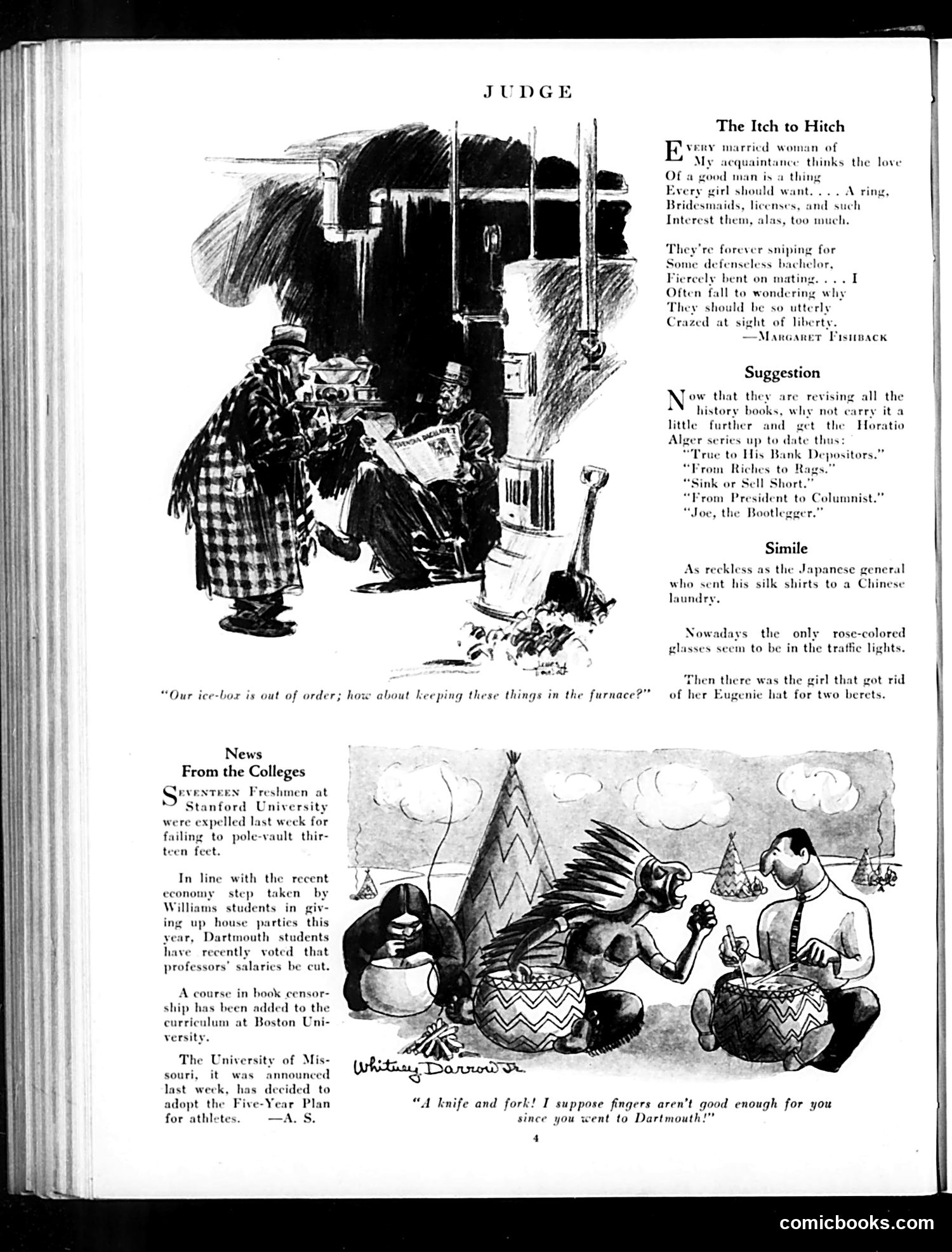
Analysis of Judge Magazine Page The top cartoon depicts a janitor or building superintendent confronting a woman about furnace maintenance, with the caption "Our ice-box is out of order; how about keeping these things in the furnace?" This satirizes domestic complaints and the poor living conditions of working-class apartments—likely referencing inadequate heating and cooling systems in early 20th-century urban housing. The page includes three literary/social commentary pieces ("The Itch to Hitch," "Suggestion," "Simile") mocking marriage expectations, revisionist history books, and modern fashion trends. The bottom cartoon by Whitney Darrow shows Native Americans using utensils, captioned with a joke about "fingers" and Dartmouth, likely satirizing both Native American stereotypes and college life assumptions of the era. The "News from the Colleges" section reports actual campus incidents, including disciplinary actions at Stanford University.
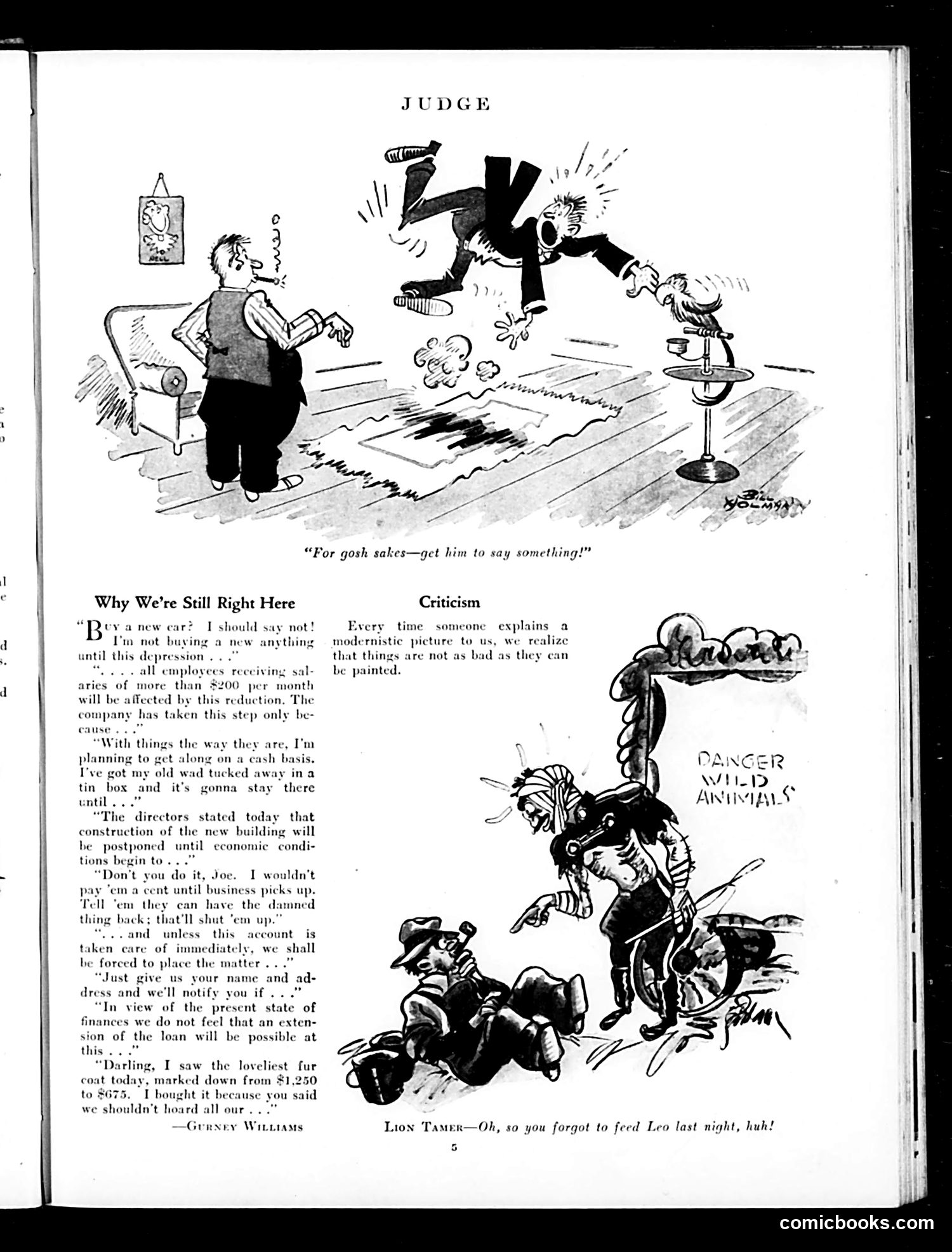
Analysis of Judge Magazine Page Top Cartoon ("Judge"): A disheveled judge loses his composure and balance, literally kicked off his bench by an unseen force. The caption "For gosh sakes—get him to say something!" suggests judicial silence or evasion during a legal proceeding, likely satirizing a specific trial or court case where a judge refused to rule or speak on controversial matters. "Why We're Still Right Here": A monologue by "Gurney Williams" presenting Depression-era economic rationalizations—people justifying why they won't buy new cars or make purchases, citing the ongoing economic crisis. It's satirizing deflationary thinking and consumer hesitancy perpetuating economic stagnation. "Criticism"/"Danger Wild Animals": An unrelated cartoon-caption pair below, likely from different content.
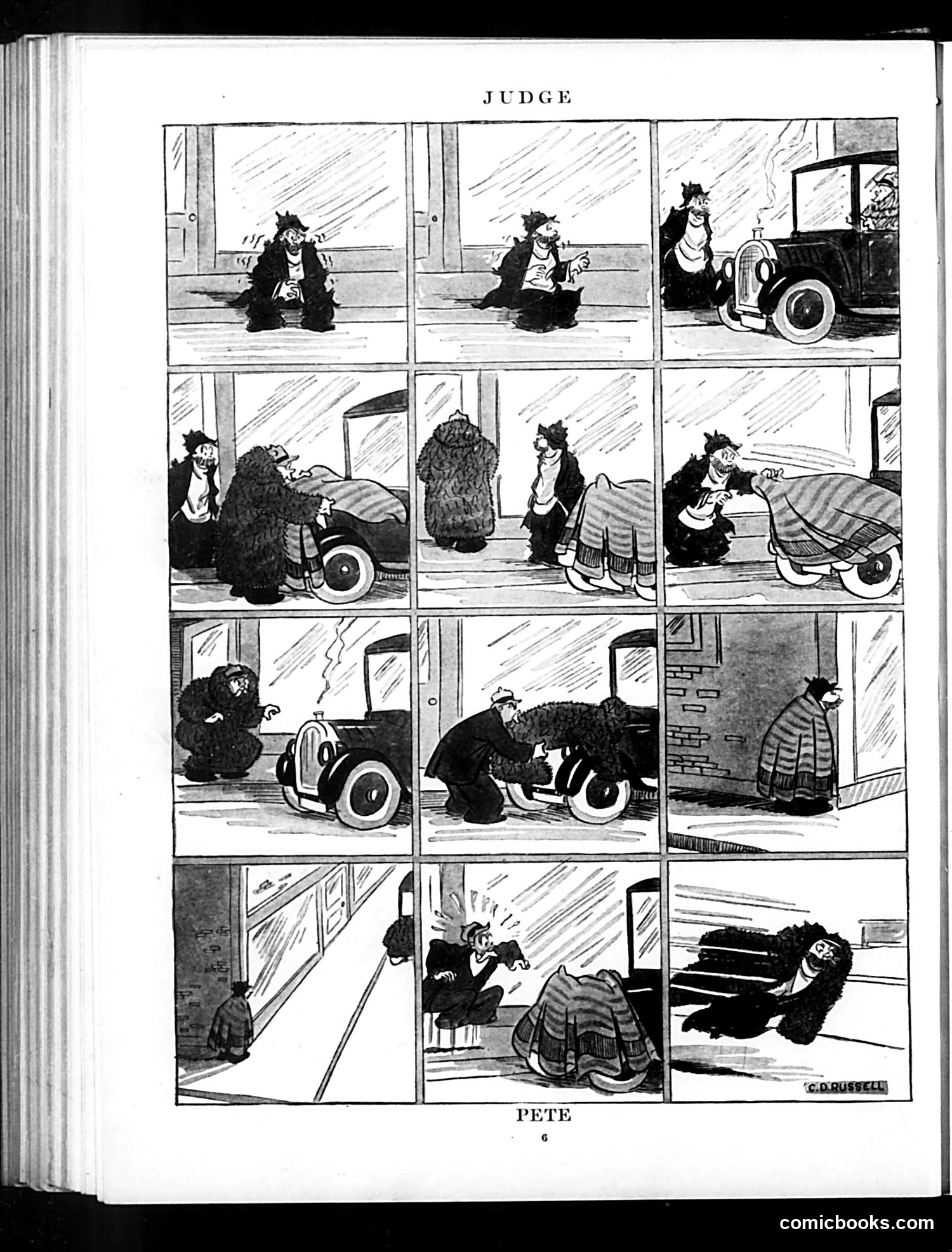
Analysis of "Judge" Comic Strip Page This comic strip titled "Judge" (signed by C. D. Russell) depicts a slapstick narrative about a figure in formal dress dealing with a baby carriage. The sequence shows: the character sitting dejected in the rain, then attempting to manage an unwieldy carriage, struggling with its mechanics, and ultimately being knocked down or overwhelmed by it. The satire appears to mock domestic incompetence or the complications of childcare—specifically, a presumably upper-class man's inability to handle a baby carriage, a task typically assigned to women or servants. The humor derives from physical comedy and the contrast between the figure's formal attire and his undignified struggles with ordinary domestic objects. The exact political context remains unclear without additional page information.
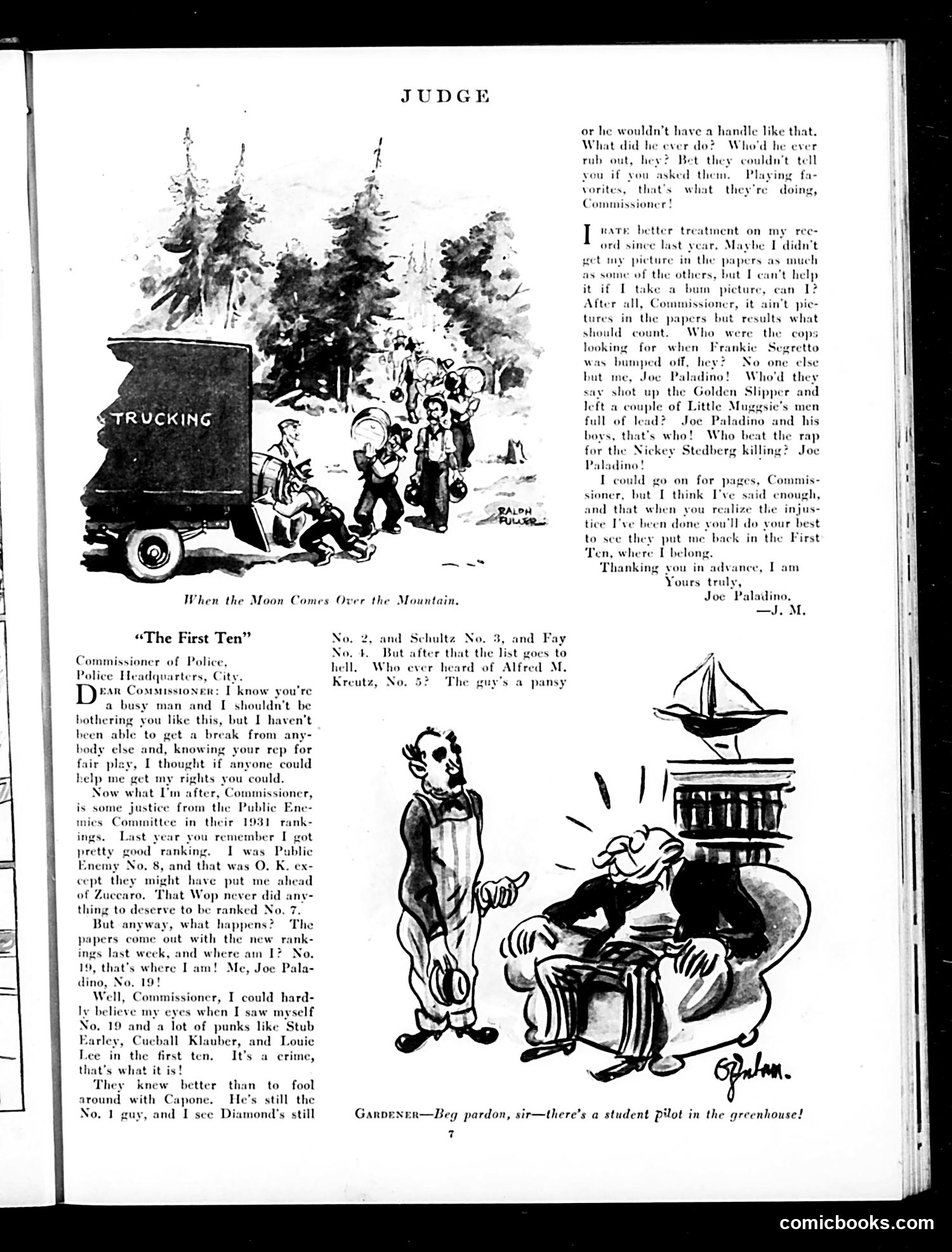
Analysis for Modern Readers This page satirizes Chicago's criminal underworld during Prohibition, specifically the 1931 "Public Enemies" rankings—an actual FBI/press list of most-wanted gangsters. The Main Cartoon: Joe Paladino, a minor mobster, petitions Police Commissioner about his ranking dropping from #8 to #19. He complains he's been unfairly overlooked despite his "accomplishments"—murders, shootouts—while arguing rivals like Zuccaro didn't deserve higher rankings. He names actual gangsters: Capone (still #1) and Diamond. The Satire: Judge mocks both the criminals' vanity and the public's obsession with gangster rankings, treating violent felons like sports players. Paladino's indignant tone—demanding "justice" for being ranked too low—absurdly applies corporate fairness complaints to criminal status. Historical Context: This reflects 1930s media sensationalism around organized crime, when newspapers published actual "Most Wanted" lists, making gangsters into celebrities. The piece ridicules how seriously these criminals took their public rankings.
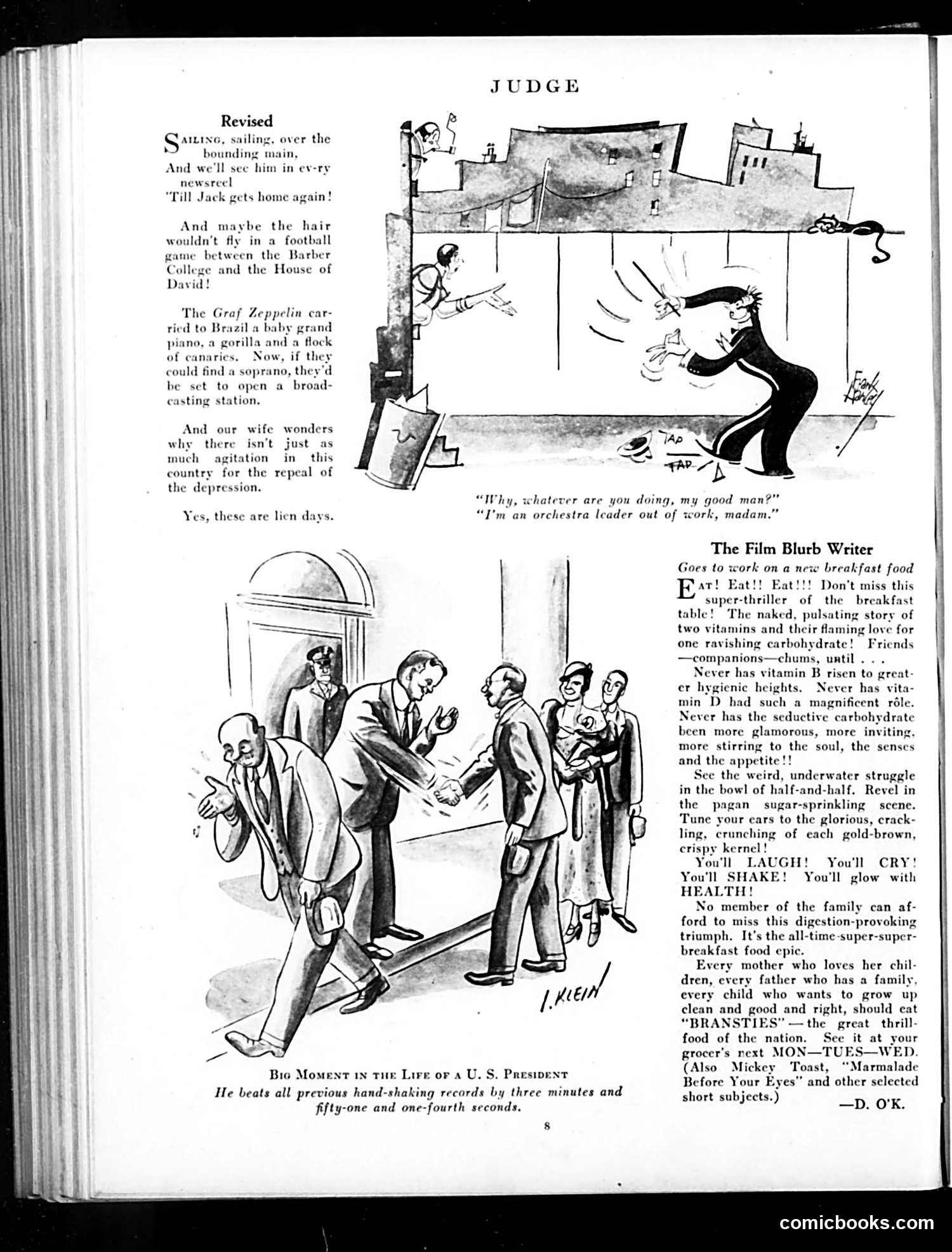
Explanation of Judge Magazine Page This page contains three satirical pieces mocking Depression-era hardship and media excess: Top cartoon: An unemployed orchestra conductor tells a wealthy woman he's "out of work." The caption "Yes, these are lien days" puns on "lean days"—referencing Depression poverty and foreclosures. "Big Moment" cartoon: Mocks a U.S. President's hand-shaking record during a time when unemployment and desperation meant citizens sought any political contact for relief or employment. "Film Blurb Writer" section: Parodies overwrought advertising copywriting that applies melodramatic movie language ("naked, pulsating story," "You'll LAUGH! You'll CRY!") to breakfast cereal. It satirizes how advertisers manipulated Depression-anxious consumers by selling mundane products with exaggerated emotional appeals and pseudo-scientific health claims (vitamins B and D). The page's recurring theme: During economic collapse, Americans experience both genuine hardship and ridiculous commercial manipulation.
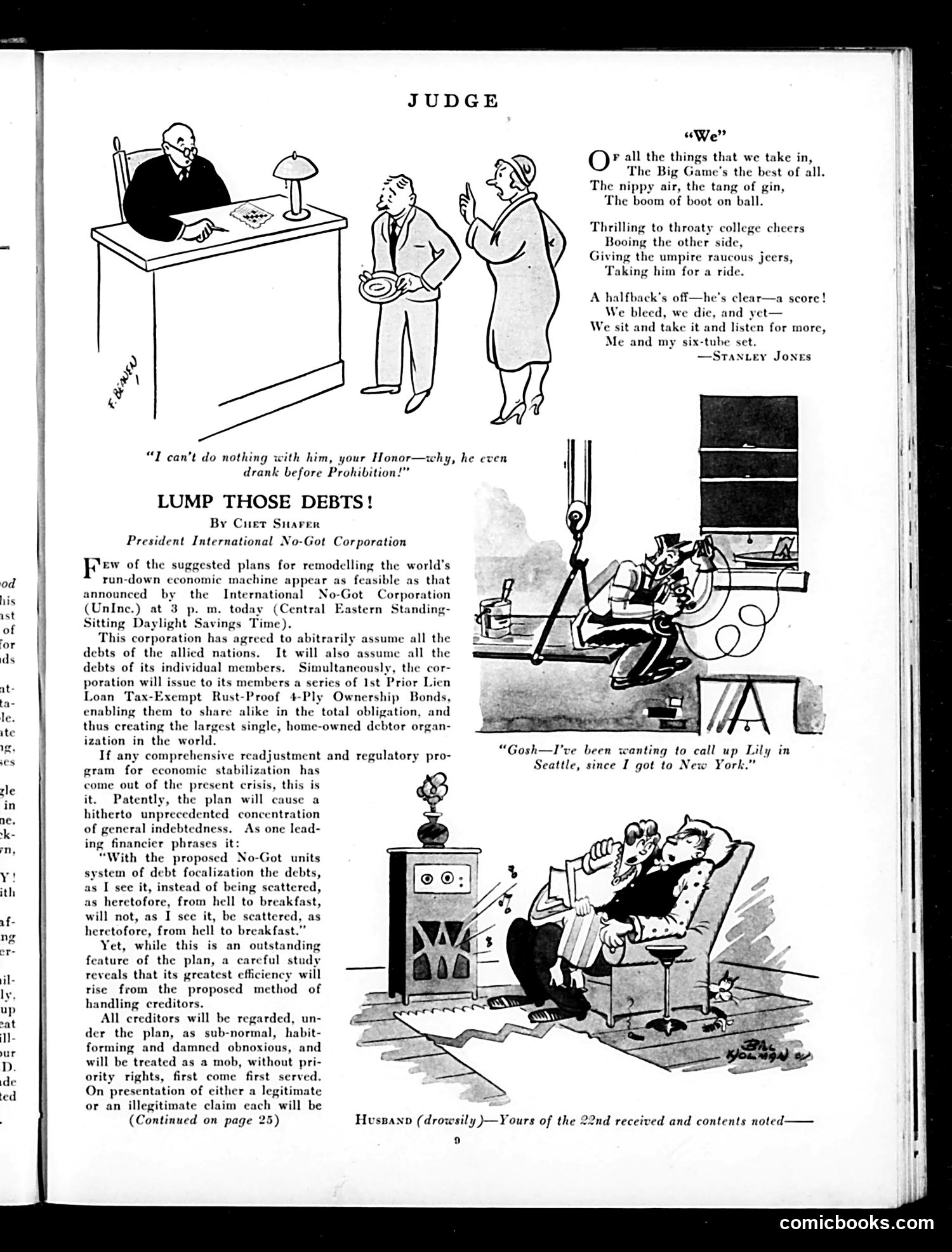
Judge Magazine Satire Analysis This page satirizes post-WWI economic proposals through absurdist humor. "Lump Those Debts" mocks a real-world scheme (the "International No-Got Corporation") proposing to consolidate allied nations' war debts into a single entity. The satire emphasizes the plan's logical absurdity: rather than solving debt, it merely concentrates all obligations into one massive "home-owned debtor organization." The phrase "from hell to breakfast" humorously describes debt's scattered state. The cartoon showing a judge tells a joke about Prohibition (1920-1933): a defendant "even drank before Prohibition," implying this predates the law and is somehow worse than post-Prohibition drinking. The "W" poem celebrates baseball and gin-drinking—a knowing wink at Prohibition's unpopularity. The bottom cartoon depicts a husband receiving a telegram about a call to Seattle, humorously suggesting marital distance or infidelity during the telephone era. The overall tone reflects post-WWI economic anxiety and satirizes the era's futile debt-restructuring proposals while mocking Prohibition through casual alcohol references.
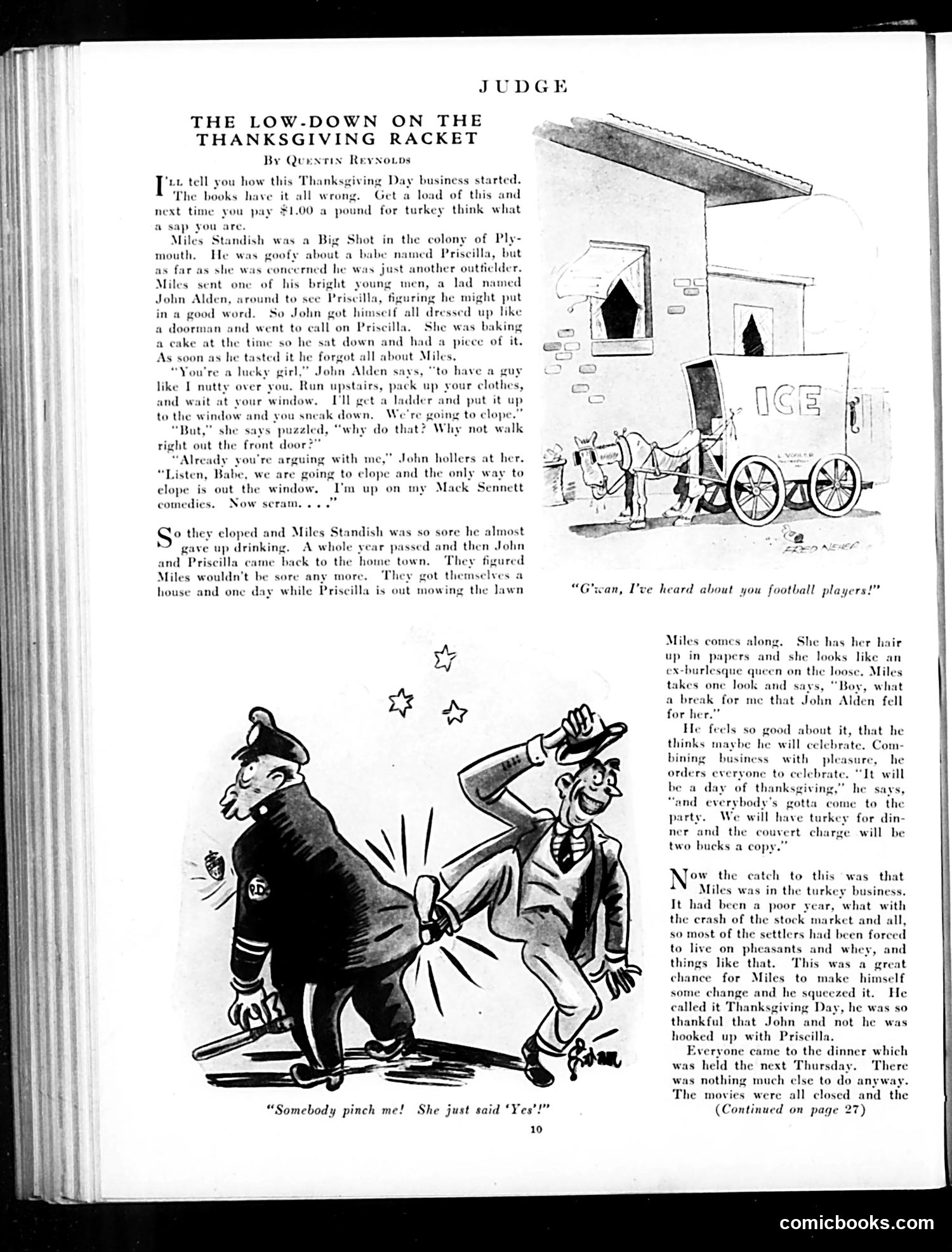
"The Low-Down on the Thanksgiving Racket" This satirical piece by Quentin Reynolds rewrites the Pilgrims' origin story as a cynical commercial scheme. The article presents Miles Standish as a scheming businessman who uses the Thanksgiving holiday as a front to sell expensive turkey to settlers during hard economic times (referencing the stock market crash). The humor relies on deflating American historical reverence: the noble first Thanksgiving becomes a profit-driven "racket." References to "Mack Sennett comedies" (silent film slapstick) and the illustration showing a woman in hair curlers undercut romantic notions. The cartoon mocks both Pilgrims and modern consumers who overpay for turkey annually without questioning the origin story. This reflects 1920s-30s cynicism about commercialized holidays and American capitalism disguised as tradition—a common Judge magazine theme targeting both greedy businessmen and gullible consumers.
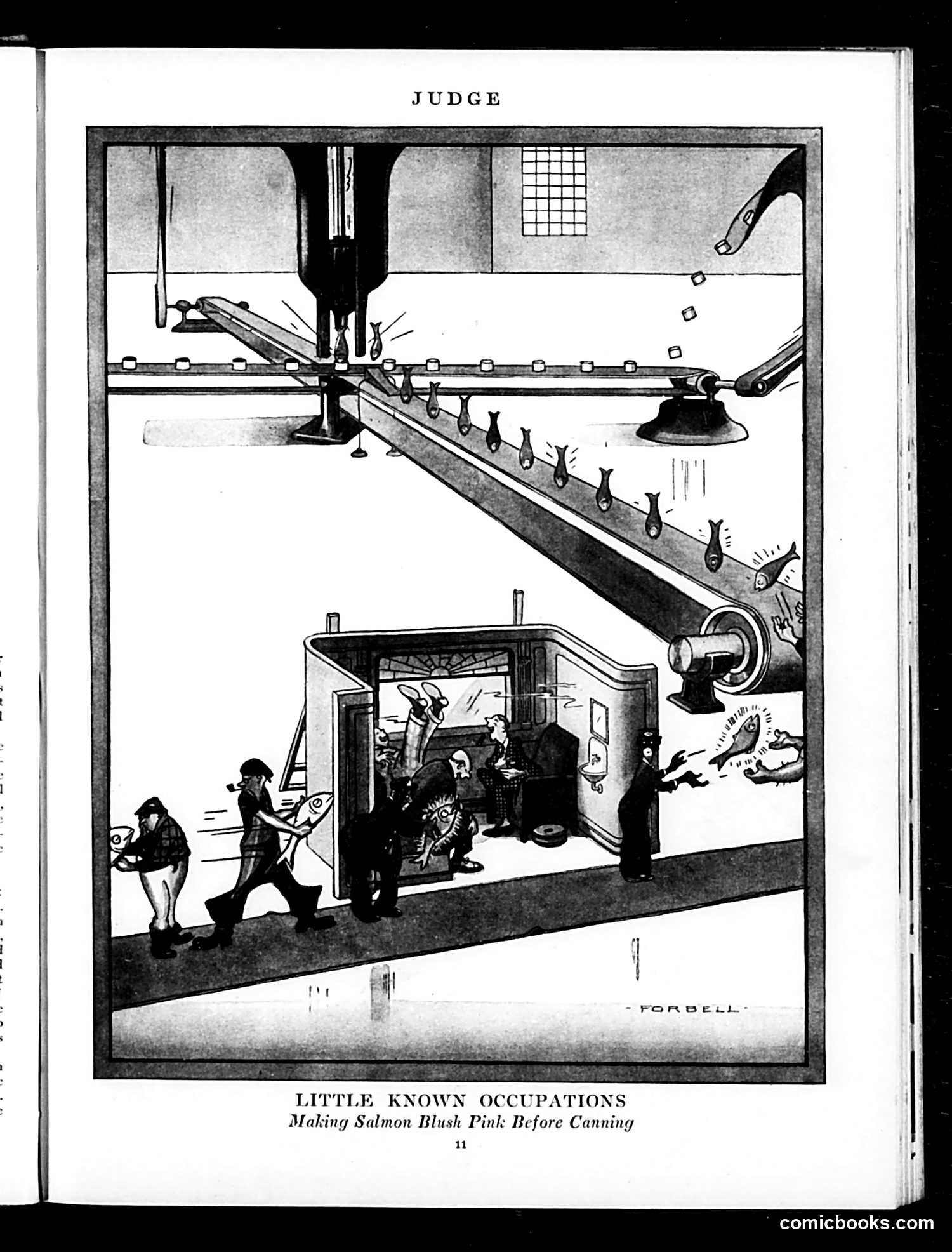
Analysis This is a satirical cartoon titled "Little Known Occupations" by Farbell, depicting the supposedly secret process of "Making Salmon Blush Pink Before Canning." The joke appears to be exposing (or pretending to expose) an absurd behind-the-scenes industrial practice. The cartoon shows workers in what looks like a factory setting with machinery, salmon being processed on an assembly line, and various contraptions. The humor derives from the satirical suggestion that salmon's natural pink color isn't genuine—that it requires artificial, comical human intervention to achieve that appealing color before commercial canning. This mocks both consumer ignorance about food production and food industry practices, suggesting deceptive or ridiculous methods might lurk behind everyday products. The elaborate machinery and multiple workers emphasize the absurdity of the supposed "secret" process.
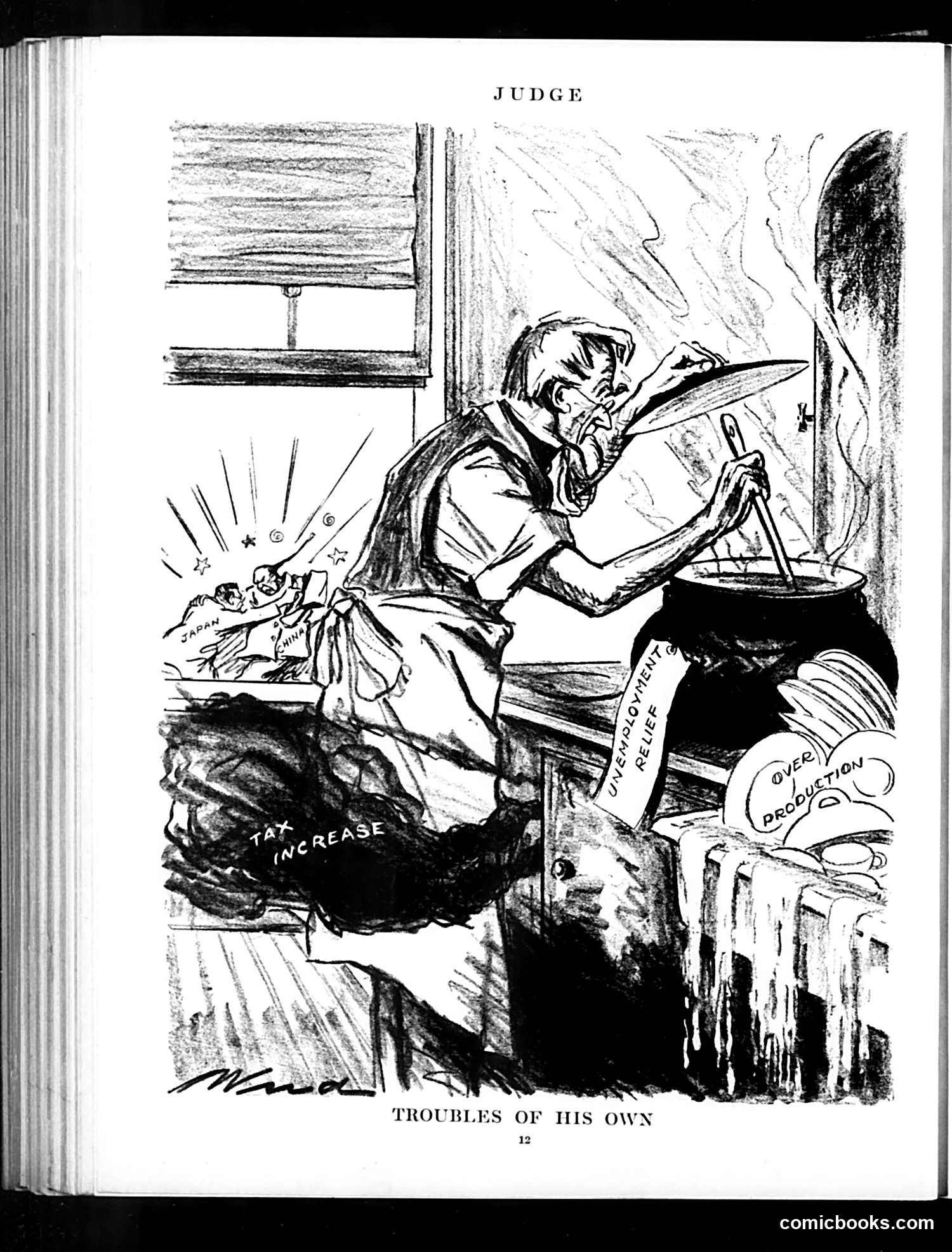
"Troubles of His Own" - Judge Magazine Cartoon This political cartoon depicts a judge at his bench confronting multiple domestic issues simultaneously. The figure labeled "TAX INCREASE" appears as a threatening presence, while papers on his desk reference "OVERPRODUCTION" and what appears to be "LIFE PROBABILITY RELIEF" or similar policy concerns. The satire suggests that judges—often positioned as impartial arbiters—face the same economic and social pressures as ordinary citizens. The cartoon criticizes the irony of judicial authority when judges themselves cannot escape contemporary crises like taxation, industrial overproduction, and economic uncertainty, likely from the early 20th century. The small figure labeled "JAPAN" in the background may reference contemporary international trade or diplomatic tensions of the era.
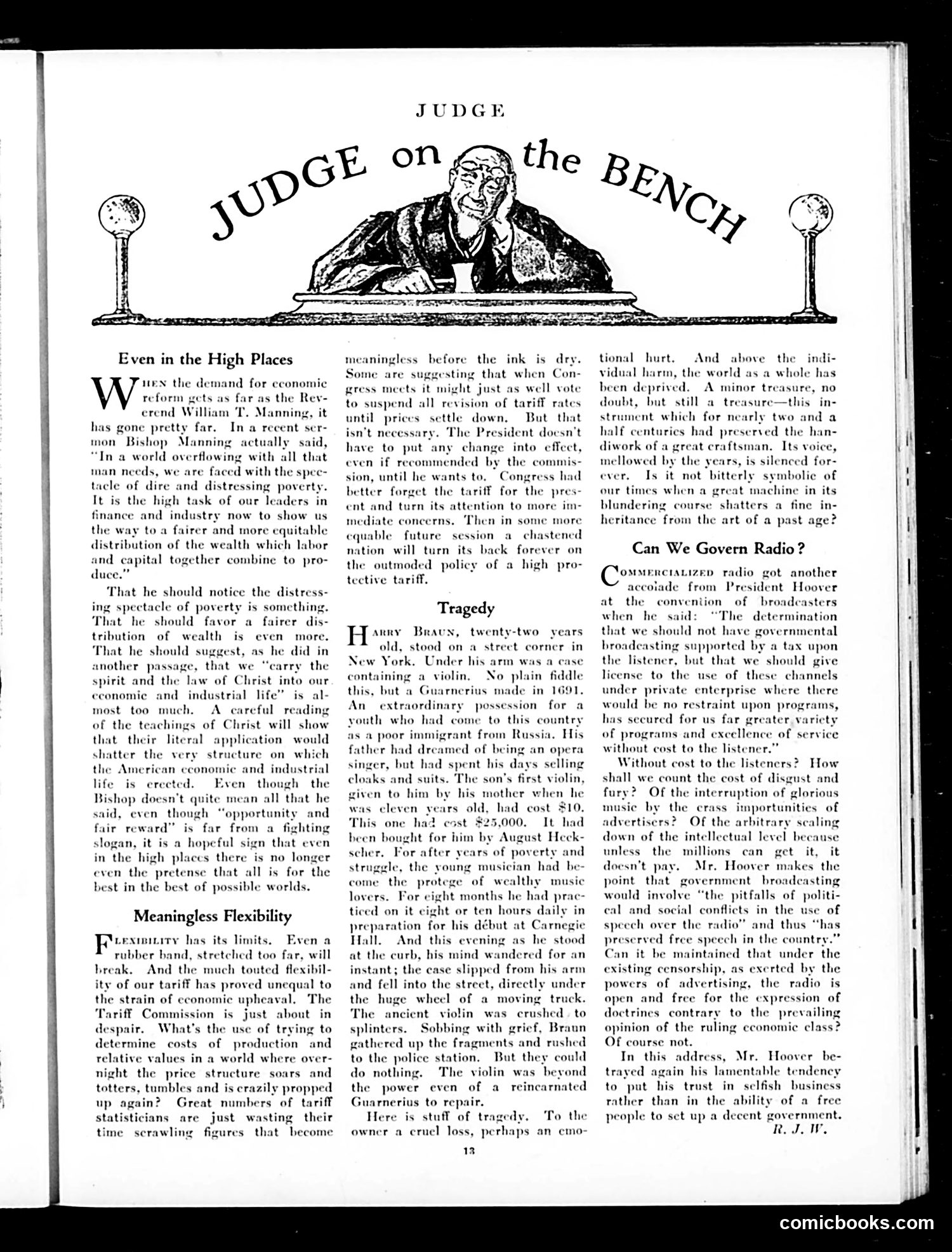
Analysis for Modern Readers This page contains three separate editorial pieces from Judge magazine: "Even in the High Places" criticizes Bishop Manning for suggesting wealthy industrialists should distribute wealth more equitably—the satire being that even religious leaders now recognize extreme poverty amid abundance, yet this remains controversial in business circles. "Meaningless Flexibility" mocks the Tariff Commission's inability to set rational trade policy when economic conditions change rapidly. The joke: collecting data becomes pointless when circumstances shift before the ink dries. "Tragedy" recounts a Russian immigrant's son—Harry Braun—losing a priceless 1691 Guarnerius violin (worth $25,000) when it falls under a truck. The satire criticizes both the arbitrary cruelty of fate and, implicitly, a society where a young musician's entire future depends on a single instrument's survival. The page reflects Depression-era concerns: wealth inequality, economic instability, and the precarious circumstances of working-class immigrants.
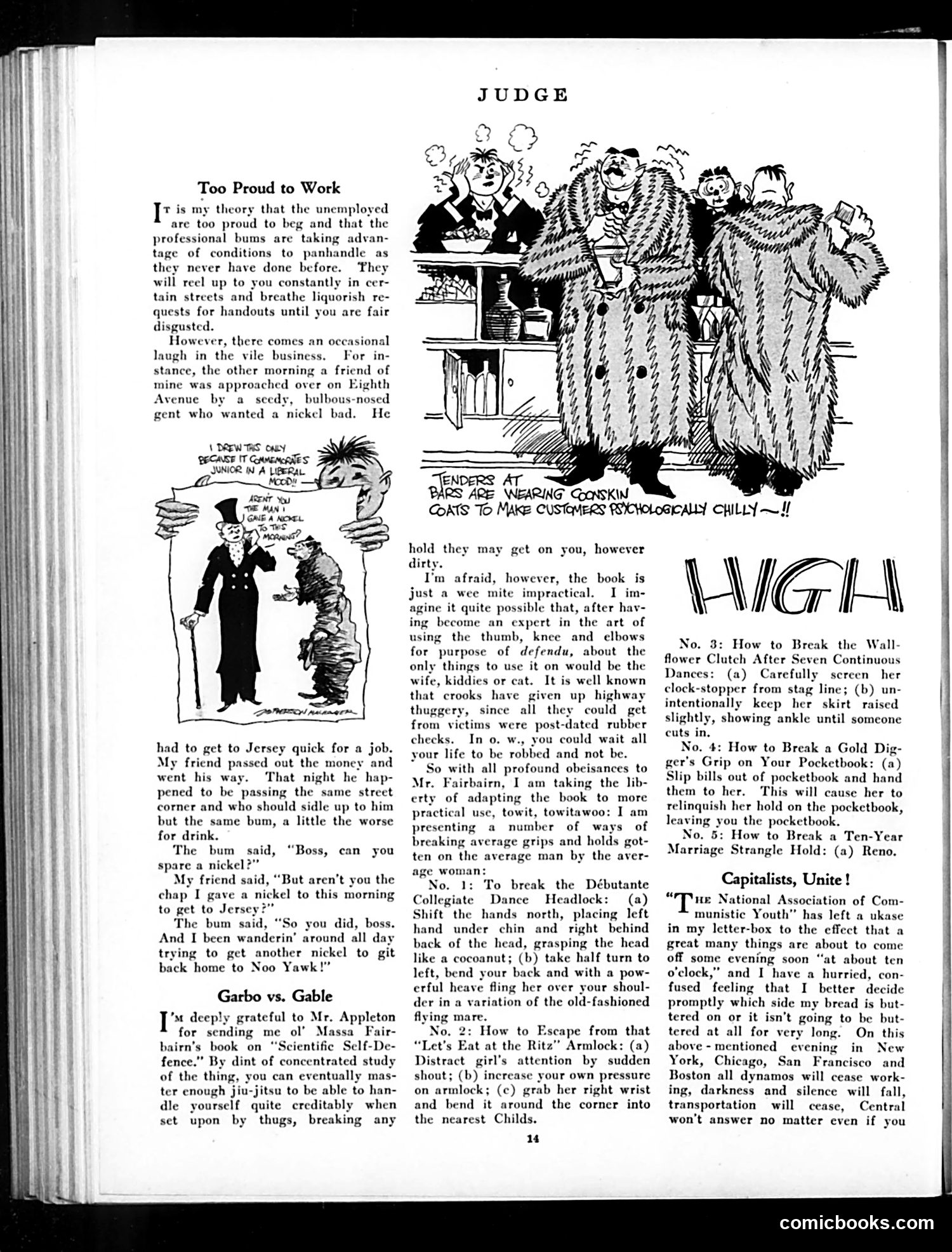
Explaining This Judge Magazine Page This satirical page from Judge magazine (a major American humor publication) contains three distinct pieces mocking social issues of its era: "Too Proud to Work" ridicules unemployed men and panhandlers, presenting an anecdote where a beggar claims he needs a nickel to reach New Jersey for a job—then appears the same day asking for another nickel to return home, suggesting chronic unemployment or dishonesty. "Garbo vs. Gable" is a humorous self-defense manual parodying a real jiu-jitsu book, adapting its techniques to dating scenarios. It mocks both flapper culture and courtship dynamics—teaching men how to "escape" from debutantes, gold-diggers, and wives. The final entry, "Reno" (Nevada's divorce capital), satirizes marital problems. The cartoon illustration shows fur-coat-wearing socialites at what appears to be a nightclub, captioned about bartenders wearing coonskin coats to make customers feel "psychologically chilly"—mocking both wealth and Prohibition-era speakeasies. The page reflects 1920s-30s anxieties: economic hardship, changing gender roles, and frivolous upper-class behavior.
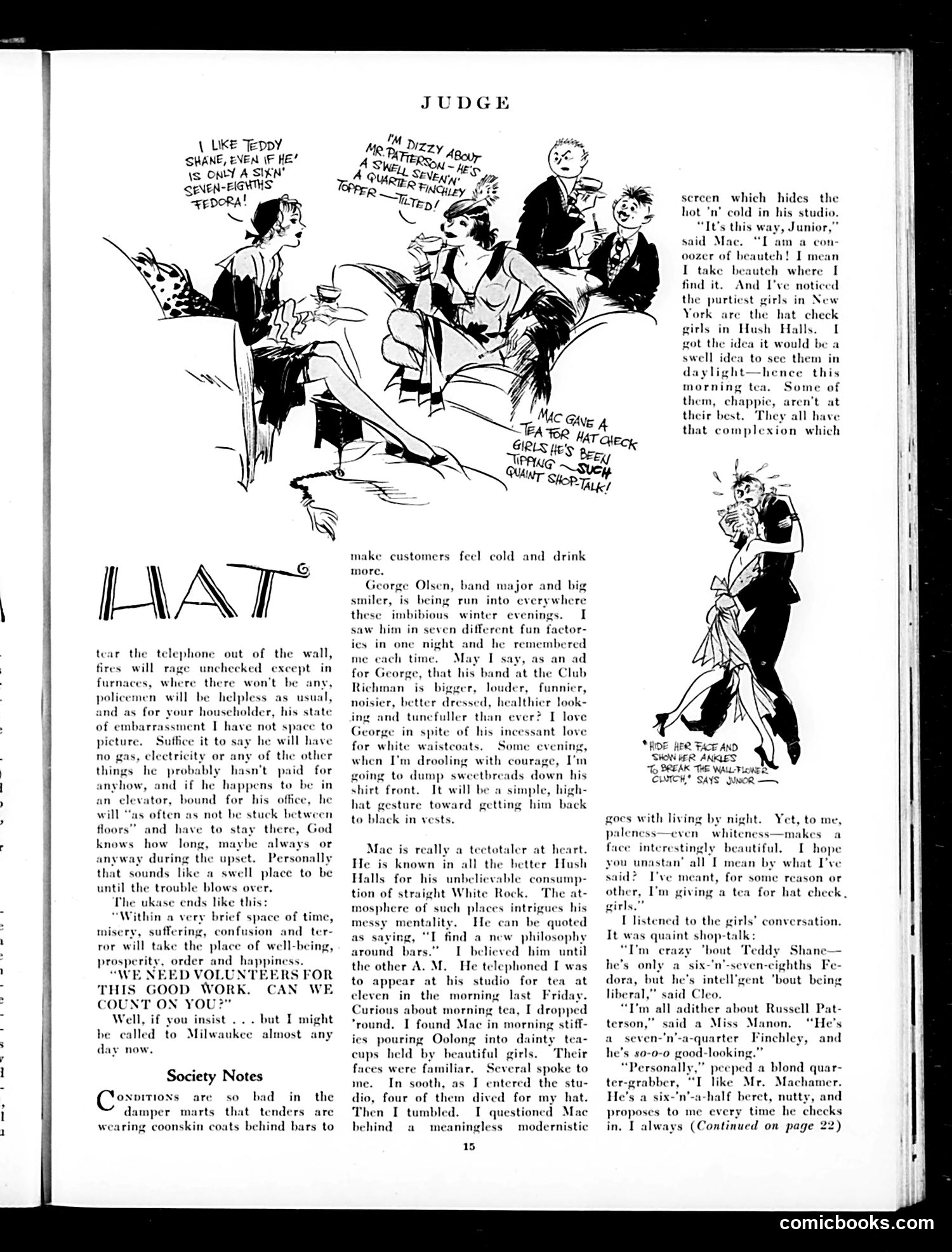
"Judge" Magazine Page: Social Satire on Nightlife and Dating This page satirizes 1920s urban nightlife and courtship customs. The main cartoon depicts a social gathering where a man discusses "hat check girls" from nightclubs—young women who work checking coats at speakeasies and upscale venues. The satire targets Mac, a character who frequents "Hush Halls" (apparently code for illicit drinking establishments during Prohibition). Mac claims to admire hat check girls' beauty and decides to host a "morning tea" to see them in daylight, revealing his real motive: romantic pursuit of working-class women. The joke critiques both male behavior (predatory interest in vulnerable service workers) and the nightlife scene itself. References to "White Rock" (likely ginger ale, suggesting prohibition-era drinking), speakeasies, and the contrast between nighttime glamour and daytime appearance all reflect Jazz Age social anxieties. The smaller cartoon warns against revealing women's faces while emphasizing legs—commenting on contemporary fashion and advertising standards.
Judge Magazine Theater Review Analysis This page contains theater reviews from Judge magazine's "The Theatre of George Jean Nathan" column—a prestigious drama critic's assessments of Broadway productions. The reviews critique two plays: "Cynara" (at the Morosco Theater) and "Here Goes the Bride" (featuring comedian Bobby Clark). Nathan praises "Cynara" for its subtle, restrained emotional storytelling, though he criticizes its melodramatic plot (infidelity, suicide, redemption) as derivative of Hollywood's sensationalism. He notes the talented cast but complains about slow scene changes. He's surprisingly harsh on "Here Goes the Bride," lamenting that producer Peter Arno's script has somehow made the legendary comedian Bobby Clark—famous for his physical "Greek art" of comedy—unfunny. This appears to be the satire's target: Arno's heavy-handed plotting undermines Clark's natural comic genius. The piece demonstrates Judge's cultural authority in early 20th-century American theater criticism.
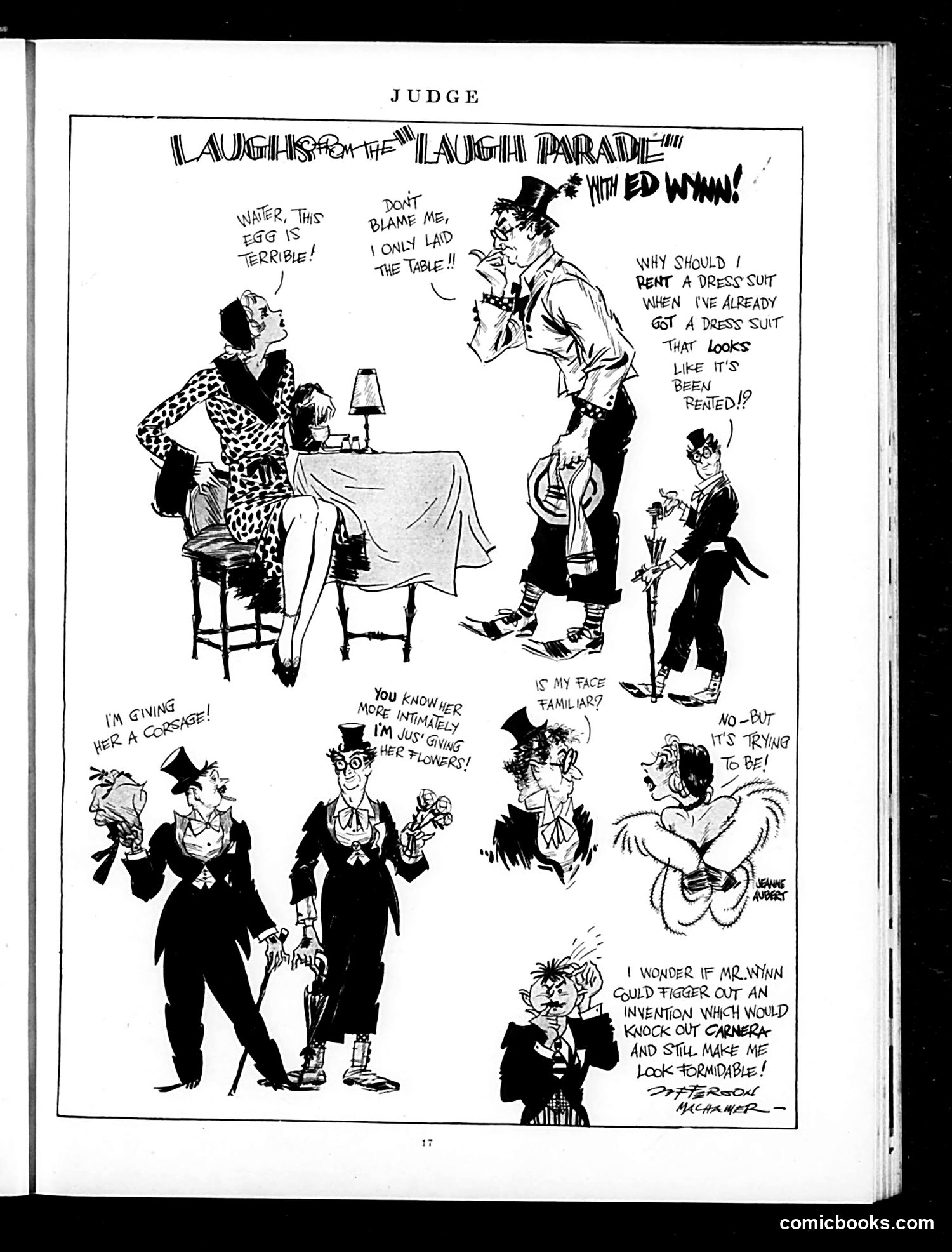
"Laugh at the Laugh Parade" — Judge Magazine This comic page satirizes high-society dinner etiquette and fashion pretense. The central scene depicts wealthy socialites at an elegant dinner party, with various characters making absurd excuses: one complains about a terrible egg, another claims he merely "laid the table" (not broke it), and a man in a shabby rented tuxedo questions why he should rent formal wear when his already looks rented. The humor targets class anxiety—the desperate attempt to appear respectable despite financial strain. The reference to "Mr. Winn" and "Carnera" (likely boxer Primo Carnera, famous in the 1930s) suggests topical humor about public figures, though specifics are unclear without additional context. The overall satire mocks the performative nature of genteel society and the gap between appearance and reality among the wealthy.
Judge Magazine: "Judging the Movies" by Pare Lorentz This is a film criticism column reviewing three movies, each featuring a female lead sacrificing motherhood for survival or propriety. The pattern across all three films—Rose Hobart, Ruth Chatterton, and Helen Hayes—involves women forced into "the world's oldest profession" (prostitution) to support abandoned children or family honor. Lorentz criticizes this repetitive plotline as exploitative and beneath the actresses' talents. He particularly objects to Paramount recycling the same storyline under different titles ("Compromised," "The Woman Pays," "Her Sacrifice"). While praising Hayes's genuine acting ability, he argues that even her considerable talent cannot redeem such contrived, emotionally manipulative material. The satire targets both Hollywood's lazy writing and audience appetite for melodrama—specifically, the predictable tearjerker formula of virtuous motherhood destroyed by circumstance.
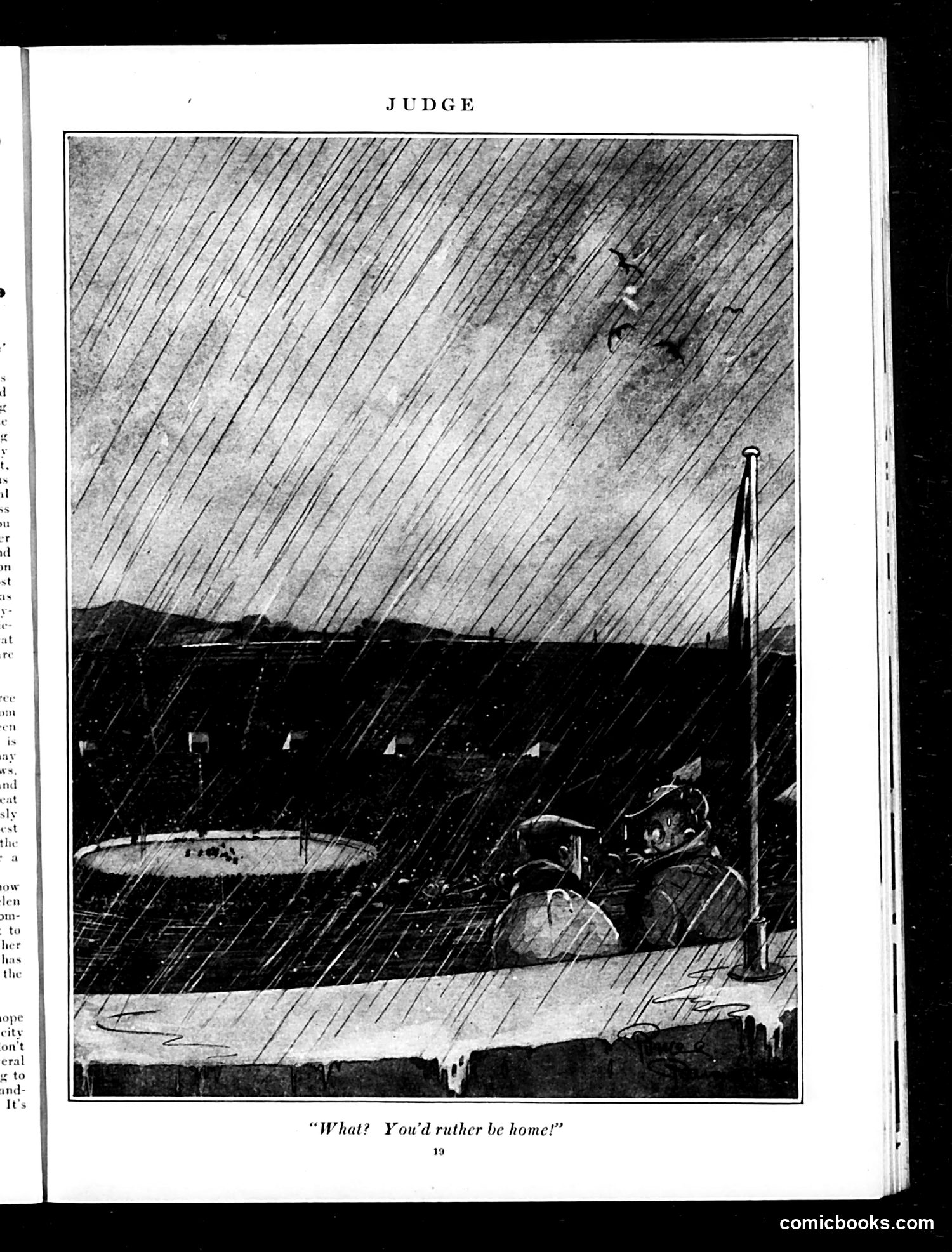
Analysis This is a single editorial cartoon from *Judge* magazine titled "What? You'd rather be home!" The image depicts a dramatic rainstorm scene with heavy diagonal rain lines. In the foreground, two figures huddle together in what appears to be a dugout or trench, with a tall pole or post beside them. The background shows an open field or stadium-like setting with additional figures visible in the distance. The caption suggests a conversation where someone is being questioned about preferring to be home rather than their current location. Given the trench-like setting and military appearance, this likely references World War I — critiquing soldiers' preference for home over front-line duty, or possibly satirizing the discomfort of wartime service. The cartoon's point appears to be ironic commentary on soldiers' understandable desire to escape harsh battlefield conditions. Without a visible date or artist signature, the specific historical moment remains unclear.
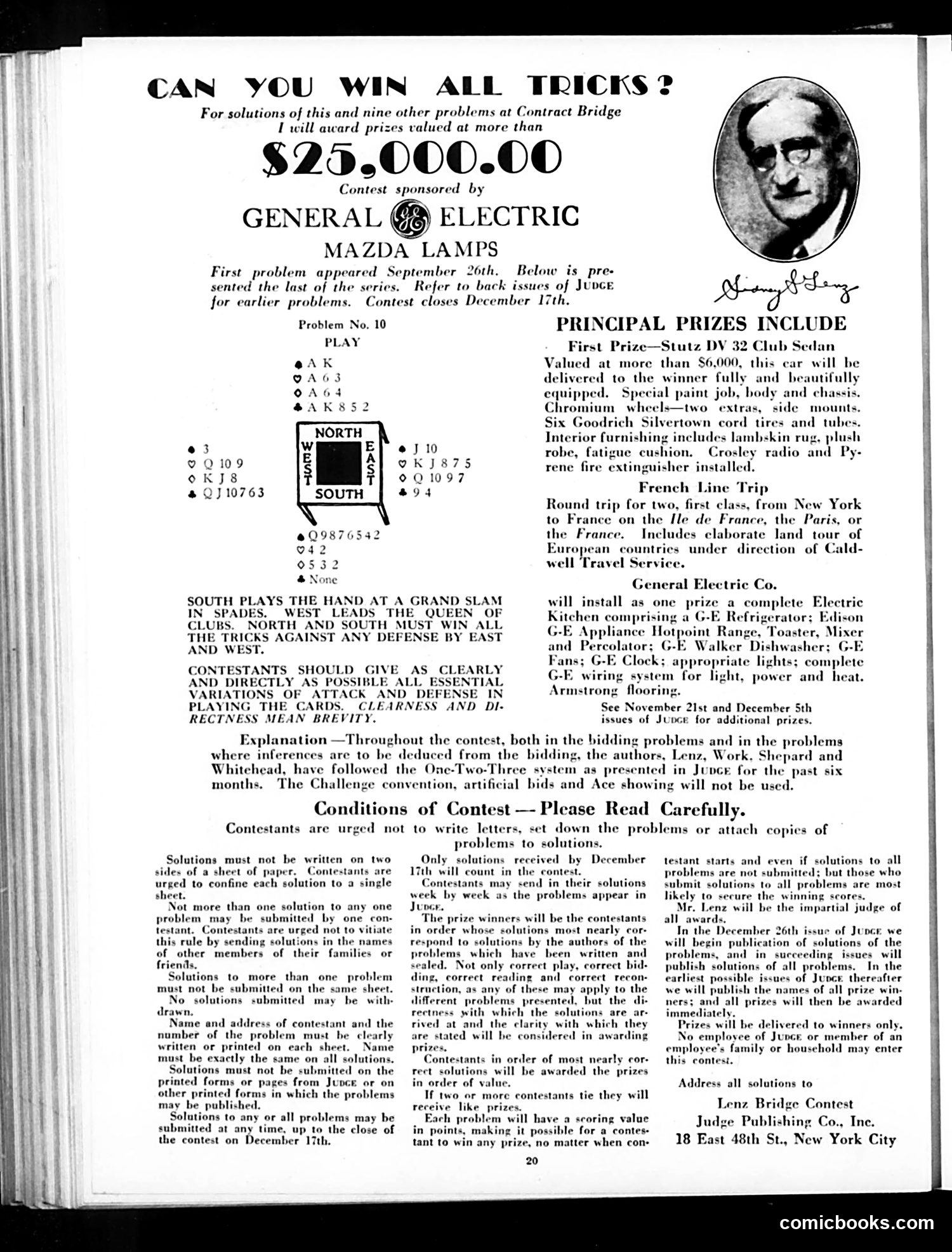
This Page Analysis This is primarily advertising and contest rules, not a political cartoon. Judge magazine is running a "Contract Bridge" problem-solving contest sponsored by General Electric (Mazda Lamps). The page announces: The Contest: Readers solve 10 bridge card-game problems for prizes totaling over $25,000—substantial money for the era (appears to be 1930s based on the Stutz automobile and General Electric appliances mentioned). Principal Prizes Include: - A Stutz DV 32 Club Sedan ($6,000+ value) - A French ocean liner trip - A complete General Electric kitchen with refrigerator, range, dishwasher, and wiring The Portrait: The small oval photograph shows what appears to be a bridge expert or contest judge, though the OCR'd name is unclear. Context for Modern Readers: This reflects how magazines used game competitions and substantial prizes as circulation boosters during the Depression era. Contract Bridge was a popular, prestigious pastime among middle/upper-class readers—exactly Judge's target audience.
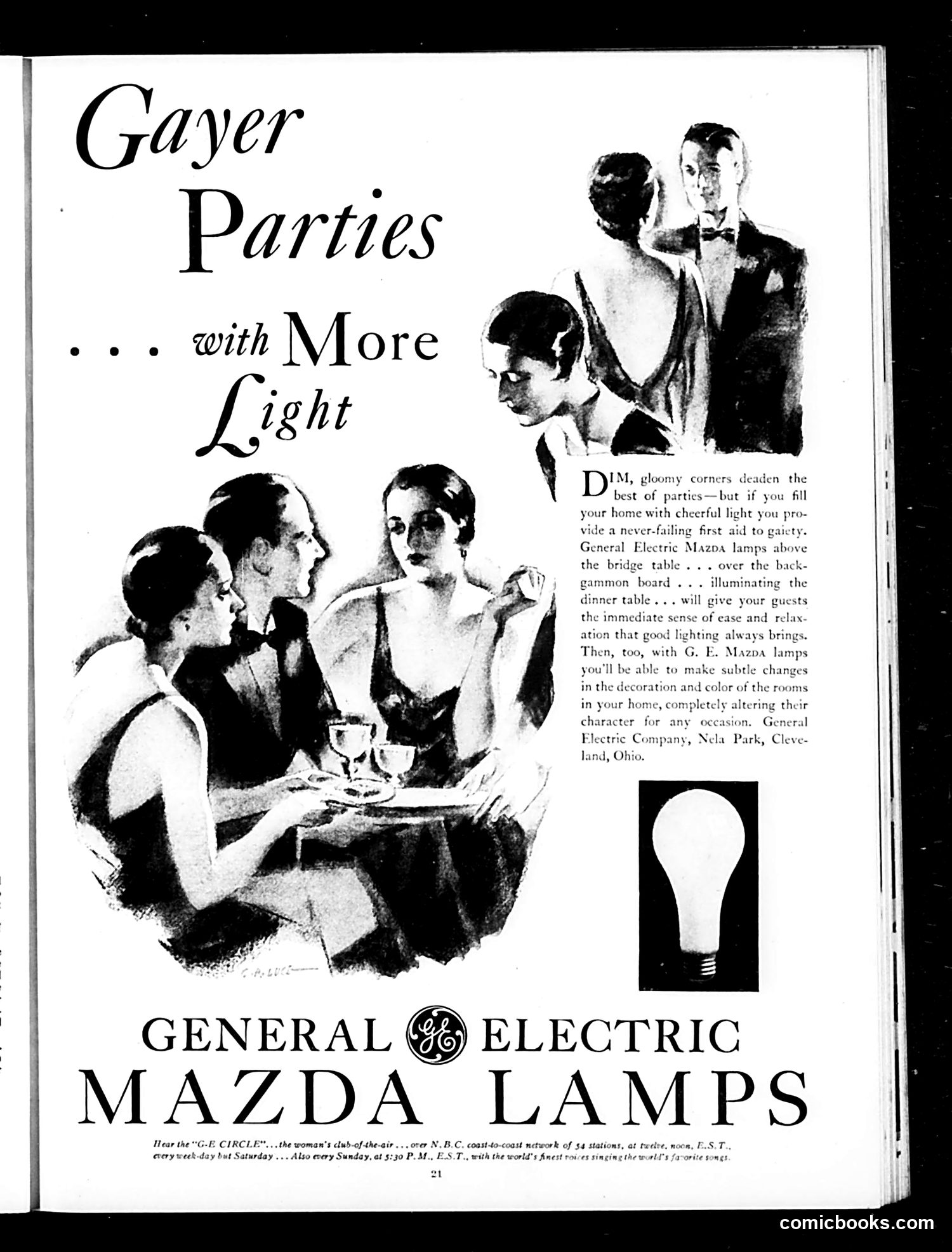
Analysis This is not a political cartoon or satire—it's a full-page advertisement for General Electric Mazda lamps, disguised as editorial content in *Judge* magazine. The image shows a stylized dinner party scene with well-dressed guests in what appears to be the 1920s-30s. The ad's message is straightforward: proper electric lighting at parties creates "cheerfulness" and "ease," and GE Mazda lamps allow homeowners to adjust lighting and room decoration for different occasions. The only "joke" is the ad's framing as lifestyle advice—that good lighting is a "never-failing first aid to gaiety" for entertaining. The copy promotes lamps for bridge tables, backgammon boards, and dining rooms. No political figures or satire are present. This is purely commercial advertising using aspirational imagery of urban, upper-class leisure to sell electrical products.
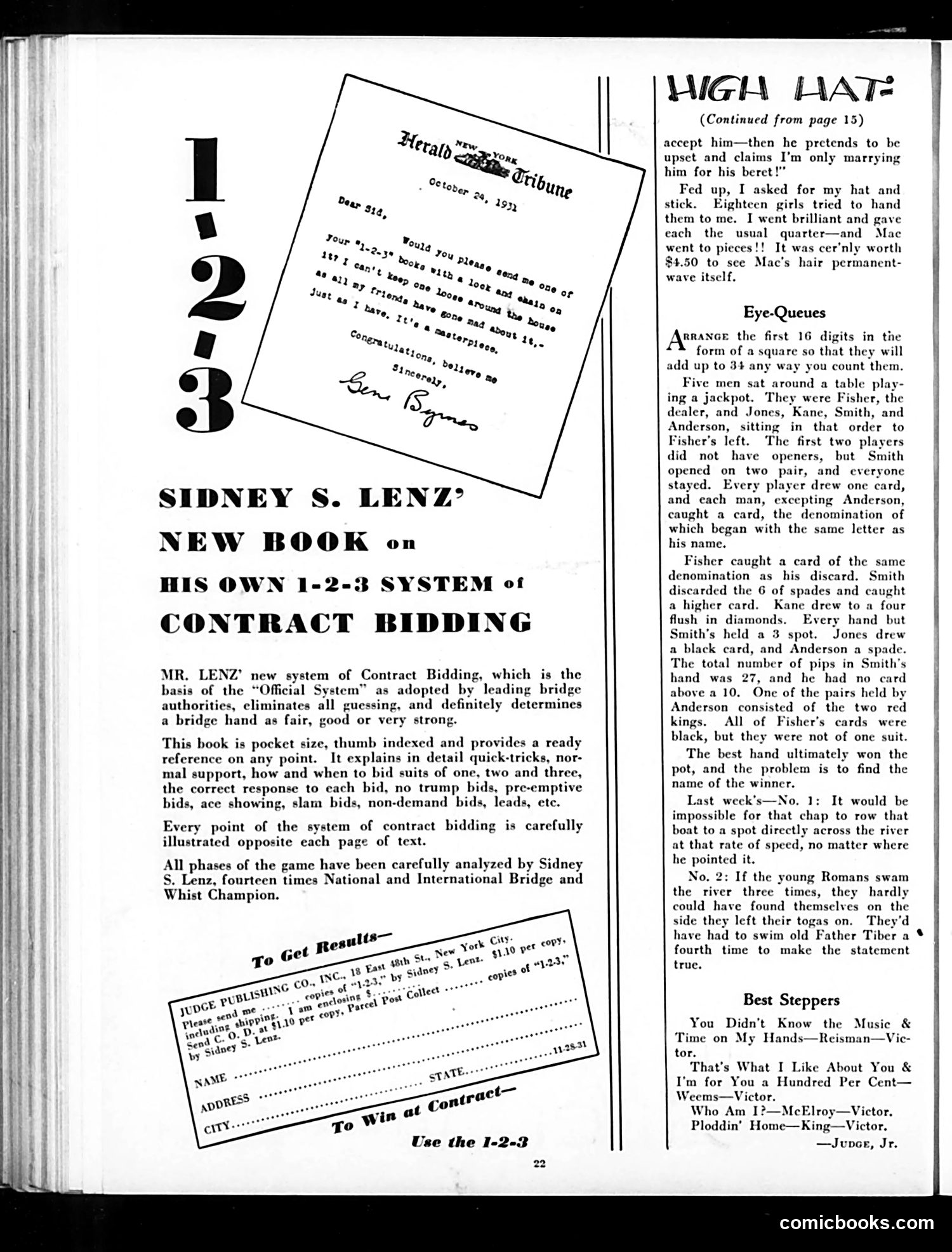
Advertisement and Puzzle Page from Judge Magazine This page is primarily advertising and entertainment content, not political satire. The main feature is an advertisement for Sidney S. Lenz's new bridge bidding instruction book—a pocket-sized guide to contract bridge, the card game that was popular among educated Americans in the 1920s. Lenz is identified as a fourteen-time National and International Bridge Champion, positioning the book as authoritative instruction. The remainder of the page contains two unrelated items: an "Eye-Queues" logic puzzle (a number arrangement challenge and a card game mystery) and a "Best Steppers" column listing popular songs with their artists and record labels—typical entertainment content for a general-interest magazine of this era. There is no political commentary or social satire visible on this page.
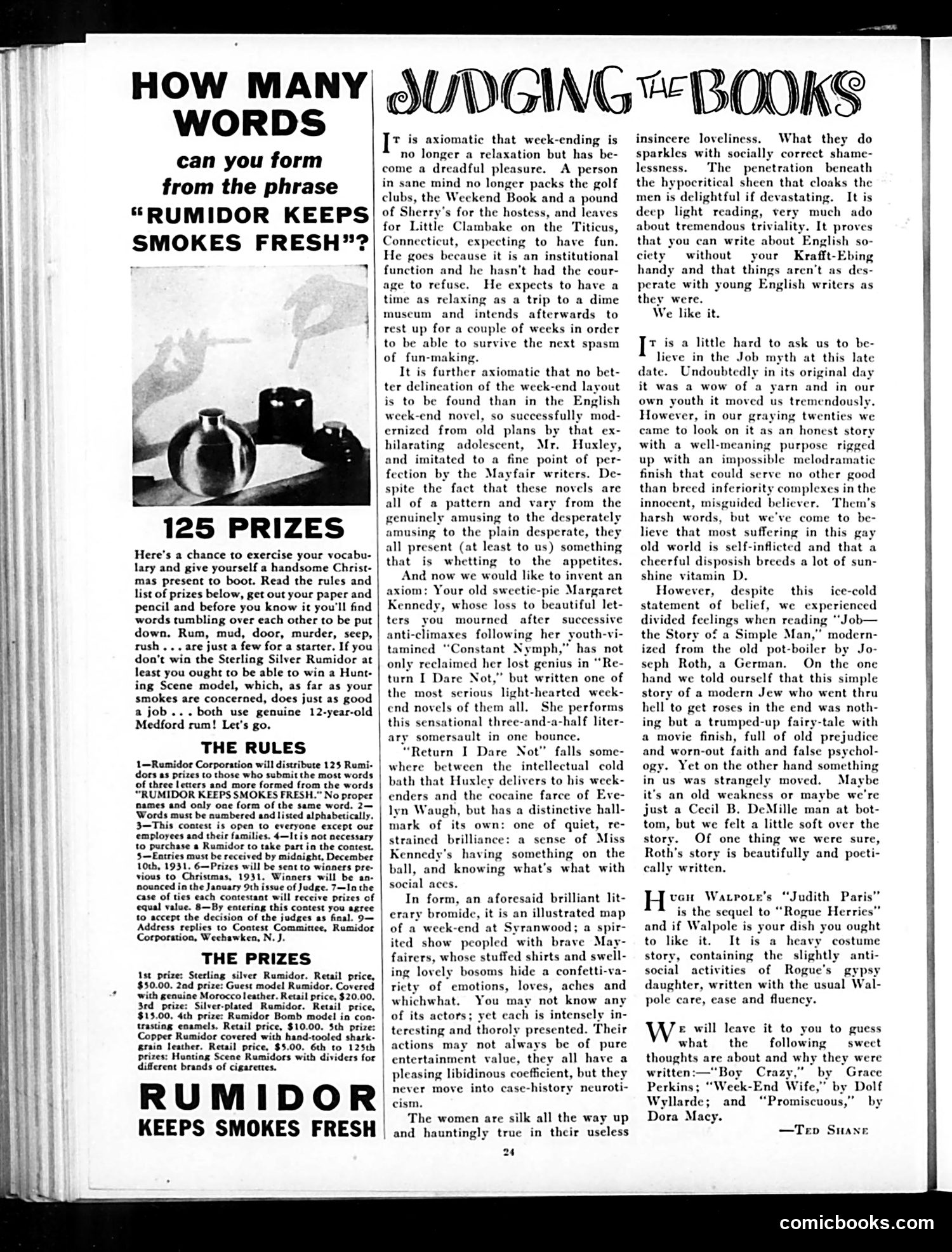
Explanation for Modern Readers This page is primarily advertising disguised as entertainment. The contest asks readers to form words from "RUMIDOR KEEPS SMOKES FRESH"—a cigarette humidor brand's slogan. Readers compete for prizes (silver humidors, cigarette cases) by submitting word lists. The page's book review section discusses 1930s novels about wealthy leisure activities ("week-end" house parties), particularly Margaret Kennedy's "Return I Dare Not." The reviewer critiques how modern fiction depicts these social events as obligatory tedium rather than genuine pleasure. The satire: The contest and reviews occupy the same space—both are marketing content. Judge magazine juxtaposes consumer products (humidors) with literary criticism, blending commerce and culture. The review's complaints about artificial social obligations subtly echo the contest's implicit message: even leisure activities (smoking, reading) are now commercialized rituals. The humor lies in Judge presenting branded advertising as legitimate content worthy of reader engagement.
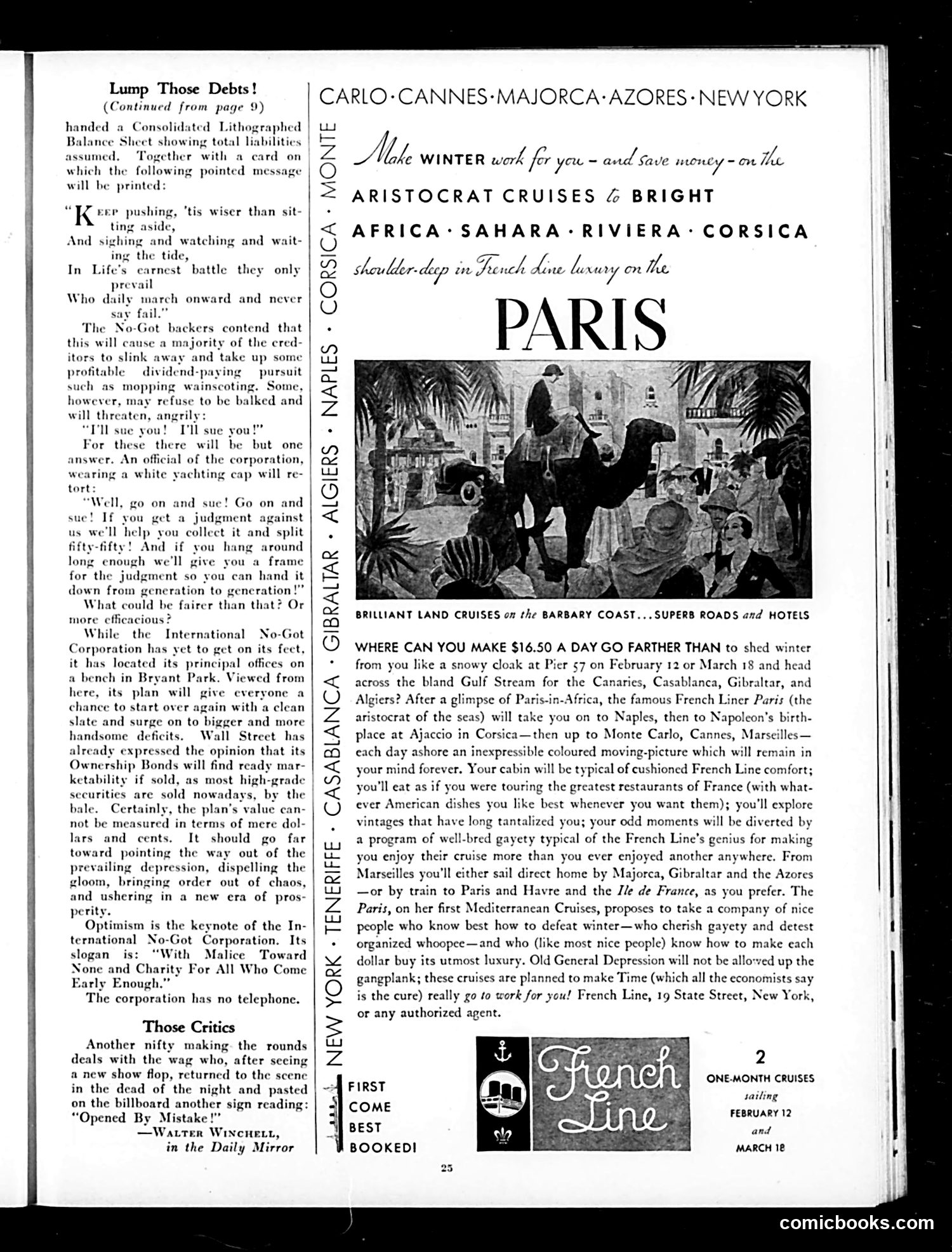
Page Analysis: Judge Magazine Advertisement and Satire This page contains two distinct elements: Left Column - Satirical Article "Lump Those Debts!": A commentary on the Great Depression, mocking a fictional "International No-Got Corporation" that proposes addressing debt through absurdist means. The satire targets how corporations and Wall Street handle financial crises—suggesting they'll offer creditors impossible terms (collecting debts by "splitting fifty-fifty," framing judgments for future generations) while accumulating larger deficits. The joke is that optimistic corporate rhetoric masks insolvent operations. The final quote—a corporation with "no telephone"—underscores the absurdity. Right Column - French Line Cruise Advertisement: A luxurious ship advertisement offering winter Mediterranean cruises, emphasizing escape from Depression-era hardship ("shed winter") through affordable elegance ($16.50/day mentioned). The Irony: Juxtaposing Depression-era debt satire with an expensive luxury cruise ad creates implicit social commentary—while ordinary people struggled financially, the wealthy could afford leisure travel.
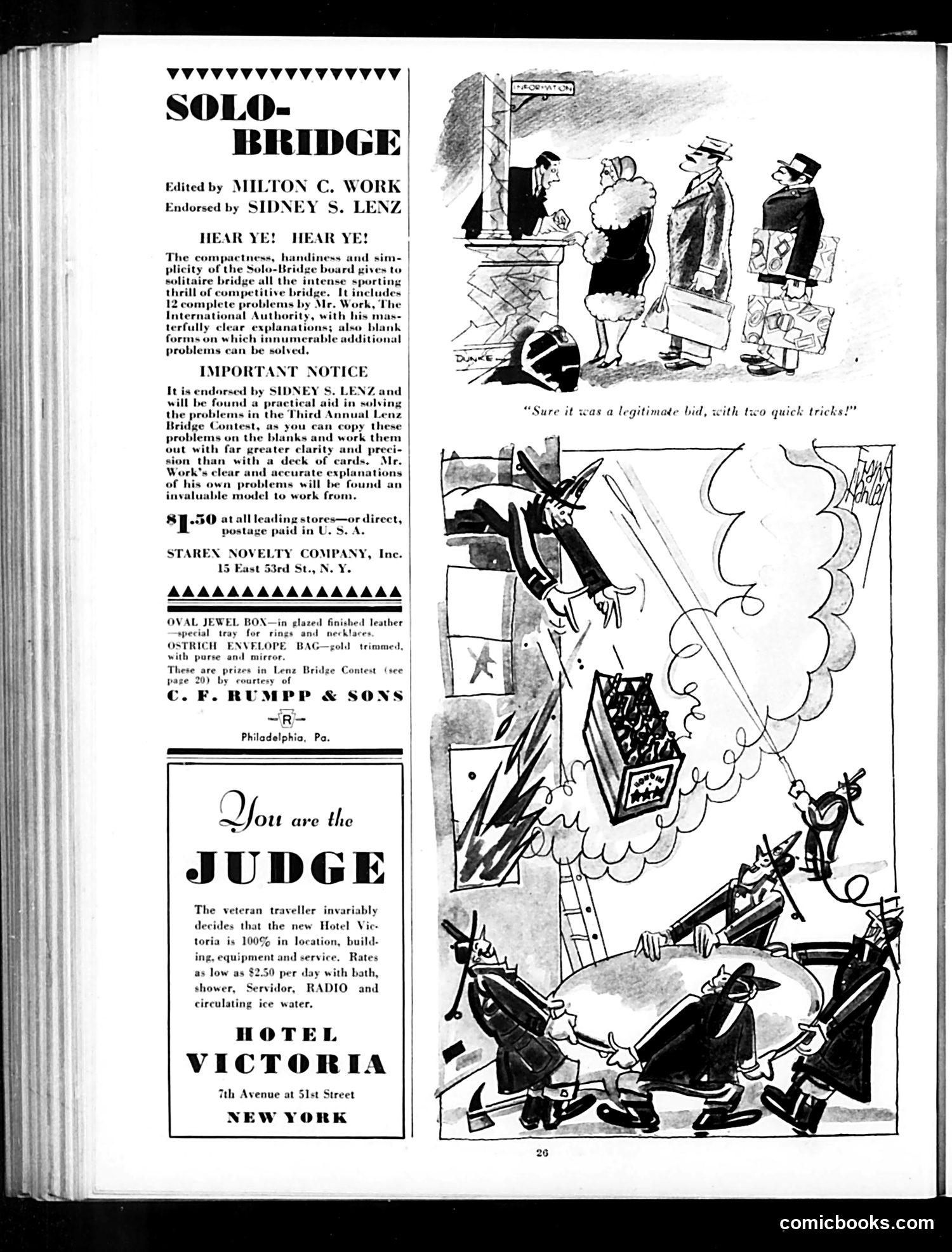
Analysis This page is primarily advertising and promotional content, not satire or political commentary. It features: Main Content: - A "Solo-Bridge" instructional book advertisement, edited by Milton C. Work and endorsed by Sidney S. Lenz (both real bridge experts of the era). Bridge was a popular card game in this period. The Cartoon: The illustration shows bridge players in a humorous scene where someone appears to have made a dubious bid ("Sure it was a legitimate bid, with two quick tricks!"), with other players reacting skeptically. This is a light joke about bridge strategy rather than social or political satire. Advertisements: - Starex Novelty Company selling Solo-Bridge materials ($1.50) - C.F. Rumpp & Sons advertising jewelry boxes and ostrich bags as prizes for a bridge contest - Hotel Victoria advertising its amenities to travelers The page reflects 1920s-30s leisure culture, when bridge was a widespread social pastime, particularly among middle and upper classes.
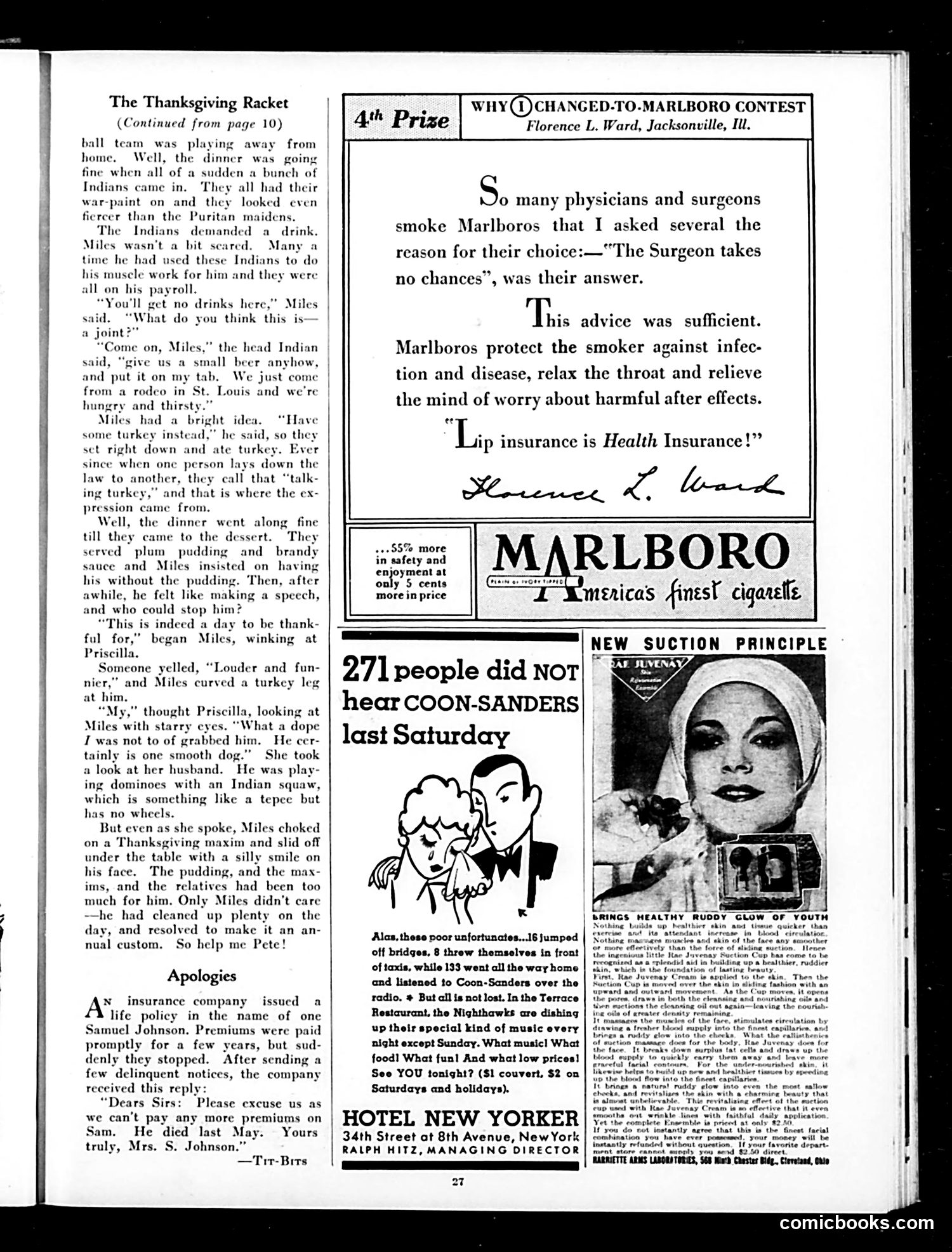
Explaining This Judge Magazine Page This page contains three distinct pieces: "The Thanksgiving Racket" (continued story): A humorous narrative about a man named Miles who hosts Thanksgiving dinner. When uninvited Indians arrive (depicted as his employees), Miles serves them turkey instead of alcohol. The satire mocks the romanticized "Thanksgiving" narrative by showing it as a commercial transaction—Miles employs these men and uses them for labor. The punchline relies on the phrase "talking turkey" (meaning frank discussion) originating from this incident. Marlboro Advertisement: A cigarette ad quoting physicians claiming Marlboros protect smokers against infection and disease—health claims now completely discredited and illegal in advertising. The appeal to medical authority was common in early tobacco marketing. "Apologies" humor items: Brief jokes, including one mocking people who attempted suicide after hearing a radio broadcast, and another about an insurance company whose policyholder died. The page is primarily advertising-driven with satirical content secondary. The humor reflects 1920s-30s sensibilities—cavalier about suicide, romanticizing Native Americans as servants, and promoting cigarettes with false health claims.
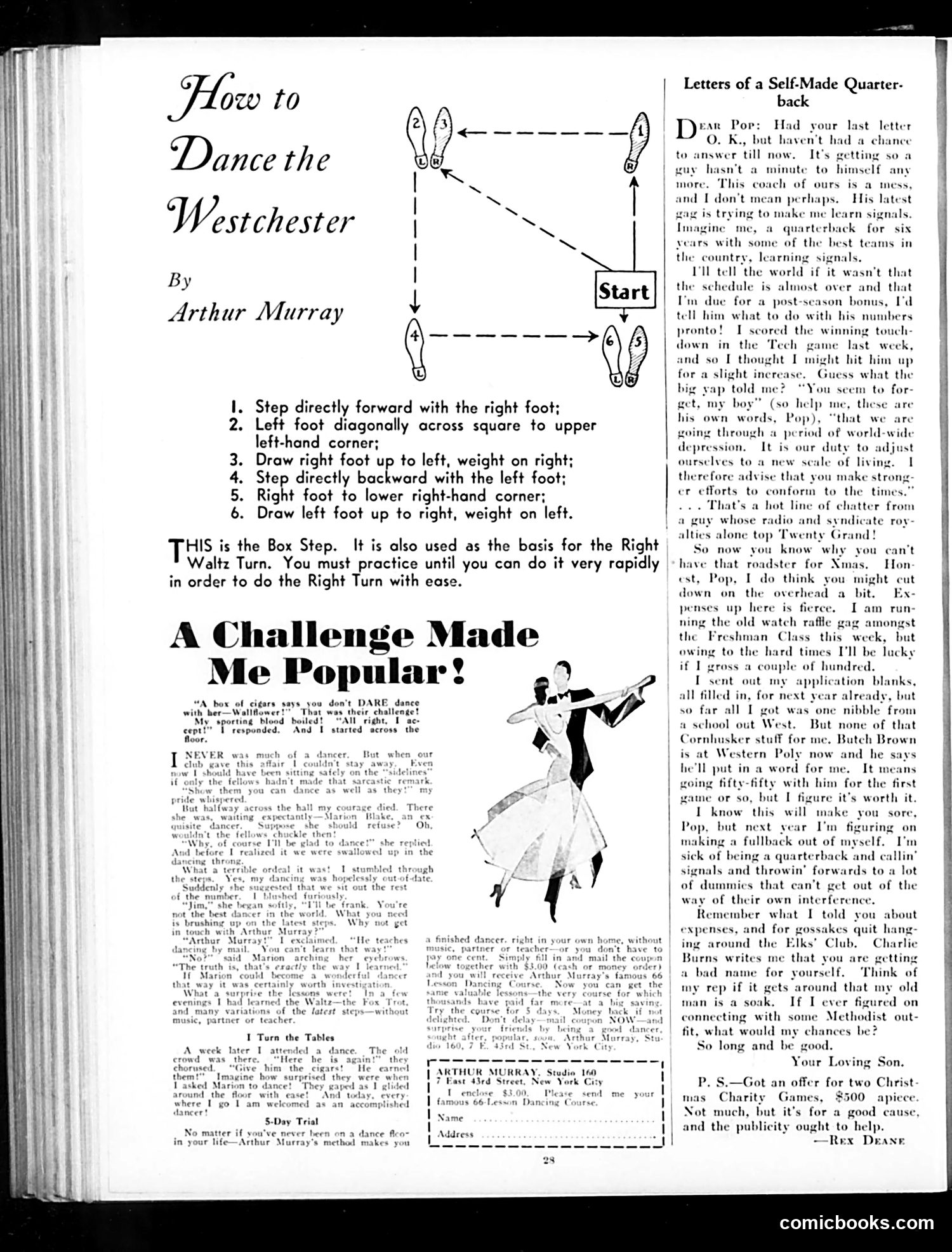
Analysis for Modern Readers This page contains two unrelated articles from Judge magazine: "How to Dance the Westchester" is an instructional piece by Arthur Murray, the famous dance instructor, teaching the Box Step with numbered foot positions. It's a straightforward how-to feature, not satirical. "A Challenge Made Me Popular" appears to be a humorous anecdote about someone challenged to dance the Westchester, who then becomes an accomplished dancer and "turns the tables" at a subsequent dance. "Letters of a Self-Made Quarterback" is a satirical advice column where a cocky football player complains to his father ("Pop") about being required to learn signals despite years of experience. The satire targets the player's arrogance and entitlement during the Great Depression—he demands a raise after one good play, complains about expenses, and dismisses his coach's economic hardship arguments while the coach profits from radio and syndication deals. The humor lies in exposing his hypocrisy and self-centeredness during economic crisis.
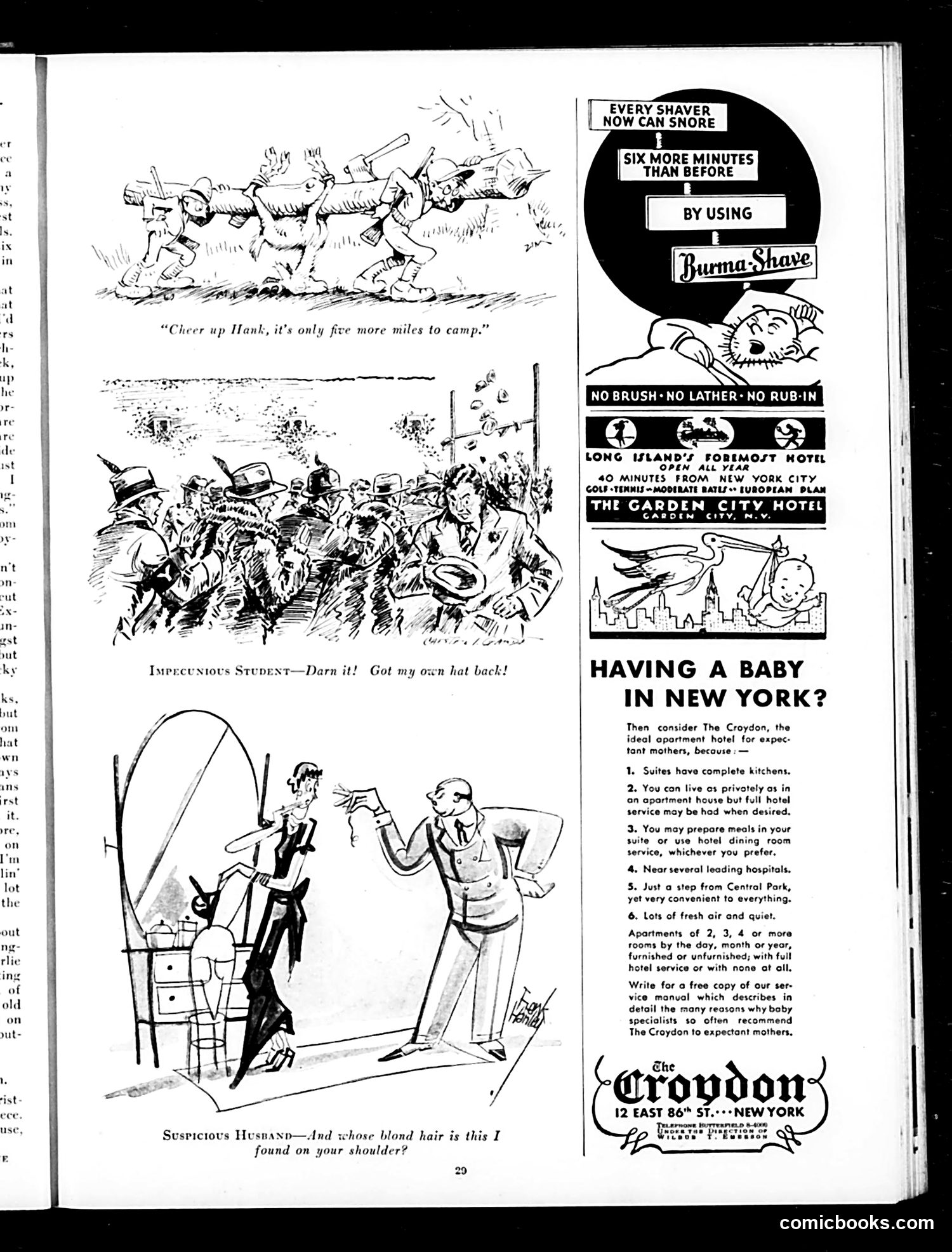
Judge Magazine Page Analysis This page contains three unrelated items typical of early 20th-century magazine layout: Top cartoon: Soldiers marching toward camp. The humor is mild—one soldier reassures another ("Hank") that only five more miles remain, a mundane military complaint. Middle cartoon: A domestic/marital comedy. A suspicious husband confronts his wife about blonde hair found on his shoulder, implying infidelity. This represents a common "comedy of suspicion" trope popular in the era. Advertisements: The page is dominated by ads for Burma-Shave (a brushless shaving cream), The Garden City Hotel, and The Croydon apartment hotel in New York. The Croydon ad specifically targets expectant mothers, emphasizing privacy, proximity to hospitals, and full hotel service—reflecting early 20th-century attitudes toward pregnancy and urban accommodation. The page demonstrates how Judge mixed satirical cartoons with commercial advertising, with no apparent thematic connection between items.
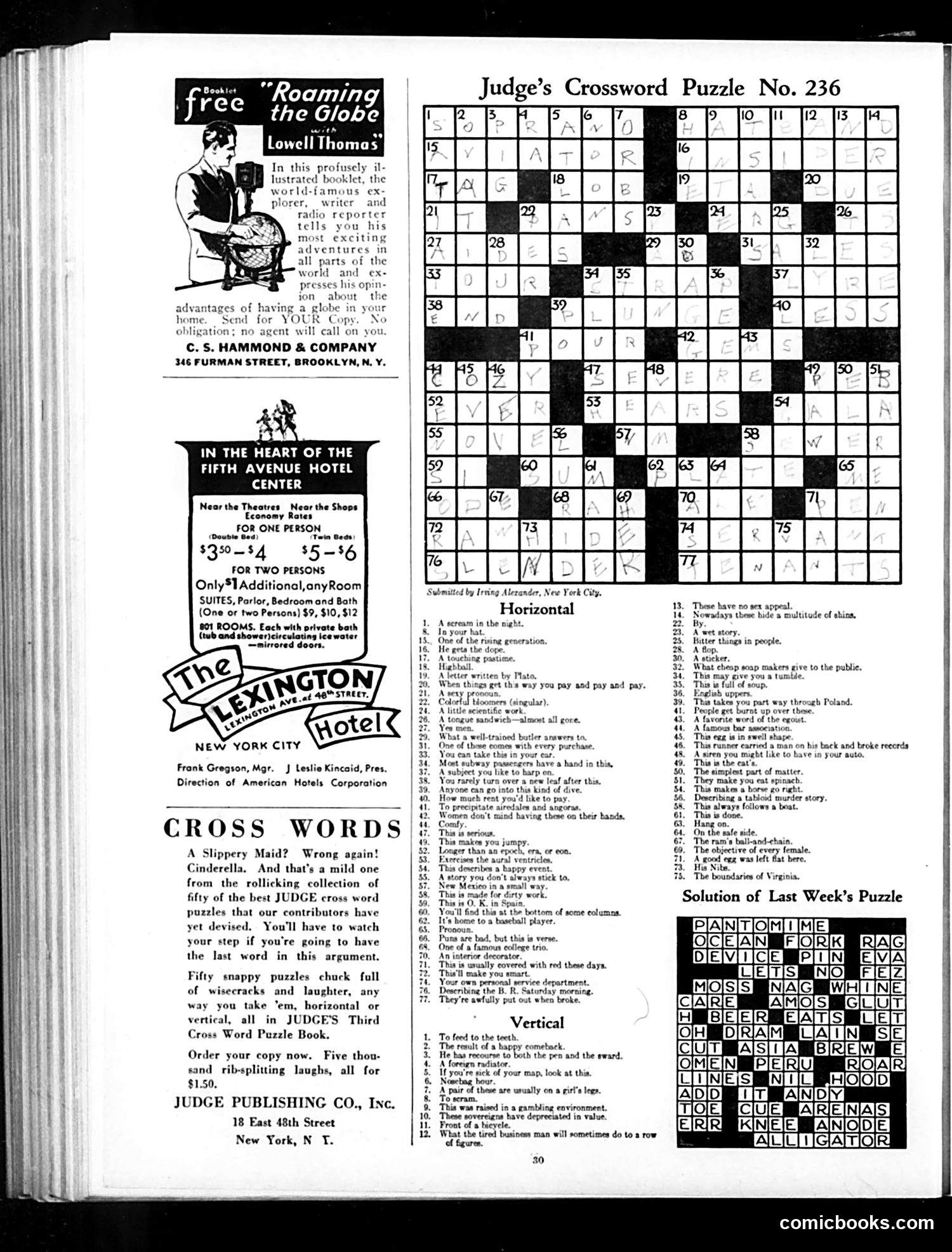
Judge Magazine Page Analysis This page is primarily advertising and entertainment content, not political satire. The main elements are: Advertisements: - Lowell Thomas's illustrated travel booklet "Roaming the Globe" - The Arlington Hotel (Fifth Avenue area, NYC) promoting budget rates - Judge Publishing Company's crossword puzzle book Main Content: A crossword puzzle (No. 236) with clues that are intentionally humorous and punny rather than straightforward. The clues use wordplay and double meanings—typical Judge magazine style—making the puzzle entertaining through witty misdirection. For example, clues reference popular culture, urban life, and contemporary concerns (subway passengers, rent, "personal service department"). Historical Context for Modern Readers: This reflects the 1920s-30s era when crossword puzzles were a major entertainment craze. Judge's appeal lay in combining intellectual challenge with humor. The puzzle clues reference period-specific details (airedales, radiators, "tired business man") that ground it in its time but are largely accessible to modern solvers. No significant political message—this is commercial entertainment content typical of Judge's format.
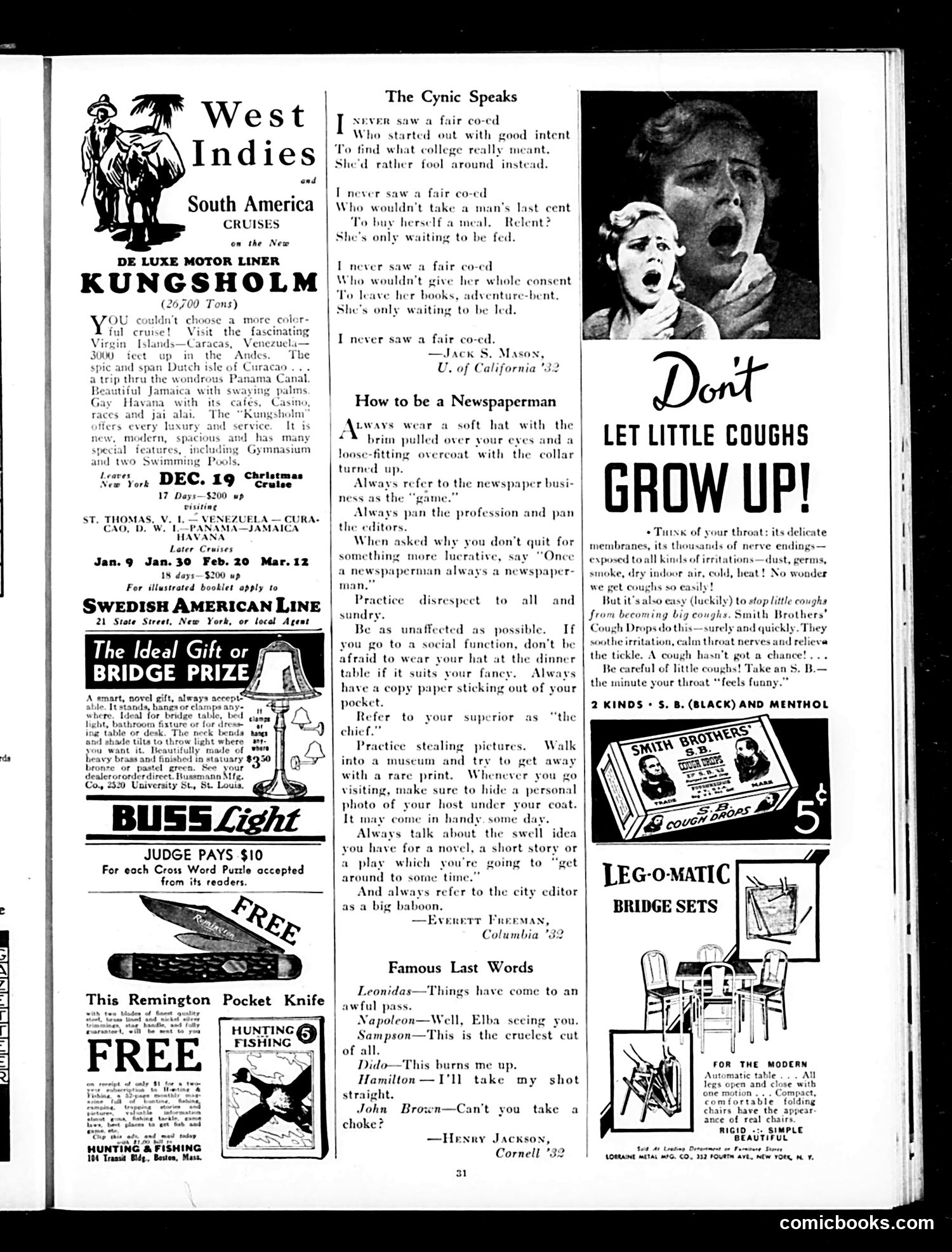
Analysis of Judge Magazine Page This page is primarily advertising and advice columns rather than political satire. Key content: "The Cynic Speaks" presents cynical, misogynistic verses about college women, portraying them as materially motivated and intellectually unserious—typical 1930s sexist humor mocking female students. "How to be a Newspaperman" is satirical advice mocking journalistic clichés: the stereotypical rumpled newsman in slouch hat, his dismissive attitude toward editors (calling them "baboons"), his petty ethics violations (stealing pictures), and his perpetual self-important posturing about the "swell idea" he'll get around to someday. This gently mocks the profession's pretensions. "Famous Last Words" presents historical figures' final statements as punchlines—mostly mediocre jokes playing on their names or fates. The page is dominated by period advertisements for Caribbean cruises, hunting/fishing knives, cough drops, and bridge game sets—typical 1930s magazine content. The visual cartoons accompanying ads appear generic rather than carrying specific political commentary.
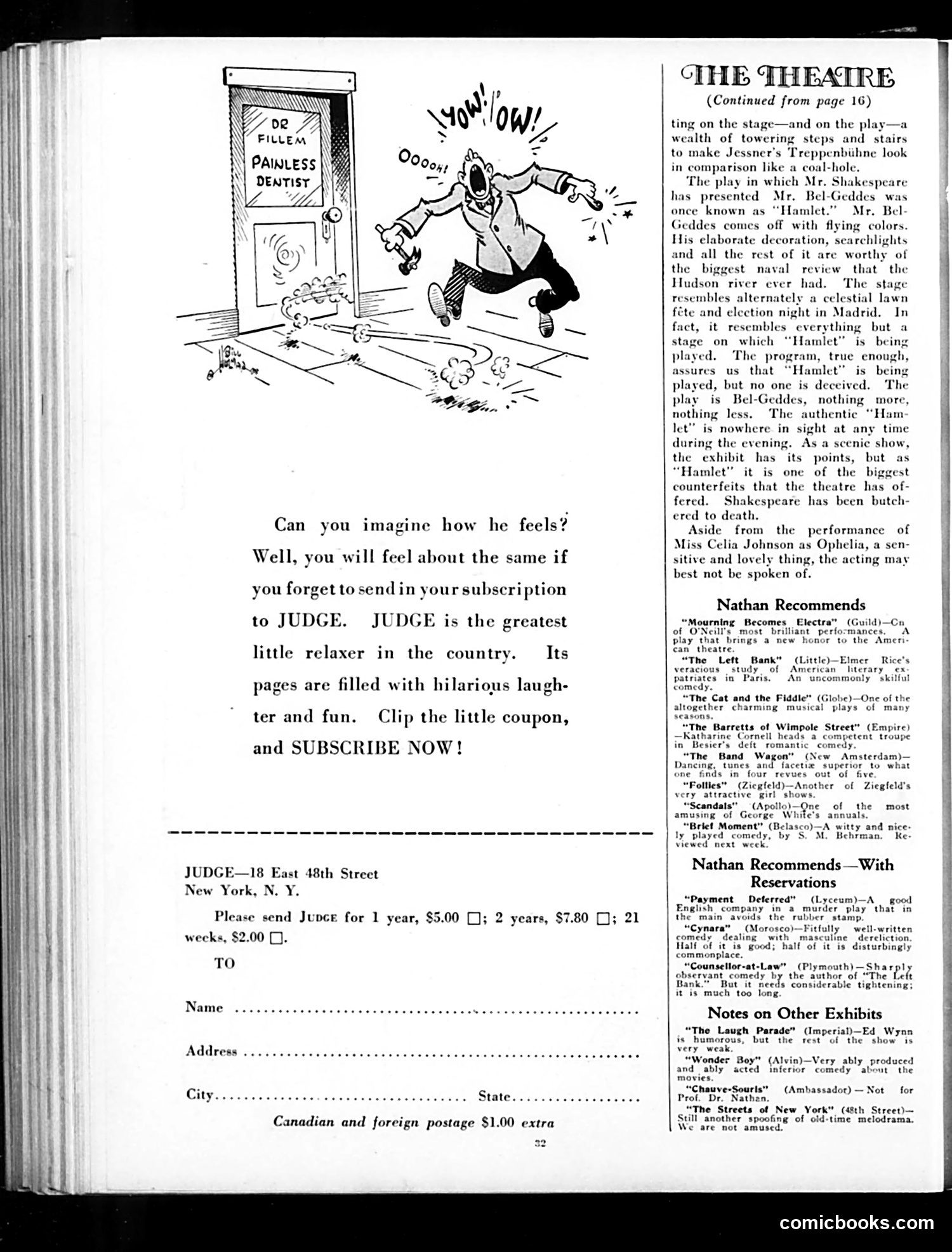
Analysis: Judge Magazine Theatre Page This page from Judge (a satirical American magazine) contains theatre reviews and advertising. The cartoon at top shows a dentist's patient violently expelling from the office—a visual pun on discomfort and unpleasant experiences. The main satirical content critiques a Broadway production of *Hamlet* featuring elaborate scenic design by Norman Bel Geddes. The reviewer argues that Bel Geddes' ornate sets, lighting, and staircases have completely overshadowed Shakespeare's play itself—making the production a spectacle rather than genuine theatre. The production becomes "one of the biggest counterfeits" of *Hamlet*, with the authentic play "nowhere in sight." The page then shifts to theatre recommendations by "Nathan," listing current Broadway shows with brief reviews. Shows like *Mourning Becomes Electra*, *The Cat and the Fiddle*, and Ziegfeld's *Follies* receive praise, while others face criticism for being too long or derivative. The subscription pitch uses the dentist cartoon as metaphor: readers who don't subscribe will feel as miserable as that patient—Judge offers relief through humor.
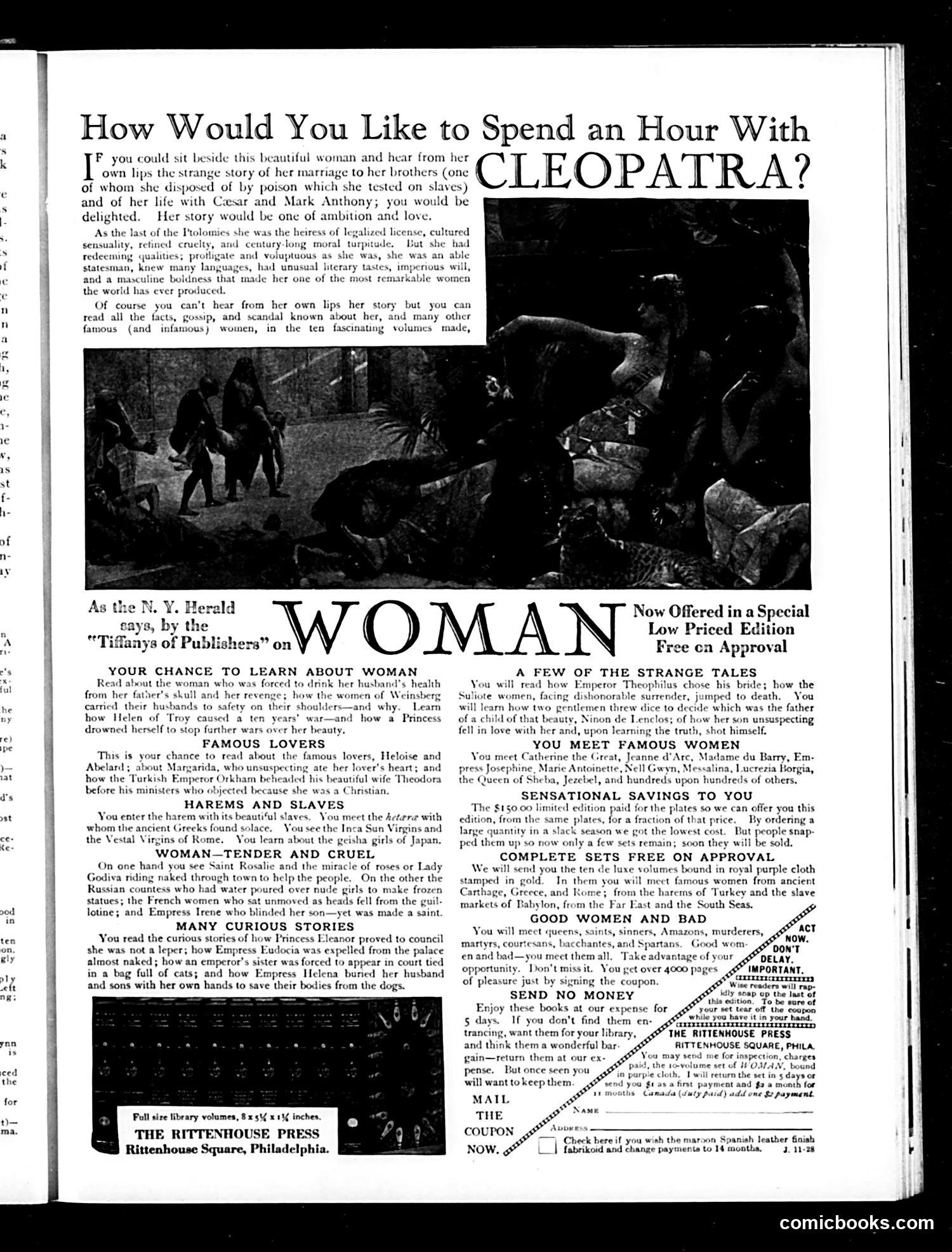
Advertisement for "Woman" Book Series This page is primarily a advertisement for a ten-volume book series about famous women in history, published by the Rittenhouse Press. The headline frames it as an imaginary conversation with Cleopatra. The advertisement emphasizes sensational and scandalous content: famous lovers (Heloise and Abelard), women in harems and as "Vestal Virgins," and stories of cruelty alongside virtue (Saint Rosalie versus a Russian countess who froze nude girls). It lists historical figures including Catherine the Great, Joan of Arc, Marie Antoinette, and Lucrezia Borgia. The marketing strategy targets readers interested in "curious stories" of women's ambition, sexuality, and power—framed as educational but clearly emphasizing the lurid and transgressive. The "special low price" and "free on approval" offer suggests this was a common mail-order sales tactic of the era. The small image appears to show a dramatic historical scene, likely meant to evoke the exotic and sensational content promised within.
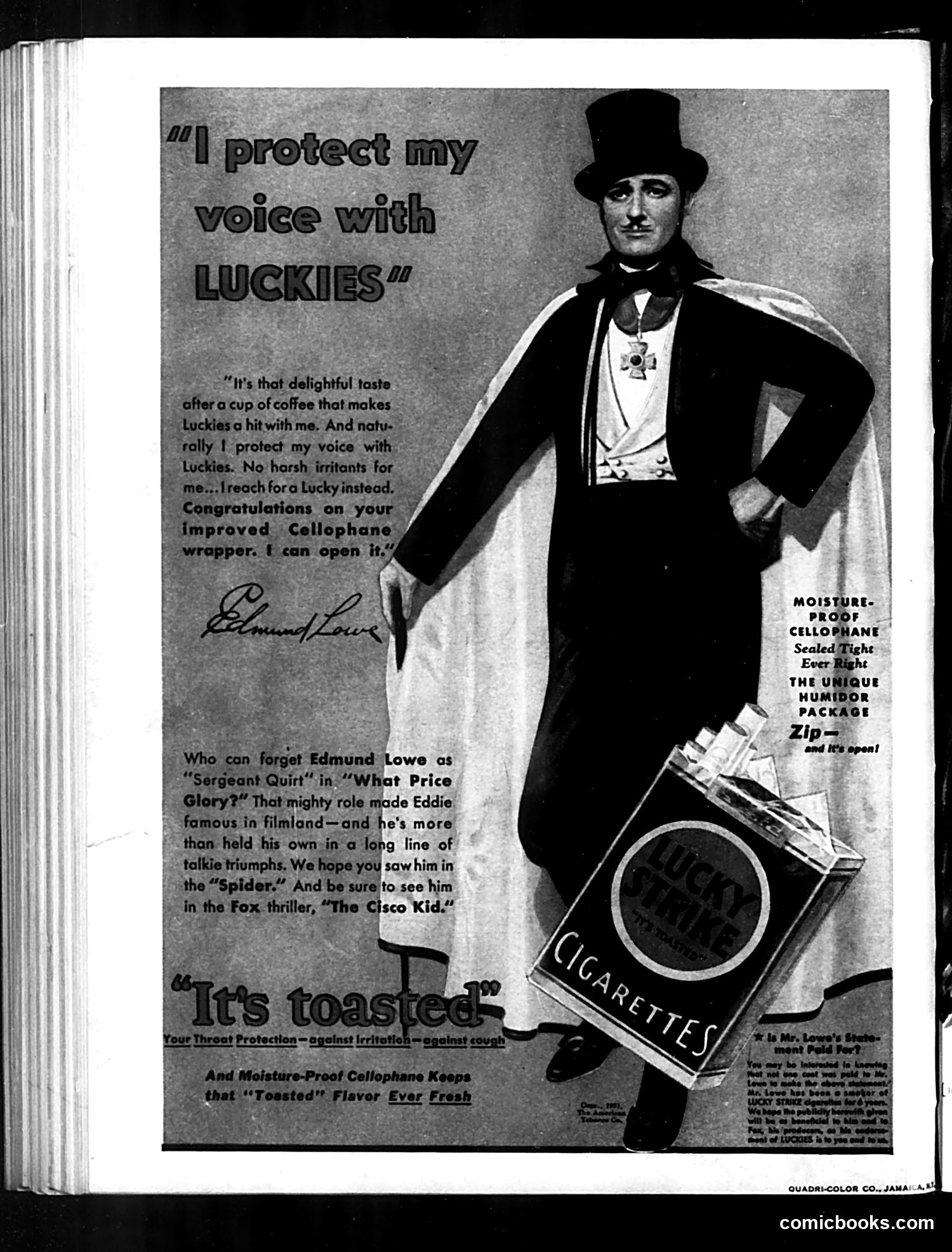
This is a Lucky Strike cigarette advertisement, not a political cartoon. The page features actor Edmund Lowe endorsing Lucky cigarettes. The ad plays on his famous film role as "Sergeant Quirt" in "What Price Glory?" and references his upcoming Fox films "The Splitter" and "The Cisco Kid." The humor relies on a pun: Lowe claims he "protect[s] my voice with LUCKIES" instead of using harsh irritants, because cigarettes are "toasted" for throat protection. The ad conflates cigarette smoking with vocal care—a common (and now infamous) marketing claim from this pre-regulation era. The "moisture-proof cellophane" packaging is highlighted as a selling point for keeping cigarettes fresh. This is straightforward vintage advertising rather than satire.